
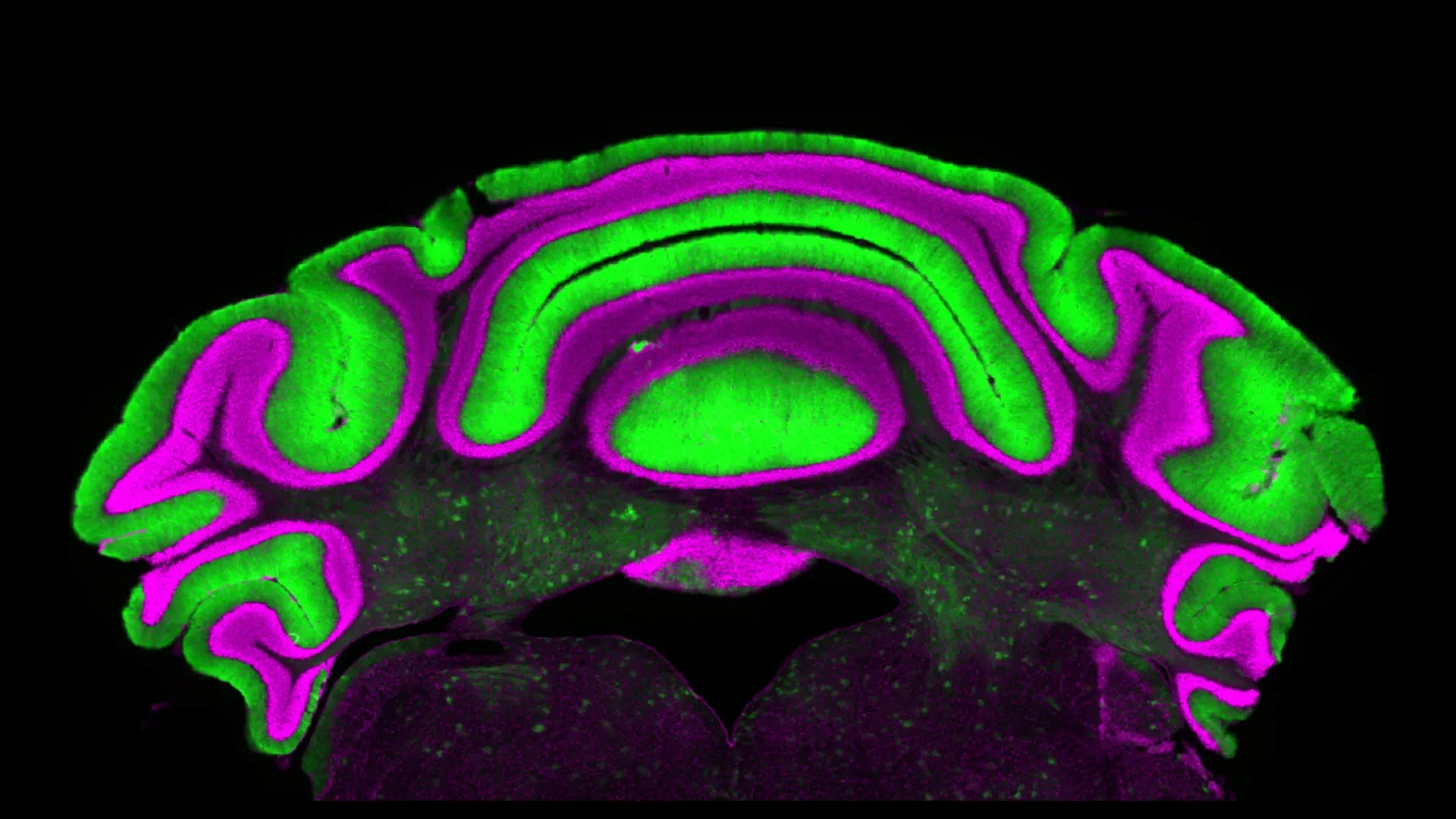
New research from a Virginia Tech neuroscientist at the Fralin Biomedical Research Institute at VTC is raising critical questions about a long-standing approach to studying chronic neurological conditions such as dystonia, ataxia, and tremor. The study, published in the prestigious Journal of Physiology, suggests that the prevailing assumption regarding the direct predictive power of Purkinje cell activity on deep cerebellar nuclei cell activity may be flawed, potentially impacting decades of research and therapeutic development for these debilitating disorders.
The cerebellum, a critical brain region primarily responsible for coordinating voluntary movements, posture, balance, coordination, and speech, becomes a focal point when these functions are compromised. Disruptions within this intricate neural network can manifest in a spectrum of debilitating symptoms, including painful and involuntary muscle contractions characteristic of dystonia, the uncoordinated and clumsy movements of ataxia, and the persistent shaking associated with tremors. These conditions, affecting millions worldwide, have historically been investigated through the lens of a specific cellular relationship within the cerebellum.
For an extended period, the scientific community has largely operated under the premise that the activity of Purkinje cells, a principal type of neuron in the cerebellar cortex, directly and reliably reflects the activity of deep cerebellar nuclei (DCN) cells. Purkinje cells are known to exert an inhibitory influence on DCN cells, which are the primary output neurons of the cerebellum, relaying processed motor commands to other parts of the brain and spinal cord. This inhibitory connection has led researchers to infer that by monitoring the electrical firing patterns of Purkinje cells, they could gain a comprehensive understanding of the functional state of the DCN cells. This assumption has been a cornerstone in experimental design, data interpretation, and the formulation of therapeutic strategies.
However, the groundbreaking work led by Dr. Meike van der Heijden, an assistant professor at the Fralin Biomedical Research Institute at VTC and a faculty member in Virginia Tech’s School of Neuroscience, challenges this deeply ingrained scientific paradigm. Her team’s meticulous analysis of extensive electrophysiology recordings from preclinical models of cerebellar disease has yielded unexpected and significant findings.
The Core Finding: A Disconnect in Cerebellar Signaling
The central tenet of Dr. van der Heijden’s research is that the direct anatomical connection between Purkinje cells and DCN cells does not translate into a straightforward, predictable relationship in their activity levels, particularly in the context of neurological disease. The study’s results, detailed in its publication in the Journal of Physiology, reveal a notable absence of a significant correlation between the firing rates of these two crucial neuronal populations.
"We see that there’s not a clear linear relationship between activity in the Purkinje cells and in the deep nuclei cells," stated Dr. van der Heijden in an interview. "So, there’s very limited predictive power in monitoring one to understand what’s going on in the other." This statement underscores the core of the discovery: the assumption that Purkinje cell activity serves as a reliable proxy for DCN cell activity is, in many instances, inaccurate.
Background: Why Purkinje Cells Became the Focus
The long-standing focus on Purkinje cells is not without reason. Anatomically, they are situated in the outermost layer of the cerebellar cortex, making them relatively more accessible for electrophysiological recordings and other experimental manipulations compared to the DCN cells, which are nestled deeper within the brain’s structure. This accessibility has historically made Purkinje cells a more convenient target for neuroscientists investigating cerebellar function. Over time, this convenience, coupled with the known inhibitory pathway, solidified the view that their activity was a key indicator of cerebellar output.
This accessibility advantage has meant that a vast body of research has accumulated, primarily examining Purkinje cell function in various neurological states. Consequently, many therapeutic interventions and research hypotheses have been predicated on modulating Purkinje cell activity, with the implicit expectation that the DCN cells would respond in a predictable, inhibitory manner.
The Study’s Methodology and Timeline
The research team embarked on this investigation by leveraging a substantial database of electrophysiology recordings. These recordings, gathered from well-established preclinical models designed to mimic aspects of cerebellar diseases, provided a rich source of data for analysis. While the exact timeline of data collection and analysis is not explicitly detailed in the initial release, the process would typically involve:
- Data Acquisition: Preclinical models exhibiting symptoms analogous to human cerebellar disorders would have undergone rigorous electrophysiological recording sessions. This likely involved implanting electrodes in specific cerebellar regions to capture the electrical signals from both Purkinje and DCN cells simultaneously or in close temporal proximity.
- Data Processing and Cleaning: Raw electrophysiological data is often noisy and requires sophisticated algorithms to filter out artifacts and accurately identify neuronal firing events.
- Correlation Analysis: The core of the study involved statistical analysis to determine the degree of correlation between the measured activity patterns of Purkinje cells and DCN cells. This would have involved calculating correlation coefficients and assessing their statistical significance.
- Interpretation and Validation: The researchers would have then interpreted these statistical findings in the context of existing knowledge about cerebellar circuitry and disease pathology.
The significance of the study lies in its retrospective analysis of existing, robust datasets. This approach allowed the team to examine a large volume of observations without needing to conduct new, potentially resource-intensive experiments to gather this specific comparative data. The publication in the Journal of Physiology, a peer-reviewed scientific journal, signifies that the study has undergone rigorous scrutiny by experts in the field, further bolstering its credibility.
Implications for Dystonia, Ataxia, and Tremor Research and Treatment
The implications of these findings for the study and treatment of cerebellar movement disorders are profound and far-reaching. Alyssa Lyon, a doctoral candidate in Virginia Tech’s Translational Biology, Medicine, and Health Graduate Program and the paper’s first author, emphasized the direct impact on clinical applications.
"Purkinje and cerebellar deep nuclei cell activity is disrupted in a disease state, and a better understanding of the relationship between these neuron types will ultimately help optimize treatments for diseases such as dystonia, ataxia, and tremor," Lyon stated. This highlights that a more accurate understanding of the underlying cellular dysfunctions is paramount for developing effective interventions.
For decades, research into these conditions has often centered on the Purkinje cell pathway. Therapies aimed at influencing Purkinje cell activity – perhaps through pharmacological agents or electrical stimulation – may have been developed with the assumption that the intended downstream effects on DCN cells would reliably occur. The new research suggests that such assumptions may have led to suboptimal or even ineffective therapeutic strategies.
This discovery necessitates a re-evaluation of current research paradigms. Scientists may need to shift their focus to directly measuring DCN cell activity, even with the inherent technical challenges. This could involve developing more advanced recording techniques or utilizing novel imaging methods to gain clearer insights into the function of these deeper neurons.
A Call for Caution and Empirical Testing
Dr. van der Heijden’s message extends beyond simply highlighting a flawed assumption; it serves as a cautionary note for the entire field of neuroscience. "This is a cautionary tale for understanding cerebellar activity in disease, but also for treating these challenging diseases," she warned. "We need to be very careful in making assumptions, and to actually do experiments to test our hypotheses."
This advice is particularly relevant in the context of complex neurological disorders where the exact mechanisms of dysfunction are still being unraveled. The temptation to rely on simpler, more accessible markers of disease can lead to incomplete or misleading conclusions. The study by van der Heijden and Lyon advocates for a more rigorous, hypothesis-driven approach, emphasizing the importance of direct empirical validation of proposed cellular relationships, especially when those relationships are foundational to research and treatment strategies.
Broader Impact and Future Directions
The findings from the Fralin Biomedical Research Institute at VTC have the potential to reshape the direction of cerebellar research. By demonstrating a disconnect between Purkinje cell and DCN cell activity, the study opens up new avenues for investigation. Researchers may now explore:
- Alternative Signaling Pathways: Are there other, less understood neural circuits within the cerebellum or connections from other brain regions that exert a more significant influence on DCN cell activity?
- Modulatory Influences: Could other cell types or neurotransmitters play a more crucial role in regulating DCN function than previously appreciated?
- Disease-Specific Dysregulation: Does the relationship between Purkinje and DCN cells vary depending on the specific cerebellar disorder? For example, the cellular pathology in dystonia might differ significantly from that in ataxia, leading to distinct signaling abnormalities.
- Development of Targeted Therapies: With a clearer understanding of DCN cell behavior, it may be possible to design therapies that more directly target these output neurons, potentially leading to more effective treatments for movement disorders.
The study also highlights the continuous evolution of scientific understanding. What is considered a foundational principle today may be refined or even overturned by new evidence tomorrow. This underscores the dynamic nature of scientific inquiry and the importance of ongoing research and critical re-evaluation of established theories.
The research team’s commitment to open science and data sharing, though not explicitly detailed in the initial report, would be crucial for the broader scientific community to build upon these findings. Collaboration and the sharing of experimental methodologies will be key to validating and extending this research.
In conclusion, the work by Dr. Meike van der Heijden and her team at the Fralin Biomedical Research Institute at VTC marks a significant moment in cerebellar neuroscience. By challenging a long-held assumption about the relationship between Purkinje and deep cerebellar nuclei cells, their research provides a critical re-evaluation of how we study and approach debilitating neurological conditions like dystonia, ataxia, and tremor. This foundational discovery promises to stimulate new research directions and ultimately pave the way for more precise and effective therapeutic interventions for individuals affected by these challenging disorders. The scientific community now faces the imperative to directly investigate DCN cell function and to approach treatment development with a renewed emphasis on empirical validation.
