
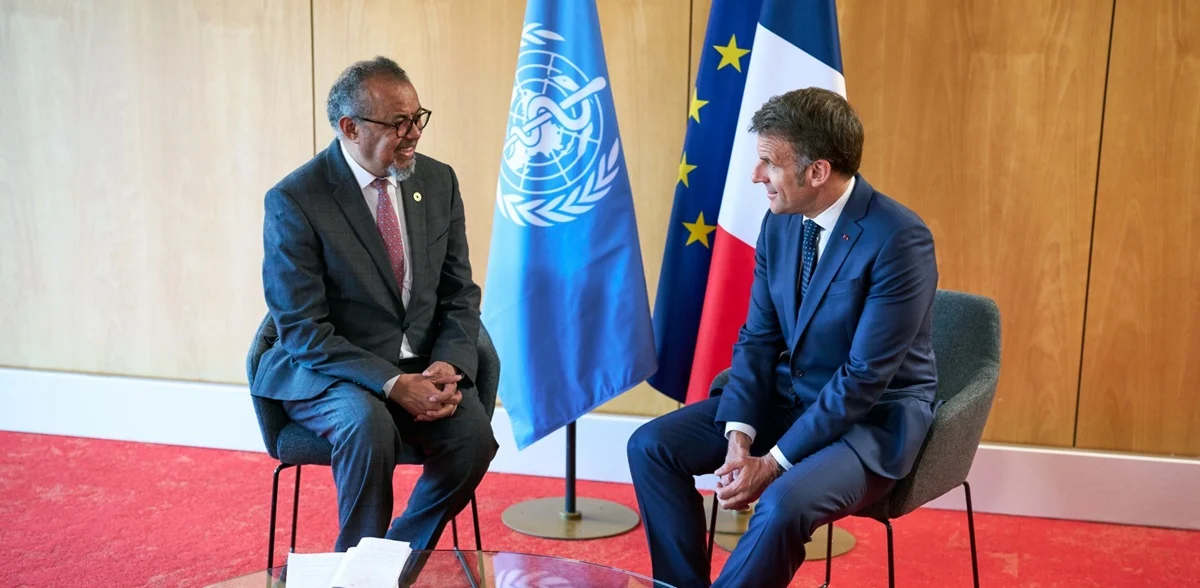
The intersection of human health, animal welfare, and environmental stewardship took center stage in France this week as global heads of state, scientific experts, and international policymakers gathered for the landmark One Health Summit. Held on World Health Day, the event served as a critical platform for the World Health Organization (WHO) and its international partners to unveil a comprehensive suite of actions designed to fortify global defenses against emerging health crises. The summit, hosted by the French government, represents a decisive pivot from theoretical advocacy to the practical implementation of the "One Health" approach—a multidisciplinary framework that recognizes the inextricable links between the health of people, animals, and the ecosystems they inhabit.
Under the 2024 World Health Day theme, "Together for health. Stand with science," the proceedings in France highlighted the escalating risks posed by a rapidly changing planet. The urgency of the gathering was underscored by sobering statistics regarding the origins of global pathologies. Public health data indicates that approximately 60% of known infectious diseases in humans are zoonotic, originating in animal populations, while nearly 75% of all emerging infectious diseases follow a similar cross-species trajectory. The devastating legacy of the COVID-19 pandemic, which resulted in an estimated 15 million deaths and triggered trillions of dollars in global economic losses between 2020 and 2021, served as a grim reminder of the costs of fragmented health systems.
A Strategic Framework for Global Health Security
The One Health Summit was characterized by a call for systemic transformation. Dr. Tedros Adhanom Ghebreyesus, Director-General of the WHO, emphasized that the traditional "siloed" approach to medicine, agriculture, and environmental science is no longer sufficient to protect modern society. By integrating expertise across these sectors, the WHO aims to detect biological and environmental risks at their source, allowing for faster and more coordinated interventions.
The summit’s host, French President Emmanuel Macron, reinforced this sentiment, positioning France as a vanguard for international scientific cooperation. President Macron noted that the well-being of the human population cannot be decoupled from the vitality of the environment or the health of livestock and wildlife. The French administration’s commitment to "moving One Health from ambition to implementation" is expected to influence upcoming international dialogues, including the G7 and G20 summits, where pandemic preparedness and response remain high on the diplomatic agenda.
Chronology of the Summit and Concurrent Forums
The events in France unfolded over several days, creating a comprehensive timeline of scientific and political engagement. The core One Health Summit took place on April 7, coinciding with World Health Day. This high-level meeting focused on the political and strategic alignment of the Quadripartite partners—the WHO, the Food and Agriculture Organization of the United Nations (FAO), the World Organisation for Animal Health (WOAH), and the United Nations Environment Programme (UNEP).
Following the primary summit, the focus shifted to the first-ever Global Forum of WHO Collaborating Centres (CCs), which ran from April 7 through April 9. This forum brought together over 800 institutions from more than 80 countries. High-level representation included health ministers from France, Germany, Indonesia, and South Africa. This three-day event was designed to facilitate the translation of high-level policy into technical reality, fostering a global ecosystem for data sharing, capacity building, and collaborative research.
Four Pillars of Concrete Action
The summit was not merely a forum for discussion but a launchpad for four specific, high-impact initiatives intended to reshape the global health landscape by 2030.
1. The Global Network of One Health Institutions
The WHO announced plans to establish a Global Network of One Health Institutions. This initiative is designed to operationalize the "One Health Joint Plan of Action" by mobilizing a multidisciplinary pool of experts. The network will serve as a bridge between global guidance and local implementation. By utilizing the WHO Academy and other educational institutions, the network will provide specialized training for health and environmental workers, ensuring that countries have the tools and human capital necessary to manage complex health-environment interfaces.
2. Extension of the One Health High-Level Expert Panel (OHHLEP)
To ensure that policy remains rooted in rigorous evidence, the WHO and its Quadripartite partners confirmed the extension of the One Health High-Level Expert Panel. The panel’s mandate has been extended through 2027, with a secondary phase planned for 2027–2029. OHHLEP will focus on three priority areas: defining the global research agenda, supporting the implementation of joint action plans, and providing high-level advocacy to ensure that scientific findings are integrated into national and international laws.
3. The 2030 Rabies Elimination Initiative
In a targeted move against one of the world’s most persistent zoonotic threats, the WHO, WOAH, and the Institut Pasteur launched a renewed strategy to eliminate dog-mediated human rabies deaths by 2030. Rabies currently claims approximately 60,000 lives annually, a disproportionate number of whom are children in developing regions. By focusing on community-based surveillance and mass canine vaccination, the initiative aims to use rabies elimination as a blueprint for how One Health strategies can successfully eradicate zoonotic threats through cross-sectoral cooperation.
4. Unified Strategy for Avian Influenza
Given the increasing frequency of H5N1 and other avian influenza outbreaks, the summit introduced a new Strategic Framework for Collaboration on avian influenza. This framework seeks to move beyond reactive, fragmented responses to bird flu. Instead, it proposes a unified strategy that addresses the threat across the spectrum of public health, food security, and biodiversity. The framework emphasizes enhanced surveillance in both wild bird populations and domestic poultry to prevent potential "spillover" events into human populations.
Leadership Transitions and the Quadripartite Collaboration
A significant outcome of the summit was the formal announcement that the WHO is assuming the Chairmanship of the Quadripartite collaboration. In this role, the WHO will lead the coordinated efforts of the FAO, WOAH, and UNEP. This leadership transition is expected to streamline governance and focus the four organizations on a set of high-priority deliverables.
Under the WHO’s chairmanship, the Quadripartite will prioritize "measurable impact at the country level." This involves moving away from high-level declarations and focusing on helping individual nations develop the infrastructure needed for integrated disease surveillance. The goal is to create a seamless flow of information between a local veterinarian reporting an unusual animal die-off and a national health department preparing a public health response.
Supporting Data: The Economic and Biological Imperative
The data supporting the One Health approach is compelling. Beyond the human toll of pandemics, the economic argument for prevention is becoming a cornerstone of international policy. World Bank estimates suggest that an annual investment of approximately $10 billion to $15 billion in One Health prevention strategies could prevent future pandemics that might cost the global economy trillions.
Furthermore, the environmental drivers of disease are becoming more pronounced. Deforestation, urban encroachment into wildlife habitats, and the climate crisis are driving species into closer proximity with human settlements. This "pathogen spillover" is exacerbated by unsafe food systems and water contamination. The summit’s focus on biodiversity loss highlights that a healthy ecosystem acts as a natural buffer against disease; when that buffer is removed through environmental degradation, the risk to human health increases exponentially.
Global Reactions and Future Implications
The international community has largely welcomed the outcomes of the summit, though experts note that the success of these initiatives depends on sustained funding and political will. Public health advocates suggest that the inclusion of the United Nations Environment Programme (UNEP) in the Quadripartite is a vital step in ensuring that environmental factors are not sidelined in favor of purely medical solutions.
The implications of the summit extend to the private sector as well. Industries related to agriculture, pharmaceuticals, and environmental technology are expected to see increased regulation and opportunities for innovation as countries align with One Health standards. For instance, the push for rabies elimination and avian influenza surveillance will require significant advancements in vaccine distribution and rapid diagnostic kits.
In the long term, the One Health Summit in France may be viewed as the moment when the global community finally acknowledged that human health is a subset of planetary health. As the world moves toward the 2030 deadline for many of these goals, the focus will remain on whether these "concrete actions" can effectively mitigate the next great biological threat before it crosses the threshold from the animal kingdom to the human population. The consensus from France is clear: science must be the guide, and multilateral cooperation the primary tool, in safeguarding the collective future of the planet.
