
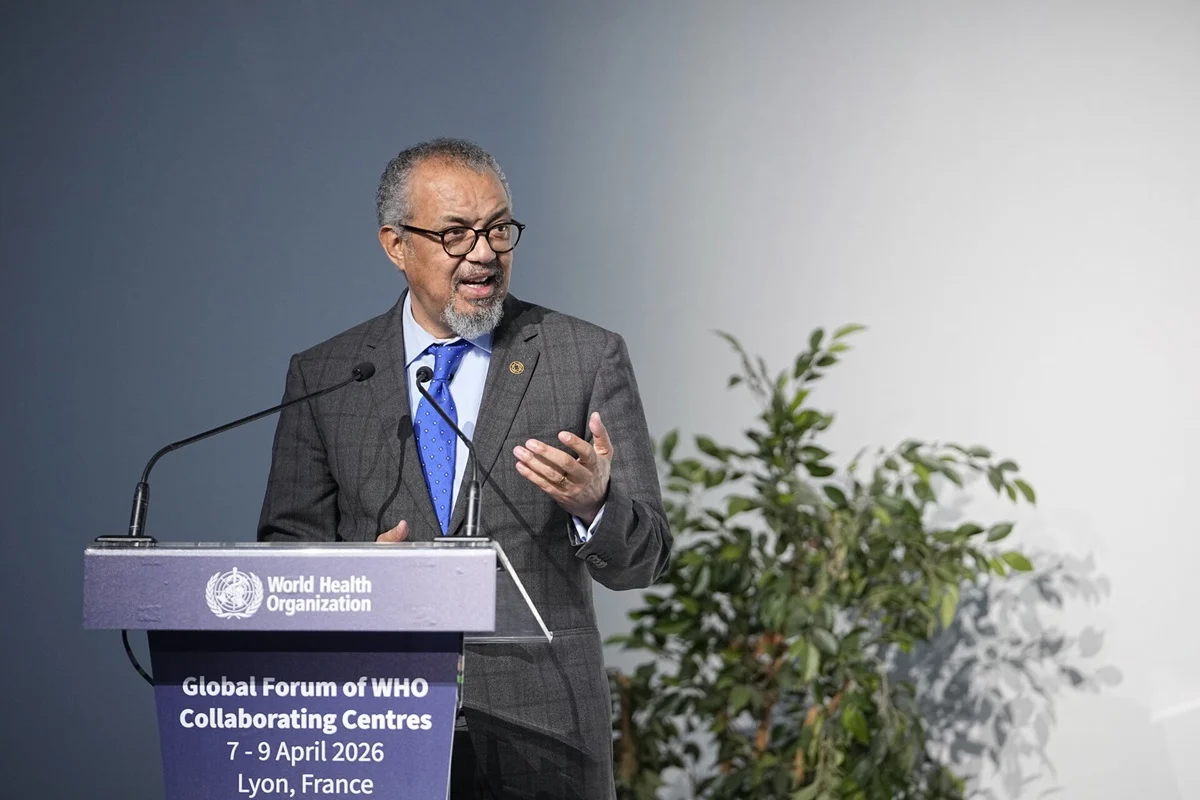
The World Health Organization (WHO) has officially inaugurated the first Global Forum of Collaborating Centres, marking a pivotal moment in the history of international public health cooperation. This landmark assembly brings together a massive network of more than 800 institutions from over 80 countries, representing one of the most extensive and diverse scientific alliances ever coordinated under a single global mandate. The forum, designed to unify disparate research efforts and technical expertise, serves as a strategic response to the increasingly complex and fragmented nature of the modern global health landscape. By convening this vast array of academic, technical, and research-based institutions, the WHO aims to transition its collaborative framework from a collection of isolated scientific projects toward a more dynamic, integrated, and responsive global partnership.
The conclusion of the forum comes at a time when the international community faces a dual reality: the emergence of unprecedented health threats and a simultaneous decline in traditional global health financing. Scientists and policymakers at the meeting emphasized that while the world is currently grappling with geopolitical instability and economic pressures, these challenges also provide a unique catalyst for innovation. The consensus reached at the forum underscores a renewed commitment to "standing with science," a mantra that is expected to guide the WHO’s strategic direction as it approaches its next decade of operations.
The Evolution of a Global Scientific Network
The WHO Collaborating Centres (CCs) are not a new phenomenon; rather, they are rooted in the very DNA of the World Health Organization’s constitutional functions. The concept was formalized in 1949 during the Second World Health Assembly. At that time, the burgeoning organization faced a critical choice: whether to build its own centralized laboratories and research institutes or to leverage the existing expertise scattered across the globe. The Assembly chose the latter, establishing a precedent that the WHO should advance health research not by duplicating efforts, but by coordinating, supporting, and harnessing the technical capacity of the world’s leading institutions.
Over the past 77 years, this network has grown from a handful of European and North American laboratories into a global powerhouse of technical knowledge. Today, the 800-plus centres provide the WHO with a decentralized intelligence network that covers nearly every aspect of human health, from infectious disease control and mental health to food safety and occupational health. These centres are not merely advisory bodies; they are functional extensions of the WHO’s technical departments, responsible for setting global norms, developing international standards, and conducting the primary research that informs global health policy.
Strategic Initiatives: Addressing Disease X and CORC
A central theme of the Global Forum was the proactive management of future health crises. The WHO utilized the platform to detail the expansion of its community of collaborating centres to confront emerging threats with greater unity. A cornerstone of this expansion is the creation of the Collaborative Open Research Consortia (CORC). This initiative is designed to link thousands of scientists worldwide into specialized networks that can be activated instantly in the event of a public health emergency.
The mission of CORC is particularly focused on "Disease X"—the placeholder term used by the WHO to describe an unknown pathogen that could potentially cause a future pandemic. By establishing these consortia now, the WHO is building a framework for scientific readiness that bypasses the bureaucratic delays often seen during the early stages of an outbreak. The goal is to accelerate the development of vaccines, diagnostics, and therapeutics through open-access data sharing and pre-arranged research protocols. This "ready-state" science ensures that when a new pathogen emerges, the global scientific community is not starting from scratch but is instead activating a pre-tested engine of innovation.
Integrating One Health and World Health Day 2026
The Global Forum was strategically aligned with the international One Health Summit, reflecting a shift in how the WHO views the intersection of human, animal, and environmental health. The "One Health" approach recognizes that the health of people is closely connected to the health of animals and our shared environment. Many of the collaborating centres involved in the forum specialize in zoonotic diseases—illnesses that jump from animals to humans—which account for the majority of new and emerging infectious diseases.
Furthermore, the forum serves as a cornerstone for the World Health Day 2026 campaign. Under the theme "Together for health. Stand with science," the WHO is launching a multi-year effort to rebuild public trust in scientific institutions. This is a direct response to the rise of misinformation and the politicization of health data observed during the COVID-19 pandemic. By highlighting the work of the Collaborating Centres, the WHO hopes to demonstrate the tangible benefits of international scientific cooperation and the rigorous evidence-based processes that protect populations.
Official Perspectives on Scientific Diplomacy
The leadership of the WHO has been vocal about the untapped potential of this network. Dr. Tedros Adhanom Ghebreyesus, WHO Director-General, described the network as an "immensely valuable but under-utilized resource." He noted that the collaborating centres represent a powerful demonstration of international cooperation, particularly in a world where multilateralism is often under strain. According to Dr. Tedros, these institutions are the primary vehicles for translating abstract scientific evidence into life-saving actions at the country level, thereby strengthening national health systems.
Echoing this sentiment, Dr. Sylvie Briand, WHO Chief Scientist, emphasized that science remains the core of all health protection efforts. She characterized the network as an "extraordinary concentration of scientific expertise and public health leadership." In her address, Dr. Briand argued that in an era of growing global challenges—ranging from climate change to antimicrobial resistance—this spirit of trusted scientific collaboration is no longer just a "value-add" but an absolute necessity for the survival of global health security.
Data and Economic Implications of the CC Network
The enrichment of the WHO’s scientific foundation through these centres also has significant economic implications. As global health financing faces scrutiny and reductions in several key donor nations, the "in-kind" contributions of the Collaborating Centres have become indispensable. While the WHO provides the framework and coordination, the participating institutions—which include prestigious universities like Johns Hopkins, the London School of Hygiene & Tropical Medicine, and the University of Tokyo, alongside specialized institutes in the Global South—provide the manpower, laboratory facilities, and local data.
Internal WHO data suggests that the collective research output and technical services provided by these 800 institutions would cost billions of dollars if the WHO were to attempt to replicate them internally. By maintaining this network, the WHO operates as a "force multiplier," using a relatively small administrative budget to direct a global research enterprise. This model is increasingly seen as the most sustainable way to manage global health in a resource-constrained environment.
Analysis of Global Health Implications
The convening of the Global Forum signals a shift in the WHO’s role from a traditional top-down health authority to a central hub of a decentralized scientific ecosystem. This evolution is critical for several reasons:
- Resilience Against Geopolitical Fragmentation: As nations become more inward-looking, the Collaborating Centres maintain "track-two" scientific diplomacy, ensuring that data flows across borders even when political relations are strained.
- Capacity Building in the Global South: The WHO is actively seeking to expand the number of CCs in low- and middle-income countries. This decentralization of expertise helps ensure that global health standards are not just "Western-centric" but are applicable and effective in diverse socioeconomic contexts.
- Rapid Response Capabilities: The transition from rigid, long-term projects to dynamic partnerships allows the WHO to pivot its technical resources quickly. If a localized outbreak occurs, the WHO can immediately tap into the specific CCs that have the most relevant regional and technical expertise.
Looking Ahead: The Road to 2027
The forum concluded with the announcement that the next Global Forum of Collaborating Centres will be held in 2027. This three-year interval is intended to allow the newly formed consortia, such as CORC, to establish their operations and produce preliminary results. The intervening years will also be used to further digitize the network, creating a "Global Health Science Cloud" that allows for real-time collaboration between researchers in different time zones.
As the world prepares for the challenges of the late 2020s, the WHO’s move to formalize and strengthen its scientific network suggests a long-term strategy of "resilience through collaboration." By anchoring its operations in the world’s leading scientific institutions, the WHO is attempting to insulate global health from the whims of political cycles and funding fluctuations. The success of this initiative will ultimately be measured by the world’s ability to detect and contain the next "Disease X" before it reaches pandemic proportions—a task that, as the forum participants agreed, no single nation or organization can achieve alone.
