
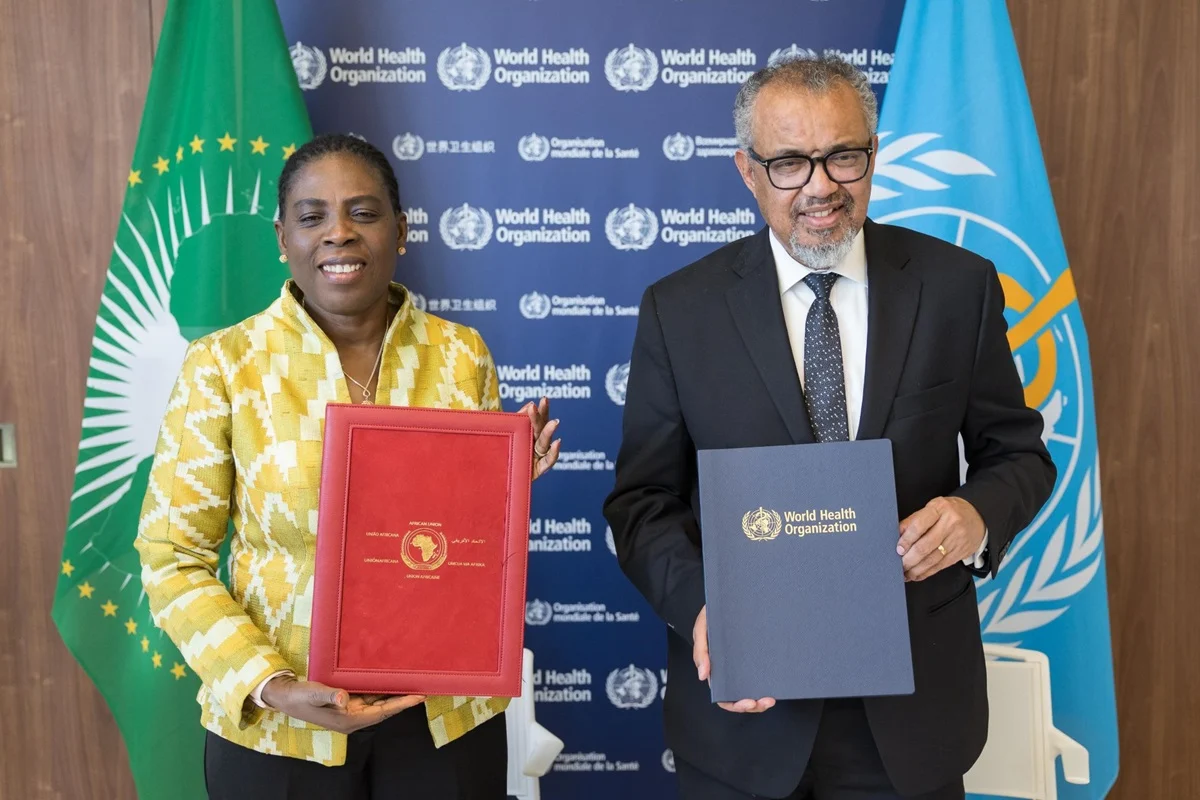
The World Health Organization (WHO) and the African Union (AU) Commission have officially renewed their long-standing strategic partnership, signing an updated Memorandum of Understanding (MoU) on the sidelines of the 78th World Health Assembly in Geneva. This landmark agreement arrives at a juncture defined by complex global financial instability and a shifting geopolitical landscape, reinforcing a shared commitment to universal health coverage, enhanced regional health security, and the attainment of sustainable development goals across the African continent. By formalizing this updated cooperation framework, both organizations aim to transition African health policy from a reliance on fluctuating bilateral aid toward a model of self-reliance and regional institutional strength.
Historical Context and the Evolution of the Partnership
The relationship between the WHO and the African Union has matured significantly since the landmark 2019 Memorandum of Understanding. That initial agreement served as the foundation for institutionalizing cooperation, focusing primarily on pandemic preparedness and basic health infrastructure. However, the global landscape has undergone a radical transformation in the years since, driven largely by the existential shocks of the COVID-19 pandemic, which exposed the vulnerabilities of fragmented health systems and the inequities inherent in global medical supply chains.
The 2024 renewal is not merely a bureaucratic continuation but a strategic recalibration. Historically, health interventions in Africa were often characterized by vertical, donor-driven initiatives that frequently lacked long-term sustainability. The new MoU seeks to address this by streamlining how WHO technical expertise supports the African Union’s Department of Health, Humanitarian Affairs, and Social Development. This evolution recognizes that the African Union is no longer a peripheral observer in global health but a central architect of its own future, a role bolstered by the organization’s recent admission to the G20.
Chronology of Cooperation: From 2019 to 2024
To understand the weight of this renewed agreement, it is necessary to view it through the timeline of recent regional health developments:
- 2019: The original MoU is signed, creating a formal platform for policy alignment and technical exchange between the WHO Regional Office for Africa and the AU Commission.
- 2020–2022: The COVID-19 pandemic serves as a stress test for the partnership. Cooperation intensifies around vaccine procurement, local manufacturing initiatives, and the strengthening of the Africa Centres for Disease Control and Prevention (Africa CDC).
- 2023: The African Union’s G20 membership is confirmed, elevating the continent’s bargaining power in global health financing negotiations.
- May 2024: The 78th World Health Assembly in Geneva serves as the venue for the signing of the updated MoU, signaling a pivot toward "health sovereignty" and away from emergency-response-only frameworks.
The Financial Landscape: Addressing the Aid Dependency Gap
The urgency of this partnership is underscored by a precarious global financial environment. Recent data indicates a concerning trend in bilateral health aid, which has seen stagnation and, in some sectors, significant cuts. According to recent reports from the OECD, official development assistance (ODA) for health has become increasingly volatile as donor nations shift domestic priorities toward internal economic recovery and defense spending.
For African nations, this volatility creates a "health vacuum." The WHO and the AU have identified this as the primary catalyst for the new agreement. By integrating their efforts, they aim to optimize existing resources and prevent the duplication of administrative costs. The shift toward "planning for health sovereignty" is an explicit rejection of the historical model where health budgets were tied to the whims of foreign donor cycles. Instead, the partnership emphasizes the mobilization of domestic resources and the creation of regional regulatory environments that encourage the local production of pharmaceuticals and medical supplies.
Official Statements and Strategic Vision
The signing ceremony, conducted by Her Excellency Ambassador Amma Adomaa Twum-Amoah, Commissioner for Health, Humanitarian Affairs and Social Development, and Dr. Tedros Adhanom Ghebreyesus, WHO Director-General, highlighted the shift in philosophy.
Commissioner Twum-Amoah remarked that the agreement represents more than a logistical update; it represents a cultural shift in how African nations approach health governance. "We need to move from budgeting for survival to planning for health sovereignty," she stated, noting that the AU’s leadership is now essential in ensuring that continental health policy is coherent, inclusive, and resilient.
Dr. Tedros echoed these sentiments, emphasizing the moral and practical necessity of the partnership. "This renewed agreement comes at a critical time, as cuts to bilateral aid imperil the health of millions in Africa," he said. He further articulated that the goal of the WHO is to act as a technical enabler, empowering the AU to manage its own health architecture so that countries can eventually transcend the limitations of traditional aid dependency.
Five Pillars of Collaboration: A Structural Analysis
While the full text of the MoU outlines multiple technical areas, the partnership is defined by five key pillars designed to integrate the strengths of both organizations:
- Universal Health Coverage (UHC): Aligning policy frameworks to ensure that all African citizens have access to essential health services without financial hardship.
- Health Security and Pandemic Preparedness: Establishing a unified, regional early-warning system that bridges the gap between local health facilities and continental response agencies like the Africa CDC.
- Local Pharmaceutical Manufacturing: A core focus on reducing Africa’s reliance on external imports for essential medicines and vaccines by fostering regional manufacturing hubs.
- Strengthening Health Systems: Enhancing the workforce, supply chains, and data infrastructure of member states to create a sustainable foundation for public health.
- Multilateral Advocacy: Using the combined weight of the AU and WHO to advocate for more equitable global health financing and to ensure African health priorities remain on the agenda of international forums like the G20 and the UN General Assembly.
Implications for Global Health Governance
The implications of this agreement extend far beyond the African continent. By consolidating its position, the African Union is setting a precedent for other regional blocs. If the AU successfully demonstrates that a centralized, harmonized approach to health governance can yield better outcomes than fragmented, country-by-country negotiations, it may redefine the model for international cooperation in the Global South.
Furthermore, the partnership reinforces the WHO’s role as the definitive technical authority. In an era where the legitimacy of international organizations is often challenged by populist movements or regional fragmentation, the WHO’s ability to act as a trusted partner to the AU provides a vital anchor for global health stability. The agreement serves as a reminder that technical expertise and political legitimacy are both required to address the modern crises of climate-driven disease, antimicrobial resistance, and pandemic threats.
Challenges Ahead: Implementation and Sustainability
Despite the optimism surrounding the signing, the path to implementation faces significant structural hurdles. The primary challenge remains the mobilization of domestic capital. While the rhetoric of "health sovereignty" is powerful, it requires member states to prioritize health in national budgets—a difficult task in nations currently grappling with high debt-to-GDP ratios and inflationary pressures.
Additionally, the success of this partnership will depend on the effectiveness of the administrative link between the AU Commission and the various WHO regional offices. Historical bottlenecks in communication and the slow pace of bureaucratic integration have, in the past, hindered similar agreements. To succeed, both organizations must move beyond the signing of the MoU to ensure that the technical support promised at the ministerial level reaches the frontline workers at the municipal and regional levels.
Conclusion: A New Chapter for African Public Health
The renewal of the WHO-AU partnership represents a strategic realignment that acknowledges the changing realities of the 21st century. By shifting the focus from crisis management to long-term health system architecture, the organizations are attempting to build a system that is not only more efficient but more equitable.
As the African continent continues to assert its voice in global governance, this collaboration serves as a crucial mechanism for ensuring that health remains a central pillar of Africa’s development agenda. The success of this initiative will be measured not by the signing of documents in Geneva, but by the tangible improvement in health outcomes for citizens across the continent—a metric that both the WHO and the African Union have now explicitly committed to, ensuring that the era of aid dependency is eventually replaced by a sustainable, self-reliant future. The world will be watching as this partnership unfolds, as it offers a blueprint for how regional leadership and global expertise can coalesce to solve the most pressing humanitarian challenges of our time.
