
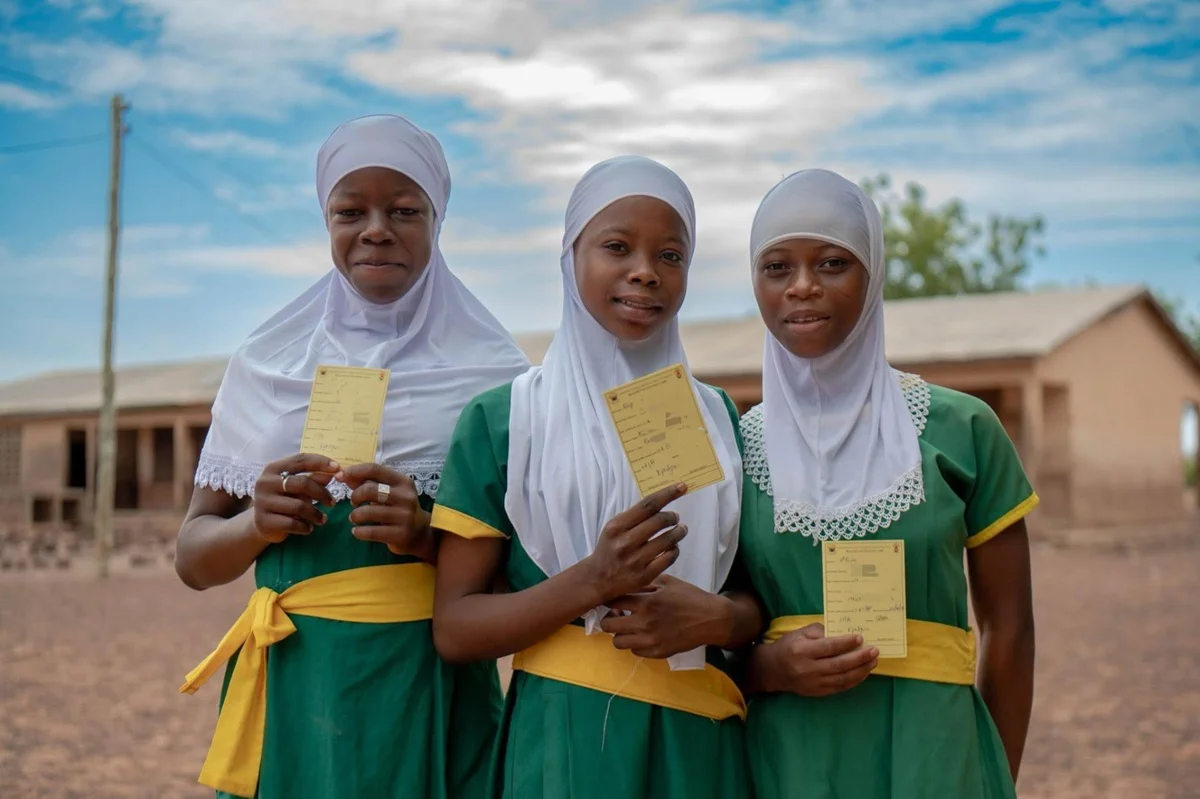
Global health authorities have sounded a clarion call as new data reveals that international efforts to immunize the world’s children have entered a period of concerning stagnation. According to the annual WHO-UNICEF Estimates of National Immunization Coverage (WUENIC) released today, approximately 90 percent of infants globally—representing nearly 116 million children—received at least one dose of the diphtheria, tetanus, and pertussis (DTP) vaccine in 2025. While this figure shows a marginal increase of one percentage point from the previous year, the broader picture remains troubling: global coverage is still one point below the levels recorded in 2019, before the COVID-19 pandemic disrupted health systems worldwide.
The data indicates that while the world has largely recovered from the catastrophic drops in routine immunization seen during the peak pandemic years, progress has leveled off. Since 2009, global vaccination rates for the three-dose DTP series (DTP3), a primary indicator of health service reach, have hovered within a narrow and stubbornly consistent range. In 2025, 85 percent of infants, or 110 million children, completed this full series. This lack of upward momentum suggests that traditional immunization strategies may be reaching their ceiling of effectiveness, even as millions of children remain excluded from basic life-saving interventions.
The Persistence of the Zero-Dose Challenge
One of the most critical metrics tracked by WHO and UNICEF is the number of "zero-dose" children—infants who do not receive a single dose of any vaccine during their first year of life. In 2025, an estimated 13.5 million children fell into this category. While this is an improvement of roughly 750,000 children compared to the previous year, the gain is being undermined by a parallel rise in "dropout" rates. These are children who begin their vaccination schedule but fail to complete it.
The majority of these zero-dose and under-vaccinated children reside in lower-income countries where national immunization programs are supported by Gavi, the Vaccine Alliance. The data suggests a growing fragility in the "middle" of the vaccination pipeline. Globally, an estimated 7.3 million infants received their first DTP dose but dropped out of the system before they could receive their first dose of the measles vaccine. This gap in retention is a primary driver of the current measles crisis.
The Measles Crisis and the 95 Percent Threshold
The failure to maintain high coverage rates has had immediate and deadly consequences, particularly regarding measles. As one of the most contagious viruses known to science, measles requires a 95 percent vaccination coverage rate to achieve herd immunity and prevent community outbreaks. The 2025 data shows the world is significantly short of this target, with coverage for the first dose of the measles-containing vaccine (MCV1) at 84 percent and the second dose (MCV2) at a mere 77 percent.
This deficit in coverage has led to a surge in viral activity. In 2025 alone, 57 countries reported large or disruptive measles outbreaks. These outbreaks do not only claim lives; they strain already fragile health systems, divert resources from other essential services, and cause long-term disability in survivors. Health experts warn that as long as coverage remains stalled in the low 80s, the world will remain in a state of perpetual vulnerability to measles resurgence.
A Chronology of Recovery and Stagnation
To understand the 2025 figures, one must look at the trajectory of global health over the last two decades. From 2000 to 2010, the world saw a dramatic expansion in immunization services, driven by the formation of Gavi and increased domestic health spending in emerging economies. However, by 2011, the rate of improvement began to slow.
The COVID-19 pandemic in 2020 caused the largest sustained backslide in childhood vaccinations in thirty years. The years 2021 and 2022 were characterized by "The Great Catch-Up," a global effort to restore services. By 2024, many regions had clawed back to near-2019 levels. However, the 2025 data confirms that the momentum of this recovery has dissipated. We are no longer in a "recovery" phase; we are in a period of "stagnation," where the "easy to reach" populations are protected, but the "hard to reach" remain consistently neglected.
Regional Disparities: Leaders and Laggards
The 2025 WUENIC report highlights a stark divergence in regional performance. The Americas and South-East Asia have emerged as the primary success stories, having fully recovered from pandemic-era declines. South-East Asia, in particular, has now become the highest-performing region globally, a testament to sustained political will and community-level engagement in countries like India and Indonesia.
In contrast, other regions are struggling to regain their footing:
- Africa and the Eastern Mediterranean: While these regions saw modest gains in 2025, their overall coverage remains below 2019 levels. Persistent conflict and rapid population growth continue to outpace the expansion of health services.
- Europe: Despite high baseline coverage, the region has not fully returned to its pre-pandemic performance, partly due to localized disruptions and shifting public sentiment.
- Western Pacific: In a concerning trend, the Western Pacific region experienced a decline in 2025, leaving it further below its 2019 baseline than any other region. This decline is attributed to a combination of policy shifts and health system fatigue in several large nations.
Conflict and Fragility as Barriers to Progress
The report underscores that geography is often destiny when it comes to vaccination. More than half of all zero-dose children live in "fragile, conflict-affected, or vulnerable" (FCV) settings. These areas account for only one-third of the world’s child population but a disproportionate share of those left behind. In these environments, political upheaval, physical insecurity, and chronic underfunding make the delivery of vaccines nearly impossible.
The volatility of these settings is illustrated by the contrasting cases of Syria and Sudan. In Syria, ongoing instability led to a 6-percentage-point drop in DTP1 coverage and a 12-point drop in MCV1 in just one year. Conversely, Sudan recorded the largest single-country gain globally in 2025. Despite being embroiled in conflict, Sudan managed to increase DTP1 coverage by 35 percentage points and MCV1 by 22 points. This anomaly demonstrates that with targeted international support and local humanitarian corridors, immunization is possible even in the most dire circumstances.
The Rising Threat of Vaccine Hesitancy in High-Income Nations
Progress is not only being lost in war zones. In middle- and high-income countries, the challenge is increasingly behavioral and political rather than logistical. Even where vaccines are free and readily accessible, coverage is slipping.
South Africa, for instance, has seen a staggering 20-percentage-point decline in DTP1 coverage since 2019, a trend that continued into 2025. Similarly, Bosnia and Herzegovina, which celebrated significant gains in 2024, suffered a 23-point drop in MCV1 coverage over the past year. These fluctuations are often tied to rising vaccine hesitancy, fueled by misinformation, and a decline in public trust in government institutions.
Official Responses and the Call for Action
Leadership from the reporting agencies expressed a mixture of pride in the recovery and deep concern for the future.
"Governments and health workers have helped global vaccination rates bounce back after dropping significantly during the COVID-19 pandemic," said UNICEF Executive Director Catherine Russell. "But millions of vulnerable children are still being left unprotected due to conflict, displacement, and poverty. We must reach every child, and we must rebuild trust where it is fraying."
Dr. Tedros Adhanom Ghebreyesus, WHO Director-General, emphasized the ethical and economic necessity of immunization. "Every child, whether born into wealth or poverty, peace or conflict, deserves the lifegiving protection that vaccines provide," he stated. "Immunization is one of the most cost-effective, most equitable, and most reliable interventions for protecting children’s health. Our greatest security begins with ensuring that everyone is protected from deadly diseases."
Dr. Sania Nishtar, CEO of Gavi, the Vaccine Alliance, noted the historical achievements while warning of a looming "funding cliff." As Gavi enters a new five-year strategic period, she noted that geopolitical uncertainty and international budget constraints pose a significant threat to maintaining current coverage levels.
The Data Crisis: A Blind Spot for Global Health
Perhaps the most alarming finding in the 2025 report is the degradation of the data systems used to track immunization. To effectively target interventions, health agencies rely on national immunization surveys. However, only 18 such surveys were submitted this year—a sharp decline from 50 in 2024 and an average of 33 per year in the late 2010s.
Cuts to international health financing have begun to hollow out the technical infrastructure required for surveillance. Without accurate, real-time data, health agencies are "flying blind," unable to identify exactly where outbreaks are likely to occur or where zero-dose children are concentrated. This weakening of data systems is a precursor to backsliding, as it prevents the early detection of declining coverage.
Broader Implications and the 2030 Agenda
The current trajectory puts the world at odds with the Immunization Agenda 2030 (IA2030). This global strategy aims to reduce the number of zero-dose children by 50 percent by the end of the decade. Currently, the world is off track to meet this goal.
The implications of this failure extend beyond health. Vaccination is a foundational component of primary healthcare. When immunization programs fail, it is often a "canary in the coal mine" for the collapse of other essential services, such as maternal care and nutrition programs. Furthermore, the economic cost of treating preventable diseases and managing outbreaks far exceeds the investment required for vaccination.
To correct this course, WHO and UNICEF are calling for a renewed commitment to three pillars:
- Sustainable Financing: Protecting international and domestic health budgets from further cuts.
- Political Will: Prioritizing routine immunization in national development agendas, even amidst political transitions.
- Community Trust: Investing in local health workers who can address hesitancy through culturally sensitive communication.
As the 2025 data shows, the "lifegiving protection" of vaccines is currently a matter of geography and stability. Until the global community can bridge the gap between the 85 percent who are reached and the 15 percent who are missed, the threat of preventable epidemics will continue to loom over the world’s most vulnerable populations.
