

Hyaluronic acid (HA), alongside its closely related derivative sodium hyaluronate, stands as a cornerstone ingredient in contemporary skincare and makeup formulations, revered for its unparalleled hydrating capabilities. This ubiquitous molecule is not merely a cosmetic additive but a vital component naturally present throughout the human body, with a particularly high concentration found within the extracellular matrix—the intricate scaffold that provides structural support and cohesion to skin cells. Distributed across both the superficial epidermis and the deeper dermis, hyaluronic acid plays a multifaceted role critical to skin health, including maintaining optimal hydration, facilitating metabolic processes, aiding in skin repair mechanisms, and offering crucial protection against environmental aggressors such as free radicals and ultraviolet (UV) radiation.
At its core, hyaluronic acid is classified as a glycosaminoglycan, a complex carbohydrate polymer characterized by its remarkable capacity to bind and retain water molecules. This exceptional hygroscopic property stems from its highly polar nature, which enables it to attract and hold onto water with remarkable efficiency. This inherent ability is fundamental to HA’s function in keeping the skin firm, plump, and resilient. For many years, it was widely believed that a significant decrease in the skin’s hyaluronic acid content contributed directly to the visibly thinner and drier appearance associated with aged skin. However, more recent and refined scientific research has offered a nuanced understanding, suggesting that while the total quantity of hyaluronic acid in the skin may not drastically diminish with chronological aging, its distribution within the skin undergoes changes. These redistributions are influenced by both intrinsic aging processes and extrinsic factors, particularly environmentally induced skin damage, collectively impacting the skin’s overall hydration and structural integrity.
The integration of hyaluronic acid into skincare formulations primarily leverages its extraordinary moisture-retaining prowess. It is widely incorporated into a diverse range of products, including moisturizers, serums, and masks, functioning as a potent humectant. Humectants are substances designed to attract water from the atmosphere and the deeper layers of the skin, drawing it into the stratum corneum (the outermost layer of the skin) to enhance hydration. A direct consequence of adequately hydrated skin is a noticeable improvement in its texture and appearance. Dehydrated skin often manifests as fine lines, wrinkles, and a dull complexion. By effectively plumping the skin with moisture, hyaluronic acid can dramatically reduce the visibility of these signs, imparting a smoother, more supple, and significantly more youthful and less fatigued look. While glycerin is another widely recognized and more economically accessible humectant, it can sometimes impart a sticky or heavy sensation on the skin. Hyaluronic acid is frequently combined with glycerin in formulations to achieve optimal hydration benefits while simultaneously enhancing the product’s aesthetic feel, resulting in a lighter and more comfortable application.
The efficacy and behavior of hyaluronic acid in skincare products are not uniform across all formulations, largely owing to variations in its molecular weight. HA is typically categorized into different molecular sizes: high molecular weight (HMW) hyaluronic acid, characterized by its larger molecular structure, and low molecular weight (LMW) hyaluronic acid, which consists of smaller fragments obtained by enzymatic or chemical degradation. The nomenclature on ingredient lists can sometimes be a clue; "sodium hyaluronate" generally indicates smaller molecular fragments compared to "hyaluronic acid," although even within these designations, a spectrum of molecular sizes exists. The fundamental distinction between these sizes lies in their ability to penetrate the skin. Smaller molecules, by virtue of their reduced size, are capable of traversing the skin barrier more effectively than larger molecules. Consequently, low molecular weight hyaluronic acid can deliver hydration to deeper epidermal layers, whereas high molecular weight hyaluronic acid tends to form a moisturizing film on the skin’s surface, providing immediate hydration and reducing transepidermal water loss.
The discussion surrounding low molecular weight hyaluronic acid also encompasses its potential role as an inflammatory signal. While the term "inflammatory" often carries negative connotations, it is crucial to recognize that inflammation is a complex biological process that is not inherently detrimental; in many contexts, it is a vital part of the body’s protective and healing responses. Research into LMW HA has indicated its capacity to modulate cellular responses, potentially acting as a signaling molecule. Studies conducted on skin and skin cells have demonstrated that low molecular weight hyaluronic acid can significantly enhance the skin’s intrinsic ability to repair itself, bolster its defense mechanisms against microbial incursions, and offer therapeutic benefits for specific skin conditions, such as seborrheic dermatitis. While further comprehensive research is warranted to fully elucidate its effects on normal, healthy skin, the existing evidence suggests a more nuanced and potentially beneficial role beyond mere hydration. Nevertheless, it is important to temper expectations: topical application of hyaluronic acid, even in its low molecular weight form, primarily provides surface and lower epidermal hydration. It does not directly replenish the body’s natural endogenous hyaluronic acid stores, which are maintained through complex biosynthetic pathways within the body. Its primary benefit remains its exceptional hydrating capacity, which, in turn, supports overall skin barrier function, with ancillary anti-inflammatory and antioxidant activities contributing to its overall efficacy.
The sourcing of hyaluronic acid for cosmetic products also presents an important consideration for consumers. Historically, and still to some extent today, one significant source of hyaluronic acid has been animal-derived, specifically from rooster combs. These structures are notably rich in hyaluronic acid, containing approximately 15 times the concentration found in human skin. For individuals adhering to vegetarian or vegan lifestyles, or those with ethical concerns regarding animal-derived ingredients, this necessitates careful scrutiny of product ingredient lists and manufacturer sourcing policies. However, a predominant and increasingly preferred method of producing hyaluronic acid today is through biofermentation, a process involving the microbial fermentation of sugars by specific bacterial strains. This biotechnological approach yields a high-purity, animal-free hyaluronic acid, making it suitable for a broader consumer base and aligning with growing demands for ethical and sustainable ingredient sourcing in the beauty industry.
Beyond its widespread use in topical skincare, hyaluronic acid boasts a diverse array of applications across various fields. In the realm of makeup, particularly in skin-smoothing primers, dehydrated hyaluronic acid spheres are innovatively employed. These dry, microscopic spheres are typically incorporated into anhydrous (water-free) formulations. When applied to the skin, these spheres settle into fine lines, wrinkles, and pores. Upon contact with moisture from the skin and ambient air, the hyaluronic acid spheres begin to absorb water and swell, physically plumping up the skin and effectively blurring imperfections, thereby creating a smoother canvas for makeup application.
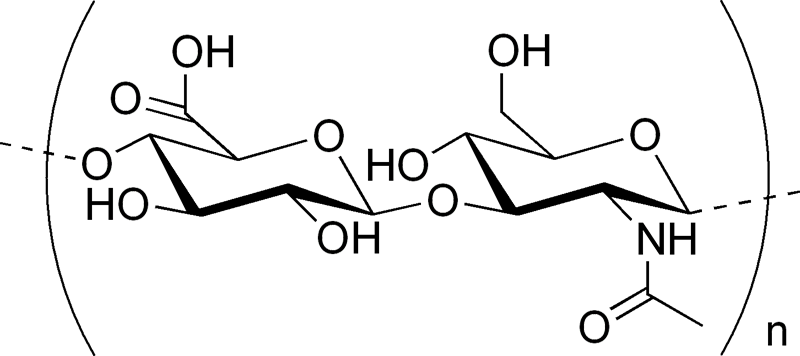
In the broader medical and cosmetic landscape, chemically modified hyaluronic acid forms the basis of many injectable dermal fillers. Brands such as Juvéderm, Restylane, and Voluma utilize HA to restore volume, plump deep wrinkles, augment lips, and sculpt facial contours. These fillers work by injecting a gel-like form of HA directly into the skin, where it binds water and adds immediate volume. The effects are temporary, typically lasting several months to over a year, as the body gradually metabolizes the HA. Hyaluronic acid has also been explored in more controversial applications, such as Macrolane, a filler previously used for breast and buttock enhancement, highlighting the versatility and potential, as well as the ethical considerations, of this molecule. Medically, HA is also critical in ophthalmology, used in eye drops for dry eyes and as a viscoelastic agent in cataract surgery, and in orthopedics, where it is injected into joints to lubricate and reduce pain in osteoarthritis patients.
Oral supplements containing hyaluronic acid are available in nutrition stores, marketed with claims of improving skin hydration and joint health from within. However, the scientific evidence supporting these claims remains largely inconclusive. A significant challenge lies in demonstrating that ingested hyaluronic acid can effectively survive the digestive process, be absorbed into the bloodstream in a bioactive form, and subsequently reach target tissues like the skin or joints in sufficient concentrations to elicit a measurable benefit. The large molecular size of HA raises questions about its bioavailability when taken orally, leading to ongoing skepticism within the scientific community regarding the efficacy of such supplements.
The global market for hyaluronic acid has witnessed substantial growth over the past decade, driven by increasing consumer awareness of its benefits and the proliferation of HA-infused products across various sectors. Industry reports indicate that the global hyaluronic acid market was valued at several billion dollars in recent years, with projections estimating continued robust growth at a compound annual growth rate (CAGR) of approximately 7-10% through the next decade. This expansion is fueled by rising demand in cosmetics, pharmaceuticals, and nutraceuticals, underscoring HA’s transition from a niche ingredient to a mainstream staple. The beauty industry, in particular, has capitalized on HA’s hydrating prowess, with consumers actively seeking products that promise plump, youthful, and well-moisturized skin. This surge in demand has also propelled innovations in HA delivery systems and molecular modifications, aiming to enhance penetration and efficacy.
Navigating the vast array of hyaluronic acid products available requires an informed approach. Consumers are advised to look beyond marketing claims and consider the ingredient list, paying attention to the forms of HA used (e.g., sodium hyaluronate, hydrolyzed hyaluronic acid) which can indicate different molecular weights. Reputable brands often provide transparency regarding the molecular weight distribution of their HA to help consumers choose products tailored to their specific skin concerns. For instance, those seeking surface hydration and barrier support might benefit from HMW HA, while individuals targeting deeper hydration or mild repair might opt for products featuring LMW HA.
It is also critical to approach scientific claims with a discerning eye. A notable instance of this involves a long-standing "fun fact" circulated within both popular and some scientific literature: the assertion that "1 gram of hyaluronic acid can hold onto 6 liters of water." This claim, while evocative, has been rigorously investigated and largely debunked. As noted in corrections by various scientific bodies, including an analysis by Borchers and Pirrung in the Journal of Cosmetic Science, the original source cited for this specific statistic often lacked a verifiable reference, proving it to be an example of how misinformation can propagate even within respected academic circles. While hyaluronic acid undoubtedly possesses an extraordinary water-binding capacity—far exceeding that of most other humectants—the precise magnitude of this capacity is subject to various factors including molecular weight, concentration, and environmental conditions. This highlights the importance of critical evaluation of scientific claims, particularly those presented as general knowledge or tangential facts, and encourages skepticism even when presented in otherwise credible publications.
Looking ahead, research into hyaluronic acid continues to evolve. Scientists are exploring novel ways to enhance its stability, improve its delivery into specific skin layers, and investigate new therapeutic applications. Innovations in encapsulation technologies and cross-linking techniques aim to maximize its benefits and extend its longevity in both cosmetic and medical contexts. The development of new HA derivatives with tailored properties for specific biological interactions also represents a promising avenue.
In conclusion, hyaluronic acid has cemented its status as an indispensable molecule, extending its influence from fundamental biological processes within the human body to a wide spectrum of applications in modern medicine and cosmetics. Its remarkable ability to attract and retain moisture is central to its efficacy, making it a powerful agent for skin hydration, repair, and protection. While its role in skincare primarily revolves around its humectant properties, its diverse molecular forms, ethical sourcing considerations, and extensive applications in injectables, makeup, and other medical fields underscore its enduring significance. As scientific understanding progresses, hyaluronic acid is poised to remain at the forefront of innovation, continually redefining standards in health and beauty.
