
The widespread belief that hair needs "hydration" from products to be healthy and beautiful is a deeply ingrained concept within the beauty industry and among consumers alike. Yet, the scientific community holds a more nuanced, and often contradictory, perspective on the interaction between water and hair. Far from being a simple elixir, water’s role in hair health is complex, challenging common marketing narratives and requiring a re-evaluation of how we approach hair care. This article delves into the actual science, dispelling myths and clarifying how water truly impacts hair’s structure, strength, and appearance.
The Pervasive Myth of "Hydrated Hair"
For decades, beauty marketing has championed "hydrating" hair products, leading consumers to believe that infusing hair with water is the key to achieving softness, smoothness, and a "healthy" feel. This narrative is so pervasive that it has become almost an industry-standard, despite scientific findings that often tell a different story. Cosmetic scientists, while understanding the intricacies, frequently encounter commercial pressures that discourage challenging these established consumer perceptions. As one scientist at an industry lecture reportedly put it, explaining the true science is "too hard" and risks alienating consumers who might then seek products from competitors adhering to the popular "hydration" storyline. This underscores a significant challenge in the beauty sector: balancing scientific accuracy with marketability and consumer expectations.
The Molecular Dance: Water and Hair’s Structural Integrity
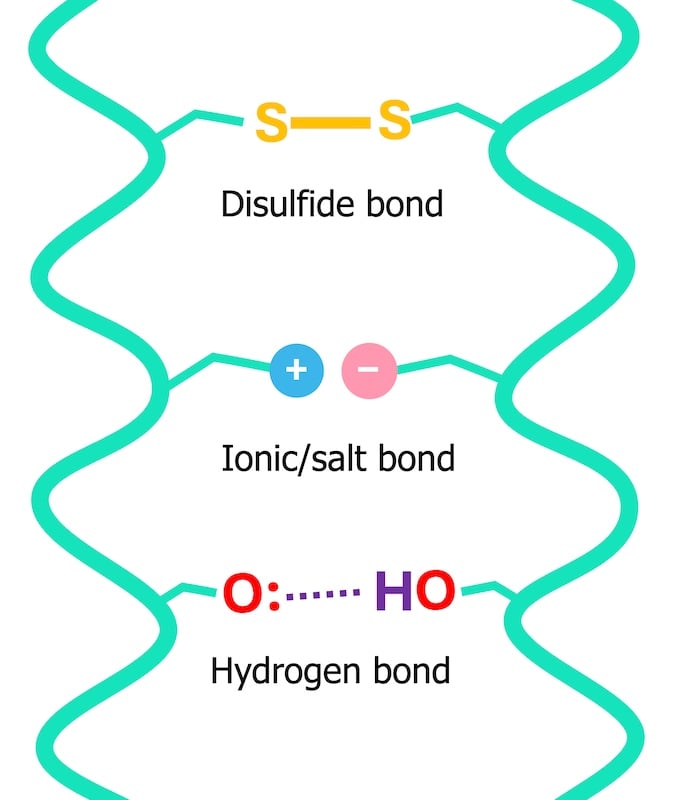
To understand water’s impact, one must first appreciate hair’s fundamental architecture. Hair strands are primarily composed of keratin proteins, which are linked together by various types of chemical bonds that dictate hair’s strength, elasticity, and shape. These bonds fall into two main categories: permanent (disulfide bonds, which are broken and reformed in chemical treatments like perms or relaxers) and temporary (hydrogen bonds and ionic bonds). The temporary bonds are particularly sensitive to water.
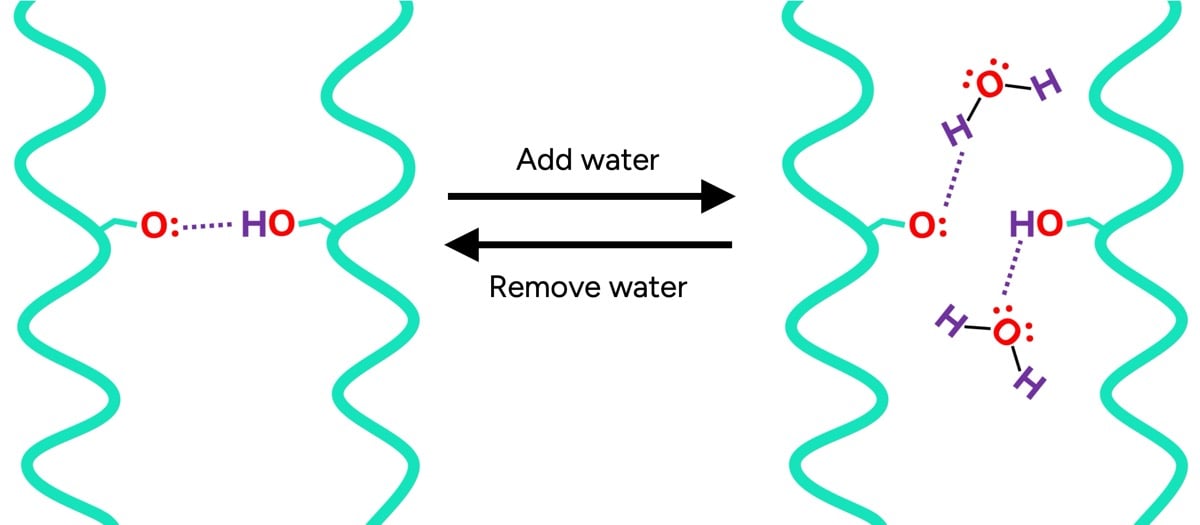
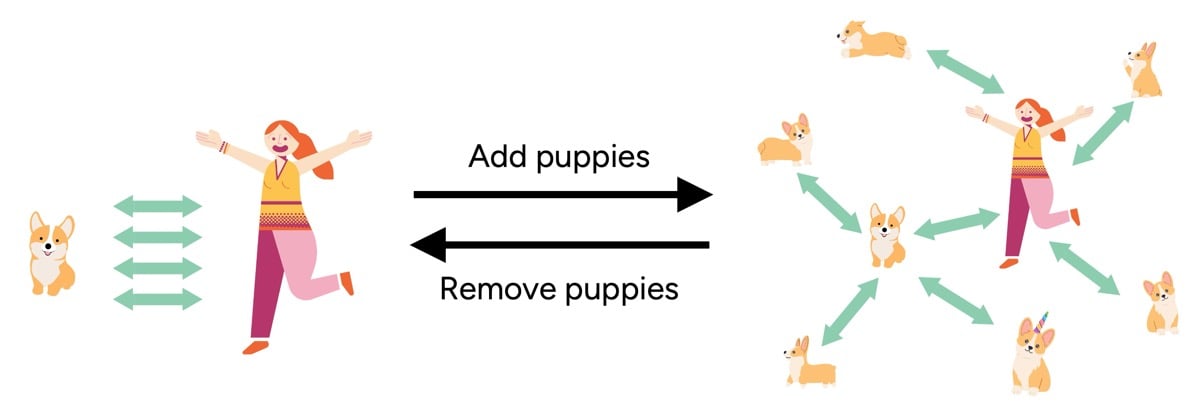
In its dry state, hair’s protein chains are extensively interconnected by these temporary bonds, acting like a molecular "glue" that provides stiffness and structural integrity. However, when water molecules are introduced, they readily form new hydrogen bonds with the hair proteins. This process, known as hydrogen bond disruption, causes the proteins to "hold hands" with water molecules instead of each other. Consequently, the internal structure of wet hair possesses significantly fewer protein-to-protein bonds, rendering it weaker and more pliable. This weakening is not inherently damaging if hair is handled with care, but it fundamentally alters the hair’s mechanical properties. The cortex, the innermost and thickest layer of the hair shaft, is particularly susceptible to this water-induced structural shift.
Detangling Dynamics: Water’s Dual Impact on Hair Types
The alteration in hair’s internal bonding structure by water has direct implications for everyday hair care practices, particularly detangling. Wet hair, with its reduced internal bonds, becomes more elastic and stretchier. This increased flexibility means that while wet, hair is paradoxically more susceptible to mechanical damage if mishandled.
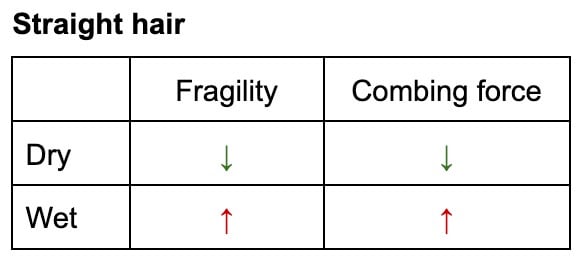
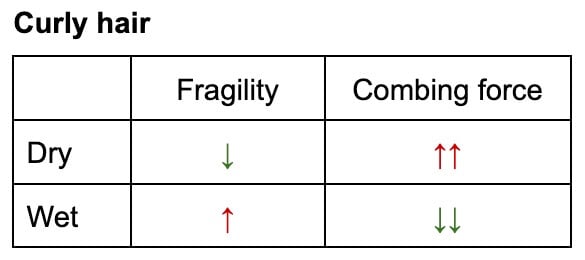
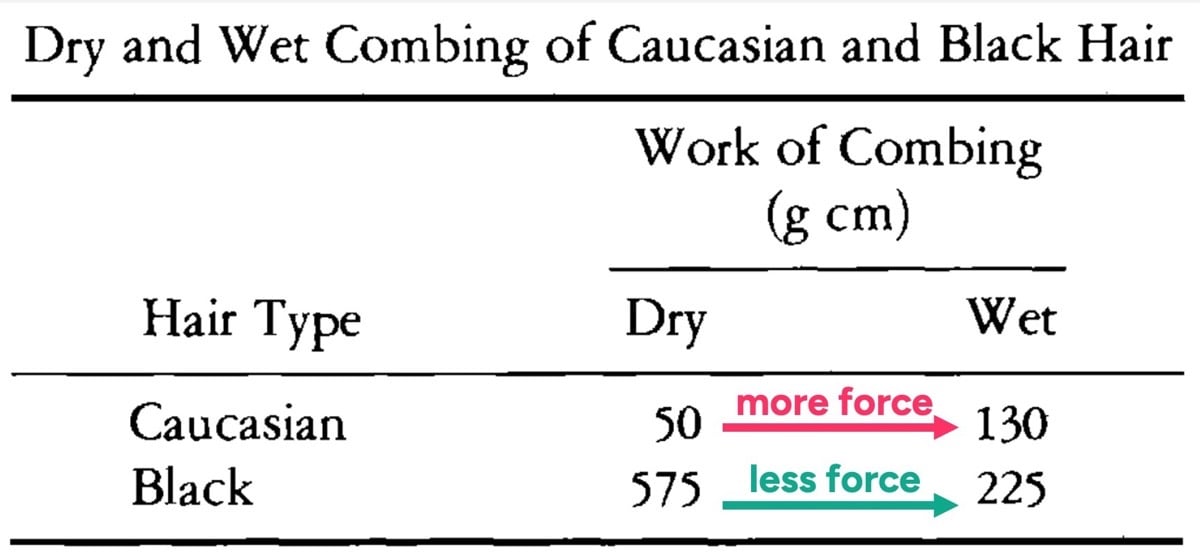
For straight hair, the consensus among hair scientists is that wet detangling can be more damaging. The hair’s shape remains largely the same, but its tensile strength is diminished. Moreover, water creates increased surface friction between individual strands, causing them to stick together more. This combination of reduced strength and increased friction makes combing wet straight hair a higher-risk activity for breakage. Researchers like Epps and Wolfram (1983) have illustrated how even in humid environments, straight hair experiences higher combing forces, indicating increased potential for damage compared to dry conditions.
Conversely, for curly and coily hair types, wet detangling is often less damaging. While the hair is still weaker when wet, the intrinsic spring-like structure of curls means that the "looser" shape when wet allows for less resistance during detangling. The water helps to lubricate the strands, allowing them to glide past each other more easily, reducing the force required to remove tangles. This paradox highlights the importance of understanding individual hair type and structure when developing hair care routines. Regardless of hair type, the application of a good conditioner is crucial. Conditioners create a smooth surface, significantly reducing friction and minimizing the mechanical stress on hair during detangling, whether wet or dry.
Beyond Feel: The Disconnect Between Perception and Reality
One of the most counterintuitive findings in hair science is the discrepancy between how hair feels and its actual water content. Common perception dictates that soft, smooth, and "healthy-feeling" hair is well-hydrated. However, empirical studies reveal the opposite. A notable study cited by Evans (2013) involved 50 individuals rating hair samples with varying water content. A majority perceived hair with lower water content as more moisturized, smoother, less tangled, and less damaged. This suggests that our tactile perception of "hydration" is largely influenced by surface smoothness rather than internal moisture levels.
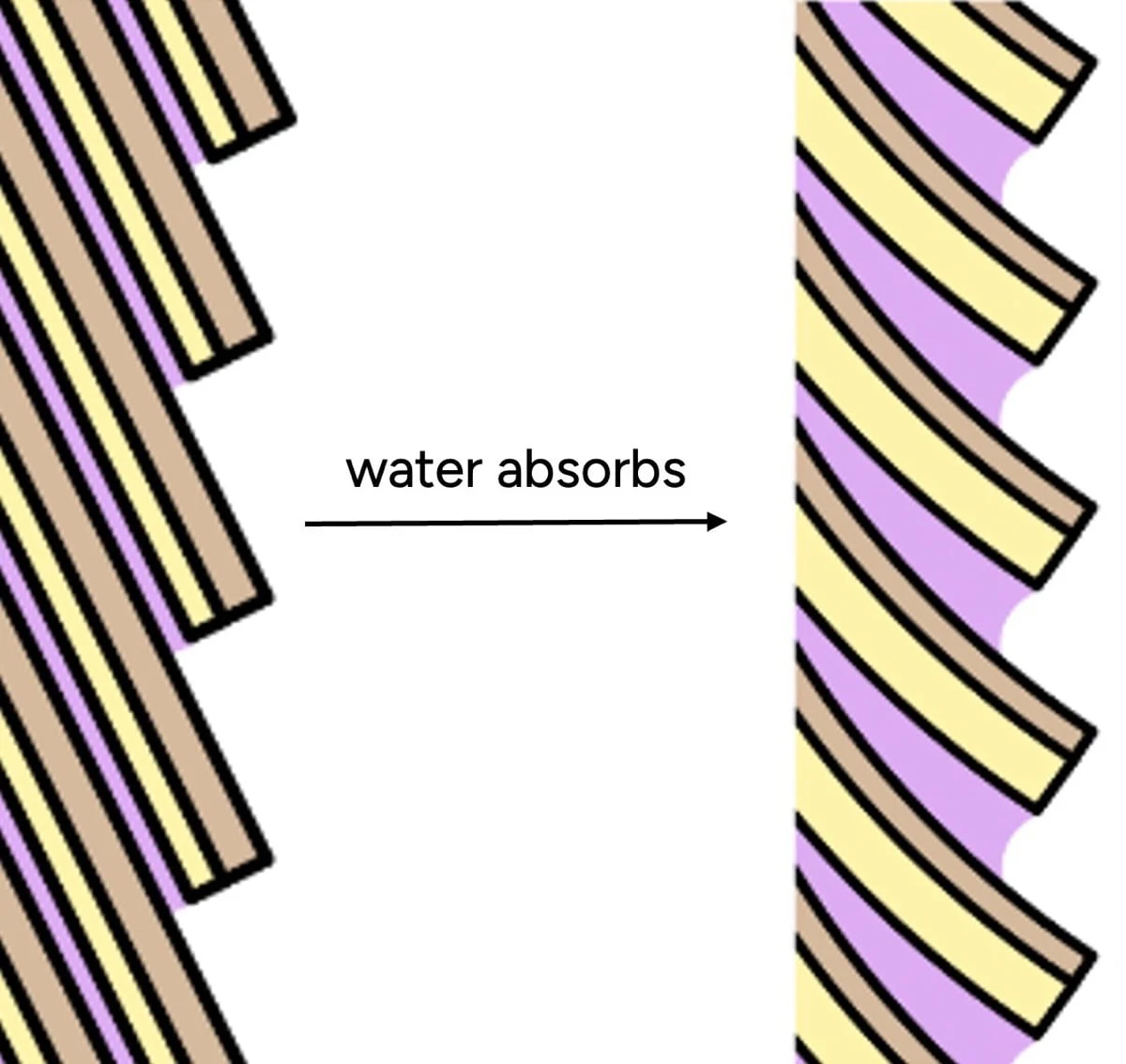
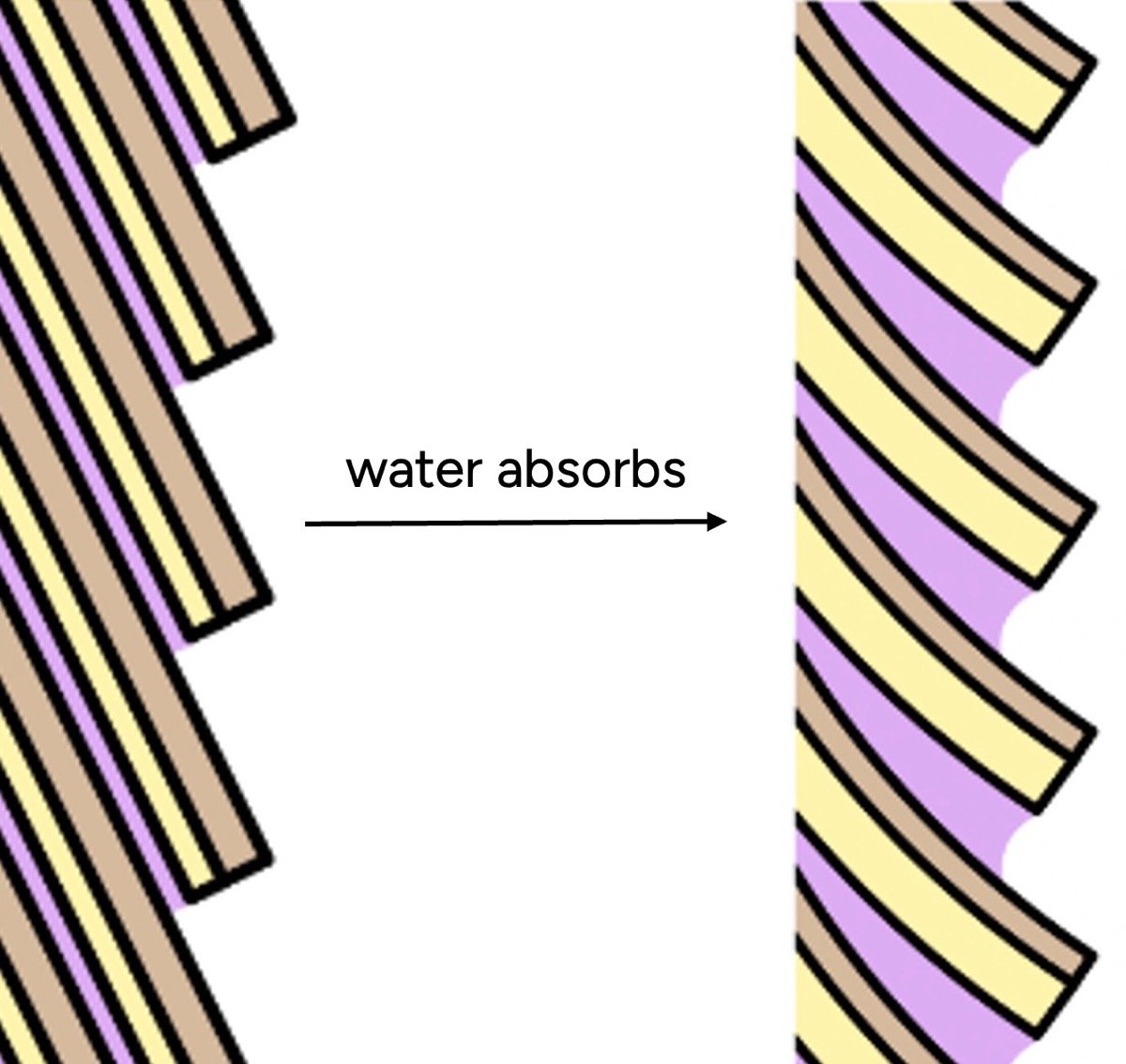
This sensory illusion stems from the behavior of the hair cuticle, the outermost layer composed of overlapping, tile-like scales. In dry hair, these scales lie relatively flat, creating a smooth surface. When hair absorbs water, these cuticle scales swell, but crucially, they do so unevenly. The endocuticle (the inner part of the scale) and the cell membrane complex (the "glue" between scales) absorb significantly more water than the outer parts. This differential swelling causes the scales to lift and protrude, creating a microscopically bumpy and rough surface. Furthermore, water itself is inherently sticky due to surface tension and hydrogen bonding, increasing friction between strands and against the hand. Thus, wet hair, despite containing more water, feels rougher and "drier" to the touch, leading to the misinterpretation that it is lacking moisture.
Unmasking "Hydrating" Products: The Science of Conditioning
Given the scientific reality, how do "hydrating" hair products achieve their lauded effects? The answer lies predominantly in conditioning, not necessarily in increasing the hair’s internal water content. Conditioners are formulated with oily ingredients such as silicones, fatty alcohols, and various emollients. These ingredients deposit a thin, protective film onto the hair’s cuticle. This film serves several critical functions:
- Surface Smoothing: The conditioning agents fill in the microscopic gaps and irregularities caused by lifted cuticle scales, creating a smoother, more uniform surface. This reduces friction and gives hair that coveted soft, silky feel.
- Protection: The film acts as a barrier, shielding the cuticle from environmental stressors and mechanical damage.
- Mimicking the F-Layer: Undamaged hair naturally possesses a protective, oily outer layer known as the F-layer (18-MEA). This layer is easily stripped away by styling, washing, and chemical treatments. Conditioners effectively replicate the function of the F-layer, restoring the hair’s natural lubricity and protective qualities.
While some "hydrating" products might also include humectants (e.g., glycerin, hyaluronic acid), which attract and hold water from the atmosphere, their primary role is to maintain surface moisture rather than to deeply "hydrate" the hair’s core. The perceived benefits are largely a result of enhanced surface properties and reduced friction, rather than an increase in internal water.
The Transformative Power of Water: Resetting Hair’s Shape and Surface
Despite the complexities, water plays a crucial, transformative role in hair care, particularly evident after a thorough wash. The improved feel and appearance of hair post-shampooing and conditioning can be attributed to several key mechanisms:
- Optimal Ingredient Distribution: Water acts as an excellent vehicle for spreading conditioning ingredients evenly across the hair shaft. In a rinse-off conditioner, the abundant water allows for uniform coating, ensuring every strand benefits from the smoothing and protective agents.
- Hair Shape Resetting: Water is remarkably effective at breaking the temporary bonds that hold hair in a styled configuration. Whether it’s heat styling from a curling iron or the natural shape maintained between washes, water causes these bonds to dissolve. As hair dries, new temporary bonds form, allowing the hair to be re-styled into a desired shape or revert to its natural pattern. This explains why humidity can quickly ruin a carefully styled hairdo, as atmospheric moisture infiltrates the hair and disrupts its temporary bonds. The process involves water entering the hair, disrupting these bonds, and then exiting as hair dries, allowing for a new configuration of bonds to form. Washing hair with warm water and shampoo is particularly effective, as heat and surfactants further facilitate water penetration and bond disruption, leaving hair in a "super floppy" state ready for reshaping.
- Enhanced Curl Definition (for Curly/Coily Hair): For textured hair types, water’s surface tension plays a pivotal role in promoting curl clump formation. As wet strands touch, the water coating their surface can "zip" them together through capillary action, aligning them into well-defined curl patterns (a phenomenon known as self-assembly). These larger, aligned clumps present a smoother, cooler surface to the touch when dry, which consumers often mistakenly interpret as "hydration." This tactile sensation is akin to how satin feels cooler and smoother than rougher fabrics, creating a perception of superior condition.
- Microscopic Surface Reset: Rapid or improper drying (e.g., with high heat) can lead to uneven drying and shrinkage of cuticle scales, causing them to buckle or warp. This buckling can also occur if hair is excessively stretched. Soaking hair in water and allowing it to dry naturally or gently can reset these microscopic distortions, allowing the cuticle scales to lie flatter and restore a smoother surface, as demonstrated in research by Gamez-Garcia (2021).
It is important to note that these beneficial effects are primarily about water’s ability to transform hair’s shape and surface characteristics, rather than simply increasing its static water content. The cycle of wetting, shaping, and drying is key.
Achieving Equilibrium: The Ideal Water Content for Hair Health
Just like skin, hair thrives within a "sweet spot" of water content. Too much water, as discussed, leads to weakened internal bonds, cuticle swelling, increased friction, and a rougher feel. This state, often associated with prolonged exposure to high humidity or excessive wetting, makes hair more vulnerable to mechanical damage.
Conversely, hair with too little water also suffers negative consequences:
- Increased Static Build-up: In very low humidity environments (e.g., dry climates, airplanes), hair easily builds up static electricity. This occurs because hair loses electrons when rubbed against other materials, and without sufficient water molecules to dissipate these electric charges, static accumulates, leading to flyaways and frizz.
- Brittleness and Reduced Shock Absorbency: Extremely dry hair is stiff and brittle. The abundance of undisturbed temporary bonds makes the hair less flexible and unable to absorb external forces (like brushing or combing) without forming microscopic cracks. Over time, these cracks propagate, leading to breakage. This phenomenon is readily observable with fingernails, which share similar protein structures with hair; dry nails tend to crack and splinter more extensively when clipped compared to wet, flexible nails. Kamath and Hornby (1985) have researched how different treatments affect the mechanical and fractographic behavior of hair, supporting the idea that ideal water content contributes to resilience.
The ideal water content for hair is a dynamic equilibrium, influenced by environmental humidity and individual hair characteristics. The goal of effective hair care is to maintain hair within this optimal range, ensuring flexibility without excessive weakening, and smoothness without brittleness.
Strategic Hair Care: Managing Water Content for Optimal Results
Understanding the science allows for a more strategic approach to hair care. The aim is not simply to "hydrate" but to manage water interaction for optimal hair properties:
- Conditioners and Leave-in Treatments: These are paramount. They deposit emollients and film-forming agents that smooth the cuticle, reduce friction, and provide a protective layer, effectively making hair feel and behave as if it has an ideal water content, regardless of its internal moisture.
- Humectants: Ingredients like glycerin, panthenol, and hyaluronic acid can attract and hold atmospheric moisture to the hair surface, which helps prevent excessive dryness and static, especially in moderately humid environments. In very dry conditions, humectants can sometimes draw moisture out of hair, so their use should be balanced with occlusive agents.
- Oils: Specific oils, particularly those with smaller molecular structures like coconut oil, can penetrate the hair shaft, reducing protein loss during washing and potentially influencing the hair’s water absorption characteristics. Kaushik et al. (2021) have explored the distinct effects of various oils on hair’s physical properties. Heavier oils can also act as occlusives, sealing in moisture or preventing excessive uptake.
- Heat Protectants: These products form a barrier that shields hair from the damaging effects of high heat, which can rapidly dehydrate hair and cause cuticle buckling. They also often contain conditioning agents.
- Drying Techniques: Air drying or using a diffuser on a cool setting for curly hair, and gentle towel drying followed by low-heat blow-drying for straight hair, can minimize mechanical stress and prevent rapid, uneven drying that leads to cuticle damage.
- Gentle Handling: Always treat wet hair with extreme care, using wide-tooth combs and ample conditioner if detangling is necessary.
Conclusion: A Refined Understanding of Hair and Water
The relationship between water and hair is far more intricate than the simplistic "hydration" narrative often promoted. Water is neither inherently good nor bad; it is a powerful tool that dynamically interacts with hair’s protein structure, influencing its strength, flexibility, and surface characteristics. The perceived benefits of "hydrated" hair — smoothness, softness, and reduced tangles — are primarily achieved through effective conditioning, which smooths the cuticle and protects the hair surface, rather than by simply saturating the hair with water.
Consumers should prioritize products that focus on conditioning and cuticle health, regardless of whether they are marketed as "hydrating." Concerns about "hygral fatigue" (damage caused by repeated wetting and drying) are largely unfounded in scientific literature; the actual risk stems from aggressive mechanical manipulation of hair when it is in its weaker, wet state. By understanding the true science, individuals can adopt more effective, evidence-based hair care routines that truly foster healthy, resilient, and aesthetically pleasing hair.
References
- Evans T. Consumer vs. scientific language: relating in vivo to in vitro. Cosmetics & Toiletries. 2013;128(5):300-304.
- Epps J, Wolfram LJ. Letter to the editor. J Soc Cosmet Chem. 1983;34:213-214.
- Gamez-Garcia M. Moisture in the cuticle sheath: effects on hair mechanical and cosmetic properties. J Cosmet Sci. 2021;72:687-696.
- Kamath YK, Hornby SB. Effect of chemical and humectant treatments on the mechanical and fractographic behavior of Negroid hair. J Soc Cosmet Chem. 1985;36:39-52.
- Kaushik V, Chogale R, Mhaskar S. Single hair fiber assessment techniques to discriminate between mineral oil and coconut oil effect on hair physical properties. J Cosmet Dermatol. 2021;20(4):1306-1317. doi:10.1111/jocd.13724
- Robbins CR. Chemical and Physical Behavior of Human Hair. 5th ed. Springer Berlin Heidelberg 2012.
