
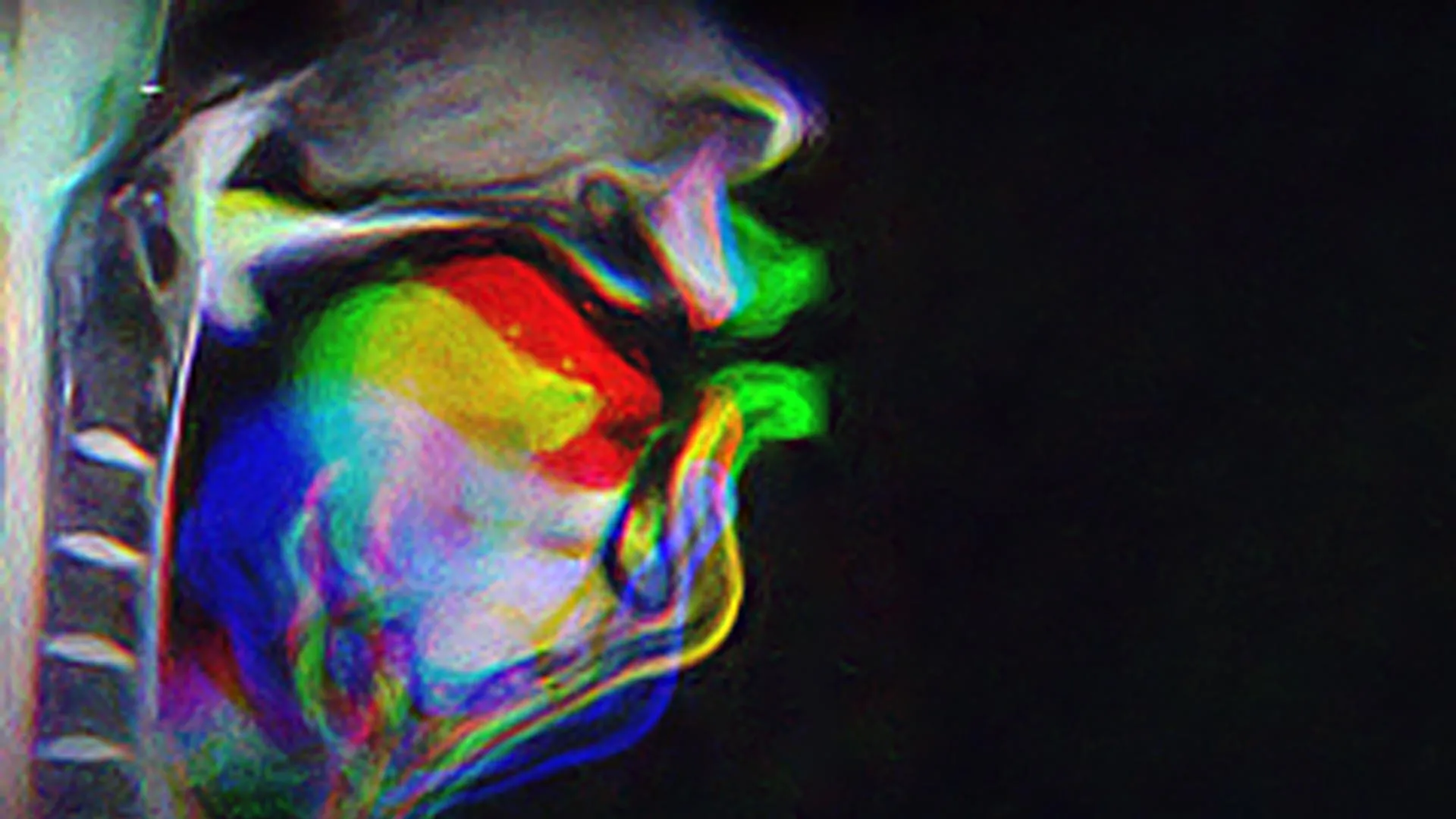
Learning a new language or recovering the ability to speak may rely less on the brain’s movement centers than scientists once believed. New research suggests that regions involved in processing sound and physical sensations play a much larger role in speech learning and memory. This groundbreaking study, conducted by researchers at McGill University and the Yale School of Medicine, has the potential to fundamentally reshape scientific understanding of how speech is acquired and retained, and to significantly influence the design of future speech recognition and brain-based communication technologies. The findings challenge long-held assumptions within the field of sensorimotor neuroscience, shifting the focus from motor control to the intricate interplay of sensory processing in the development and maintenance of our most fundamental communication abilities.
Revisiting the Role of Brain Regions in Speech Acquisition
For decades, the prevailing scientific consensus in speech neuroscience has posited that the intricate and precise motor sequences required for articulation are primarily orchestrated and learned by the brain’s motor areas. These regions, located predominantly in the frontal lobe, are responsible for executing the complex muscle movements of the face, mouth, tongue, and vocal tract that enable us to produce speech sounds. The implicit understanding was that learning to speak, much like learning to play a musical instrument or master a new athletic skill, was fundamentally a process of refining motor commands through practice and feedback, with the motor cortex acting as the central command center.
However, the latest research from McGill and Yale offers a compelling counter-narrative. Instead of motor regions taking center stage, the study indicates that the auditory cortex, which processes sound, and the somatosensory cortex, which registers physical sensations, are in fact critical for acquiring and retaining new speech patterns. This paradigm shift suggests that the brain’s ability to learn how to speak is not solely about perfecting motor execution, but rather about how sensory information from both the sounds we produce and the physical sensations within our vocal apparatus are integrated and processed.
"Sensorimotor neuroscience has traditionally focused on frontal motor areas as the principal drivers of movement," explained David Ostry, a Professor of Psychology at McGill University and a lead author on the study. "This study changes that understanding by showing that human speech learning is extensively sensory in nature." This perspective implies that the brain may be learning to associate specific auditory targets with the somatosensory feedback generated by the articulatory movements required to achieve those sounds. The motor system, in this view, may be more of an effector, carrying out the learned patterns rather than being the primary locus of their formation and storage.
Experimental Design: Unraveling Sensory Contributions Through Brain Stimulation
To rigorously test these hypotheses, the research team designed an elegant experiment that manipulated participants’ speech in real-time and observed the impact of temporarily disrupting activity in key brain regions. The study involved recruiting participants who were asked to speak into a microphone. Their speech was then subtly altered in real-time—for instance, by slightly shifting the pitch or introducing a minor distortion—and played back to them through headphones. This manipulation created a feedback loop that encouraged participants to unconsciously adjust their speech patterns to compensate for the altered auditory input, effectively inducing a form of speech motor learning.
Following this initial learning phase, the researchers employed transcranial magnetic stimulation (TMS), a non-invasive neuroscientific technique that uses magnetic pulses to temporarily disrupt or enhance the activity of specific brain regions. TMS was used to target three critical areas involved in speech production and perception: the auditory cortex, the somatosensory cortex, and the motor cortex. The researchers meticulously controlled the timing and intensity of the TMS pulses to ensure that the disruption was temporary and localized, allowing for precise assessment of each region’s contribution.
The critical evaluation occurred 24 hours after the initial learning session. Participants returned to the laboratory, and their ability to retain the newly learned speech patterns was assessed. The underlying logic of the experiment was straightforward: if a particular brain region was essential for the learning and long-term storage of speech-related memories, then temporarily disrupting its activity during the learning phase should significantly impair the retention of those learned patterns. Conversely, if a region was not critical for this process, disrupting it would have little to no measurable effect on retention.
Striking Results: Sensory Processing Emerges as Paramount
The experimental outcomes provided compelling evidence for the paramount role of sensory processing in speech learning and memory. When the researchers disrupted activity in either the auditory cortex or the somatosensory cortex using TMS, participants exhibited significantly poorer retention of the speech motor adaptations they had acquired the previous day. This indicated that the neural changes underlying the learned speech patterns were heavily dependent on the integrity and function of these sensory processing centers.
In stark contrast, when activity in the motor cortex was temporarily disrupted, the researchers observed a negligible impact on the retention of learned speech movements. This finding directly challenged the long-standing assumption that motor areas are the primary repositories of speech motor memories. The results strongly suggest that while motor regions are undoubtedly involved in the execution of speech, the learning and consolidation of new speech patterns are more deeply rooted in how the brain processes the sensory consequences of our vocalizations.
"Our study challenges the assumption that new speech memories are solely reliant on changes in motor areas of the brain," stated Nishant Rao, an Associate Research Scientist at Yale University and a co-author of the study. "Instead, it underscores the importance of changes in auditory and somatosensory brain areas in shaping how we learn to speak." This perspective suggests that the brain might be building an internal model of speech by linking the sounds it expects to hear with the specific physical sensations that arise from producing those sounds.
Historical Context and Broader Implications for Neuroscience
This research builds upon a growing body of evidence suggesting that sensory systems play a more active and crucial role in motor learning than previously appreciated. In a series of prior studies, the same research group investigated motor learning in the limbs. These earlier investigations also found that disrupting sensory regions of the brain, such as those involved in proprioception (the sense of the relative position of one’s own parts of the body and strength of effort being employed in movement) and touch, significantly interfered with participants’ ability to learn and retain new motor skills involving the arms and hands.
The consistent findings across different motor domains—speech and limb movements—strengthen the argument for a unified principle of motor learning that heavily integrates sensory feedback. This points towards a more sophisticated understanding of brain plasticity, the brain’s remarkable ability to reorganize itself by forming new neural connections throughout life. The study suggests that plasticity within sensory systems is a fundamental driver of acquiring and refining motor skills, including the highly complex skill of human speech.
The implications of these findings extend far beyond basic neuroscience, with potentially transformative applications in the field of neurorehabilitation and the development of assistive technologies. The traditional approach to speech therapy, particularly for individuals who have lost speech abilities due to stroke or other neurological conditions, often focuses on retraining motor pathways. However, if sensory processing is indeed the critical element, future therapeutic interventions could be redesigned to emphasize sensory feedback and integration.
Future Directions: Towards Novel Therapies and Technologies
The researchers are keen to delve deeper into the specific neural circuits within the auditory and somatosensory cortices that are involved in speech learning. Identifying these precise pathways could pave the way for more targeted and effective interventions. Furthermore, the study’s findings have direct relevance for the burgeoning field of brain-computer interfaces (BCIs) and brain-speech technologies.
For individuals who have lost the ability to speak due to conditions like amyotrophic lateral sclerosis (ALS) or severe stroke, BCIs offer a glimmer of hope for restoring communication. Current BCI systems often rely on decoding motor commands or neural activity associated with intended speech. However, incorporating an understanding of sensory-based learning could lead to the development of more intuitive and efficient BCIs. For instance, systems could be designed to provide rich sensory feedback to the user, mirroring the natural learning process, thereby improving performance and user experience.
"The results may also help guide the development of emerging brain-speech technologies," noted Professor Ostry. "Such systems could one day help restore communication abilities after stroke by incorporating sensory processes to improve performance and usability." This could involve developing novel ways to stimulate the auditory or somatosensory cortices, or creating algorithms that better leverage sensory information to interpret neural signals and generate synthesized speech.
A Chronology of Discovery and Funding
The journey leading to these significant findings involved years of meticulous research and collaboration. The conceptual groundwork was laid by earlier studies on motor learning in the limbs, which provided preliminary evidence for the importance of sensory feedback. The specific investigation into speech learning, detailed in this article, was conducted over a period that likely spanned several years, from initial experimental design and data collection to rigorous analysis and peer review.
The study, titled "Sensory Basis of Speech Motor Learning and Memory," was formally published in the prestigious journal Proceedings of the National Academy of Sciences of the United States of America (PNAS), a testament to its scientific rigor and impact. The research was made possible through the financial support of the U.S. National Institute on Deafness and Other Communication Disorders (NIDCD), an arm of the National Institutes of Health (NIH). This funding underscores the national interest in advancing our understanding of communication disorders and developing effective treatments. The collaborative nature of the research, involving institutions like McGill University and Yale School of Medicine, highlights the power of interdisciplinary and multi-institutional efforts in pushing the boundaries of scientific knowledge.
The publication in PNAS, a journal known for its high standards and broad readership across scientific disciplines, ensures that these findings will be widely disseminated and considered by researchers in neuroscience, psychology, linguistics, and engineering. This broad reach is crucial for fostering further research and translating these discoveries into tangible benefits for individuals with communication challenges. The continued investigation into brain plasticity and its role in learning and memory, particularly within sensory systems, promises to unlock new avenues for therapeutic interventions and technological innovations in the years to come.
