

A groundbreaking peer-reviewed study has provided robust evidence that cultivated meat, produced through cellular agriculture, offers a substantially more environmentally friendly alternative to conventional animal proteins such as beef and pork. While the ethical arguments for cultivated meat have long been compelling, questions regarding its true ecological impact have persisted, often fueled by earlier research that presented a more nuanced picture. This latest analysis, published in the esteemed International Journal of Life Cycle Assessment, addresses these concerns by utilizing primary data from a leading cultivated meat producer, Bene Meat Technologies, in collaboration with the Czech Technical University (CTU) in Prague. The findings not only reinforce the environmental benefits of cultivated meat but also offer critical insights into the factors that can further optimize its sustainability.
The journey towards understanding the environmental credentials of cultivated meat has been marked by evolving research and varying conclusions. Early assessments, such as a widely cited 2019 study from the University of Oxford, suggested that while some forms of cultivated meat could indeed be beneficial for the planet, others, particularly those heavily reliant on fossil-derived energy, might contribute to higher global temperatures in the long run. This led to ongoing debate and a call for more granular, real-world data. Even in more recent analyses, such as an evaluation by cultivated beef pioneer Aleph Farms last year, cultivated meat was positioned fifth in a ranking of protein systems based on their positive environmental impact, falling behind practices like regenerative and organic farming. However, a growing body of life-cycle assessments (LCAs) has consistently pointed towards cultivated meat having a significantly lower climate impact compared to the traditional livestock industry. This new study by Bene Meat Technologies and CTU aims to add definitive data to this body of literature, moving beyond theoretical models to assess the environmental performance based on actual production processes.
Bene Meat Technologies, a Czech startup actively involved in producing cultivated meat for both pet food and human consumption, partnered with the Czech Technical University to conduct a comprehensive LCA of its protein production. The study’s significance lies in its foundation: unlike many previous assessments that relied on laboratory data and estimations, this research utilized primary data derived directly from Bene Meat’s pilot production process and detailed models of its planned industrial-scale facility. This approach ensures that the environmental impact assessment is closely aligned with the realities of future, large-scale production.
Miroslav Šilka, head of the department of management and economics at CTU and a co-author of the study, emphasized the importance of this methodological shift. "The goal was to align the environmental impact assessment with the real conditions of future production," Šilka stated. "Using primary data from the industrial process allows us to significantly refine previous estimates and provides a vital reference framework for further development in the field of cultivated meat." This commitment to empirical data collection is crucial for building trust and providing actionable insights for the burgeoning cultivated meat industry.
The findings from this rigorous LCA paint a promising picture for cultivated meat. The research indicates that all production scenarios developed by Bene Meat Technologies achieve significantly better environmental outcomes than previously established baselines. More remarkably, they exhibit lower product environmental footprints than even the most ambitious benchmarks set for conventional beef and pork production. This suggests a fundamental shift in the environmental impact of protein production is not only possible but is already being realized by innovative companies.

Kateřina Dvořáková Vávrová, Bene Meat’s communications coordinator, clarified the scope and applicability of the study’s metrics. "These metrics are calculated based on our proprietary platform and processes. As such, they are tied to our technology rather than to any specific cell type," she explained to Green Queen. "This means the values are generally applicable across different applications, with variations depending on the specific use case. At the time of the study, the data were based on our pet food application; however, today they are comparable across all of our cell lines." This highlights the adaptable nature of Bene Meat’s technology and the broad relevance of its LCA findings.
Key Drivers of Cultivated Meat’s Environmental Performance: Raw Materials and Energy Mix
A central revelation from the Bene Meat Technologies and CTU study is the critical role that raw material sourcing and the energy mix play in determining the overall climate impact of cultivated meat. The LCA, based on a projected production capacity of 400-600 kg of cultivated meat per day, revealed a current carbon footprint of 5.3 kg of CO2 equivalent (CO2e) per kg of product. However, this figure can fluctuate, ranging from 3.3 kg to 6.6 kg of CO2e, depending on the specific choices made regarding raw materials and the energy sources utilized.
Bene Meat’s current production process relies on a culture medium that incorporates soy protein isolate and glucose. The study pinpointed the origin of the soybeans as the most significant factor influencing the product’s overall environmental footprint, accounting for an estimated 35% to 45% of the impact. Glucose followed as the next most impactful ingredient. Collectively, electricity, heat, and water demineralization contribute a further 21% to 26% to the total footprint.
A critical aspect identified in the study is the environmental impact associated with Bene Meat’s current soy protein isolate supplier, based in China. This supplier’s production mix includes a substantial proportion of Brazilian soybeans. The cultivation of these soybeans in Brazil is associated with a larger environmental footprint due to significant land-use changes, including deforestation and the conversion of natural habitats. These changes release stored carbon and diminish biodiversity, contributing to a higher overall CO2e per kilogram of soy protein isolate.
The study proposed a tangible solution to mitigate this impact: switching to a US-based soybean supplier. This change could reduce Bene Meat’s overall climate impact by an impressive 20%, primarily because soybean production in the US generally involves negligible land-use change effects. This finding underscores the power of strategic sourcing and the importance of understanding the upstream impacts of agricultural inputs.
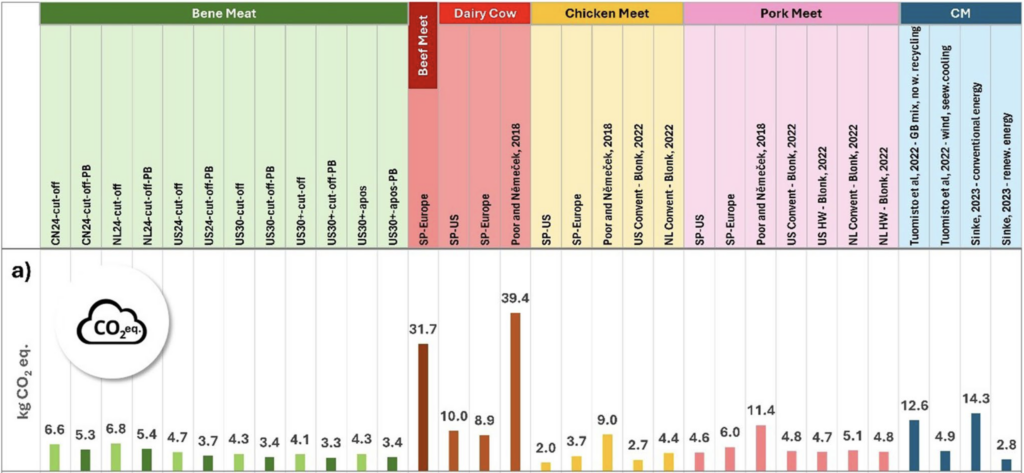
Furthermore, the research meticulously assessed the influence of different electricity sources. It concluded that adopting a greener energy mix, incorporating as little as 30% solar power, could lead to a notable reduction in Bene Meat’s cultivated meat emissions by approximately 12%. This highlights the direct correlation between the decarbonization of energy grids and the enhanced sustainability of cultivated meat production. The study also factored in the impact of byproducts, suggesting that their efficient utilization or allocation can further improve the environmental profile of the final product.
Bene Meat’s Cultivated Protein Outperforms Conventional Beef, Pork, and Even Chicken
The comparative analysis presented in the study is particularly striking, positioning Bene Meat’s cultivated protein as a significantly more sustainable option than widely consumed animal proteins. Beef, notorious for its substantial environmental footprint, registered a global average of 98.6 kg of CO2e per kg. This figure is a staggering 95% higher than the cultivated meat’s footprint. Even the most optimistic projections for conventional beef production, representing the most ambitious scenarios, still yield a footprint of 34.9 kg of CO2e per kg, which remains considerably higher than Bene Meat’s cultivated protein.
Pork production, while generally less carbon-intensive than beef, also shows a discernible environmental disadvantage. The average footprint for pork production stands at 11.4 kg of CO2e per kg, more than double that of Bene Meat’s cell-cultured protein. Even when considering the most ambitious forecasts for pork production, Bene Meat’s cultivated protein still demonstrates a 55% lower impact, with an associated footprint of just 5.1 kg of CO2e.
The study went further, identifying a highly promising scenario for cultivated meat that integrates several optimizations. This scenario, which includes sourcing soybeans from the US, utilizing a 30% solar energy mix, effectively allocating byproducts, and reflecting potential reductions in environmental impacts, achieves an even more impressive sustainability advantage. In this optimized scenario, Bene Meat’s cultivated protein demonstrates "35% lower impacts than the best meat equivalent – European chicken," according to the authors. This comparison is particularly significant, as chicken is often considered one of the more environmentally efficient conventional meat options. Furthermore, this optimized cultivated meat would be 63% lower in its climate impact compared to beef derived from dairy cows, a segment of the beef industry that often carries a substantial environmental burden.
To achieve further reductions in the climate impact of its cultivated protein, Bene Meat is focused on minimizing the effects of its key raw material inputs, namely soy protein isolate and glucose. The study suggests two primary strategies for this: optimizing reaction yields through adjustments in process conditions and timings, and selecting suppliers who prioritize sustainable production methods. The researchers recommend a combination of both approaches for maximum impact.
"Another strategy could involve adopting an energy mix with a significant share of renewable sources, such as installing photovoltaic panels at the production facility," the study noted. "Additionally, future opportunities for decarbonising heat and background processes should be explored, even though they were not included in this study." This forward-looking perspective indicates that the potential for environmental improvement in cultivated meat production is far from exhausted.
Broader Implications and Future Outlook
The findings from Bene Meat Technologies and CTU align with and strengthen the conclusions of similar recent research. A 2025 LCA conducted by BioCraft Pet Nutrition, another cultivated pet food startup, found that its protein exhibited a remarkable 92% lower emissions compared to the beef byproducts commonly used by manufacturers in the pet food industry. This consistent trend across different companies and applications bolsters the argument for cultivated meat as a scalable and sustainable solution to global protein demand.
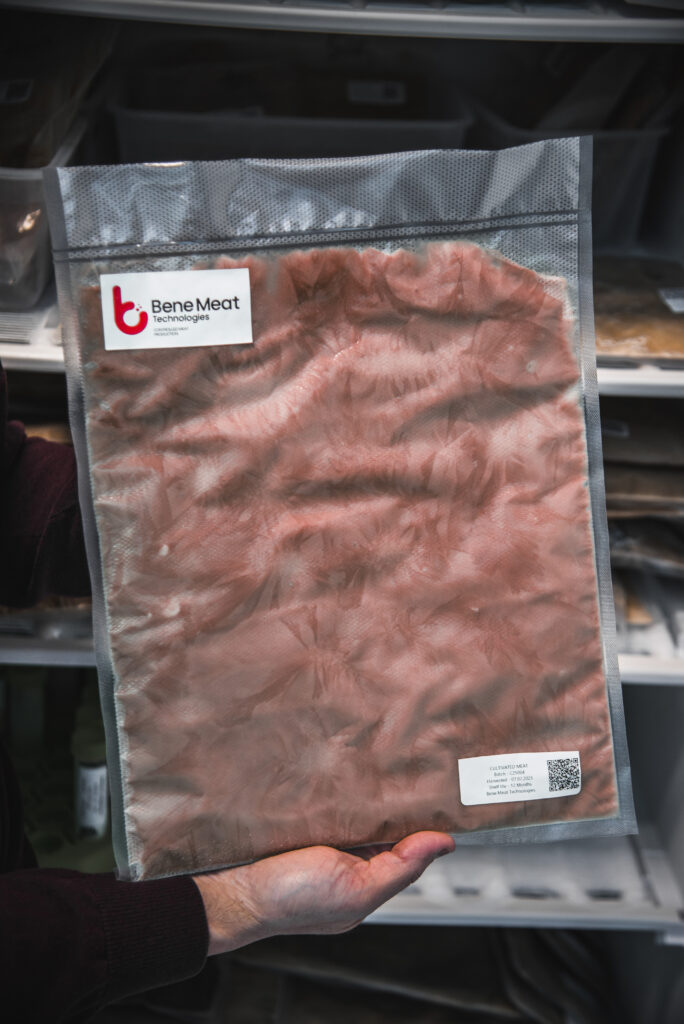
Bene Meat has already made significant strides in commercialization, having successfully registered its cultivated meat as a feed material within the European Union, thereby enabling its sale as a pet food ingredient. The company is now planning a subsequent analysis based on data from its full-scale operational facilities. This future study is expected to provide a more definitive verification of the current findings in a real-world, large-scale production environment, offering what the company describes as the "most precise view yet" of the climate impact of full-scale cultivated meat production.
Jan Luprich, Bene Meat’s head of business development, emphasized the company’s commitment to data-driven progress. "For Bene Meat, it is essential to work with real data," Luprich stated. "This study clearly demonstrates that our technology has the potential to succeed in industrial production from both a technological and environmental standpoint." This commitment to transparency and scientific rigor is vital as the cultivated meat industry navigates the complexities of scaling up and gaining wider consumer and regulatory acceptance.
The implications of this study are far-reaching. As global populations continue to grow and the demand for protein intensifies, traditional livestock farming faces increasing pressure due to its significant environmental footprint, including greenhouse gas emissions, land use, water consumption, and biodiversity loss. Cultivated meat offers a compelling alternative that can decouple protein production from many of these environmental challenges. The research from Bene Meat Technologies and CTU provides crucial, data-backed reassurance that cultivated meat can indeed be a substantially more sustainable choice, paving the way for a more environmentally responsible future of food production. As the technology matures and production scales, further optimizations in raw material sourcing, energy efficiency, and process design are expected to drive down the environmental impact even further, solidifying cultivated meat’s role in a more sustainable global food system.
