
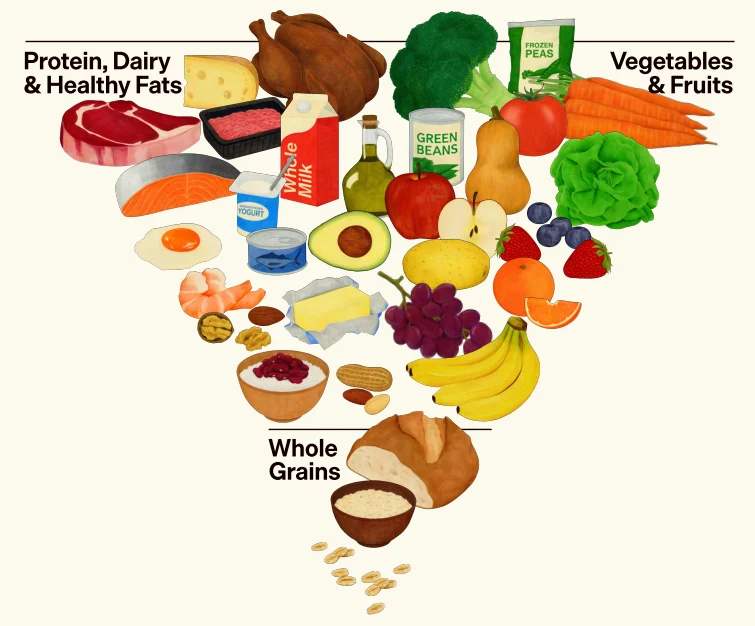
The release of the 2025–2030 Dietary Guidelines for Americans (DGAs) marks a pivotal moment in federal public health policy, arriving with a concise mandate to "eat real food" and a significantly heightened focus on the reduction of added sugars and ultra-processed items. While the document seeks to simplify nutritional advice for the general public, it has simultaneously ignited a firestorm of debate among researchers, nutritionists, and policy advocates. The inclusion of a revised food pyramid, which visually prioritizes animal-based products such as red meat, butter, and full-fat dairy, has prompted widespread concern regarding potential contradictions between the government’s stated saturated fat limits and its visual marketing materials.
The Evolution of Federal Nutrition Policy
Every five years, the U.S. Departments of Agriculture (USDA) and Health and Human Services (HHS) collaborate to update the DGAs. These guidelines serve as the foundation for federal nutrition programs, including the National School Lunch Program, the Supplemental Nutrition Assistance Program (SNAP), and the Special Supplemental Nutrition Program for Women, Infants, and Children (WIC). Historically, the development process involves a multi-year effort by the Dietary Guidelines Advisory Committee (DGAC), an independent panel of scientific experts who conduct a rigorous, evidence-based review of the latest nutritional literature.
The path to the 2025 edition, however, deviated significantly from established norms. Following the release of the official DGAC scientific report, the current administration opted to supplement the findings with an additional analysis conducted by a group of contractors rather than the original committee. This decision has sparked intense scrutiny, with public health experts raising questions about the transparency of the methodology used to select these contractors and the lack of clarity regarding how the final recommendations were synthesized.
A Chronology of the 2025-2030 Process
The development cycle for this edition followed a structured timeline that was eventually upended by administrative intervention:
- 2023–2024: The independent DGAC completed its comprehensive review of current nutrition science, focusing on chronic disease prevention and life-stage nutrition.
- Early 2025: The Committee submitted its final report, adhering to the standard, transparent, and peer-reviewed protocols established by the HHS.
- Mid-2025: The administration announced the formation of an additional review panel, selected through a federal contracting process, to provide supplemental analysis.
- January 2026: The official 2025–2030 Dietary Guidelines for Americans were published, featuring the "New Food Pyramid" and updated recommendations on protein and sugar.
The rejection of the initial committee’s report and the subsequent reliance on a supplemental analysis has been criticized by figures such as Dr. Deirdre Tobias, a professor at the Harvard T.H. Chan School of Public Health. Critics argue that the process lacked the replicable, unbiased rigor required to maintain the integrity of federal health advice, specifically citing potential conflicts of interest among those involved in the supplemental analysis who have documented ties to the beef and dairy industries.
Unpacking the Nutritional Mandates
The 2025 guidelines introduce several key shifts in dietary focus, most notably regarding the definition and consumption of processed foods. For the first time, the DGAs explicitly address "highly processed foods," advising a pivot toward whole, fiber-rich options. This includes a strict stance on sugar, suggesting that no amount of added sugar is beneficial for a healthy diet. Specifically, the guidelines now recommend that children avoid added sugars entirely until the age of 10—a significant increase from the previous age-two threshold.
Furthermore, the document increases the suggested protein intake to 1.2 to 1.6 grams per kilogram of body weight, a 50–100% increase over previous baseline recommendations. While this may support muscle maintenance in certain populations, nutritionists warn that the guidelines fail to distinguish between protein sources. The "protein package"—the fats, fiber, and sodium accompanying protein—is vital. A diet high in red meat, while meeting protein targets, carries different cardiovascular risks than one centered on plant-based proteins, legumes, and fish.
The Contradiction of Saturated Fat
The most persistent point of contention remains the guidance on saturated fats. The DGAs maintain the long-standing scientific consensus that saturated fat should be limited to 10% of total daily caloric intake. However, the accompanying "New Food Pyramid" visually emphasizes foods that are high in saturated fat, such as steak and butter, as central components of a daily diet.
To illustrate the mathematical tension, consider a 2,000-calorie diet, which allows for approximately 22 grams of saturated fat per day. If an individual follows the DGAs’ recommendation for three servings of dairy—opting for the full-fat versions often showcased in the new pyramid—they could easily consume 17 grams of saturated fat from those three items alone. A single tablespoon of butter adds another 7 grams, immediately pushing the consumer past the recommended daily threshold before accounting for any other food intake.
Dr. Frank Hu, chair of the Department of Nutrition at the Harvard T.H. Chan School of Public Health, has noted that this creates a "mixed message" that may mislead consumers. By grouping animal-based fats with healthier, plant-based unsaturated fats without providing clear instructions on which to prioritize, the guidelines may inadvertently encourage an intake level that elevates LDL cholesterol and increases cardiovascular risk.
Addressing Alcohol and Environmental Sustainability
The 2025 guidelines continue to struggle with the complexities of modern public health. Regarding alcohol, the DGA message is intentionally vague, stating that individuals should "consume less alcohol for better health." Unlike previous iterations that provided specific, albeit debated, consumption limits, the lack of concrete guidance makes it difficult for the public to translate this into actionable behavior.
Additionally, the guidelines remain silent on the environmental impact of food production. As global food systems face the dual challenges of climate change and food security, many international health organizations have begun incorporating sustainability into their dietary recommendations. The omission of environmental context in the U.S. guidelines is viewed by some policy analysts as a missed opportunity to align national health objectives with broader planetary health goals.
Implications for Public Health and Future Policy
The influence of the DGAs extends far beyond the kitchen table. Because they dictate the menus for millions of students, service members, and senior citizens, the messaging contained within these pages has immediate, large-scale health consequences. If the guidelines are perceived as confusing or contradictory, their utility in combating the nation’s epidemic of diet-related chronic diseases—such as type 2 diabetes, heart disease, and hypertension—may be significantly undermined.
Historical data from the Centers for Disease Control and Prevention (CDC) suggests that adherence to federal guidelines is already low among the American population. The introduction of a more "consumer-friendly" digital interface and a simplified pyramid is clearly designed to increase engagement. However, experts warn that accessibility cannot come at the expense of scientific accuracy. If the visual materials contradict the clinical recommendations, the result may be increased public skepticism rather than improved health outcomes.
Professional Perspectives and Moving Forward
The reliance on a non-transparent, supplemental review process has set a concerning precedent for future iterations of the DGAs. Transparency is the bedrock of public trust in federal health institutions. When scientific committees are bypassed in favor of processes that appear to be influenced by industry lobbying—particularly regarding high-profit sectors like meat and dairy—the credibility of the entire document is called into question.
For the average American, the 2025–2030 guidelines serve as a reminder that nutritional literacy requires more than just following a government-issued graphic. The consensus among independent researchers remains clear: prioritize plant-based proteins, minimize highly processed grains and added sugars, and replace saturated fats with unsaturated fats like those found in olive oil, nuts, and fatty fish. As the nation grapples with these new guidelines, many nutritionists recommend that individuals rely on well-established evidence-based tools, such as the Healthy Eating Plate, or consult with registered dietitians to create personalized plans that are not susceptible to the conflicting messaging inherent in the latest federal report.
Ultimately, the 2025–2030 DGAs represent an ambitious, if flawed, attempt to modernize American nutrition. Whether they succeed in shifting the needle on the nation’s health crisis will depend on how effectively the public can navigate the discrepancies between the official text and the visually dominant, yet nutritionally questionable, new pyramid. As these policies take hold, the academic and medical communities will continue to watch closely to see if the administrative departures from standard scientific protocol lead to long-term improvements in population health or simply further confusion in an already crowded marketplace of nutritional advice.
