
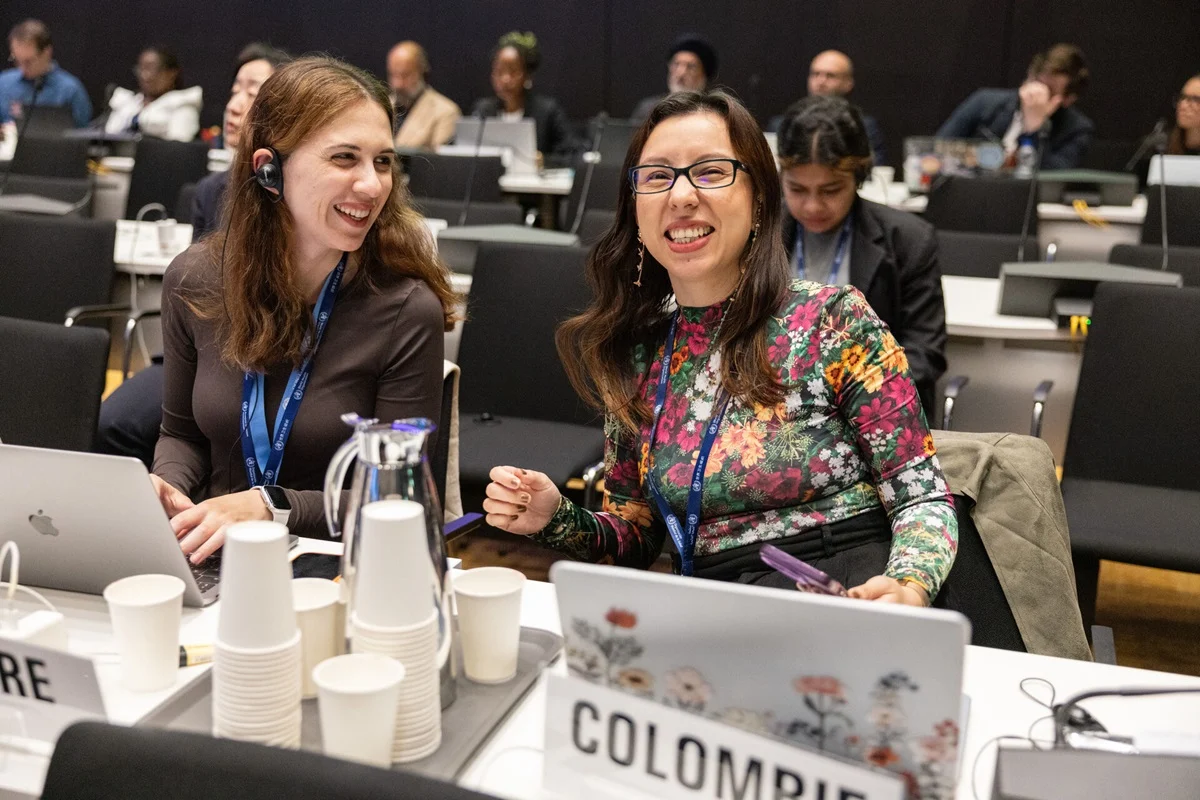
The Seventy-ninth World Health Assembly (WHA) concluded its intensive week-long session in Geneva, Switzerland, marking a pivotal moment in global health governance as Member States adopted more than 20 decisions and 13 resolutions aimed at fortifying the world’s defenses against emerging and endemic health threats. The Assembly, the supreme decision-making body of the World Health Organization (WHO), addressed a vast spectrum of clinical and systemic challenges, including stroke, liver disease, tuberculosis, antimicrobial resistance (AMR), diagnostic imaging, emergency care, haemophilia, precision medicine, and radiation. Beyond clinical guidelines, the delegation achieved a historic consensus on reforming the global health architecture through a Member State-led, WHO-hosted joint process, signaling a collective commitment to a more resilient and unified international response to future pandemics.
At the formal closing ceremony, WHO Director-General Dr. Tedros Adhanom Ghebreyesus underscored the necessity of moving from high-level diplomacy to tangible local impact. In a symbolic gesture of appreciation for their leadership, Dr. Tedros presented ceremonial gavels to the President of the Seventy-ninth World Health Assembly, Dr. Víctor Atallah Lajam, Minister of Health of the Dominican Republic, and to the Chairs of the Assembly’s primary working groups: Dr. Timur Sultangaziyev, Deputy Minister of Health of Kazakhstan (Committee A), and Dr. Kwabena Mintah Akandoh, Minister of Health of Ghana (Committee B). Dr. Tedros reminded the delegates that the true metric of success for the Assembly’s work lies not in the halls of Geneva, but in the clinics and households of the most remote communities. He emphasized that political commitment and sustained financing are the essential catalysts required to ensure that a child is vaccinated, an outbreak is contained, or a mother survives childbirth.
Strengthening the Global Health Workforce and Ethical Recruitment
One of the most significant achievements of the Seventy-ninth WHA was the approval of a resolution to amend the WHO Global Code of Practice on the International Recruitment of Health Personnel. This update represents the first major revision of the Code in 16 years, reflecting the drastic changes in the global labor market following the COVID-19 pandemic. The Code, originally adopted in 2010, serves as a framework for countries to manage the migration of health workers in a manner that respects the rights of the workers while protecting the health systems of source countries—often developing nations that face severe shortages of medical professionals.
The new amendments broaden the scope of the Code to include "care workers," a recognition of the growing importance of long-term care and social support sectors in aging societies. Furthermore, the revisions clarify how recruitment principles should be applied during global health emergencies, preventing "brain drain" from vulnerable regions when they are most in crisis. A key addition to the Code is the encouragement of "co-investment," suggesting that destination countries (typically high-income nations) should provide financial or technical support to the health systems of source countries to offset the loss of trained personnel.
This policy shift follows recommendations from an Expert Advisory Group (EAG), which noted that while data availability on migrant health workers has improved, many source countries still require significant support to retain their workforce. By integrating ethical recruitment principles into national policies, the WHA aims to ensure that the global pursuit of universal health coverage (UHC) does not come at the expense of the world’s most fragile health systems.
A New Paradigm: The Economics of Health for All
In a move that seeks to redefine the relationship between finance and medicine, Member States adopted the "Strategy on the Economics of Health for All (2026–2030)." This landmark decision represents a departure from traditional views of health spending as a fiscal burden, instead positioning health as a primary driver of economic stability and sustainable development. The strategy was born from the realization that the global health financing system is currently in a state of emergency, with many nations struggling to fund essential services amidst rising debt and economic volatility.
The 2026–2030 strategy outlines a vision where economic, fiscal, and industrial policies are systematically aligned with health outcomes. Delegates argued that a "well-being-oriented economy" is the only viable path to achieving the Sustainable Development Goals (SDGs). By equipping countries with stronger technical capacity to engage with financial actors and ministries of finance, the WHO hopes to foster an environment where investment in public health is seen as a prerequisite for, rather than a consequence of, economic growth. This shift is expected to facilitate the sustainable financing of universal health coverage and the creation of more resilient public goods.
Addressing the "Silent Pandemic" of Antimicrobial Resistance
The Assembly also took decisive action against the escalating threat of antimicrobial resistance (AMR), approving an updated Global Action Plan (GAP-AMR) for the period of 2026–2036. The urgency of this resolution is underscored by harrowing data from the WHO’s Global Antimicrobial Resistance and Use Surveillance System (GLASS). In 2023, one in six common bacterial infections was found to be resistant to standard antibiotic treatments. Recent studies estimate that 4.71 million deaths were associated with bacterial AMR in 2021 alone. Projections suggest that without intervention, AMR could claim up to 39 million lives by 2050, with low- and middle-income countries bearing the brunt of the mortality.
The updated GAP-AMR 2026–2036 adopts a "One Health" approach, recognizing that the health of humans, animals, and the environment are inextricably linked. The plan sets a specific target: a 10% reduction in bacterial AMR-associated deaths globally by 2030. To reach this goal, the strategy focuses on expanding equitable access to effective antimicrobials while simultaneously reducing their overuse in agrifood systems and minimizing environmental pollution from pharmaceutical residues.
With over 170 countries already having developed national action plans, the focus now shifts to implementation and accountability. The WHO, in partnership with the Food and Agriculture Organization (FAO), the UN Environment Programme (UNEP), and the World Organisation for Animal Health (WOAH), will provide technical guidance to ensure that AMR interventions are mainstreamed into broader health system strengthening efforts.
First-Ever Resolution on Radiation and Public Health
In a historic first, the Seventy-ninth World Health Assembly approved a comprehensive resolution on "Radiation and health: strengthening global protection, preparedness and response." This is the first time Member States have agreed on a unified approach that covers both ionizing radiation (such as X-rays and nuclear sources) and non-ionizing radiation (such as ultraviolet rays and electromagnetic fields).
The resolution acknowledges the ubiquitous nature of radiation exposure in modern life, arising from medical imaging, occupational settings, and environmental factors. It highlights the significant contribution of natural sources, such as radon gas and UV radiation, to the global cancer burden. Children and pregnant women were identified as particularly vulnerable groups requiring specialized protection protocols.
Under the new resolution, Member States commit to improving national monitoring systems, enhancing workforce training for radiation safety, and ensuring the equitable use of advanced medical technologies like radiotherapy and radiopharmaceuticals. The WHO has been tasked with conducting a global mapping of actors and initiatives in this field to identify gaps in emergency preparedness and response. A progress report on these initiatives is scheduled to be presented to the Assembly in 2028.
Administrative Reform and the Path to 2030
The Assembly’s agenda also included critical discussions on the reform of the global health architecture. The agreement to embark on a Member State-led process to modernize the WHO’s operational framework reflects a desire for greater transparency, efficiency, and inclusivity in international health governance. This reform is seen as essential for managing the complex interplay of political, economic, and biological factors that define 21st-century health challenges.
Throughout the week, the underlying theme remained the "last mile" of health delivery. Whether discussing the management of stroke and liver disease or the implementation of precision medicine, the delegates emphasized that policy is only as effective as its execution at the community level. The adoption of resolutions on diagnostic imaging and emergency care, for instance, aims to close the gap in service availability between high-income and low-income regions, ensuring that life-saving interventions are not a privilege of geography.
As the Seventy-ninth World Health Assembly drew to a close, the mood was one of cautious optimism. The resolutions passed in Geneva provide a robust roadmap for the next decade, but as Dr. Tedros noted in his final remarks, the task now moves from the diplomatic stage to the field. The success of the GAP-AMR, the Economics of Health for All strategy, and the new Health Workforce Code will depend on the sustained political will of Member States to translate these international agreements into national laws and funded programs. The international community now looks toward the next session with the hope that the commitments made this week will lead to a measurably healthier and more equitable world.
