
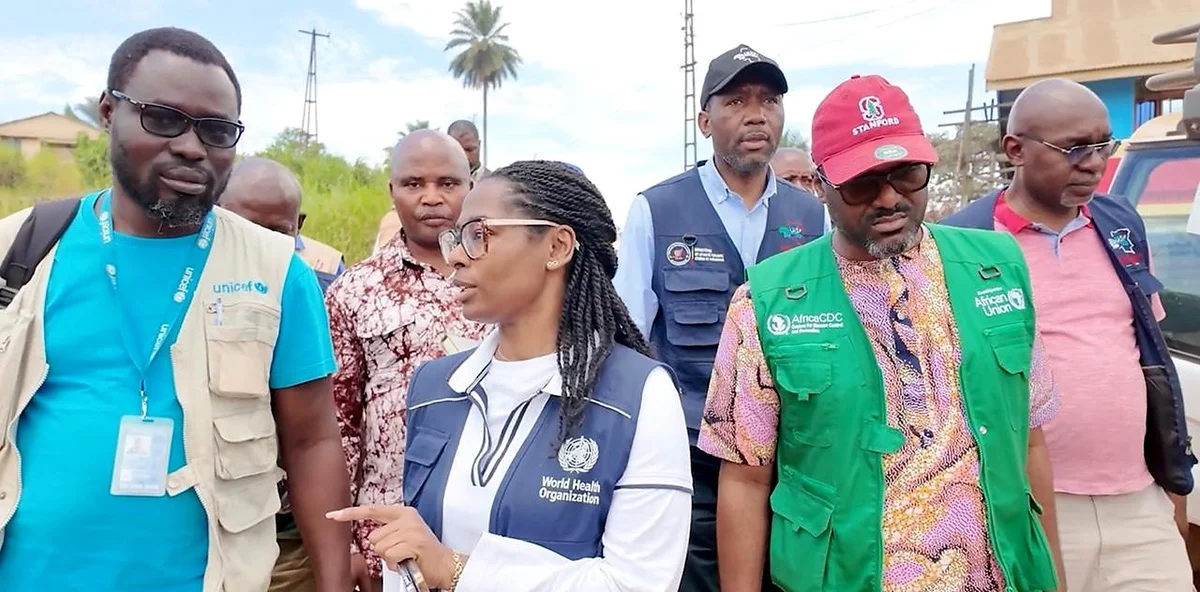
The Africa Centres for Disease Control and Prevention (Africa CDC) and the World Health Organization (WHO) have officially inaugurated a comprehensive, joint continental preparedness and response plan designed to address the escalating Ebola outbreak fueled by the Bundibugyo virus species. This strategic initiative, unveiled today, seeks to mobilize a total of US$ 518 million in funding to assist African Member States and international partners in the rapid detection, containment, and management of the virus. Spanning a critical six-month window from June to November 2026, the plan represents a pivotal moment in African public health, emphasizing a unified "One Response" approach that consolidates governmental efforts, community participation, and international aid under a single operational framework.
The urgency of this mobilization stems from the unique challenges posed by the Bundibugyo ebolavirus (BDBV). Unlike the more frequently occurring Zaire ebolavirus, for which several vaccines and therapeutic treatments have been developed and licensed, the Bundibugyo species currently lacks specifically approved medical countermeasures. This gap in the pharmaceutical arsenal necessitates a heightened focus on traditional public health interventions, including rigorous contact tracing, advanced laboratory diagnostics, and intensive clinical supportive care. The joint plan aims to bridge these gaps by strengthening health systems across the continent, ensuring that even in the absence of a vaccine, the transmission of the virus can be effectively halted through coordination and rapid intervention.
A Unified Strategy for a Complex Threat
The "One Response" framework is built upon the principle of total synchronization. By aligning the African Union’s public health agency with the United Nations’ global health authority, the plan seeks to eliminate the redundancies and fragmented responses that have hindered past outbreak management. The strategy focuses on several core pillars: emergency coordination, enhanced disease surveillance, streamlined laboratory testing, infection prevention and control (IPC), clinical care, and logistics.
A primary component of the plan is the integration of national response efforts already underway in the Democratic Republic of the Congo (DRC) and Uganda. These two nations, which have historically been the epicenters of Bundibugyo outbreaks, have launched their own localized strategies. The Africa CDC and WHO joint plan is designed to complement these national efforts, providing the regional surge capacity and financial resources necessary to prevent the virus from crossing borders and becoming a wider continental crisis. By operating under the mantra of "one plan, one budget, one team," the organizations hope to provide a blueprint for future health emergencies in Africa.
Understanding the Bundibugyo Ebola Virus
To understand the necessity of this $518 million plan, it is essential to examine the nature of the Bundibugyo ebolavirus. First identified in 2007 following an outbreak in the Bundibugyo District of western Uganda, BDBV is one of six species within the genus Ebolavirus. While it has historically shown a lower case-fatality rate compared to the Zaire species—typically ranging from 25% to 40%—it remains a highly lethal pathogen capable of causing hemorrhagic fever and rapid death.
The current 2026 outbreak has raised alarms due to the speed of transmission in high-traffic border regions. Because the symptoms of Ebola—fever, fatigue, muscle pain, and sore throat followed by vomiting and diarrhea—overlap with many other endemic diseases such as malaria and typhoid, early detection is notoriously difficult. The joint plan’s emphasis on laboratory capacity is intended to address this, providing decentralized testing facilities that can return results in hours rather than days, thereby allowing for the immediate isolation of infected individuals.
Chronology of the Response and Emerging Crisis
The development of the joint continental plan follows a series of escalating events in early 2026. The initial cases of the current outbreak were detected in rural clusters, but within weeks, the virus had reached urban centers with significant transit links.
- Early 2026: Sporadic cases reported in the border regions of the DRC and Uganda.
- April 2026: National health authorities in the DRC and Uganda declare a public health emergency as case numbers climb and human-to-human transmission is confirmed in multiple districts.
- May 2026: Africa CDC deploys its first wave of technical experts and epidemiologists to assist in contact tracing. Preliminary data suggests a lack of efficacy in existing Zaire-specific vaccines against this strain.
- June 2026: WHO and Africa CDC formalize the "One Response" approach, leading to today’s launch of the $518 million appeal.
This timeline highlights the proactive nature of the current response compared to previous decades. The establishment of Africa CDC as an autonomous institution of the African Union has significantly reduced the lead time between an initial outbreak and a coordinated continental response.
Breaking Down the $518 Million Budget
The financial requirements of the plan are extensive, reflecting the high cost of operating in logistically challenging environments. The US$ 518 million is slated for allocation across several critical sectors:
- Emergency Coordination and Logistics: A significant portion of the funds will be used to establish supply chains for personal protective equipment (PPE), medical supplies, and mobile laboratory units. In remote areas of the DRC, logistics often involve air transport and specialized refrigeration for samples.
- Surveillance and Contact Tracing: Funds will support the training and deployment of thousands of community health workers who serve as the front line in identifying potential cases and monitoring those who have been exposed.
- Clinical Care and IPC: The plan prioritizes the establishment of Ebola Treatment Centres (ETCs) that provide high-standard supportive care while ensuring that healthcare workers are protected from accidental exposure.
- Research and Development: Given the lack of Bundibugyo-specific therapeutics, a portion of the budget is dedicated to facilitating clinical trials and observational studies under emergency protocols to identify potential treatments.
Official Responses and Leadership Perspectives
The leadership of both the WHO and Africa CDC has emphasized that the success of the plan hinges on more than just financial capital; it requires political will and social trust.
Dr. Tedros Adhanom Ghebreyesus, WHO Director-General, noted that the only path to victory is through close partnership and the leadership of the affected countries. He stressed that containing Ebola is a multifaceted challenge that requires "sustained financing and the trust and engagement of communities." Dr. Tedros highlighted that if communities do not participate in contact tracing or safe burial practices, the virus will continue to find avenues for transmission.
Mirroring this sentiment, Dr. Jean Kaseya, Director-General of Africa CDC, underscored the need for speed. "Ebola moves fast. Africa must move faster," Dr. Kaseya stated. He framed the joint plan as a clear path for the continent to act with unity, transforming high-level political commitments into tangible resources for the communities most at risk. His comments reflect a broader shift toward African-led health solutions, where the continent takes primary responsibility for its own health security.
The Critical Role of Community Engagement
A recurring lesson from the 2014-2016 West Africa Ebola outbreak and subsequent outbreaks in the DRC is that medical interventions are ineffective if they are met with community resistance. The 2026 joint plan places communities at the center of the response. This involves working with local religious leaders, traditional healers, and community influencers to disseminate accurate information and dispel myths regarding the virus and the response efforts.
By involving communities in the decision-making process, the WHO and Africa CDC aim to ensure that safe care is not delayed and that contact tracing is viewed as a supportive measure rather than a punitive one. This approach is vital for maintaining the "One Response" philosophy, as it ensures that the "one team" includes the very people the plan is designed to protect.
Navigating a Multi-Epidemic Landscape
The Ebola response does not exist in a vacuum. Africa is currently grappling with a "polycrisis" of concurrent health threats, including mpox, cholera, and measles. The joint plan explicitly mentions the need to maintain support for these other ongoing emergencies. There is a strategic risk that focusing exclusively on Ebola could lead to a resurgence of other vaccine-preventable diseases or waterborne illnesses.
The plan, therefore, advocates for a "diagonal" approach to health—strengthening the overall health system while addressing the acute crisis of Ebola. By improving laboratory networks and surveillance systems for Ebola, the continent simultaneously enhances its ability to monitor mpox and other pathogens. This systemic resilience is a core objective of the $518 million investment, ensuring that the progress made during this six-month period leaves a lasting legacy of improved public health infrastructure.
Regional Cooperation and Future Implications
The joint plan calls upon Member States to strengthen screening at points of entry and enhance cross-border coordination. In an interconnected region, the movement of people across the DRC, Uganda, and neighboring countries poses a constant risk of viral export. The plan encourages "solidarity" among nations, urging them to implement evidence-based measures rather than resorting to blanket travel bans that can cripple local economies and hinder the movement of medical personnel.
The long-term implication of this joint response is the further solidification of Africa’s capacity to manage its own health threats. Drawing on lessons from the COVID-19 pandemic and previous Ebola crises, the Africa CDC and WHO are building a framework that prioritizes local expertise and regional sovereignty. The successful implementation of this $518 million plan will serve as a litmus test for the continent’s ability to prevent future health threats from becoming global catastrophes, ultimately protecting both lives and livelihoods across the African region.
