
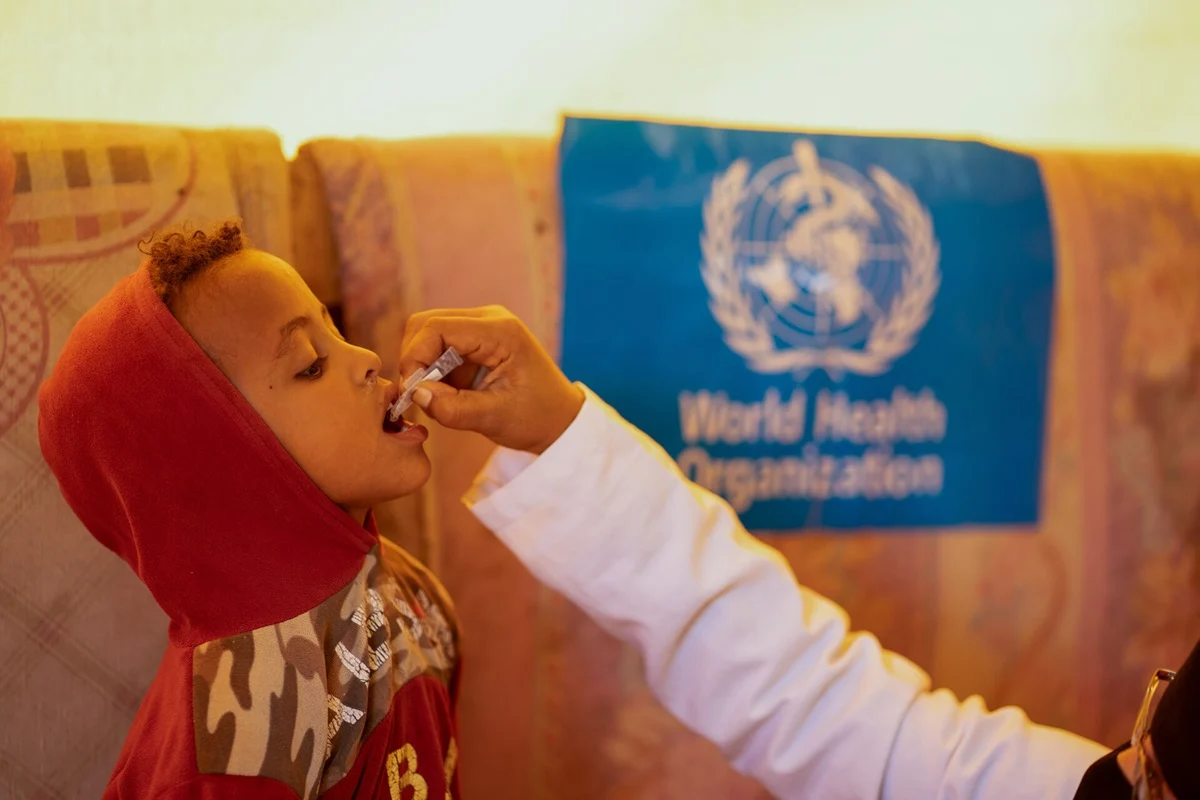
The global health community reached a significant turning point today as Gavi, the Vaccine Alliance, UNICEF, and the World Health Organization (WHO) announced that the supply of oral cholera vaccines (OCV) has finally reached a level sufficient to restart large-scale preventive vaccination campaigns. This development marks the end of a three-year hiatus in preventive efforts, a period during which a severe global shortage forced health agencies to prioritize reactive measures over proactive protection. Mozambique has been identified as the first nation to resume these life-saving preventive efforts, signaling a shift in the global strategy to combat a disease that has seen a dramatic resurgence in recent years.
The suspension of preventive campaigns in 2022 was a direct consequence of a perfect storm: a global surge in cholera outbreaks that drove demand to unprecedented levels, coupled with a limited manufacturing base. For years, the International Coordinating Group (ICG) on Vaccine Provision—the body that manages the global emergency stockpile—was forced to ration doses, often limiting outbreak responses to a single dose instead of the standard two-dose regimen. The news of the supply recovery offers a reprieve for nations grappling with the dual threats of climate change and crumbling sanitation infrastructure.
The Situation in Mozambique: A Catalyst for Action
Mozambique’s selection as the first country to restart preventive vaccination is both strategic and humanitarian. The nation is currently battling an ongoing cholera outbreak while simultaneously dealing with the catastrophic aftermath of severe flooding. These floods have impacted more than 700,000 people and displaced tens of thousands, creating the ideal conditions for the Vibrio cholerae bacterium to spread.
When floodwaters damage water treatment facilities and disrupt health systems, the risk of waterborne diseases skyrockets. In Mozambique, the destruction of basic infrastructure has left many communities without access to safe drinking water, making the 3.6 million doses of OCV delivered to the country a critical line of defense. By targeting high-risk areas before the disease can take a firmer hold, health officials hope to prevent the kind of mass-casualty events seen in previous years.
A Global Logistics Triumph: Doubling the Vaccine Supply
The resumption of these campaigns is the result of a coordinated multi-year effort to expand production capacity. According to data released by the partnering agencies, the annual global supply of OCV has effectively doubled, rising from approximately 35 million doses in 2022 to an anticipated 70 million doses by 2025. This increase is largely attributed to the sustained efforts of EUBiologics, a South Korean manufacturer that currently stands as the only producer capable of delivering the vaccine at the scale required for mass international campaigns.
Gavi, the Vaccine Alliance, has played a pivotal role in this expansion by providing the necessary financing for the global stockpile. UNICEF, acting as the primary procurement and delivery partner, ensures that these doses reach the most remote and vulnerable regions. The first major allocation under this renewed supply includes 20 million doses: 3.6 million for Mozambique, 6.1 million for the Democratic Republic of the Congo (DRC)—another nation facing significant outbreaks—and 10.3 million doses earmarked for Bangladesh, a country with a long history of endemic cholera.
Chronology of the Cholera Vaccine Crisis (2021–2025)
To understand the significance of today’s announcement, it is necessary to examine the timeline of the vaccine shortage that crippled global prevention efforts:
- 2021: Global cholera cases begin a steady upward trend as climate change and conflict destabilize sanitation systems in several regions.
- Late 2022: A massive surge in outbreaks across multiple continents leads to a critical shortage of OCV. The ICG makes the difficult decision to temporarily suspend the standard two-dose vaccination strategy in favor of a one-dose approach to stretch the limited supply.
- 2023: Preventive campaigns are halted entirely. Vaccination becomes purely reactive, used only to dampen active outbreaks rather than prevent new ones. Reports indicate that over 600,000 cases and 7,600 deaths occurred this year, though experts warn these figures are likely underestimated.
- 2024: Collaborative efforts between WHO, Gavi, and EUBiologics focus on streamlining the manufacturing process and increasing yield. New allocation frameworks are developed to ensure equitable distribution.
- 2025: Production reaches the 70-million-dose threshold. The GTFCC (Global Task Force for Cholera Control) approves the resumption of preventive campaigns, with Mozambique leading the way.
Official Responses and Strategic Vision
The leadership of the major global health organizations expressed a mixture of relief and renewed urgency following the announcement. Dr. Tedros Adhanom Ghebreyesus, Director-General of the WHO, emphasized the transition from a defensive to an offensive posture. "Global vaccine shortages forced us into a cycle of reacting to cholera outbreaks instead of preventing them," Dr. Tedros stated. He specifically lauded EUBiologics for its role in scaling production but also issued a call for more manufacturers to enter the market to ensure long-term supply resilience.
Dr. Sania Nishtar, CEO of Gavi, echoed these sentiments, highlighting the concept of vaccine supply as a "global public good." She noted that the unprecedented demand of the last few years served as a "stark reminder" that the world cannot afford complacency. For Gavi, the focus now turns to maintaining the financial health of the OCV stockpile to ensure that future surges do not lead to similar shutdowns.
UNICEF Executive Director Catherine Russell focused on the impact on the most vulnerable. "Resuming preventive cholera vaccination will protect children and help stop this highly contagious disease in its tracks," she said. However, she was quick to point out that vaccines are not a silver bullet, stressing that they must be accompanied by investments in safe water and sanitation.
The Role of the GTFCC in Equitable Distribution
With supply still needing careful management, the Global Task Force for Cholera Control (GTFCC) has implemented a rigorous allocation framework. This partnership of over 50 organizations ensures that vaccines are distributed based on transparent, evidence-based criteria. The framework prioritizes areas with the highest burden of disease, the greatest risk of transmission, and the lowest capacity for rapid medical response.
Dr. Ilesh Jani, chair of the GTFCC Steering Committee, noted that preventive vaccination "buys critical time" for governments to improve their infrastructure. He emphasized that while the vaccine provides an immediate shield, lasting progress is contingent upon political commitment to long-term infrastructure projects.
Understanding the Vaccine: Efficacy and Strategy
The Oral Cholera Vaccine (OCV) is a safe and effective tool for individuals over one year of age. The medical community recognizes two primary strategies for its use:
- The Two-Dose Regimen: This is the gold standard for long-term protection. Two doses, usually administered two weeks to six months apart, provide protection against infection for up to three years. This is the strategy utilized in preventive campaigns to create "herd immunity" in high-risk zones.
- The One-Dose Regimen: In response to the shortage, the one-dose strategy became the standard for outbreak response. A single dose provides short-term protection for at least six months. While global supply is improving, health agencies confirmed today that the one-dose strategy will remain the standard for active outbreak responses for the time being, with two-dose applications considered on a case-by-case basis.
Broader Implications: Climate Change and Public Health
The resurgence of cholera is inextricably linked to the global climate crisis. Extreme weather events, such as the floods in Mozambique and droughts in the Horn of Africa, disrupt water cycles and force populations into overcrowded, unsanitary living conditions. This "climate-driven" cholera requires a sophisticated response that goes beyond traditional medicine.
The resumption of preventive campaigns is a significant victory for global health security, but it also highlights the fragility of the current system. Relying on a single major manufacturer for a disease that threatens millions is a risk that global health leaders are eager to mitigate. The successful doubling of the supply provides a blueprint for how public-private partnerships can address market failures in the vaccine industry.
Conclusion: A Multi-Pronged Approach to Eradication
While the 70 million doses expected by 2025 represent a triumph of logistics and manufacturing, the fight against cholera remains a multi-front war. Vaccination is a critical pillar, but it cannot stand alone. The WHO and its partners continue to advocate for the "Ending Cholera: A Global Roadmap to 2030" initiative, which aims to reduce cholera deaths by 90% through a combination of vaccination, early detection, and massive investments in Water, Sanitation, and Hygiene (WASH) infrastructure.
The start of the preventive campaign in Mozambique is more than just a local health event; it is a signal to the world that the "cycle of reaction" can be broken. As 10.3 million doses head toward Bangladesh and 6.1 million toward the DRC, the focus remains on reaching the "zero-dose" children and the marginalized communities who bear the brunt of this preventable disease. The road to a cholera-free world remains long, but for the first time in three years, the global health community has the tools to start moving forward again.
