
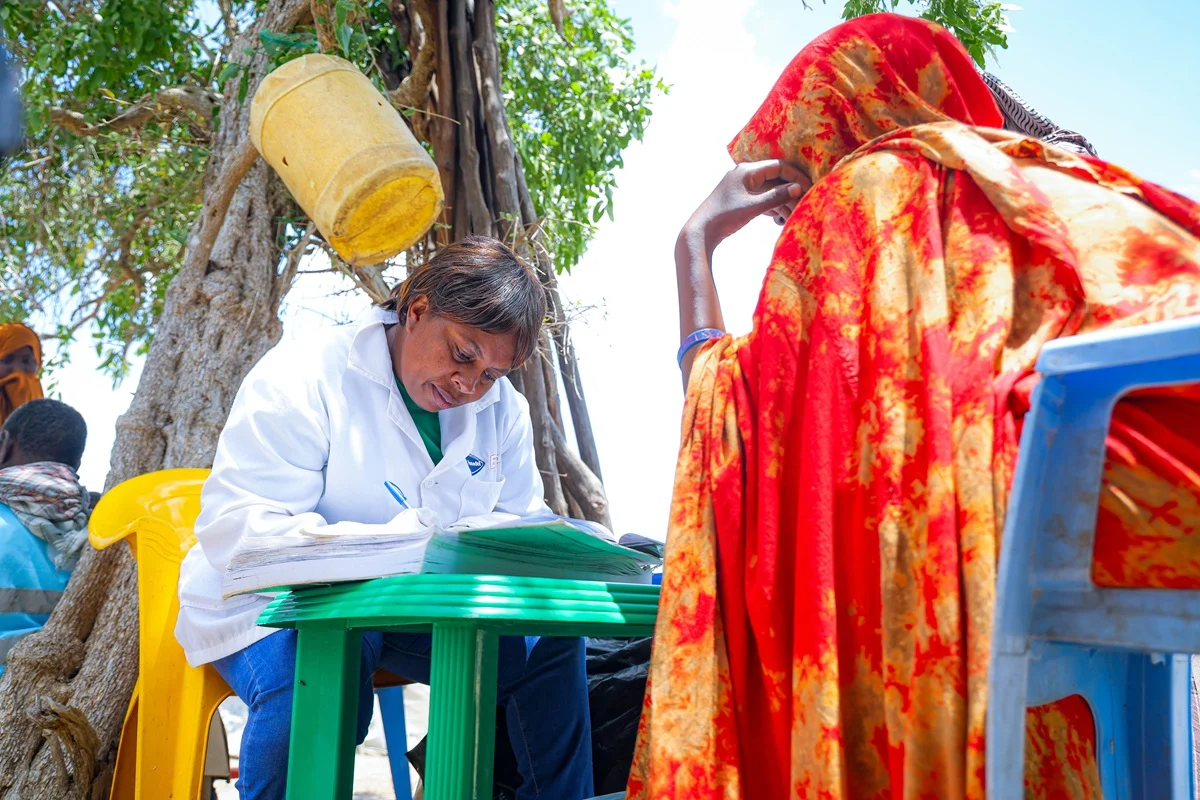
In a unified call to action, the leaders of six major United Nations agencies have issued a stark warning regarding the global progress toward eliminating female genital mutilation (FGM). As the international community observes the International Day of Zero Tolerance for Female Genital Mutilation, the heads of UNFPA, UNICEF, OHCHR, UN Women, WHO, and UNESCO have highlighted a critical juncture in the fight against this harmful practice. While decades of advocacy have yielded significant gains, the agencies warn that a combination of waning international funding, the "medicalization" of the practice, and a systematic pushback against gender equality is threatening to reverse hard-won progress.
According to the latest projections, an estimated 4.5 million girls are at risk of undergoing FGM in 2026 alone, with a significant portion of these victims being under the age of five. Currently, more than 230 million girls and women worldwide are living with the lifelong physical, psychological, and social consequences of the procedure. The joint statement reaffirms a collective commitment to ending the practice for every girl at risk and ensuring that survivors have access to the comprehensive services they require to heal and thrive.
The Public Health Crisis and Economic Burden
Female genital mutilation is defined by the World Health Organization (WHO) as all procedures involving partial or total removal of the external female genitalia or other injury to the female genital organs for non-medical reasons. It is recognized internationally as a severe violation of the human rights, health, and integrity of girls and women.
The health implications are profound and enduring. Immediate complications can include severe pain, shock, excessive bleeding (hemorrhage), infections, and difficulty in passing urine. Long-term consequences are equally devastating, encompassing chronic pain, cysts, abscesses, increased risk of HIV transmission, and complications during childbirth. Many women who have undergone FGM suffer from obstetric fistula and are at a significantly higher risk of newborn deaths.
Beyond the physical toll, the mental health impact is substantial. Survivors often experience post-traumatic stress disorder (PTSD), anxiety, depression, and psychosexual difficulties. The joint statement emphasizes that these health complications carry a staggering economic price tag. The cost of treating the health complications resulting from FGM is estimated at approximately US$ 1.4 billion annually. For many developing nations, this represents a significant drain on already strained healthcare systems, diverting resources that could otherwise be used for maternal health, immunization, or primary care.
A Chronology of Global Efforts and Recent Progress
The movement to end FGM has evolved over several decades, transitioning from a localized health concern to a global human rights priority.
- 1997: The first Joint Statement against FGM was issued by the WHO, UNICEF, and UNFPA, marking a formal inter-agency commitment.
- 2003: The International Day of Zero Tolerance for Female Genital Mutilation was first observed on February 6, following a campaign by Stella Obasanjo, the then-First Lady of Nigeria.
- 2008: The UNFPA-UNICEF Joint Programme on the Elimination of Female Genital Mutilation was launched, becoming the largest global program to accelerate the abandonment of the practice.
- 2012: The UN General Assembly adopted a milestone resolution (67/146) calling on all member states to ban the practice and intensify efforts to eliminate it.
- 2015: The elimination of FGM was included as a specific target (Target 5.3) under the Sustainable Development Goals (SDGs) to be achieved by 2030.
The data suggests that these interventions are working. In countries where FGM is prevalent, nearly two-thirds of the population now express support for its elimination. The pace of change has accelerated notably in recent years; half of all the progress made since 1990 occurred within the last decade. This momentum has reduced the global prevalence of FGM from one in two girls to one in three. However, the UN leaders caution that this acceleration must be sustained and increased to meet the 2030 deadline.
The Strategy for Elimination: Community-Led Change
The joint statement outlines a clear roadmap for what works in the fight against FGM. The agencies argue that while legal bans are necessary, they are insufficient on their own. Lasting change requires a shift in social norms and the active participation of community members.
Effective strategies include comprehensive health education and the active engagement of religious and community leaders, who often hold the authority to redefine cultural rites of passage. By involving parents and health workers in the dialogue, programs can dispel myths regarding the necessity of the practice for marriageability or religious purity.
Furthermore, the UN emphasizes the importance of grassroots movements and youth networks. These groups are often the most effective at challenging traditional power structures and advocating for the rights of the next generation. Formal education for girls also plays a pivotal role; studies consistently show that girls who complete secondary education are significantly less likely to undergo FGM or to subject their own daughters to the practice.
Supporting survivors is equally critical. The agencies call for context-tailored healthcare that addresses both physical and psychological needs, alongside legal assistance to ensure that those who have been harmed can seek justice and protection.
The Investment Case: A Tenfold Return
One of the most compelling arguments presented in the joint statement is the economic rationale for ending FGM. The UN agencies assert that every dollar invested in elimination efforts yields a tenfold return.
Current financial models suggest that an investment of US$ 2.8 billion could prevent 20 million cases of FGM by 2030. This investment would not only save millions of girls from trauma but would also generate approximately US$ 28 billion in returns. These returns manifest through reduced healthcare costs, increased educational attainment for girls, and higher workforce participation for women, which collectively boost national economies.
Despite this clear "value for money," global investment is currently falling short. Funding gaps are described as a primary hurdle, with many community outreach programs facing scale-backs due to declining international support for child protection and reproductive health initiatives.
Emerging Challenges: Medicalization and Systematic Pushback
As the 2030 deadline for the Sustainable Development Goals approaches, the fight against FGM faces new and complex obstacles. One of the most alarming trends identified by the UN is the "medicalization" of female genital mutilation. This occurs when the procedure is performed by healthcare providers, such as doctors, nurses, or midwives, under the false premise that it is safer if done in a clinical setting.
The WHO and its partners have strongly condemned this practice, asserting that FGM is never safe and that its performance by medical professionals violates medical ethics and the principle of "do no harm." Medicalization does not reduce the long-term health risks and serves only to legitimize a human rights violation.
Furthermore, the joint statement highlights a growing "systematic pushback" against gender equality and women’s rights. In some regions, there has been a resurgence of traditionalist arguments that seek to protect FGM as a cultural or religious right. This ideological resistance, compounded by political instability and humanitarian crises in several high-prevalence countries, creates a volatile environment for activists and frontline workers.
The Role of the Six UN Agencies
The joint statement represents a multi-disciplinary approach, with each agency bringing a specific focus to the issue:
- UNFPA (United Nations Population Fund): Focuses on the reproductive health aspects and coordinates the Joint Programme with UNICEF.
- UNICEF (United Nations Children’s Fund): Concentrates on child protection and the rights of the girl child to grow up free from violence.
- OHCHR (Office of the High Commissioner for Human Rights): Frames FGM as a fundamental violation of human rights and monitors legal compliance.
- UN Women: Addresses the practice within the broader context of gender-based violence and the empowerment of women.
- WHO (World Health Organization): Provides the clinical guidelines, health data, and advocacy against the medicalization of the practice.
- UNESCO (UN Educational, Scientific and Cultural Organization): Promotes education as a tool for social change and the abandonment of harmful traditional practices.
Conclusion: A Critical Moment for the 2030 Target
The joint statement concludes with a sobering reminder that the gains of the past thirty years are fragile. Without adequate, predictable, and sustained financing, the progress that has moved the world from a 50% prevalence rate to a 33% rate could be reversed.
The UN leaders emphasize that ending FGM is not just a moral imperative but a prerequisite for achieving global goals related to health, education, and economic equality. The call to action is directed at both public and private partners, urging them to reinvest in the protection of girls.
As 4.5 million girls face the threat of this practice in the coming year, the international community is at a crossroads. The tools and strategies to end FGM exist; the challenge remains in securing the political will and the financial resources to implement them at scale. The statement serves as a final reaffirmation that the goal of zero tolerance is achievable, but only through a unified, well-funded, and community-led global effort.
