
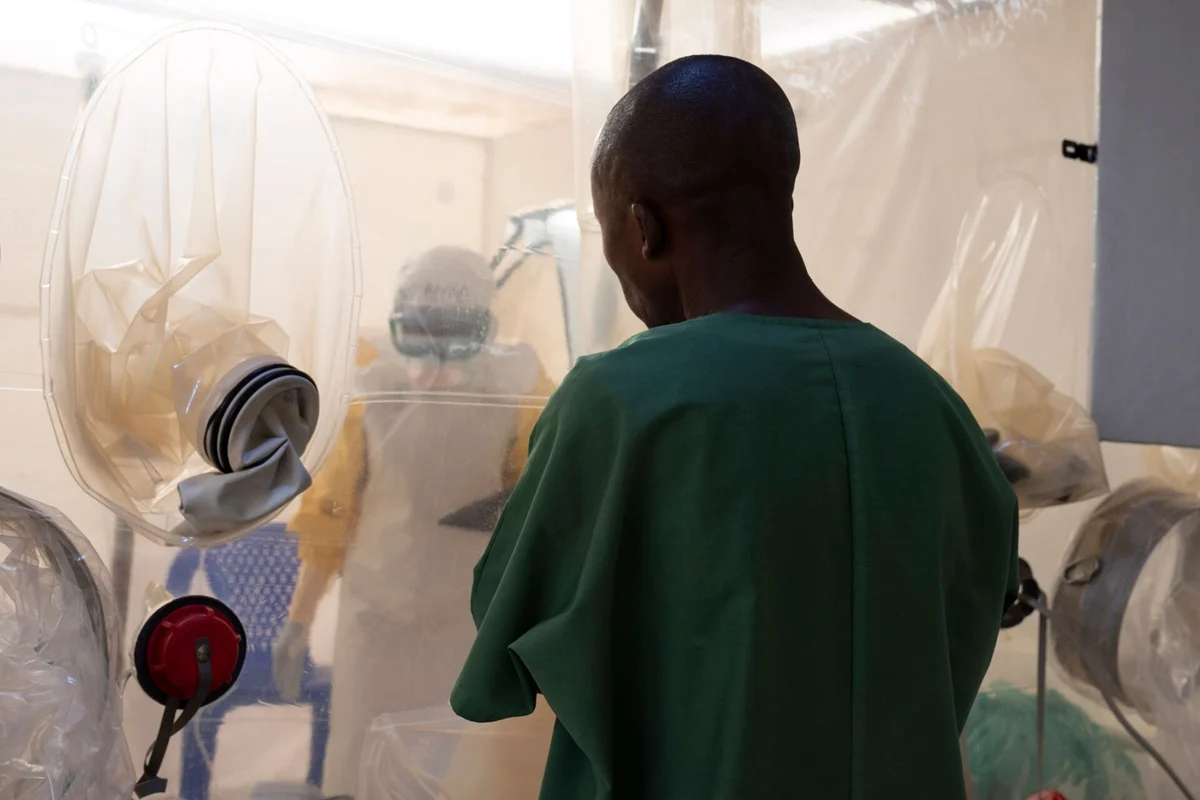
In a decisive move to address one of the most pressing gaps in tropical medicine, an international coalition of health organizations and research institutions has officially commenced the PARTNERS clinical trial in the Democratic Republic of the Congo. This large-scale scientific effort is designed to evaluate the efficacy of experimental treatments for Ebola disease caused by the Bundibugyo virus, a strain that has historically lacked the dedicated therapeutic resources afforded to the more common Zaire ebolavirus. The trial marks a significant milestone in global health security, representing a shift toward proactive, real-time research within the heart of active disease outbreaks.
The PARTNERS trial—an acronym for Platform Adaptive Randomised Trial for New and Repurposed Filovirus TreatmentS—aims to provide a definitive assessment of whether two specific antiviral therapies can improve survival rates among those diagnosed with Bundibugyo virus disease (BVD). The therapeutic candidates under scrutiny include MBP134, a monoclonal antibody, and remdesivir, a broad-spectrum antiviral medication. Furthermore, the study will investigate whether a combination of these two agents offers a synergistic effect, potentially providing a more robust defense against the virus than either treatment administered alone.
The Scientific Framework and Strategic Partnerships
Sponsored by the World Health Organization (WHO), the PARTNERS trial is the result of a complex coordination effort between several of the world’s leading medical and research bodies. The primary logistical and scientific anchors include the Institut National de Recherche Biomédicale (INRB) in the Democratic Republic of the Congo, the Institute of Tropical Medicine in Belgium, and the University of Oxford’s Pandemic Sciences Institute in the United Kingdom. This core group is supported by the Africa Centres for Disease Control and Prevention (Africa CDC) and various humanitarian organizations, including ALIMA (The Alliance for International Medical Action) and Médecins Sans Frontières (MSF).
The trial is structured as a "platform trial," a modern and highly flexible clinical design that has gained prominence since the COVID-19 pandemic. Unlike traditional clinical trials that evaluate a single drug against a placebo over a fixed period, a platform trial allows for multiple treatments to be tested simultaneously. Perhaps most importantly, it allows researchers to add new experimental drugs to the study as they become available, or to drop treatments that prove ineffective, without having to restart the entire regulatory and logistical process. This adaptability is crucial in the context of an evolving outbreak where time is the most precious commodity.
Contextualizing the Bundibugyo Virus Outbreak
The urgency of the PARTNERS trial is underscored by the current epidemiological situation in the Democratic Republic of the Congo. Since the onset of the latest BVD outbreak, health authorities have confirmed over 1,400 cases of the disease. The human cost has been severe: while nearly 210 individuals have managed to recover through supportive care, approximately 440 people have succumbed to the virus. This mortality rate highlights the lethal nature of the Bundibugyo strain, which was first identified in 2007 during an outbreak in the Bundibugyo District of Uganda.
While the global medical community achieved a breakthrough with the approval of treatments like Ebanga and Inmazeb for the Zaire ebolavirus, these therapies are specifically engineered to target the surface proteins of that particular strain. Because the Bundibugyo virus is genetically distinct, these existing treatments are not effective against it. Currently, there are no approved therapeutics specifically for BVD, leaving clinicians to rely almost exclusively on "supportive care"—rehydration, electrolyte management, and treating secondary infections—to keep patients alive.
The Therapeutic Candidates: MBP134 and Remdesivir
The selection of MBP134 and remdesivir for the PARTNERS trial was not arbitrary. The WHO Technical Advisory Group chose these candidates following an exhaustive review of preclinical data, safety profiles from previous human use, and observational evidence gathered during prior filovirus responses.
MBP134 is a sophisticated cocktail of two human monoclonal antibodies. It was developed to provide "pan-ebolavirus" protection, meaning it is designed to target a site on the virus’s glycoprotein that is conserved across different species of Ebola, including Zaire, Sudan, and Bundibugyo. In animal models, MBP134 has shown high levels of efficacy, offering hope that it could become the first standardized treatment for multiple strains of the disease.
Remdesivir, originally developed by Gilead Sciences, is a nucleotide analog that inhibits viral RNA polymerases. While it gained global fame as a treatment for COVID-19, its roots are in the search for Ebola treatments. It was used during the 2018-2020 Ebola outbreak in the eastern DRC as part of the PALM trial. While it was not the top performer against the Zaire strain in that specific study, its safety profile is well-documented, and its mechanism of action remains a promising tool for inhibiting the replication of the Bundibugyo virus.
Integration with Clinical Care and Patient Support
A key feature of the PARTNERS trial is its seamless integration into the existing clinical care framework. Patients who enroll in the study will not only receive the investigational antivirals but will also be guaranteed the highest standard of supportive care. According to WHO guidelines, this includes intravenous or oral fluids, electrolyte replacement, oxygen therapy, blood pressure management, and pain control.
Enrolled participants will be closely monitored by medical teams for a minimum of 28 days. This rigorous follow-up is essential not only for assessing the efficacy of the drugs but also for ensuring the safety of the participants. An independent data and safety monitoring board will regularly review the trial’s data to identify any adverse effects or early signs of success, ensuring that the trial remains ethical and scientifically sound.
Leadership Perspectives and Official Responses
The launch of the trial has drawn praise and commitment from leaders across the global health landscape. Dr. Tedros Adhanom Ghebreyesus, Director-General of the WHO, emphasized the humanitarian necessity of the project. "Even without approved therapeutics, people are recovering from this disease, but of course, we could save many more lives with safe and effective therapeutics in our toolkit," Dr. Tedros stated. He noted that the trial was established in "record time," reflecting a new global standard for rapid response research.
Professor Amanda Rojek, the PARTNERS Trial Operations Lead from the University of Oxford, highlighted the shift in research philosophy. "One of the key lessons from recent outbreaks is that research needs to happen alongside the response, not after it," she said. Professor Rojek pointed out that by conducting the trial during the outbreak, the evidence generated can be used to inform patient care in "months rather than years."
From the Congolese perspective, the trial is a point of national scientific pride and a beacon of hope. Dr. Samuel Roger Kamba, the Minister of Health of the DRC, noted that the country is "demonstrating its strong commitment to science and research." He added that the findings would not only save lives in the current outbreak but would "strengthen global preparedness for future Ebola epidemics."
Professor Jean-Jacques Muyembe-Tamfum, the Director-General of the INRB and a legendary figure in Ebola research, reinforced the importance of the evidence-based approach. "By integrating this trial into clinical care, we are giving patients access to promising investigational treatments while generating the evidence needed to improve care for current and future outbreaks," he said.
A Chronology of Ebola Research Evolution
The PARTNERS trial is the latest chapter in a decades-long effort to tame filoviruses. For years, Ebola research was hampered by the sporadic and unpredictable nature of outbreaks. Research often began too late, with trials failing to reach statistical significance before an outbreak naturally subsided.
The paradigm shifted during the 2014-2016 West Africa Ebola epidemic, where the international community realized that clinical trials must be "warm-started" and ready to deploy at a moment’s notice. This led to the PALM trial in the DRC (2018), which successfully identified two effective treatments for the Zaire strain. The PARTNERS trial builds on this legacy, applying the "platform" methodology to the Bundibugyo strain and potentially the Sudan strain and Marburg virus in the future.
Broader Implications for Global Health Security
The implications of the PARTNERS trial extend far beyond the borders of the Democratic Republic of the Congo. By establishing a sustainable research platform that can operate across multiple outbreaks and different types of filoviruses, the global health community is building a permanent infrastructure for pandemic preparedness.
This initiative addresses the "neglected" status of certain tropical diseases. For too long, scientific attention was focused on pathogens with the highest visibility or greatest potential to affect high-income nations. The PARTNERS trial corrects this imbalance by focusing on a strain that primarily affects Central and East Africa, ensuring that equity is a central pillar of medical innovation.
Furthermore, the trial strengthens the "One Health" approach by fostering collaboration between local health ministries, international academic institutions, and humanitarian agencies. This network of trust and logistical expertise is what will ultimately prevent local outbreaks from escalating into global pandemics.
Institutional Backgrounds
The success of the PARTNERS trial relies on the diverse expertise of its participating institutions. The INRB, founded in 1984, has become a global leader in virology and infectious disease research, having been on the front lines of nearly every Ebola outbreak in the DRC’s history.
The Pandemic Sciences Institute (PSI) at the University of Oxford brings world-class data analysis and clinical trial management to the project. PSI was established to apply the lessons learned from the COVID-19 pandemic to other infectious threats, focusing on equitable access to medical solutions.
The World Health Organization continues its role as the coordinating authority for international public health. The launch of this trial aligns with the WHO’s mission to lead the world’s response to health emergencies and to ensure that science remains the foundation of health protection. As the world moves toward World Health Day 2026, themed "Together for health. Stand with science," the PARTNERS trial stands as a premier example of that philosophy in action.
The results of the PARTNERS trial are expected to be released in stages as data becomes available. For the thousands of families living in the shadow of the Bundibugyo virus, the trial represents more than just a scientific endeavor; it is a promise that they will not be forgotten by the global scientific community. Through rigorous research and international solidarity, the goal of turning Ebola from a death sentence into a manageable condition is closer than ever before.
