
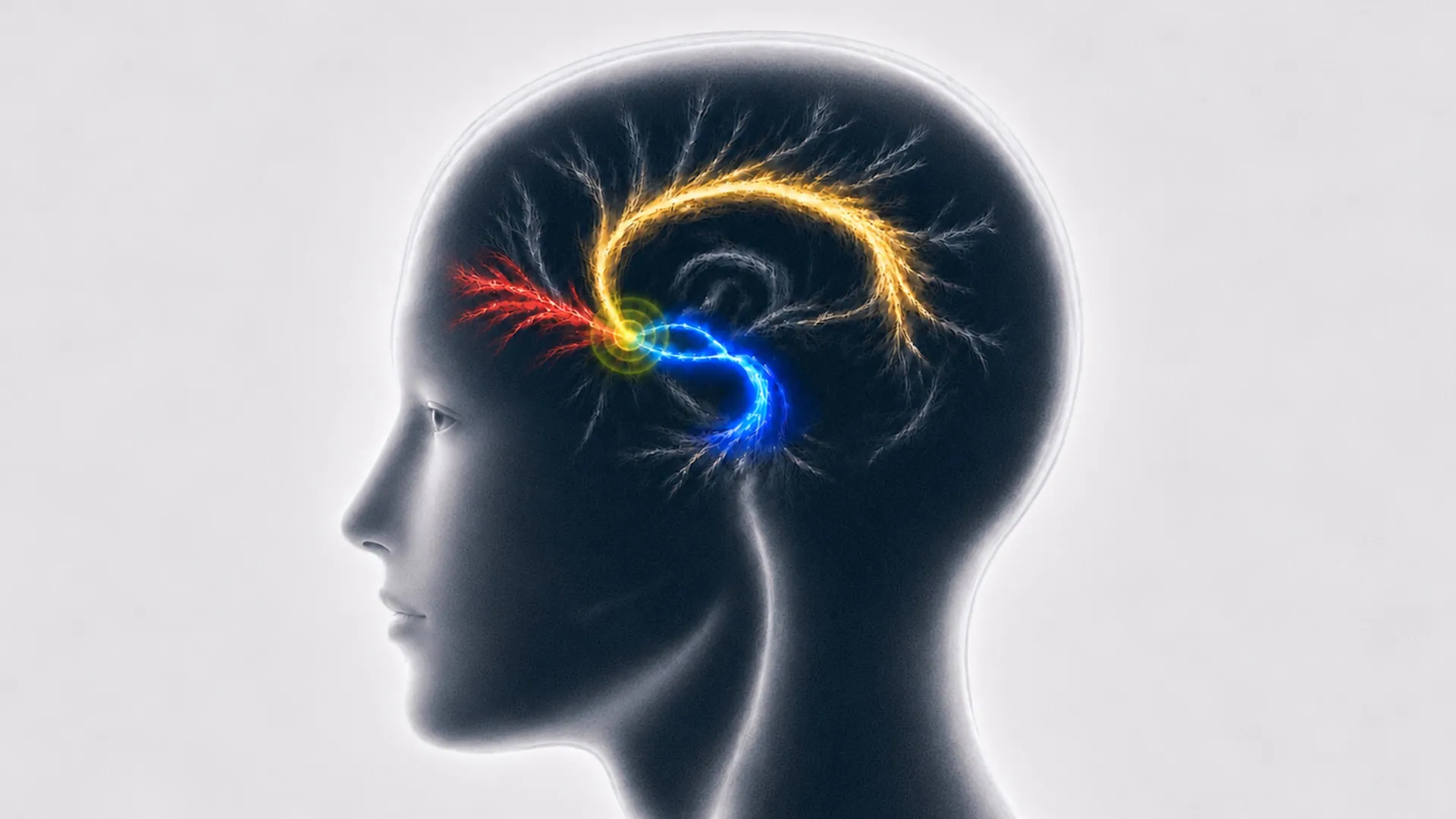
Neuroscientists at the Icahn School of Medicine at Mount Sinai have achieved a significant breakthrough in the treatment of severe psychiatric disorders by identifying three distinct brain connections linked to long-term clinical improvements in patients undergoing deep brain stimulation (DBS) for treatment-resistant depression. Published on October 1 in the American Journal of Psychiatry, the findings represent the largest multi-site collaborative analysis of its kind to date. By evaluating patient cohorts who received subcallosal cingulate deep brain stimulation (SCC DBS), the research team pinpointed specific white matter pathways that must be successfully engaged to secure sustained therapeutic relief. This discovery is expected to shift how surgical teams approach neuromodulation, steering the field away from generalized anatomical landmarks and toward hyper-personalized, connectome-based surgical planning.
The implications of this study extend far beyond theoretical neuroscience. Treatment-resistant depression affects millions of individuals globally, leaving them vulnerable to chronic suffering after failing to find relief through traditional pharmacological interventions, psychotherapy, and electroconvulsive therapy. As clinical researchers race to refine experimental neuromodulation therapies, the ability to predict which patients will respond to SCC DBS—and why certain procedures fail—remains a paramount clinical objective. The newly published data provides a biological roadmap that could dramatically increase the precision, safety, and overall efficacy of implantable brain stimulation technologies.
Chronology and Background of Subcallosal Cingulate Deep Brain Stimulation
The development of SCC DBS as an intervention for severe depression has evolved over more than two decades, driven by pioneering neuroimaging and circuit-based psychiatric research. In the early 2000s, clinical researchers, including Dr. Helen Mayberg, recognized that major depressive disorder is not merely a chemical imbalance, but a network disorder involving dysfunctional communication between multiple interconnected brain regions. By mapping these affected circuits, researchers identified the subcallosal cingulate cortex—also known as Brodmann Area 25—as a critical hub regulating mood, emotional processing, and autonomic function.
Between 2014 and 2023, collaborative research teams spanning Mount Sinai, Emory University, and other academic institutions published foundational studies in leading psychiatric journals, including Biological Psychiatry, Molecular Psychiatry, and Nature. These studies established that successful outcomes in SCC DBS depended heavily on the exact placement of electrodes to modulate specific white matter tracts rather than the gray matter target alone. However, discrepancies in patient outcomes across different clinical trials persisted, prompting the need for a comprehensive, multi-site study to determine whether specific neural pathways were universally required for sustained remission.
To resolve this question, the Mount Sinai researchers aggregated and analyzed clinical data from multiple historical and active cohorts. This included data from the heavily scrutinized BROADEN trial and patient groups from the University of Toronto, where SCC DBS was initially developed. By combining computational models of electrical fields generated by the implanted hardware with advanced brain connectivity maps, the research team could reconstruct which white matter tracts were activated during stimulation and compare those engagement patterns across successful and unsuccessful cases.
Mapping the Critical Pathways: Cingulum Bundle, Forceps Minor, and Uncinate Fasciculus
The analysis revealed that lasting clinical improvements were consistently correlated with electrical stimulation reaching three primary white matter structures: the cingulum bundle, the forceps minor, and the medial uncinate fasciculus/ventral amygdalofugal pathways. Each of these tracts serves as a major information highway connecting the subcallosal cingulate cortex to frontal, limbic, and subcortical structures responsible for mood regulation and cognitive control.
Perhaps the most revealing finding emerged from an analysis of non-responder cohorts. Across the participating study sites, patients who failed to exhibit clinical improvement after two years of continuous stimulation consistently demonstrated a lack of engagement with the left cingulum bundle. While the study did not experimentally test whether repositioning electrodes to capture this missing tract would immediately alleviate symptoms, the spatial discrepancy offers a compelling mechanical explanation for historical treatment failures. In many cases, electrodes were placed within the correct anatomical neighborhood, but failed to physically intersect the specific fiber bundles required to modulate the wider depressive network.
This realization emphasizes a fundamental truth about neuromodulation: in complex neural networks, a margin of error measured in millimeters can dictate the difference between complete clinical remission and total therapeutic failure.
Integration into Ongoing Clinical Trials and Connectome-Based Targeting
The transition from anatomical targeting—where surgeons rely on standard brain atlases to place electrodes—to connectome-based targeting represents a paradigm shift in functional neurosurgery. Connectome-based targeting utilizes individual or generalized diffusion MRI maps to visualize a patient’s unique white matter pathways, allowing surgeons to plot an optimal trajectory that maximizes engagement with target tracts while minimizing collateral stimulation.
This methodology is no longer confined to theoretical papers. The insights generated by Mount Sinai’s research framework have directly informed the design and execution of the Abbott TRANSCEND clinical trial. TRANSCEND is a randomized, controlled clinical investigation evaluating SCC DBS using individualized brain connectivity maps to guide surgical lead placement and parameter optimization. By integrating these predictive mapping techniques into live clinical trials, researchers hope to standardize outcomes and reduce the variance that has historically complicated neuromodulation research.
Expert Perspectives and Institutional Commentary
The study’s leadership highlights the multidisciplinary nature of the findings and underscores the necessity of continuous technological refinement.
"This study underscores the importance of individualized surgical targeting for achieving optimal outcomes with deep brain stimulation for depression," said Dr. Helen Mayberg, Mount Sinai Professor in Neurotherapeutics and founding Director of the Nash Family Center for Advanced Circuit Therapeutics at the Icahn School of Medicine at Mount Sinai. "In any randomized controlled trial of a neuromodulation treatment, precise lead placement and confirmation that the intended brain target has been engaged are essential first steps. We still have much to learn about which patients are most likely to benefit from stimulation of this particular target, but developing imaging-based signatures that can match patients to their optimal treatment remains a central goal of our research."
Dr. Brian Kopell, Director of the Center for Neuromodulation at Mount Sinai, emphasized the spatial sensitivity of the intervention. "This study addresses an important question in DBS: not simply which area of the brain to stimulate, but which connections within that area need to be engaged," Dr. Kopell noted. "For a network disorder such as depression, millimeters can determine whether stimulation reaches the pathways we intend to modulate. Identifying and reproducibly engaging those pathways gives us a more precise surgical target and a framework for understanding why otherwise similar electrode placements may produce different clinical outcomes."
Adding to these remarks, Dr. Ki Sueng Choi, Associate Professor and Imaging Core Leader at the Center for Advanced Circuit Therapeutics, pointed toward the future of algorithmic and device-based psychiatric care. "Our findings show precisely engaging these white matter pathways is a critical first step toward sustained response," Dr. Choi stated. "The next step is to characterize abnormal functional and structural brain states along these pathways to build more detailed models for setting patient-specific stimulation parameters, including amplitude, frequency, and pulse width, for precision medicine."
Methodological Limitations and Future Directions
While the study provides robust data supporting the role of the three identified pathways, the authors acknowledge several inherent methodological limitations. Most notably, high-resolution individual diffusion MRI scans—which map a specific patient’s unique microstructural white matter architecture—were not universally available for every historical participant across all cohorts. Consequently, a portion of the analysis relied on generalized normative brain connectivity maps rather than patient-specific connectomes.
However, a substudy involving the Emory University patient cohort compared results derived from generalized connectivity maps against those generated from individual diffusion imaging. Both analytical approaches yielded consistent findings, lending validity to the conclusions drawn from the broader multi-site dataset. Nevertheless, the researchers stress that future clinical trials must incorporate routine, patient-specific advanced neuroimaging to fully validate the predictive power of individualized connectomics.
Looking ahead, investigators plan to expand their research protocols to examine additional neuroimaging biomarkers, including quantitative measures of white matter integrity and functional connectivity states. By synthesizing structural roadmaps with real-time electrophysiological feedback, scientists aim to construct dynamic computational models that can automatically adjust device parameters—such as electrical frequency, amplitude, and pulse width—tailored to an individual’s momentary neural state.
Funding, Industry Collaboration, and Disclosures
The publication of this study highlights the complex interplay between academic medical research and private medical technology development. The research at Mount Sinai received substantial financial backing from the National Institutes of Health (NIH) BRAIN Initiative under grant UH3NS103550, alongside philanthropic support from the Hope for Depression Research Foundation and the DANA Foundation.
Abbott’s Neuromodulation business division supplied critical historical data obtained from the BROADEN clinical trial, though the company played no role in the design, execution, or data analysis of the current Mount Sinai study.
In accordance with academic transparency standards, several study authors disclosed financial relationships with industry stakeholders. Dr. Brian Kopell, Dr. Helen Mayberg, Dr. Ki Sueng Choi, and Dr. Martijn Figee have served as paid consultants to Abbott Laboratories. Furthermore, Dr. Mayberg is a named co-inventor on foundational patents regarding the use of subcallosal cingulate deep brain stimulation for treatment-resistant depression, a technology licensed to Abbott Laboratories that has previously yielded royalty payments. Dr. Mayberg, Dr. Kopell, and Dr. Choi are also named co-inventors on an institutional patent application filed through Mount Sinai covering novel techniques for optimizing electrode placement in psychiatric DBS, an approach currently utilized in the TRANSCEND clinical trial but not yet commercially licensed.
Broader Implications for Psychiatry and Precision Medicine
The identification of the cingulum bundle, forceps minor, and uncinate fasciculus as vital conduits for psychiatric symptom remission marks a watershed moment in the convergence of neurosurgery and psychiatry. As depression continues to impose a devastating toll on global public health, the shift toward treating psychiatric conditions as structural network disorders offers renewed hope for populations for whom all other medical therapies have failed.
By bridging the gap between anatomical placement and functional circuit engagement, Mount Sinai’s findings pave the way for a new era of precision neuromodulation. While considerable work remains to optimize patient selection criteria, refine hardware capabilities, and validate personalized imaging protocols, this multi-site study establishes a rigorous biological benchmark. As clinical investigations like the TRANSCEND trial progress, the psychiatric community moves ever closer to transforming invasive brain stimulation from an empirical last resort into a predictable, highly tailored precision therapy.
