
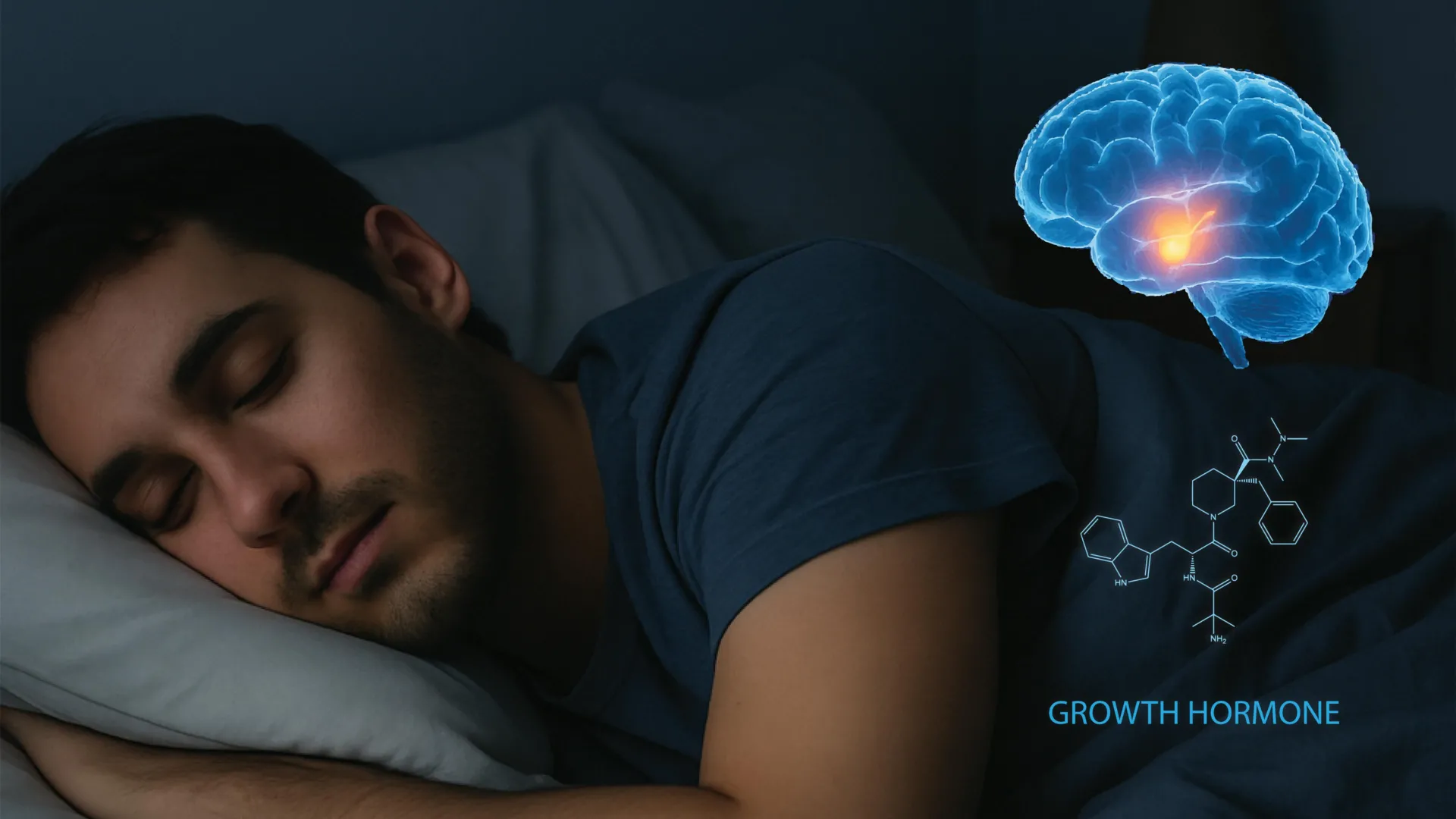
The restorative power of a good night’s sleep has long been understood as a fundamental biological necessity, essential for physical recovery, cognitive processing, and emotional regulation. Beyond merely leaving individuals feeling refreshed, deep sleep triggers the release of growth hormone—a powerful chemical messenger responsible for building muscle, strengthening bones, regulating fat metabolism, and enabling teenagers to reach their full height potential. While medical science has long recognized that insufficient sleep directly interferes with this vital hormonal production, the precise neural mechanisms governing the process during non-rapid eye movement (NREM) sleep—the deep, restorative stage dominating the early hours of the night—remained an elusive mystery.
That longstanding physiological puzzle has now begun to unravel. In a landmark study published in the prestigious journal Cell, researchers at the University of California, Berkeley, have mapped the intricate brain circuitry responsible for regulating growth hormone release during sleep. Led by laboratory principal investigator and neuroscience professor Yang Dan, alongside first author and postdoctoral fellow Xinlu Ding, the research team successfully identified the specific neurons controlling growth hormone secretion. More surprisingly, the team uncovered a previously unknown feedback loop in which growth hormone actively signals back to the brain, influencing the timing of wakefulness. This breakthrough not only redefines our understanding of sleep biology but also lays the groundwork for novel therapeutic approaches targeting metabolic and neurological disorders.
Background Context and the Evolution of Sleep Science
For decades, endocrinologists and neuroscientists relied on indirect methods to study the relationship between sleep and growth hormone. The standard clinical approach required drawing blood samples at timed intervals throughout the night to monitor fluctuations in hormone levels. While these historical studies consistently confirmed that the vast majority of daily growth hormone secretion occurs during the initial stages of deep, slow-wave sleep, they offered zero insight into the real-time electrical activity of the brain cells driving the phenomenon.
The physiological stakes of this hormonal orchestration are exceptionally high. Growth hormone’s utility extends far beyond childhood development; throughout adulthood, it dictates how the body manages glucose, utilizes stored fat, preserves bone mineral density, and maintains lean muscle mass. When sleep is chronically fragmented or restricted, this delicate regulatory framework collapses. Decades of epidemiological and clinical data have linked chronic sleep deprivation to heightened risks of obesity, type 2 diabetes, metabolic syndrome, and cardiovascular disease.
To bridge the gap between macroscopic sleep metrics and microscopic cellular activity, the UC Berkeley team turned their focus toward the hypothalamus. Situated deep within the mammalian brain, this evolutionarily conserved control center acts as a master switchboard, orchestrating hunger, core body temperature, endocrine function, and the circadian sleep-wake cycle. By peering inside this critical region, the researchers aimed to decode the exact cellular dialogue responsible for human growth and metabolic maintenance.
Chronology and Experimental Methodology
The path to this discovery required cutting-edge neuroscientific tools and an experimental model uniquely suited for sleep observation. Conducted in the laboratory of Professor Yang Dan, the research leveraged advanced optogenetics and in vivo electrophysiology. The team implanted microscopic electrodes directly into the brains of mice, allowing them to record real-time neural firing while simultaneously using precision light pulses to stimulate targeted populations of hypothalamic cells.
Mice serve as an ideal model organism for sleep research because their architecture of rest diverges sharply from human monophasic sleep. Rather than consolidating rest into one continuous eight-hour block, murine sleep occurs in frequent, brief episodes lasting only minutes, distributed unevenly across the 24-hour day. This physiological quirk provided the UC Berkeley researchers with a distinct advantage: hundreds of recurring transitions between sleeping and waking states every single day, creating an expansive window to observe how neural networks adapt in real time.
Within the hypothalamus, the scientists concentrated on three distinct neuronal populations: those that synthesize growth hormone-releasing hormone (GHRH), and two separate classes of cells that produce somatostatin. These two chemical messengers operate in constant opposition. GHRH acts as an accelerator, prompting the pituitary gland at the base of the brain to secrete growth hormone into the bloodstream, whereas somatostatin functions as a brake, suppressing its release.
By mapping the functional connectivity of these cells across different sleep stages, the research team documented a fascinating shift in cellular choreography. During rapid eye movement (REM) sleep—the stage traditionally characterized by vivid dreaming—neural activity involving both GHRH and somatostatin heightens simultaneously. Although these peptides possess opposing biological mandates, their coordinated upregulation during REM sleep ultimately facilitates a surge in growth hormone production.
Conversely, the operational paradigm shifts entirely during non-REM (NREM) sleep. During this deep, restorative phase, somatostatin activity drops precipitously, lifting its inhibitory grip on the endocrine system, while GHRH activity experiences a moderate, steady rise. This precise biochemical handoff ensures a sustained, controlled release of growth hormone during the most physically restorative hours of the night.
The Discovery of a Bidirectional Feedback Loop
Perhaps the most startling revelation of the Cell study is that the relationship between sleep and growth hormone is entirely reciprocal. For generations, scientists operated under the assumption that the sleeping brain acts as a unilateral command center, dictating endocrine output based on internal circadian cues. The UC Berkeley findings prove otherwise.
As growth hormone systematically accumulates in the body during deep sleep, it does not merely circulate silently; it actively communicates back with the central nervous system. The research team discovered that rising levels of growth hormone stimulate neurons within the locus coeruleus, a densely pigmented nucleus located in the brainstem. The locus coeruleus is fundamentally responsible for driving alertness, sustained attention, cognitive processing, and behavioral arousal.
When growth hormone interacts with these brainstem cells, it increases their electrical excitability, steadily nudging the brain toward the threshold of wakefulness. This establishes a sophisticated, self-regulating feedback loop: sleep promotes the secretion of growth hormone, and the resulting accumulation of growth hormone provides the neurological impetus to wake up.
However, this circuit operates on a razor-thin biological margin. The researchers noted an unexpected regulatory hurdle regarding the locus coeruleus. While moderate stimulation of these arousal pathways encourages healthy awakening, overexcitement of these exact neurons can paradoxically induce sleepiness rather than alertness—a phenomenon co-author Daniel Silverman documented in a separate study published earlier the same year. This delicate balancing act exemplifies biological homeostasis, wherein the organism must constantly weigh competing neurochemical signals to maintain stable internal conditions.
"This suggests that sleep and growth hormone form a tightly balanced system," Silverman explained. "Too little sleep reduces growth hormone release, and too much growth hormone can in turn push the brain toward wakefulness. Sleep drives growth hormone release, and growth hormone feeds back to regulate wakefulness, and this balance is essential for growth, repair and metabolic health."
Official Responses and Expert Analysis
The implications of mapping this foundational circuit have resonated strongly throughout the broader neuroscience and endocrinology communities. By moving beyond observational blood draws and into direct neural recording, the UC Berkeley team has provided a concrete anatomical roadmap for future clinical interventions.
"People know that growth hormone release is tightly related to sleep, but only through drawing blood and checking growth hormone levels during sleep," noted study first author Xinlu Ding. "We’re actually directly recording neural activity in mice to see what’s going on. We are providing a basic circuit to work on in the future to develop different treatments."
Researchers emphasize that targeting this newly isolated circuit could unlock entirely new pharmacological and genetic avenues. For instance, advanced experimental gene therapies designed to selectively modulate specific cellular receptors could one day be deployed to dial back the pathological excitability of the locus coeruleus—a region whose dysfunction is frequently implicated in major neurological disorders, including Parkinson’s and Alzheimer’s disease, as well as severe psychiatric conditions.
"Understanding the neural circuit for growth hormone release could eventually point toward new hormonal therapies to improve sleep quality or restore normal growth hormone balance," said Daniel Silverman. "There are some experimental gene therapies where you target a specific cell type. This circuit could be a novel handle to try to dial back the excitability of the locus coeruleus, which hasn’t been talked about before."
Furthermore, because the locus coeruleus heavily influences cognitive function and post-waking mental acuity, the feedback loop suggests that healthy growth hormone rhythms are just as vital for the brain as they are for skeletal and muscular maintenance. "Growth hormone not only helps you build your muscle and bones and reduce your fat tissue, but may also have cognitive benefits, promoting your overall arousal level when you wake up," Ding added.
Broader Impact and Implications
The ramifications of the UC Berkeley study extend far beyond theoretical neurobiology, offering a fresh lens through which to view modern public health challenges. Chronic sleep deprivation has reached epidemic proportions in industrialized nations, driven by extended work hours, pervasive screen time, and high-stress environments. By demonstrating that sleep architecture and endocrine regulation are inextricably linked through a closed-loop feedback system, the research underscores the profound biological toll exacted by modern sleep habits.
In clinical settings, disruptions in growth hormone regulation are frequently observed in patients suffering from metabolic disorders, treatment-resistant insomnia, and neurodegenerative decline. If future translational studies confirm that these mammalian neural circuits operate similarly in humans, clinicians could eventually deploy targeted therapeutics to re-establish healthy feedback loops in patients whose sleep-endocrine axes have broken down.
Nevertheless, study authors maintain a measured and rigorous perspective regarding the timeline for clinical translation. Because the current findings were derived entirely from murine models, extensive translational research remains necessary to verify how these mechanisms function within the complex topography of the human brain. Clinical trials must determine whether specific pharmacological or gene-based therapies can safely modulate GHRH, somatostatin, and locus coeruleus activity without triggering adverse systemic side effects.
Ultimately, the research reinforces a fundamental paradigm shift in contemporary sleep science: rest is not a passive state of neurological shutdown, but an active, highly orchestrated physiological performance. It is a time when hormones, neurotransmitters, and neural circuits engage in an unceasing, delicate dialogue to ensure somatic repair, metabolic equilibrium, and cognitive renewal. As science continues to decode these cellular conversations, the old adage of simply "getting a good night’s sleep" takes on a profound, molecular dimension.
