
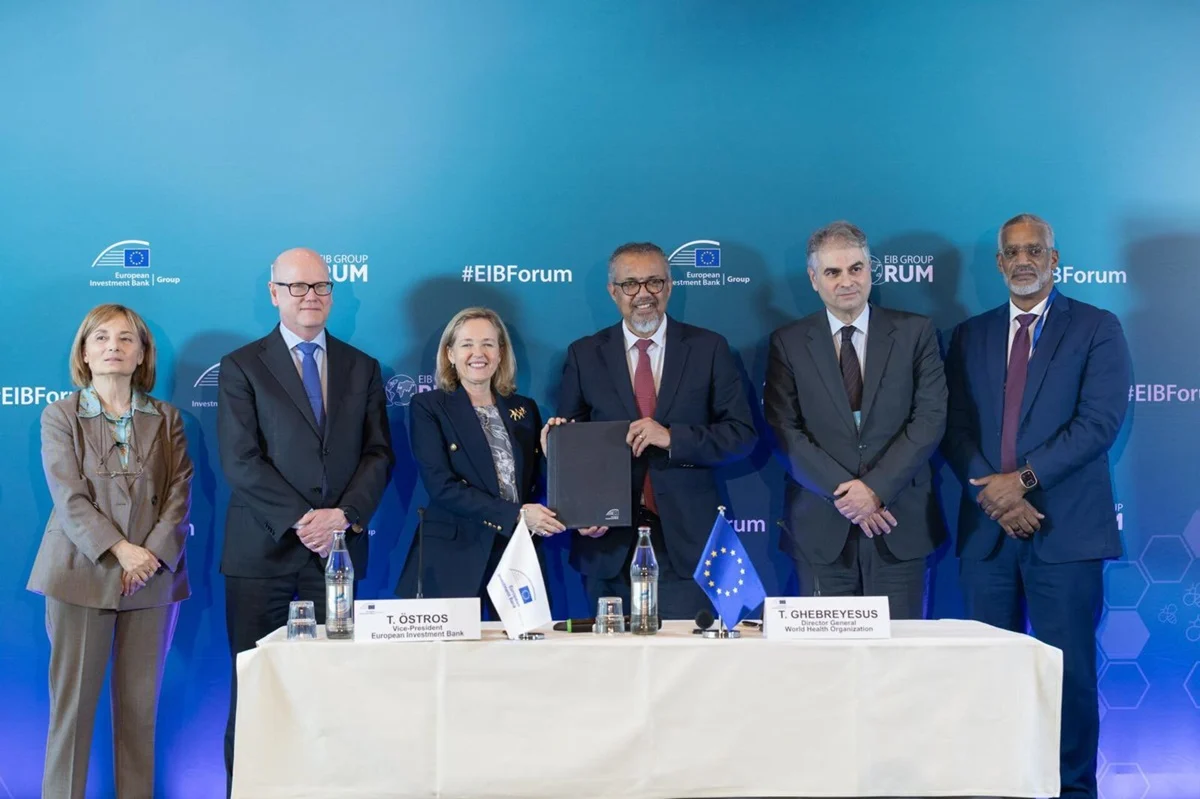
On 6 March 2025, at the prestigious EIB Group Forum held in Luxembourg, a significant milestone in international humanitarian cooperation was reached as Dr. Tedros Adhanom Ghebreyesus, Director-General of the World Health Organization (WHO), and Thomas Östros, Vice-President of the European Investment Bank (EIB Global), formalized a strategic partnership. The agreement, valued at 10 million euros, is specifically earmarked to stabilize and revitalize Lebanon’s fragile public health sector, which has been under immense strain due to overlapping economic, political, and regional crises. This funding initiative is not merely a financial transaction but a critical intervention designed to restore core diagnostic capabilities and ensure the continuity of life-saving medical supplies for the most vulnerable segments of the Lebanese population.
The Context of Crisis: Lebanon’s Healthcare Challenges
The public health landscape in Lebanon has been deteriorating rapidly since late 2019, triggered by a historic economic collapse, hyperinflation, and the subsequent COVID-19 pandemic. The national currency’s devaluation decimated the purchasing power of the Ministry of Public Health and private citizens alike, making imported pharmaceuticals—which account for the vast majority of the country’s medical supply—largely inaccessible.
The state of the Central Public Health Laboratory (CPHL) serves as a stark symbol of this decline. Prior to the crises, the CPHL was the cornerstone of the nation’s disease surveillance and diagnostic efforts. However, years of underfunding and neglect left the facility unable to perform essential testing, forcing the country to rely on fragmented private laboratories and international assistance for infectious disease control. The collapse of this central node left the public health system blind to outbreaks and unable to maintain international standards for health security.
Objectives of the WHO-EIB Initiative
The primary focus of this 10 million euro grant is twofold: the comprehensive rehabilitation of the CPHL and the provision of essential medications for non-communicable diseases (NCDs).
The re-establishment of the CPHL is expected to bolster Lebanon’s ability to conduct advanced laboratory testing, including genomic sequencing for infectious diseases and water quality monitoring. By centralizing these functions, the Ministry of Public Health aims to reduce the financial burden on the government and provide timely, accurate data for epidemiological surveillance.
Simultaneously, the initiative targets the immediate welfare of over 50,000 patients living with chronic conditions. In a country where healthcare costs have surged by several hundred percent, patients suffering from diabetes, cardiovascular diseases, and various forms of cancer have frequently been forced to forgo treatment. By establishing a robust supply chain for these life-saving medications, the WHO and EIB hope to prevent a secondary health catastrophe characterized by preventable mortality and long-term disability.
Chronology of Institutional Engagement
The lead-up to the 6 March agreement follows a series of high-level engagements between international donors and Lebanese authorities.
- 2019-2020: The onset of the Lebanese financial crisis begins to cripple the import of medical supplies.
- 2020-2022: The WHO provides emergency support to keep the public health sector functional during the height of the COVID-19 pandemic, while the EIB explores sustainable investment pathways for social infrastructure.
- 2023: Following assessments by the WHO, international stakeholders identify the laboratory infrastructure as a critical point of failure that requires urgent capital injection.
- Early 2024: Preliminary discussions occur between the EIB and the WHO regarding a grant facility that combines technical health expertise with institutional development.
- 6 March 2025: The signing ceremony at the EIB Group Forum confirms the commitment, marking the official launch of the implementation phase.
Supporting Data: The Burden of NCDs
According to recent data provided by the WHO and local health authorities, non-communicable diseases are responsible for approximately 90% of all deaths in Lebanon. Cardiovascular disease alone accounts for nearly half of these fatalities. The economic crisis has exacerbated these outcomes; reports indicate that since 2021, the cost of insulin and common hypertension medication has risen beyond the reach of the average Lebanese household.
Furthermore, the brain drain of medical professionals—an estimated 40% of the country’s doctors and nurses have emigrated since 2020—has left the remaining health infrastructure struggling to provide specialized care. This grant serves as a stabilizing force, providing the physical and material resources necessary for the remaining medical workforce to function effectively.
Official Responses and Strategic Significance
During the signing in Luxembourg, Dr. Tedros Adhanom Ghebreyesus emphasized the importance of resilient health systems as the first line of defense against global health threats. He noted that the partnership with the EIB allows the WHO to move beyond emergency relief toward long-term systemic stability. The involvement of EIB Global, the development arm of the European Investment Bank, signals a shift in strategy: treating health infrastructure as an investment in national security and economic recovery rather than a purely charitable endeavor.
Thomas Östros, Vice-President of the EIB, echoed these sentiments, highlighting that the bank’s support is part of the European Union’s broader commitment to regional stability in the Middle East. By funding the CPHL, the EIB is essentially underwriting the foundational requirements for a modern, functional state, noting that a reliable public health laboratory is a prerequisite for any modern economy’s health security.
Implications for the Future of Public Health in Lebanon
The implications of this grant extend far beyond the immediate provision of drugs. The restoration of the CPHL will allow Lebanon to integrate more fully into international disease monitoring networks, such as the Global Influenza Surveillance and Response System (GISRS). This integration is crucial for preventing the cross-border spread of pathogens and ensuring that Lebanon is not caught unprepared by future health emergencies.
However, analysts caution that while this grant provides a vital lifeline, it is not a panacea. The long-term sustainability of the health sector depends on broader structural reforms within the Lebanese government, including the stabilization of the banking sector and the implementation of a national health insurance reform. Without these macroeconomic adjustments, the public health sector will remain perpetually reliant on international aid.
Analytical Perspective: Sustainability and Accountability
The success of this initiative will be measured by its implementation timeline and the transparency of the supply chain. Previous humanitarian interventions in Lebanon have sometimes been hindered by bureaucratic bottlenecks and the lack of a centralized procurement system. By partnering directly with the WHO, the EIB has ensured that technical oversight and international procurement standards are at the heart of the project.
This partnership also sets a precedent for how International Financial Institutions (IFIs) can collaborate with specialized UN agencies to tackle complex humanitarian problems. By combining the financial muscle of the EIB with the clinical and technical expertise of the WHO, this model offers a template for addressing public health crises in other conflict-affected or economically distressed regions.
As the project moves into its operational phase, the primary challenge will be the maintenance of the laboratory equipment and the continuity of the medicine supply chain beyond the initial grant period. Ensuring that the Ministry of Public Health can eventually transition to a sustainable funding model for these services will be the ultimate test of the initiative’s success.
In conclusion, the 10 million euro grant signed in Luxembourg is a significant strategic move to prevent the total collapse of Lebanon’s public health infrastructure. By focusing on both diagnostic capability and the immediate pharmaceutical needs of the population, the WHO and EIB are providing a necessary, if interim, foundation for the country’s recovery. The eyes of the international community will be on the implementation process, as the success of this collaboration could serve as a vital blueprint for future health-focused development projects in volatile environments across the globe. Through sustained cooperation and rigorous oversight, this initiative represents a hopeful step toward restoring the basic human right to health for the people of Lebanon.
