
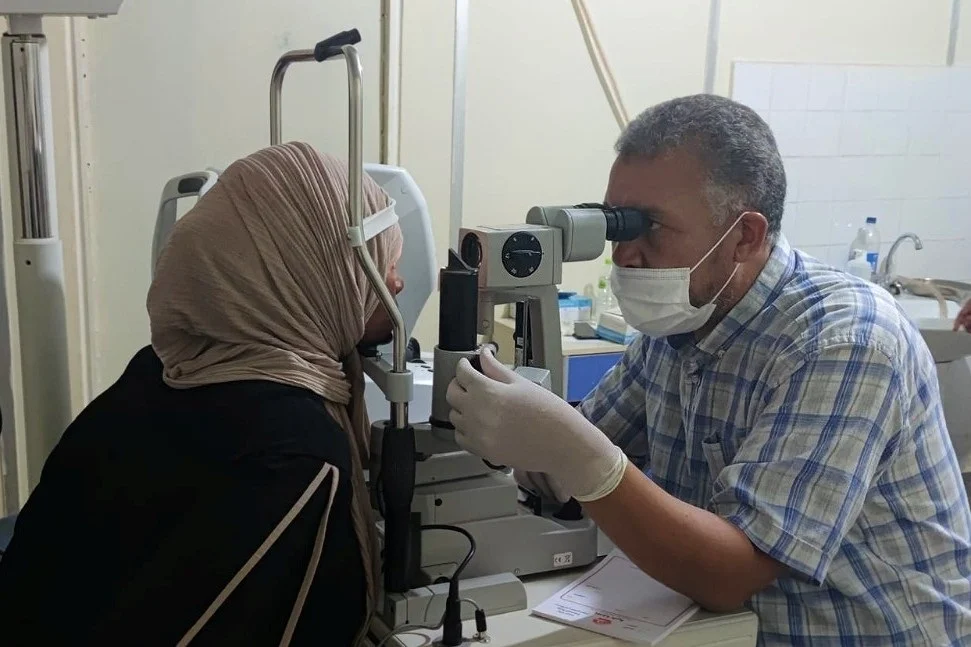
The World Health Organization (WHO) has officially validated Libya for having eliminated trachoma as a public health problem, marking a historic achievement for the North African nation and a significant victory for the Eastern Mediterranean Region. This milestone, announced following a rigorous assessment of epidemiological data and health system performance, makes Libya the 28th country globally and the 8th in its region to successfully banish the ancient disease. The validation serves as a testament to the resilience of Libya’s public health infrastructure, which has persevered through over a decade of political instability and humanitarian challenges to protect its citizens from preventable blindness.
Trachoma is a neglected tropical disease (NTD) caused by the bacterium Chlamydia trachomatis. It is primarily transmitted through direct contact with eye and nose discharge from infected individuals, as well as through contact with contaminated objects like towels or clothing and via eye-seeking flies. If left untreated, repeated infections lead to a condition known as trachomatous trichiasis, where the eyelashes turn inward and scrape the cornea. This causes excruciating pain and permanent scarring, eventually leading to irreversible blindness. For centuries, this disease has been a scourge of impoverished and arid regions, yet Libya’s success demonstrates that even in complex environments, targeted public health interventions can prevail.
A Century of Combat: The History of Trachoma in Libya
The presence of trachoma in Libya has been documented for more than a hundred years. Throughout the 20th century, clinical surveys revealed that the disease was endemic across many parts of the country, with the highest prevalence rates concentrated in the southern desert regions. In these areas, the combination of arid climates, limited access to clean water, and traditional living conditions created an environment where the Chlamydia trachomatis bacterium could flourish.
Efforts to control infectious eye diseases in Libya began in earnest during the 1970s and 1980s. The Ministry of Health launched initial control programs that focused on mass antibiotic distribution and basic hygiene education. These early interventions, combined with a period of rapid modernization and health system strengthening, led to a dramatic decline in active trachoma cases. By the late 1990s, while the disease was no longer a pervasive national crisis, pockets of infection remained, particularly among vulnerable populations in remote southern districts.
The path toward total elimination was formalized in 2017 when the Libyan Ministry of Health integrated trachoma elimination into the National Prevention of Blindness Programme. This strategic shift moved the country from a model of disease control to one of total elimination, aligning Libya with the WHO’s global targets. Despite the fragmented political landscape of the time, health authorities maintained a unified focus on surveying high-risk areas to ensure no community was left behind.
The Final Push: Strategic Interventions and Validation
The road to the 2025 validation was paved by intensive field work conducted between 2022 and 2024. Under the guidance of the National Prevention of Blindness Programme and with technical support from the WHO, Sightsavers, the International Trachoma Initiative (ITI), and Tropical Data, Libya launched a comprehensive survey of six southern districts where trachoma was suspected to persist. These districts—often located in logistically challenging environments—were assessed using WHO-standardized methodologies to measure the prevalence of both active trachoma in children and trichiasis in adults.
The 2022 surveys provided the evidence needed to confirm that transmission had largely been interrupted. Most districts showed prevalence rates well below the WHO threshold for elimination as a public health problem. However, the district of Wadi Al Hayaa/Ghat presented a final hurdle, with trichiasis levels still exceeding the safety threshold. In response, the Ministry of Health, supported by international partners, launched a targeted surgical campaign. Expert surgical teams were deployed to the region to provide corrective procedures for individuals suffering from trichiasis, effectively clearing the backlog of cases and preventing further blindness.
By 2025, follow-up surveys confirmed that the prevalence of trichiasis in the southern districts had fallen below the required threshold of less than 0.2% in adults aged 15 and older. This final data point completed the dossier required for WHO validation, signaling that the cycle of infection and disability had been broken across the entire country.
Global Leadership and Official Responses
The announcement has drawn praise from the highest levels of global health leadership. Dr. Tedros Adhanom Ghebreyesus, WHO Director-General, characterized the achievement as an "inspiring" milestone that reinforces the global belief that neglected tropical diseases can be defeated anywhere. Dr. Tedros emphasized that Libya’s determination to safeguard its people serves as a blueprint for other nations facing similar socioeconomic or political hurdles.
Within the region, Dr. Hanan Balkhy, WHO Regional Director for the Eastern Mediterranean, noted that Libya’s success is a result of strong regional coordination. "Libya joins a growing group of countries from the Eastern Mediterranean Region that have eliminated trachoma," Dr. Balkhy stated, highlighting that the country’s perseverance during periods of great challenge was the deciding factor in this victory.
Domestically, the validation has been received with a sense of national pride. Dr. Mohamed Al-Ghoj, Libya’s Acting Minister of Health, credited the success to the frontline health workers who braved difficult conditions to reach every district. He noted that even during years of conflict, the focus on eye health remained a priority, ensuring that health services reached the most marginalized populations. Dr. Ahmed Zouiten, the WHO Representative in Libya, echoed these sentiments, describing the achievement as a "collective public health triumph" achieved through a blend of science, national mobilization, and international solidarity.
Overcoming the Challenges of Instability and Migration
Libya’s achievement is particularly significant when viewed through the lens of its recent history. Since 2011, the country has faced significant political volatility, which has at times disrupted supply chains, damaged infrastructure, and led to the displacement of thousands of families. Furthermore, Libya serves as a major transit point for migration across the Mediterranean, creating a highly mobile population that can complicate the tracking and treatment of infectious diseases.
The national trachoma elimination programme succeeded by integrating surveillance into existing primary health care services. By training local eye health workers and ensuring that surgical care was accessible even in remote desert outposts, the program maintained continuity of care. The ability to conduct high-quality epidemiological surveys in 2022, amidst a complex humanitarian landscape, is cited by experts as a major logistical feat. This success demonstrates that public health goals can provide a unifying objective for health workers across political divides.
The Broader Context of Neglected Tropical Diseases
Trachoma is one of 21 conditions categorized as neglected tropical diseases (NTDs). These diseases predominantly affect the world’s most impoverished communities, where lack of access to clean water, sanitation, and basic healthcare allows pathogens to thrive. Globally, NTDs affect more than one billion people, causing not only physical suffering but also significant economic burdens by preventing children from attending school and adults from working.
The elimination of trachoma in Libya contributes to the goals set forth in the WHO’s "Road map for neglected tropical diseases 2021–2030." This strategic document sets ambitious targets for the control, elimination, and eradication of NTDs worldwide. Libya’s validation makes it the 59th country globally to eliminate at least one NTD, showcasing the steady progress being made toward the 2030 targets.
In 2025 alone, nine countries have been validated or certified for achieving NTD-related targets, suggesting an acceleration in global health outcomes. For the Eastern Mediterranean Region, Libya becomes the 10th country to eliminate an NTD, joining neighbors in a regional movement to reduce the burden of these "diseases of poverty."
Technical Framework: The SAFE Strategy
Libya’s success was built on the foundation of the WHO-recommended SAFE strategy. This four-pronged approach has been the gold standard for trachoma elimination since the launch of the GET2020 (Global Elimination of Trachoma by 2020) initiative in 1996. The components include:
- Surgery: To treat the blinding stage of the disease (trichiasis).
- Antibiotics: To clear the Chlamydia trachomatis infection, typically using mass drug administration of azithromycin.
- Facial cleanliness: To reduce the transmission of the bacteria between individuals.
- Environmental improvement: Specifically increasing access to water and sanitation to limit the breeding grounds of flies and facilitate hygiene.
By implementing these pillars, Libya addressed both the immediate medical needs of those at risk of blindness and the underlying environmental factors that allow the disease to persist. The integration of "Facial cleanliness" and "Environmental improvement" was particularly vital in the southern districts, where water scarcity has historically been a challenge.
Implications for Future Public Health Initiatives
The elimination of trachoma as a public health problem in Libya carries profound implications for the future of the country’s healthcare system. First, it frees up resources that were previously dedicated to trachoma surveillance and treatment, allowing the Ministry of Health to pivot toward other pressing health issues, such as non-communicable diseases or other endemic infections.
Second, the infrastructure built for the trachoma program—including the network of trained eye health specialists and the robust surveillance systems—can now be leveraged for other public health interventions. The "delivery as one" model, where international agencies like the WHO work in lockstep with national health teams, has proven its effectiveness and is likely to be replicated in future campaigns against diseases like polio or malaria.
Finally, Libya’s victory serves as a beacon of hope for other countries currently grappling with conflict and disease. It proves that the elimination of a disease is not solely dependent on a country’s wealth or political stability, but rather on the commitment of its health workers, the accuracy of its data, and the strength of its international partnerships. As Libya looks toward a future free from the threat of trachoma, the global health community celebrates a major step toward the total eradication of preventable blindness worldwide.
