
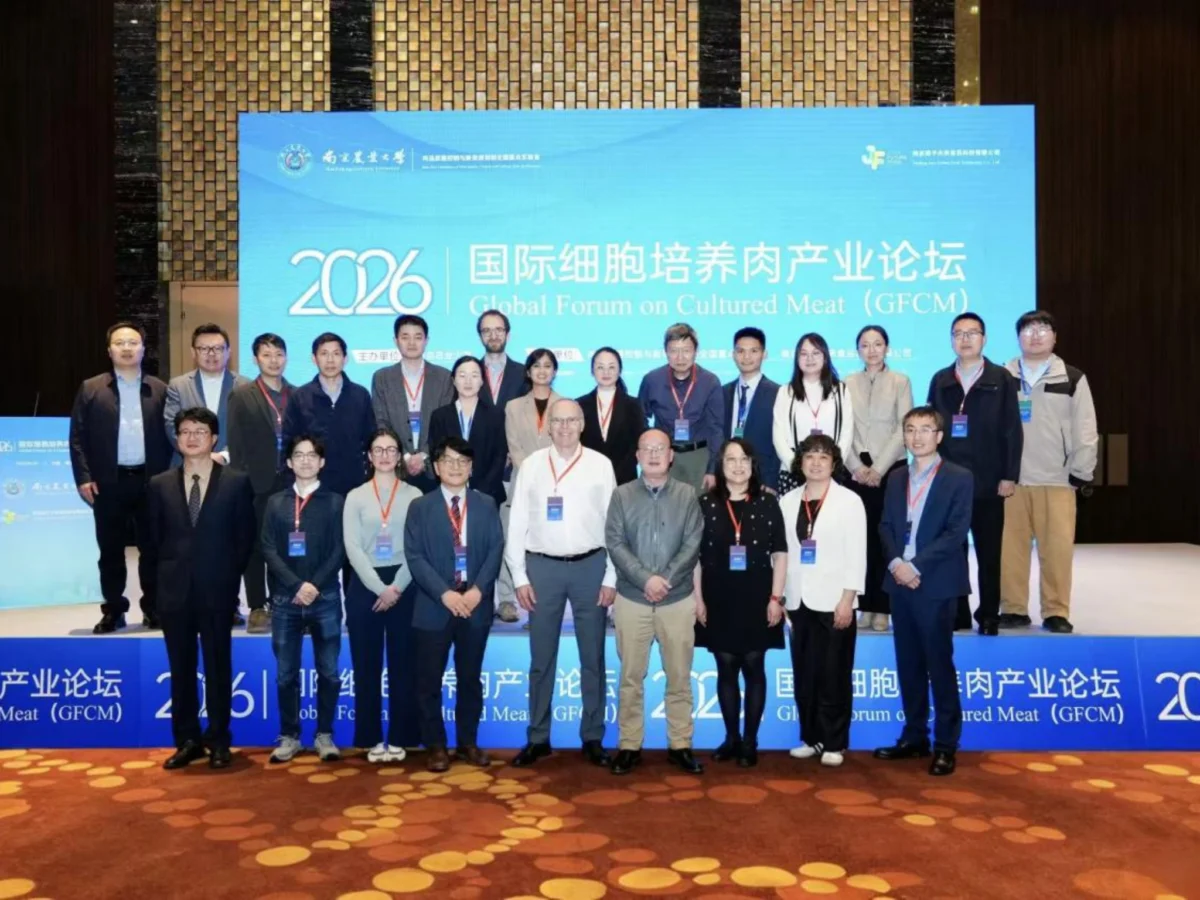
The 2026 Global Forum on Cultured Meat, a pivotal international gathering, recently convened in China, bringing together leading minds in the burgeoning field of cultivated protein. Hosted by Nanjing Agricultural University’s State Key Laboratory of Meat Quality Control and Cultured Meat Development and supported by local cultivated meat pioneer Joes Future Food, the forum underscored the critical need for cross-sector collaboration to propel the industry from its nascent stages to commercial viability. Experts, including industry pioneers, researchers, and government officials, engaged in in-depth discussions aimed at identifying and resolving the multifaceted challenges that lie ahead for this transformative food technology.
The forum’s agenda was comprehensive, delving into core issues such as the acceleration of technological innovation, the intricacies of industrial transformation, the establishment of robust safety assessment protocols, and the development of clear regulatory frameworks. Participants collectively worked towards shaping a strategic blueprint for the industry’s sustainable growth. This high-profile event occurred just one week prior to the release of a significant report highlighting China’s increasing commitment to alternative proteins. This report projects that cultivated meat could potentially command an impressive 36% of the nation’s total meat supply by the year 2050, signaling a seismic shift in the country’s protein landscape.
Navigating the Complexities: Regulation, Cost, and Scientific Advancement
The opening ceremony of the forum was expertly chaired by Professor Zhou Guanghong, director of Nanjing Agricultural University’s cultivated meat department. In his address, Professor Guanghong emphasized the inherently disruptive nature of cultivated meat, articulating its profound benefits. He highlighted its high conversion efficiency, which promises greater resource utilization compared to traditional livestock farming, its comprehensive nutritional profile, and its potential for delivering excellent eating quality. These attributes, he argued, position cultivated meat as a vital pathway to overcome the resource and environmental constraints associated with conventional agriculture, marking a crucial direction for the future productivity of the global food sector. The broad strategic value and application prospects of this technology, he asserted, cannot be overstated.
Professor Guanghong noted the rapid transition of cultivated meat from gram-level scientific research to tonne-level commercial production, characterizing the current period as a "critical window" for its industrialization. To effectively navigate this transition and accelerate progress, he called for enhanced knowledge-sharing across academia, industry, and regulatory bodies. This sentiment was echoed by Maanasa Ravikumar, a senior science and technology specialist for cultivated meat at the Good Food Institute Asia Pacific. Ravikumar stressed the importance of increasing public access to data, advocating for open-sourced media formulations and a greater volume of industry-led studies published in peer-reviewed journals. Such measures, she explained, can effectively "desilo" the scientific ecosystem and expedite the readiness of production technologies.
Ravikumar also identified several under-researched areas critical for scaling up cultivated meat production. These include adapting cells for enhanced energy efficiency, optimizing culture feeding regimes, and refining bioreactor design, fabrication, and installation processes. Addressing the persistent challenge of cost, Dr. Mark Post, co-founder and Chief Scientific Officer of Mosa Meat, a pioneering Dutch cultivated meat company, identified culture media and equipment as two of the most significant cost drivers. He outlined various approaches being explored to mitigate these expenses.
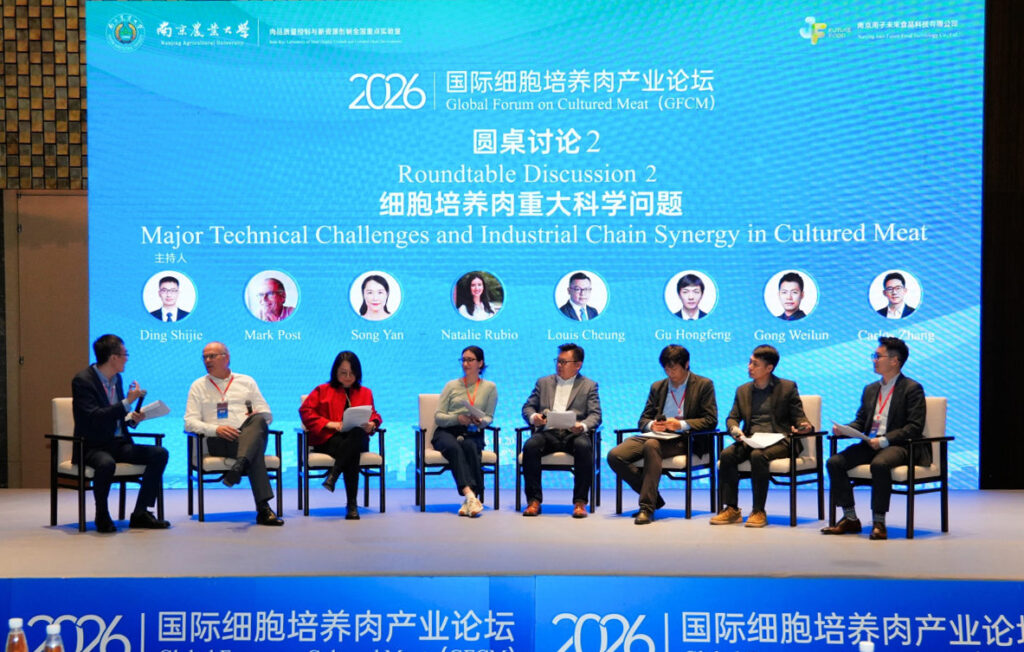
From a regulatory perspective, Song Yan, a researcher from the China National Centre for Food Safety Risk Assessment (CFSA), offered valuable insights into the challenges associated with safety assessment and the evaluation of cultivated meat products. The forum also featured distinguished experts from leading international institutions, including Tufts University, the National University of Singapore, Seoul National University, the University of Alberta, and the University of Turin. These academics delivered special reports on a diverse range of topics, encompassing safety assessment applications, the development of 3D muscle cultures, consumer-centric research and development strategies, seed cell construction, and the navigation of global regulatory pathways. The collaborative exchange of knowledge among these global institutions is vital for establishing a common understanding and accelerating the pace of innovation.
The Strategic Imperative of International Collaboration for China’s Cultivated Meat Economy
A prominent voice at the forum was Ding Shijie, co-founder and CEO of Joes Future Food. This innovative startup emerged from Nanjing Agricultural University in 2019, building upon a decade-long research effort led by Professor Guanghong, which culminated in the creation of China’s first cultivated meat prototype. Since its inception, Joes Future Food has established China’s first full-chain research and development and production platform dedicated to cultivated meat. In the year preceding the forum, the company completed the construction of the nation’s largest manufacturing facility for these proteins, boasting an annual production capacity of 10 to 50 tonnes of cell-cultured proteins. This milestone followed the startup’s successful completion of the world’s first large-scale trial production of cultivated pork utilizing a 2,000-liter bioreactor.
Shijie has been a proponent of transparency, publicly sharing scientific breakthroughs, including those that enabled the aforementioned pilot project. During the forum, he underscored the critical role of enabling technologies and business-to-business solution providers in advancing both research and development and the scaling-up of production. He emphasized that this progress necessitates strategic partnerships with international firms that possess complementary expertise across the entire cultivated meat value chain. Such collaborations would serve to augment China’s already robust R&D ecosystem for these proteins. China is a significant player in this field, evidenced by its representation among the top 20 patent applicants for cultivated meat, with eight institutions featuring prominently. Notably, Joes Future Food itself has filed more patent families (25) than any company globally, with the exception of Upside Foods.
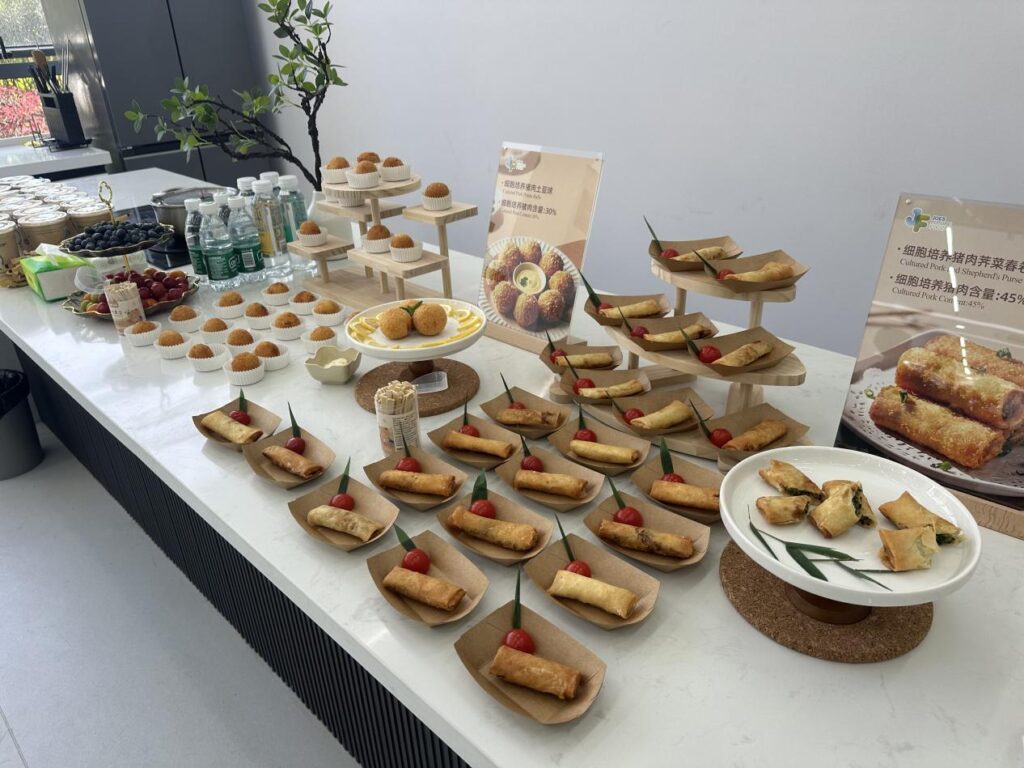
Joes Future Food extended an invitation to forum attendees to visit its pilot facility, providing opportunities for on-site research into R&D and industrialization progress. During these visits, visitors had the chance to sample various cultivated meat products, including pork chops, potato balls, and spring rolls, with the latter proving to be particularly popular among participants.
The strategic importance of alternative proteins for China is underscored by projections from the CFSA, which indicate a potential protein supply shortfall of 30-50% by 2050. This looming deficit positions alternative proteins as indispensable for ensuring the nation’s food sovereignty. The Chinese government has actively recognized this imperative, prioritizing novel protein sources within its national food security strategy, as outlined in its 15th Five-Year Plan. This forward-thinking approach reflects a commitment to diversifying protein sources and building resilience in the face of future challenges.
A Unified Vision for the Future of Cultivated Meat
According to Nanjing Agricultural University, the 2026 Global Forum on Cultured Meat successfully established a high-level international exchange platform for the global cultivated meat industry. The event fostered a unified approach, bringing together the collective efforts of industry stakeholders, academic institutions, and policymakers. The organizers, Nanjing Agricultural University and Joes Future Food, have articulated a clear objective: to continue deepening international cooperation and collaborative innovation. Their aim is to promote the "high-quality development" of the cultivated meat ecosystem, ensuring that this transformative food technology can effectively contribute to global food security and sustainability. The forum served as a testament to the growing global consensus on the potential of cultivated meat and the collaborative spirit required to realize its full promise.
