
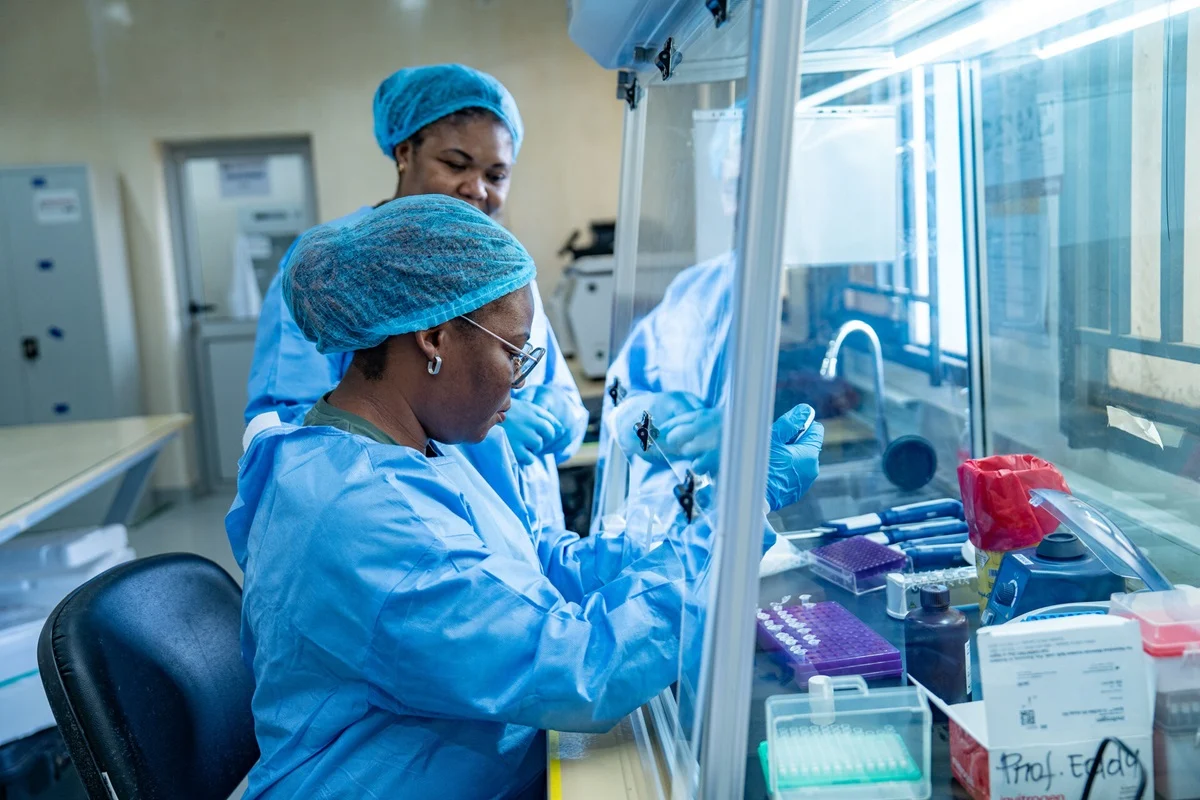
The World Health Organization (WHO) has officially expanded its diagnostic arsenal against Ebola disease by adding the first molecular diagnostic test for the Bundibugyo virus (BDBV) to its Emergency Use Listing (EUL). This landmark decision comes as health authorities struggle to contain the largest recorded outbreak of this specific virus strain, primarily concentrated in the Democratic Republic of the Congo (DRC) and neighboring Uganda. The newly listed test utilizes molecular technology to identify the genetic material of the virus in blood samples, providing a high-precision tool for clinicians to confirm infections rapidly and initiate life-saving interventions.
The authorization of this diagnostic tool marks a pivotal moment in the 2026 public health response. By verifying the test’s quality, safety, and performance against rigorous international standards, the WHO is facilitating a streamlined procurement process for United Nations agencies and national governments. This mechanism is designed specifically to bypass the standard, more time-consuming regulatory hurdles that can often delay the deployment of essential medical supplies during fast-moving health crises.
The Role and Significance of the Emergency Use Listing Procedure
The WHO Emergency Use Listing (EUL) is a risk-based procedure for assessing and listing unlicensed vaccines, therapeutics, and in vitro diagnostics (IVDs) during public health emergencies. Its primary objective is to expedite the availability of these products to people affected by an emergency while maintaining strict adherence to safety and efficacy protocols.
In the context of the Bundibugyo virus, the EUL assessment considers the available evidence on the test’s performance in real-world or simulated outbreak conditions. For low- and middle-income countries, which may lack the domestic regulatory infrastructure to evaluate complex molecular tests, the WHO listing serves as a "gold standard" endorsement. It provides health ministries with the confidence that the products they are procuring are reliable, effective, and capable of meeting the demands of high-pressure clinical environments.
"Public health emergencies require not only speed, but also confidence that the health products being used meet standards for quality, safety and performance," stated Dr. Yukiko Nakatani, WHO Assistant Director-General for Health Systems, Access and Data. "During a fast-moving outbreak, timely access to quality-assured diagnostic tests can make a critical difference in containing transmission. Through this Emergency Use Listing, WHO is helping countries access trusted diagnostic tools more rapidly so that they can respond more effectively."
Chronology of the 2026 Bundibugyo Virus Outbreak
The current crisis began to escalate early in 2026, leading to a significant international response. On May 17, 2026, WHO Director-General Dr. Tedros Adhanom Ghebreyesus declared a Public Health Emergency of International Concern (PHEIC). This declaration was prompted by a surge of Ebola disease cases caused by the Bundibugyo virus in the Democratic Republic of the Congo, with subsequent cross-border transmission reported in Uganda.
The declaration of a PHEIC is the highest level of alarm the WHO can sound, signifying a risk to other states through the international spread of disease and requiring a coordinated international response. Less than two weeks after the declaration, the WHO issued a formal call for manufacturers of in vitro diagnostics to submit Expressions of Interest (EOI) for the EUL procedure. This proactive approach was intended to incentivize the private sector to prioritize the development and validation of tests specific to the Bundibugyo strain, which has historically received less diagnostic attention than the more common Zaire ebolavirus.
The rapid listing of this first molecular test, occurring within months of the initial emergency declaration, underscores the success of the EUL framework in condensing development and review timelines without compromising scientific integrity.
Current Epidemiological Situation and Testing Capacity
The scale of the current outbreak is unprecedented for the Bundibugyo species. As of the latest reports, there have been 1,406 laboratory-confirmed cases and 438 deaths in the Democratic Republic of the Congo alone. This indicates a case fatality rate (CFR) of approximately 31%, highlighting the severe threat the virus poses to human life.
Historically, one of the primary obstacles in managing Ebola outbreaks in Central Africa has been the centralization of laboratory services. At the start of this outbreak, testing capacity was largely restricted to a few specialized facilities, most notably the Institut National de Recherche Biomédicale (INRB) in Kinshasa and Goma. These sites had a combined capacity of roughly 200 to 400 tests per day—a volume insufficient for a widespread epidemic.
However, through a collaborative effort involving the WHO and the Africa Centres for Disease Control and Prevention (Africa CDC), there has been a massive decentralization of diagnostic services. The network has expanded to include 10 laboratories across the affected provinces, raising the daily testing capacity to over 2,000 tests. The introduction of the new EUL-approved molecular test is expected to further enhance this capacity, allowing for decentralized "near-point-of-care" testing that reduces the time between sample collection and result delivery.
Strengthening Global Partnerships and Validation Platforms
The approval of the first molecular test is part of a broader, multi-organizational strategy to stabilize the region’s health security. The WHO and Africa CDC are working in tandem with international partners, including PATH, FIND (the Foundation for Innovative New Diagnostics), and the Clinton Health Access Initiative (CHAI), with additional financial and strategic support from Unitaid.
A key component of this strategy is the establishment of a joint validation platform. This platform is designed to rapidly evaluate the performance of various diagnostic products in the field. These include:
- Laboratory-based molecular tests: High-throughput systems used in provincial hubs for large-scale screening.
- Near-point-of-care molecular tests: Portable systems that can be used in rural clinics to provide quick results.
- Antigen rapid diagnostic tests (RDTs): Simpler tests that detect viral proteins, offering even faster results, though often with lower sensitivity than molecular methods.
By generating real-time clinical evidence on how these products perform in actual outbreak settings, the validation platform ensures that the global response remains evidence-based and adaptable to the changing dynamics of the virus.
Understanding the Bundibugyo Virus
The Bundibugyo virus is one of three Ebola virus species known to cause significant outbreaks in human populations, alongside the Zaire and Sudan viruses. It was first identified in 2007 following an outbreak in the Bundibugyo District of western Uganda. While it is generally associated with a lower case fatality rate than the Zaire strain—which can exceed 70-90%—the Bundibugyo virus remains a highly infectious and lethal pathogen.
BDBV is a zoonotic virus, meaning it can spread from animals to humans. The natural reservoir is believed to be fruit bats, though contact with infected non-human primates can also trigger "spillover" events into human populations. Once a human is infected, the virus spreads through direct contact with the blood, secretions, organs, or other bodily fluids of infected people, or with surfaces and materials (e.g., bedding, clothing) contaminated with these fluids.
Symptoms often include fever, fatigue, muscle pain, headache, and sore throat, followed by vomiting, diarrhea, rash, and in some cases, internal and external bleeding. The non-specific nature of early symptoms makes rapid molecular testing essential for differentiating Ebola from other endemic diseases like malaria or typhoid fever.
Analysis of Global Health Implications
The listing of this diagnostic test has implications that extend beyond the current borders of the DRC and Uganda. It represents a significant step forward in the "preparedness" pillar of global health security. By having a pre-vetted, high-quality diagnostic ready for procurement, the international community can respond to future BDBV clusters with much greater agility.
Furthermore, the emphasis on science-led response aligns with the theme of World Health Day 2026: “Together for health. Stand with science.” This campaign highlights science as the indispensable foundation for protecting global well-being. The WHO’s insistence on rigorous EUL standards ensures that even in the chaos of an emergency, the health products used are safe and effective, preventing the waste of resources on substandard diagnostics that could lead to false negatives and continued viral spread.
As the WHO continues to review additional applications for BDBV diagnostics, the global health community remains focused on expanding access to life-saving tools. The goal is not merely to react to the current 1,406 cases, but to build a resilient diagnostic infrastructure that can prevent future outbreaks from reaching such catastrophic proportions. For now, the introduction of the first EUL-approved molecular test provides a much-needed advantage to the front-line health workers risking their lives to bring the Bundibugyo virus under control.
