
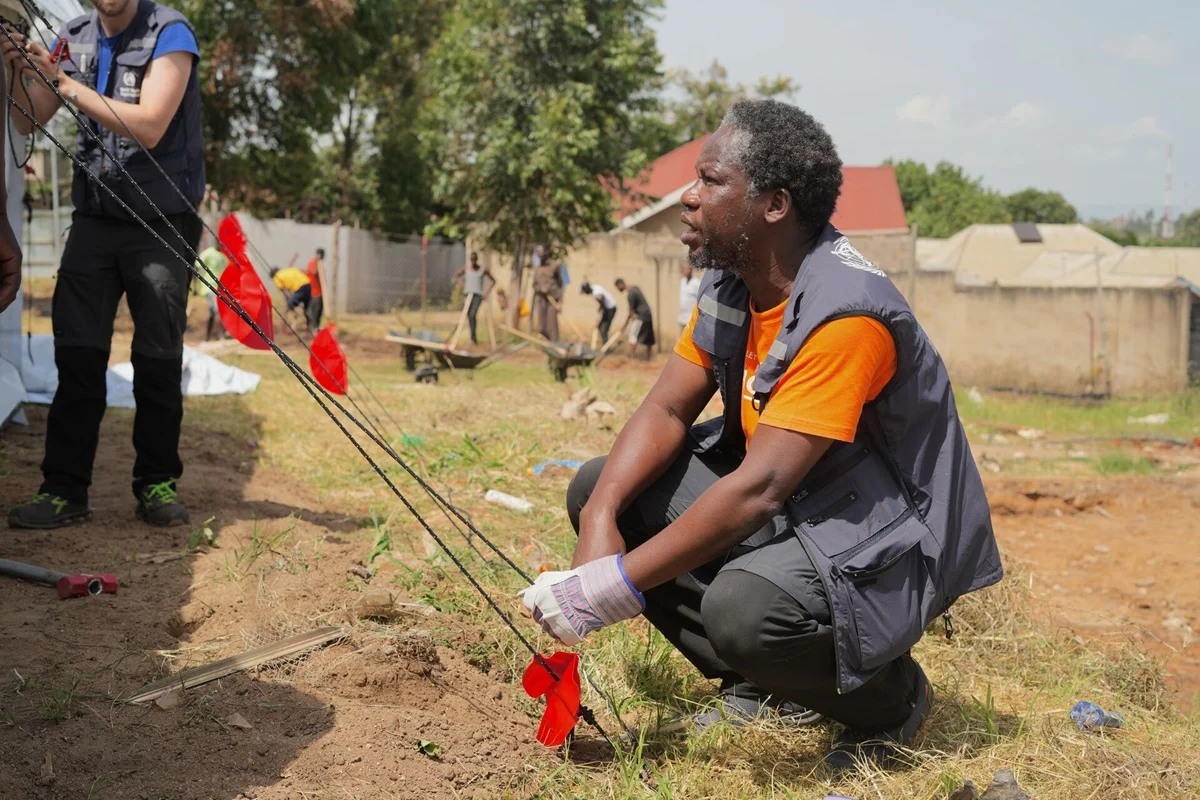
The World Health Organization (WHO) has officially convened a series of high-level technical advisory groups and expert committees to address the escalating health challenges posed by the current outbreak of Ebola disease caused by the Bundibugyo virus. The outbreak, which has primarily affected regions within the Democratic Republic of the Congo (DRC) and has seen cross-border transmission into Uganda, has prompted an international effort to identify and evaluate potential medical countermeasures. Following intensive deliberations, the WHO has issued a directive that all candidate vaccines and therapeutics for Bundibugyo virus disease (BVD) must be utilized exclusively within the framework of rigorous clinical trials. This decision aims to ensure that any intervention deployed is supported by robust scientific data while maintaining the highest ethical standards for patient safety and research integrity.
The mobilization of these expert groups comes at a critical juncture for regional health security. Unlike the more common Zaire ebolavirus, for which licensed vaccines and treatments now exist, the Bundibugyo strain remains a pathogen with no specifically approved pharmaceutical interventions. The WHO R&D Blueprint for Action to Prevent Epidemics—a global strategy designed to fast-track research and development during health emergencies—has been activated to coordinate the evaluation of experimental products that have shown promise in preclinical or early-phase testing.
Scientific and Historical Context of the Bundibugyo Virus
The Bundibugyo ebolavirus (BVDV) is one of six species within the genus Ebolavirus. It was first identified in late 2007 during an outbreak in the Bundibugyo District of Western Uganda. Historically, this specific strain has been associated with lower case fatality rates (CFR) compared to the Zaire ebolavirus, which can reach mortality rates of up to 90%. During the 2007 Uganda outbreak, the CFR was approximately 25%, while a subsequent 2012 outbreak in the Orientale Province of the DRC saw a mortality rate of roughly 34%.
Despite the lower relative mortality compared to other strains, Bundibugyo virus disease remains a severe hemorrhagic fever characterized by fever, malaise, gastrointestinal distress, and, in advanced stages, internal and external bleeding. The lack of cross-protection offered by existing vaccines—such as Ervebo, which is highly effective against the Zaire strain—necessitates a distinct research pathway. Current scientific consensus suggests that the structural differences in the glycoprotein of the Bundibugyo virus prevent Zaire-specific vaccines and monoclonal antibodies from providing effective neutralization, leaving affected populations vulnerable without a dedicated medical response.
The Role of WHO Advisory Groups and SAGE
To navigate the complexities of an outbreak without licensed tools, the WHO brought together the R&D Blueprint technical advisory groups alongside the Strategic Advisory Group of Experts (SAGE) on Immunization. These bodies are responsible for interpreting emerging data and providing the Director-General with evidence-based recommendations. The SAGE Ebola vaccine working group specifically analyzed whether existing licensed vaccines for other Ebola strains could play a role in the current outbreak, ultimately concluding that the priority must remain on the development and testing of Bundibugyo-specific candidates.
The R&D Blueprint’s involvement ensures that the research process does not occur in a vacuum. By creating a standardized platform for clinical trials, the WHO prevents fragmented research efforts that might otherwise yield inconclusive results. The experts emphasized that while several candidate products are "promising," the transition from laboratory settings to field deployment in an active outbreak zone requires a delicate balance of speed and scientific rigor.
Strategic Framework for Clinical Trials and Research Evaluation
The core recommendation from the WHO advisory groups is the implementation of "Ring Vaccination" or "Adaptive Platform Trials" for both vaccines and therapeutics. This approach allows researchers to evaluate multiple candidate products simultaneously against a standard of care.
For the treatment of cases, the focus is on identifying antiviral compounds and monoclonal antibodies that can reduce viral load and improve survival rates. For the prevention of cases, the objective is to identify a vaccine that can induce a rapid and durable immune response in high-risk individuals, including frontline healthcare workers and the contacts of confirmed cases.
The WHO is currently working in close coordination with the Ministry of Health in the DRC and the Ministry of Health in Uganda to facilitate the logistical requirements of these trials. This includes the establishment of "cold chain" infrastructure capable of maintaining the ultra-low temperatures required for many experimental biological products, as well as the training of local medical staff to administer treatments and monitor outcomes.
Collaborative Governance and Ethical Oversight
A significant aspect of the current response is the emphasis on African leadership and multi-agency cooperation. The WHO is partnering with the Africa Centres for Disease Control and Prevention (Africa CDC) to ensure that the research agenda aligns with the "New Public Health Order" for the continent, which emphasizes local manufacturing and regional self-reliance. Additionally, the ANRS Emerging Infectious Diseases (the French National Agency for Research on AIDS and Viral Hepatitis) is providing technical expertise in trial design and data management.
Ethical considerations are paramount in the WHO’s directive. Conducting research in the midst of a crisis involves inherent risks, including the potential for community mistrust or the perception that experimental treatments are being "tested" on vulnerable populations. To mitigate these risks, the WHO has called for:
- Community Engagement: Working with local leaders and community health workers to explain the nature of clinical trials and the importance of scientific data.
- Informed Consent: Ensuring that all participants fully understand the experimental nature of the products they receive.
- National Leadership: Ensuring that the governments of the DRC and Uganda remain the primary authorities overseeing the conduct of trials within their borders.
Traditional Public Health Measures: The Immediate Priority
While the search for vaccines and therapeutics continues, the WHO has reinforced the message that traditional public health interventions remain the most effective tools for stopping transmission in the immediate term. These "tried and true" methods have been refined over decades of Ebola responses in Central and West Africa.
Disease surveillance remains the cornerstone of the response. Rapid testing and diagnosis are essential for identifying cases before they can spread the virus further. Once a case is identified, contact tracing—the process of identifying and monitoring everyone who has come into contact with an infected person—is vital for breaking the chain of transmission.
Infection Prevention and Control (IPC) measures in healthcare settings are also being scaled up. This includes providing healthcare workers with Personal Protective Equipment (PPE) and ensuring that clinics have access to clean water and sanitation facilities. Furthermore, Safe and Dignified Burials (SDB) are being prioritized, as the bodies of deceased Ebola patients remain highly infectious. By respecting local customs while ensuring biological safety, SDB teams play a critical role in preventing "super-spreader" events during funeral rites.
Data-Driven Analysis of Implications and Future Preparedness
The decision to limit experimental products to clinical trials reflects a broader shift in global health policy. In previous decades, "compassionate use" of experimental drugs was often the norm during outbreaks. However, the 2014-2016 West Africa Ebola epidemic demonstrated that compassionate use often fails to provide the definitive evidence needed to license a drug for future use. By insisting on clinical trials now, the WHO is ensuring that the current outbreak in the DRC and Uganda contributes to a permanent solution for Bundibugyo virus disease.
The financial and logistical burden of these efforts is significant. The WHO has called for coordinated investment from international donors and the private sector to fund the research and development of BVD countermeasures. This includes not only the cost of the drugs themselves but the "last-mile" delivery costs in conflict-affected or geographically isolated regions.
The implications of this response extend beyond the current outbreak. As part of the lead-up to World Health Day 2026, which carries the theme "Together for health. Stand with science," the WHO is positioning the Bundibugyo response as a blueprint for how the world should handle future "Pathogen X" events. By prioritizing science as the foundation for health protection, the international community aims to move away from reactive panic and toward a state of permanent readiness.
Conclusion of the Current Directives
As the situation evolves, the WHO will continue to provide updates through its R&D Blueprint and SAGE channels. The primary goal remains the dual track of immediate containment through public health measures and long-term protection through clinical research. The cooperation between the WHO, the Africa CDC, and the national health authorities of the DRC and Uganda represents a unified front against a virus that respects no borders.
The international health community remains on high alert, recognizing that the success of these clinical trials could mark the beginning of the end for the threat posed by the Bundibugyo virus. Until then, the focus remains on the ground: supporting the patients, protecting the communities, and ensuring that every scientific step taken is a step toward a safer, more resilient global health infrastructure.
