
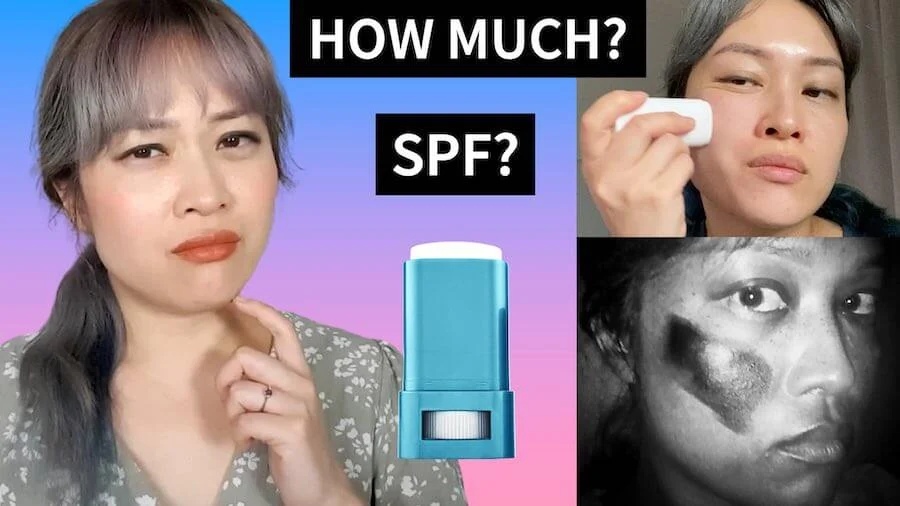
A groundbreaking investigation by Lab Muffin Beauty Science, published on June 25, 2026, has shed critical light on the efficacy and application challenges of sunscreen sticks, revealing that consumers may be significantly under-protected despite diligent efforts. The study, led by cosmetic chemist Dr. Michelle Wong, underscores a substantial gap between perceived and actual sun protection from these popular, convenient formats, challenging conventional application wisdom, including guidelines from prominent dermatological organizations.
The central finding of Dr. Wong’s research is stark: achieving the labeled SPF (Sun Protection Factor) from sunscreen sticks demands a far greater application quantity and duration than most consumers realize, often resulting in a greasy, impractical feel and appearance. This contrasts sharply with the ease and comfort of applying the equivalent protection from traditional lotion sunscreens. The investigation highlights the critical need for more realistic application guidelines and greater consumer awareness regarding the nuances of stick sunscreen usage.
The Growing Appeal of Sunscreen Sticks and the Protection Paradox
Sunscreen sticks have surged in popularity, largely owing to their mess-free application, portability, and perceived convenience for on-the-go touch-ups and targeted protection. However, the very characteristics that make them appealing also present a unique challenge: accurately measuring and applying a sufficient amount to achieve the promised SPF. The industry standard for SPF testing mandates an application density of 2 milligrams per square centimeter (2 mg/cm²) of skin. For an average adult face, this translates to approximately 0.76 grams of product. Until this study, precise, real-world data on how consumers apply stick sunscreens, and the resulting level of protection, has been scarce.
Dr. Wong initiated her research in late 2025, building on earlier work, to empirically quantify these unknowns. The primary objective was to determine how much sunscreen stick a person typically applies during a "generous" application and how this compares to the amount required for the labeled SPF. Secondary goals included evaluating the impact of application time, the efficacy of common recommendations like the "four passes" guideline, and identifying common missed spots.
Rigorous Methodology Uncovers Under-Application
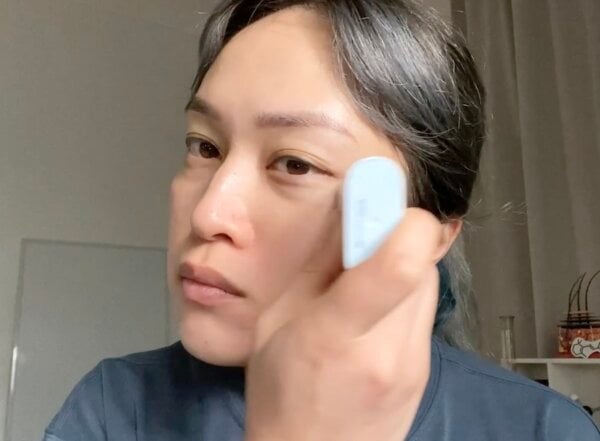
To conduct the study, Dr. Wong employed a meticulous experimental design involving three popular Korean SPF 50+ sunscreen sticks. The procedure involved weighing each stick before and after application to quantify the exact mass transferred to her face. She recorded her application process using a phone in selfie mode, allowing for precise measurement of "time on skin" – the duration the stick was actively in contact with her face. An estimated SPF was then calculated based on the applied mass, assuming a linear relationship between the amount applied and the SPF achieved (a commonly accepted approximation for under-application).
The study revealed a significant deficit in typical application:
- Initial Application: A single, "generous" layer of sunscreen stick applied by Dr. Wong averaged only 0.29 grams. This amounted to roughly one-third of the 0.76 grams needed to achieve the full SPF 50+ protection, resulting in an estimated SPF equivalent of only 19.1. The average time the stick was in contact with her skin for this layer was approximately 43 seconds.
- Layering for Protection: Even after three consecutive "generous" layers, the total applied mass averaged only 0.64 grams – still below the 0.76-gram threshold for full SPF 50+ protection. This accumulated application time stretched to nearly 187 seconds (over three minutes), a duration almost four times longer than the 60 seconds Dr. Wong typically spends applying a full, 0.76-gram layer of a lightweight lotion sunscreen. Despite this prolonged effort, the estimated SPF achieved remained below the labeled SPF 50, averaging approximately SPF 40.
The study also noted variations in product transfer based on formulation. Sticks with a "waxier" texture, like Tocobo, tended to transfer more product initially, while "slicker" formulas, such as Abib, showed a faster drop-off in transferred amount with subsequent layers, likely due to a build-up of product on the skin surface.
Debunking the "Four Passes" Myth
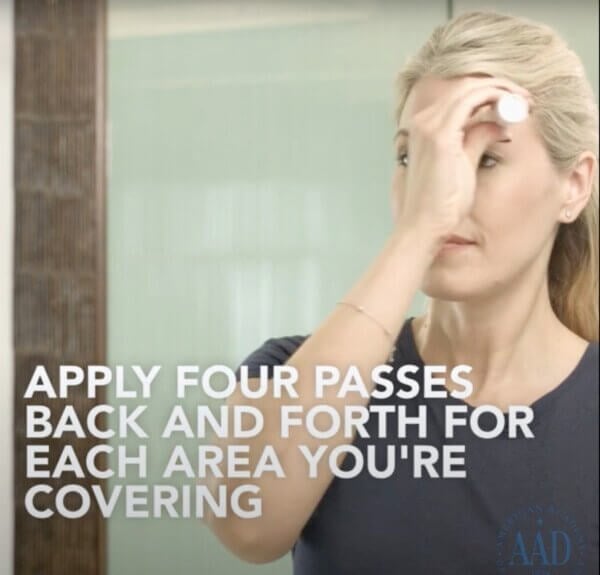
A widely cited recommendation from organizations like the American Academy of Dermatology (AAD) suggests applying "four passes" of a sunscreen stick for sufficient coverage. Dr. Wong’s research directly challenged this guideline, finding it to be grossly inadequate.
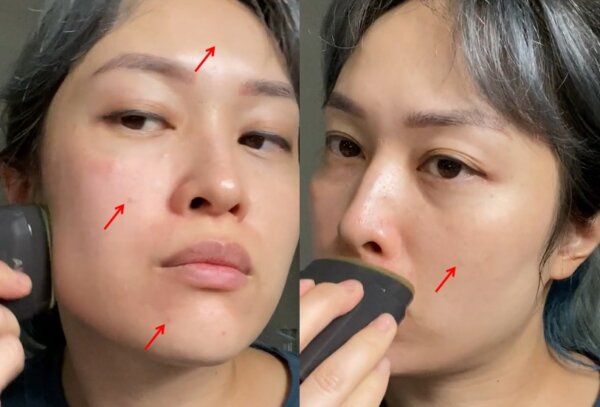
- Face Application: During her facial application, Dr. Wong observed that a single "generous" layer involved an average of 7 to 16 passes across different facial regions. This is significantly more than the AAD’s four-pass recommendation, yet it still resulted in only about one-third of the necessary product for labeled SPF.
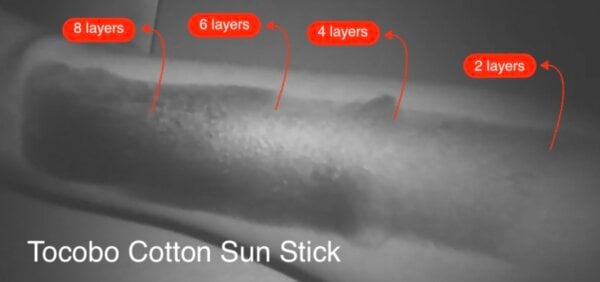
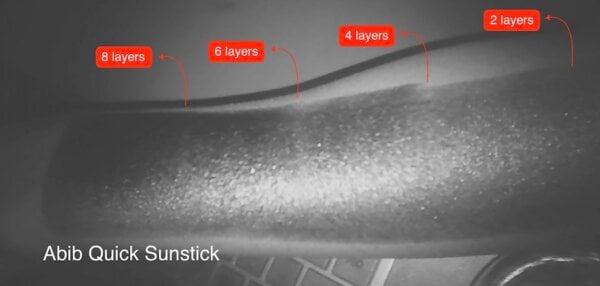
- Arm Testing: To further quantify the passes needed for standard coverage (2 mg/cm²), Dr. Wong conducted tests on a flat surface of her arm. She found that approximately 16-21 passes were needed for the Tocobo stick, and a staggering 40-64 passes for the Abib stick, to reach the 2 mg/cm² density. This stark difference underscores the unsuitability of the "four passes" guideline for achieving effective protection.
- UV Camera Misconceptions: The study also highlighted a crucial limitation of UV cameras in assessing SPF levels. While useful for identifying missed spots, UV camera footage showed that the visible darkness of the applied patch often did not change significantly after four passes, even when additional product was still being applied. This visual plateau could lead consumers to falsely believe they have achieved adequate protection with minimal application.
The Ergonomic Challenge: Missed Spots and Uneven Coverage
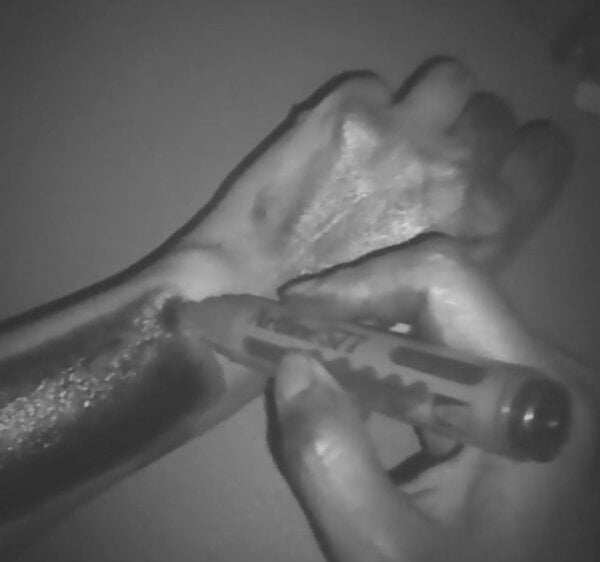
Beyond the quantity of application, the study revealed significant issues with coverage uniformity. Using a UV camera, Dr. Wong observed numerous missed spots on her face after the first layer of chemical sunscreen sticks, even though she was actively watching her application in selfie mode. Common areas overlooked included the middle of the nose, eyebrows, under the brow bone, near the hairline, and the crevices next to the nostrils.
This phenomenon is attributed to the ergonomic limitations of sunscreen sticks. Unlike fingers, which can conform to the irregular contours of the face, sticks struggle to maintain full contact over bony ridges and into recessed areas. The lack of tactile feedback during application, compared to spreading a lotion with fingers, further contributes to uneven coverage. While these missed spots could be remedied by rubbing the product in, this defeats some of the convenience factor and, without a UV camera, consumers would not know precisely where to focus their efforts.
Texture and Aesthetic Trade-offs for Protection
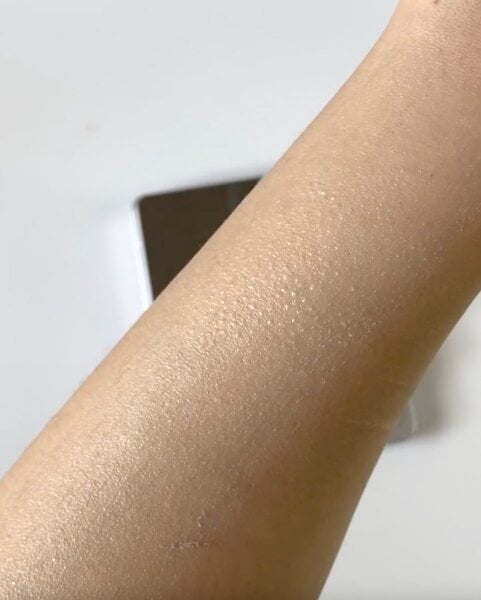
The study also delved into the sensory experience and appearance of applying multiple layers of sunscreen sticks. Dr. Wong noted that even the first layer (approximately 0.29g) felt substantially thicker than a full 0.76g application of a lightweight lotion sunscreen. This difference is largely due to formulation: sunscreen lotions typically contain a high percentage of water and volatile solvents (like alcohol or cyclopentasiloxane) that evaporate upon application, leaving behind a thinner film of active ingredients. Sunscreen sticks, conversely, contain few volatile ingredients, meaning almost all the applied product remains on the skin, contributing to a heavier, more occlusive feel.
After two layers, the stick sunscreens became noticeably "slidey," making them unsuitable as a base for makeup. By the third layer, all tested sticks resulted in a "slippery mess," with the mineral stick (Benton) leaving a distinct white cast that progressed from "little" after layer one to "pretty ghastly" after layer three. The organic filter sticks (Tocobo, Abib) remained transparent but exhibited increasing dewiness and glossiness with successive layers. These aesthetic and textural drawbacks are significant barriers to applying the substantial quantities required for full SPF protection.
Practical Implications and Recommendations
Dr. Wong’s research provides critical insights into the real-world application of sunscreen sticks and their limitations as primary sun protection. The findings strongly suggest that:
- Not Ideal for Primary Protection: Sunscreen sticks are generally not a good choice for achieving full, consistent SPF protection during prolonged or intense sun exposure, especially when aiming for high SPF values like 50+. The amount required is impractical, uncomfortable, and difficult to apply evenly.
- Best for Targeted Use: Their convenience makes them more suitable for specific, limited situations:
- Reapplication: For quick touch-ups over makeup, especially on areas prone to wear.
- Small, Exposed Areas: Ideal for delicate or often-forgotten spots like ears, nose, and lips.
- Specific Activities: Useful for sports or activities where lotion might run into eyes, or for precise application on children.
- Complementary Protection: As a supplement to a primary lotion sunscreen, not a replacement.
Broader Impact and Future Outlook

The Lab Muffin Beauty Science study carries significant implications for public health, consumer education, and the cosmetics industry.
- Public Health: The widespread under-application of sunscreen sticks directly translates to a heightened risk of UV radiation damage, including sunburn, premature skin aging, and an increased incidence of skin cancer. Health organizations and dermatologists may need to revise their guidance to specifically address the unique application challenges of stick formulations.
- Consumer Education: There is a clear need for clearer, more explicit instructions on how to use sunscreen sticks effectively. Current labeling and general recommendations appear to be insufficient, leading to a false sense of security among users.
- Industry Response: Manufacturers of sunscreen sticks may be prompted to re-evaluate their product formulations to allow for higher, more comfortable application densities, or to provide innovative application aids. Furthermore, a re-assessment of marketing claims and instructional materials for stick sunscreens is crucial to ensure consumer safety and product efficacy.
- Research Direction: Dr. Wong’s call for more independent data from other individuals underscores the importance of diverse testing to confirm and expand upon these initial findings. This type of consumer-focused research is vital for bridging the gap between laboratory SPF testing and real-world protective outcomes.
In conclusion, while sunscreen sticks offer undeniable convenience, Dr. Michelle Wong’s 2026 study definitively illustrates that achieving adequate sun protection from them is a more arduous and less effective endeavor than commonly believed. Consumers are urged to be mindful of these limitations and consider sticks primarily for supplementary protection, focusing on diligent and thorough application, especially in critical, often-missed areas. The findings serve as a powerful reminder that effective sun protection hinges not just on the SPF number on the label, but critically, on the amount and uniformity of application.
