
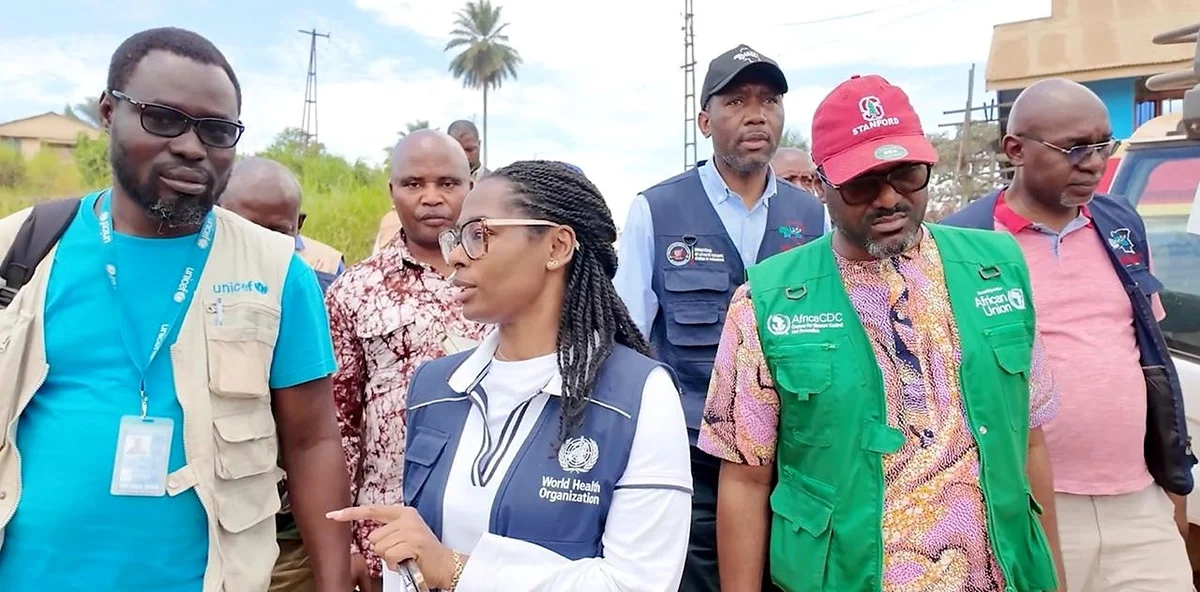
The Africa Centres for Disease Control and Prevention (Africa CDC) and the World Health Organization (WHO) have officially inaugurated a comprehensive, multi-billion-shilling continental preparedness and response strategy aimed at mitigating the spread of the Bundibugyo ebolavirus (BEV). This strategic initiative, which seeks to mobilize US$ 518 million in emergency funding, represents a unified effort to bolster the defenses of African nations against a virus that remains one of the most significant public health threats on the continent. The plan is designed to operate over a critical six-month window, spanning from June to November 2026, and is built upon a framework of international cooperation, scientific rigor, and community-centric intervention.
This joint venture arrives at a pivotal moment as the Democratic Republic of the Congo (DRC) and Uganda face renewed challenges from the Bundibugyo species of the Ebola virus. Unlike the more common Zaire ebolavirus, for which vaccines and therapeutics have been developed and deployed in recent years, the Bundibugyo strain currently lacks licensed medical countermeasures. This scientific gap necessitates a response rooted in robust public health infrastructure, rapid detection, and meticulous contact tracing. The "One Response" approach advocated by both the Africa CDC and the WHO emphasizes a streamlined methodology: one plan, one budget, and one team, ensuring that resources are not fragmented and that the intervention is as efficient as possible.
The Strategic Framework of the One Response Approach
The US$ 518 million plan is structured around several critical pillars of public health emergency management. At its core, the plan prioritizes emergency coordination, ensuring that national governments, international partners, and local health agencies operate in lockstep. This coordination is vital for managing the complex logistics of an Ebola response, which often involves the rapid movement of personnel, personal protective equipment (PPE), and laboratory supplies across difficult terrain and international borders.
Disease surveillance and laboratory testing form the second major pillar. The plan aims to enhance the capability of regional laboratories to identify the Bundibugyo strain quickly and accurately. Early detection is the cornerstone of containing any viral hemorrhagic fever; the sooner a case is identified, the faster transmission chains can be broken. This involves not only high-tech genomic sequencing but also the training of frontline health workers to recognize clinical symptoms that can often be mistaken for other endemic diseases such as malaria or typhoid.
Infection prevention and control (IPC) and clinical care are also central to the strategy. In the absence of specific antiviral treatments for BEV, the focus remains on high-quality supportive care, which has been shown to significantly improve survival rates. This includes fluid replacement, oxygen therapy, and the management of secondary infections. The plan allocates significant resources toward ensuring that health facilities are equipped with the necessary tools to prevent nosocomial (facility-based) transmission, which has historically been a major driver of Ebola outbreaks.
Historical Context and the Nature of the Bundibugyo Virus
To understand the urgency of the current response, it is necessary to examine the history of the Bundibugyo ebolavirus. First identified in 2007 during an outbreak in the Bundibugyo District of Western Uganda, this species is one of six known viruses within the genus Ebolavirus. Historically, BEV outbreaks have demonstrated case fatality rates ranging from approximately 25% to 34%. While this is lower than the fatality rates associated with the Zaire strain—which can exceed 60% to 90% if untreated—it remains a lethal pathogen with the potential for rapid geographic expansion.
The 2007 outbreak resulted in 149 cases and 37 deaths. A subsequent outbreak occurred in 2012 in the Orientale Province of the DRC, highlighting the cross-border nature of the threat. The current 2026 outbreak underscores the persistent risk posed by zoonotic spillovers in the Congo Basin and the surrounding regions. Because there are no licensed vaccines or therapeutics specifically approved for the Bundibugyo species, the international community must rely on traditional "shoe-leather" epidemiology and rigorous isolation protocols. This reality places an even greater emphasis on the Africa CDC and WHO’s joint plan, as it focuses on strengthening the very health systems that must act as the primary barrier against the virus.
Leadership and Political Commitment
The success of the continental plan is heavily dependent on the political will of Member States. Dr. Tedros Adhanom Ghebreyesus, WHO Director-General, has emphasized that the only way to defeat the outbreak is through a unified front. He noted that the containment of Ebola is not merely a medical challenge but a political and financial one. "The only way to beat this outbreak is through close partnership, working together under the leadership of the affected countries in one coordinated effort," Dr. Tedros stated. He further highlighted the necessity of community trust, pointing out that without the participation of local populations, contact tracing becomes impossible and safe care is delayed.
Echoing these sentiments, Dr. Jean Kaseya, Director-General of Africa CDC, stressed the need for speed. "Ebola moves fast. Africa must move faster," Kaseya remarked. He positioned the joint plan as a clear roadmap for the continent to act with unity and speed to save lives and protect neighboring communities. Under his leadership, the Africa CDC has evolved into an autonomous institution of the African Union, taking a more prominent role in managing continental health crises and reducing dependence on external agencies.
Protecting Vulnerable Populations and Cross-Border Collaboration
A significant portion of the $518 million budget is earmarked for the protection of vulnerable populations, including women, children, and the elderly, who are often disproportionately affected by health emergencies. In many affected regions, women serve as the primary caregivers and are frequently involved in traditional burial practices, both of which increase their risk of exposure to the virus. The plan includes targeted community engagement strategies to educate these groups on safe practices while respecting cultural traditions.
Furthermore, the plan identifies 10 priority countries that are at high risk due to their proximity to the DRC and Uganda or their status as major regional travel hubs. In these nations, the Africa CDC and WHO are working to strengthen screening at points of entry, such as airports and land crossings. This cross-border collaboration is essential in a globalized world where a virus can travel across a continent in a matter of hours. The "One Response" strategy encourages the sharing of data and resources between nations, fostering a sense of regional solidarity that is critical for long-term health security.
Integrating the Response with Existing Health Threats
The 2026 Ebola response plan does not exist in a vacuum. It is launched at a time when many African nations are simultaneously grappling with other major public health crises, including mpox, cholera, and measles. The Africa CDC and WHO have made it clear that the Ebola response must not come at the expense of these other critical health efforts. Instead, the plan emphasizes a "multi-hazard" approach to health security.
By strengthening laboratory networks, improving surveillance systems, and training health workers for the Ebola response, countries are also building capacity to handle other infectious diseases. This holistic view of health system resilience is intended to ensure that progress made during the Ebola outbreak is not lost once the immediate crisis subsides. The $518 million investment is, therefore, seen as a way to safeguard the broader progress toward Universal Health Coverage (UHC) and the United Nations Sustainable Development Goals (SDGs).
Research, Logistics, and the Future of Therapeutics
While the current response focuses on containment through public health measures, a portion of the plan is dedicated to research and development. The lack of a BEV vaccine is a significant hurdle, and the joint plan aims to facilitate clinical trials and research during the outbreak. By creating a framework for ethical research in emergency settings, the WHO and Africa CDC hope to accelerate the development of candidate vaccines and treatments that could be used in future outbreaks.
Logistically, the plan involves the creation of robust supply chains to ensure that essential medicines and equipment reach the most remote areas. This includes the deployment of mobile laboratories and the establishment of regional hubs for the distribution of PPE. The complexity of the geography in the DRC, characterized by dense forests and limited road infrastructure, makes the logistical component of the plan one of its most challenging and expensive aspects.
Implications and Analysis of the Continental Response
The launch of this joint plan marks a significant milestone in the evolution of African public health. For decades, the response to Ebola outbreaks was largely driven by international NGOs and Western health agencies. The current 2026 strategy, however, places the Africa CDC and the affected Member States in the driver’s seat. This shift toward "African-led" solutions is a core component of the African Union’s Agenda 2063, which envisions a healthy and prosperous continent capable of managing its own affairs.
The financial target of $518 million is ambitious, reflecting the high cost of operating in conflict-affected or logistically challenging environments. However, analysts suggest that the cost of inaction would be far higher. A widespread, uncontrolled Ebola outbreak could lead to thousands of deaths, the collapse of local economies, and a regional security crisis. By investing in preparedness and rapid response now, the international community and African governments are engaging in a form of "preventive economics" that seeks to avoid the catastrophic costs of a full-scale pandemic.
As the implementation of the plan moves forward, the focus will remain on the principles of transparency and accountability. Both the WHO and Africa CDC have committed to regular reporting on the progress of the response and the utilization of funds. The success of this six-month initiative will likely serve as a blueprint for how the world handles future emerging infectious diseases, emphasizing that in an interconnected world, a threat to one is a threat to all. Through science, solidarity, and sustained investment, the goal is not just to end the current outbreak but to build a more resilient Africa capable of facing any future health threat with confidence.
