
The pervasive concept of "hair porosity" as a simple diagnostic tool for haircare, often assessed through popular at-home tests like the float test and drop test, has been widely debunked by scientific evidence. Research from sources like Lab Muffin Beauty Science, published on January 28, 2026, reveals that these widely adopted methods do not accurately measure hair’s internal porosity or its ability to absorb water. Instead, they primarily reflect the surface condition of the hair, leading to significant misconceptions that can misguide consumers and professionals alike.
The notion of "hair porosity" has become a cornerstone of much contemporary haircare advice, particularly within the natural hair community and among those seeking personalized product recommendations. This complex term, which scientifically refers to the extent to which a material is permeable to fluids, has been simplified in popular discourse to categorize hair as "low," "medium," or "high" porosity. The underlying assumption is that low porosity hair resists water, while high porosity hair readily absorbs it due to structural damage. While certain product recommendations linked to these categorizations may coincidentally yield positive results for some users, the scientific basis for the tests used to determine porosity is fundamentally flawed.
The Genesis of Porosity Myths and Misconceptions
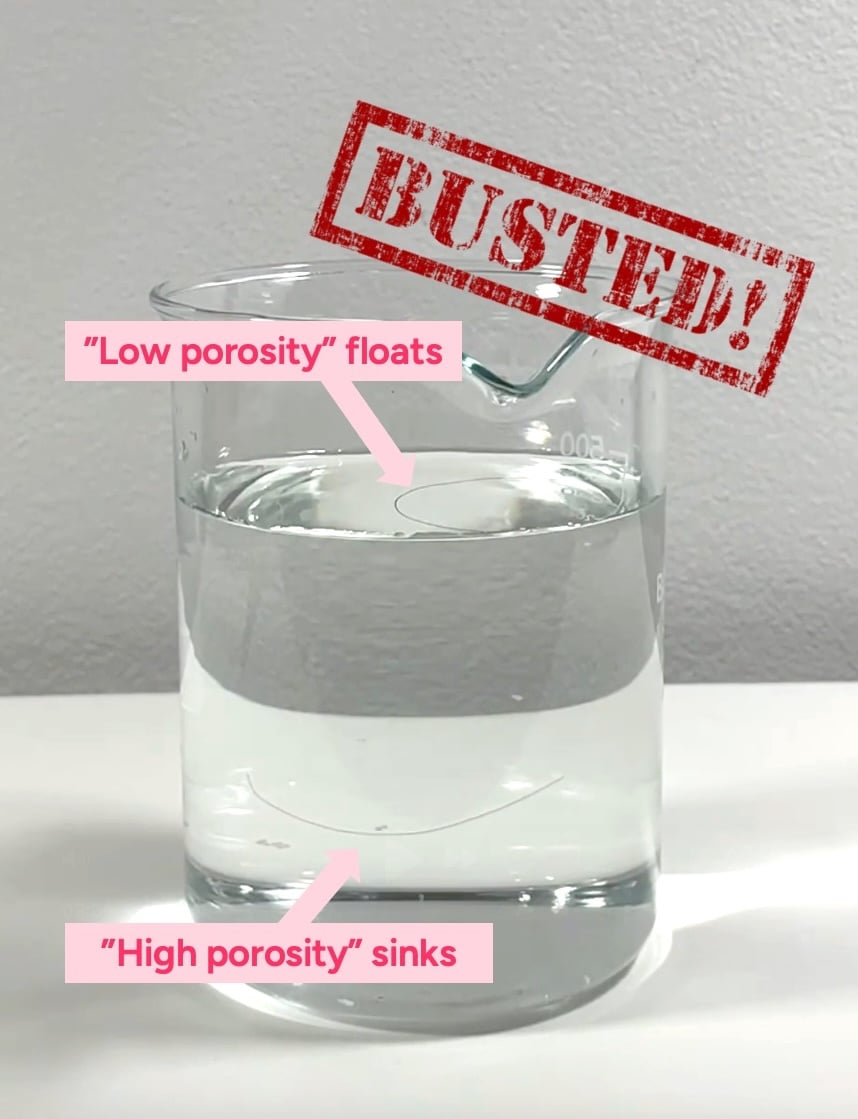
The widespread adoption of at-home hair porosity tests gained traction in the early 21st century, fueled by the rise of online beauty communities, social media influencers, and a growing interest in DIY haircare solutions. Consumers, eager to understand their hair better and choose effective products, embraced simple visual tests that promised quick insights into their hair’s characteristics. The float test, which involves placing a strand of hair in water to observe if it sinks or floats, and the drop test, where a water droplet is observed on a hair strand, became ubiquitous. These tests were presented as straightforward indicators of a hair strand’s ability to absorb moisture, with explanations often revolving around the opening and closing of hair cuticles.
Central to these myths is the misconception that healthy, undamaged hair is inherently waterproof, with its cuticle scales forming an impenetrable barrier to moisture. This belief extends to the role of conditioners, which are often thought to "seal" the cuticle and prevent water from entering or escaping. However, extensive scientific research into the chemical and physical behavior of human hair contradicts these popular notions.
Hair’s Natural Absorbency: A Scientific Perspective
Contrary to the waterproof myth, undamaged hair is remarkably absorbent. Scientific studies, such as those detailed in Robbins CR’s "Chemical and Physical Behavior of Human Hair," confirm that healthy, unconditioned hair can absorb approximately 30% of its own weight in water within minutes. This absorption capacity is dynamic, fluctuating rapidly with changes in environmental humidity. For instance, at 0% relative humidity, hair contains 0% absorbed water, but this figure rises to 3.9% at 8% humidity, 10.2% at 40%, 14.8% at 63%, 22.6% at 86%, and peaks at 31.2% in 100% relative humidity. This data unequivocally demonstrates that hair is not waterproof but rather a hygroscopic material, readily interacting with atmospheric moisture.
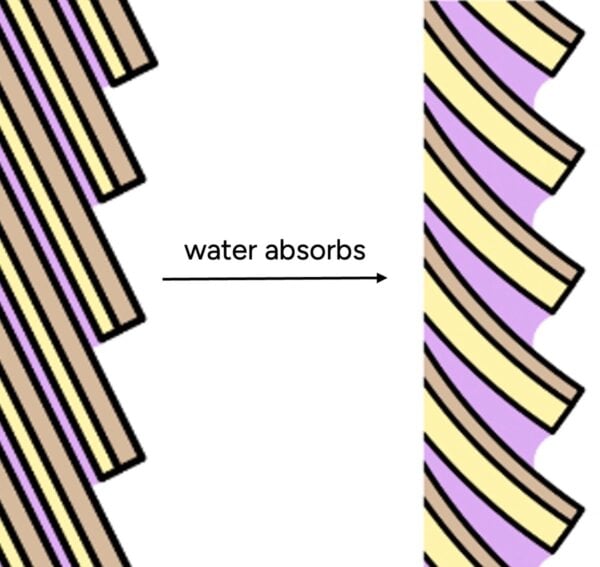
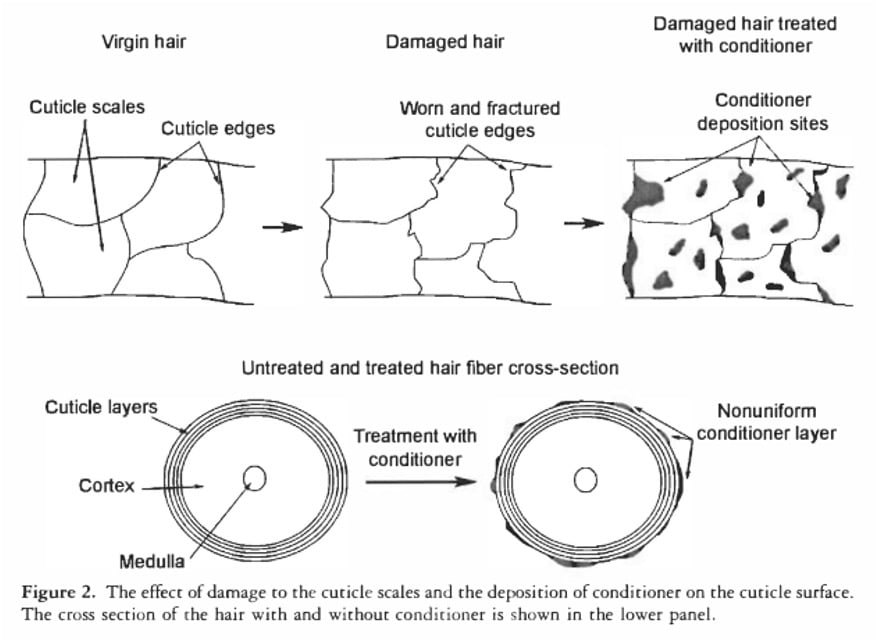
The mechanism behind this natural absorption lies in the microscopic structure of hair. The hair cuticle, often described as overlapping scales resembling a pinecone, is not a continuous, sealed barrier. While the outermost layer of each cuticle scale is coated with a natural conditioning F-layer (a fatty acid layer), this layer is discontinuous. There are numerous microscopic gaps between the scales where water molecules can penetrate. Furthermore, even chemical conditioners, while beneficial for smoothing and softening hair, do not form a perfectly continuous, water-sealing film. As observed in studies by La Torre C and Bhushan B, conditioners deposit on the hair surface in small "blobs" rather than a uniform layer. While these blobs are effective at reducing friction and making hair feel smoother to the touch, they are ineffective at preventing the ingress of tiny water molecules.
Deconstructing the Flawed Porosity Tests: The Role of Surface Tension
The apparent results of the float test and drop test, which have led countless individuals to misdiagnose their hair porosity, are not indicative of internal water absorption but rather of surface phenomena, primarily surface tension.
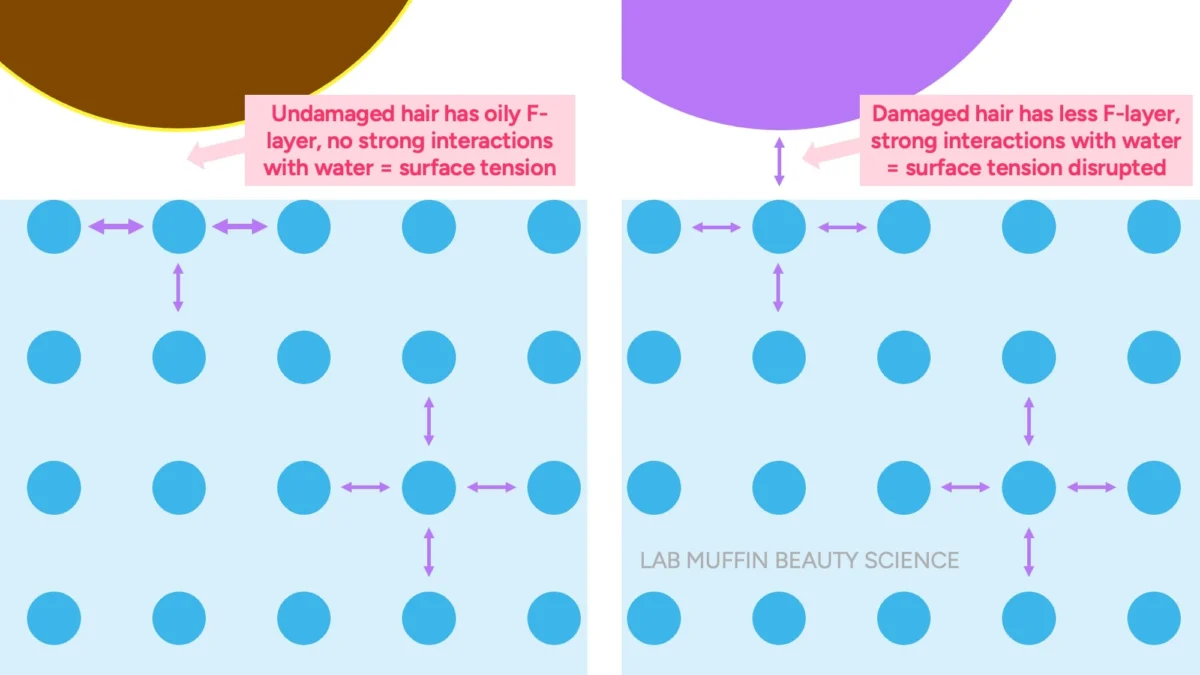
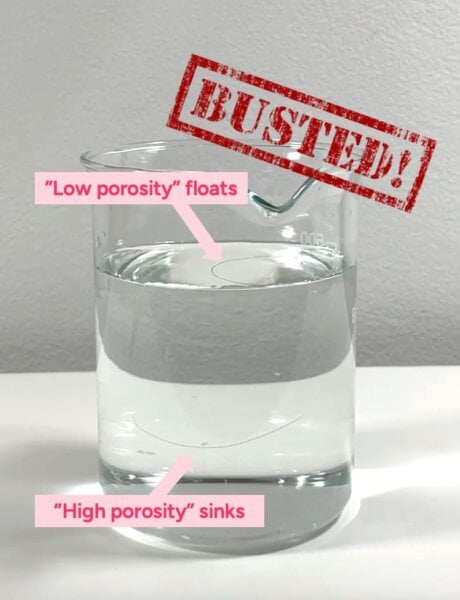
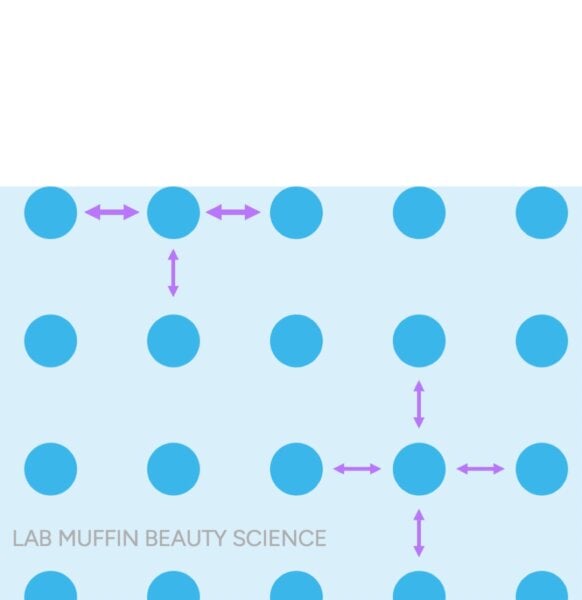
The Float Test Explained: The float test suggests that "high porosity" (damaged) hair sinks quickly because it absorbs water, while "low porosity" (undamaged) hair floats due to its resistance to water. This interpretation is flawed. Both damaged and undamaged hair are denser than water and would naturally sink if surface tension were not a factor. The ability of hair to float is akin to a paperclip floating on water, a classic demonstration of surface tension. Water molecules at the surface exhibit stronger cohesive forces (hydrogen bonds) with each other than with the air above, creating a thin, resilient "skin." This "skin" can support objects denser than water, provided their surface does not disrupt the water’s surface tension.
Undamaged hair possesses an intact, oily F-layer on its cuticle scales. This hydrophobic (water-repelling) surface minimizes interaction with the water molecules, allowing the hair strand to be supported by the water’s surface tension, causing it to float. Conversely, damaged hair often has a compromised or removed F-layer, exposing a more hydrophilic (water-attracting) surface. When this damaged surface encounters water, it readily forms hydrogen bonds with the water molecules, disrupting the surface tension "skin." This disruption causes the hair to break through the surface tension and sink. Therefore, the float test primarily measures the integrity of the hair’s surface F-layer, an indicator of surface damage, rather than its internal porosity or water absorption capacity.
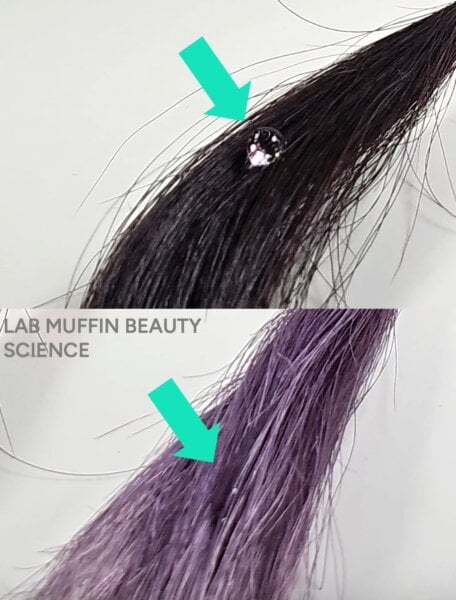
The Drop Test Explained: The drop test posits that a water droplet beads up on "low porosity" hair and flattens out or is quickly absorbed by "high porosity" hair. Again, this is a misinterpretation of surface chemistry. The beading effect on undamaged hair is due to its hydrophobic surface, which repels the water droplet and encourages it to maintain its spherical shape due minimizing contact area. The integrity of the F-layer prevents the water from spreading easily. On damaged hair, the exposed hydrophilic surface readily interacts with the water droplet. This interaction reduces the surface tension between the water and the hair, causing the droplet to spread out and appear to "absorb" more quickly. While damaged hair can absorb slightly more water (around 45% of its weight compared to 30% for undamaged hair), the rapid flattening observed in the drop test is predominantly a surface spreading phenomenon, not a direct measure of rapid internal absorption of liquid water.
Crucially, the water that hair absorbs internally, as demonstrated by humidity experiments, is primarily water vapor (gas), not liquid water. Individual water molecules in gaseous form are small enough to "wiggle" between the cuticle scales and enter the hair shaft without encountering the surface tension barrier that affects liquid water interactions. This distinction is vital for understanding hair’s true moisture dynamics.
The "Why It Works" Paradox and Practical Implications
Despite the scientific inaccuracies of these tests, many individuals find that "porosity-based" haircare advice leads them to products that seemingly work well for their hair. This apparent success is largely coincidental, stemming from the fact that these tests, while mislabeled, do provide an indirect measure of surface damage.
- "High porosity" diagnosis: Typically indicates significant surface damage (e.g., from chemical treatments, heat styling, environmental exposure). Hair with compromised cuticles tends to feel rougher, tangle more easily, and may appear dull. Products recommended for "high porosity" hair often include heavier conditioners, emollients, and protein treatments designed to smooth the cuticle, add shine, and provide a protective layer. These products address the symptoms of surface damage, irrespective of internal porosity.
- "Low porosity" diagnosis: Often corresponds to relatively undamaged hair with an intact F-layer. This hair might appear smoother and shinier but can sometimes feel weighed down by heavy products. Advice for "low porosity" hair often recommends lighter products, clarifying shampoos, and heat application to supposedly "open" the cuticle. While the "opening the cuticle" part is scientifically dubious, lighter products can prevent buildup and maintain bounce on less damaged hair.
The danger arises when these misdiagnoses lead to incorrect conclusions, especially in professional settings. For instance, a hairdresser relying on the float test might determine a client has "high porosity" hair due to extensive surface damage from repeated chemical treatments. However, if the hair’s internal structure is severely compromised, it might paradoxically resist further chemical processing (like dyes or perms) or require extended processing times, despite the "high porosity" label. Conversely, hair heavily coated with oils could present as "low porosity" in these tests, masking underlying damage.
Therefore, the scientific community, including cosmetic chemists and trichologists, strongly advises against using these at-home tests to guide critical professional decisions, particularly concerning chemical treatments. The most reliable method for assessing how hair will respond to a chemical process remains a direct strand test using the actual product, which provides real-time, empirical data on product penetration and efficacy.
Broader Impact and the Future of Haircare Science
The debunking of popular hair porosity tests underscores a larger issue within the beauty industry: the prevalence of pseudo-science and anecdotal evidence over rigorous scientific understanding. For consumers, this highlights the importance of critical thinking and seeking information from credible, science-backed sources. Understanding that hair is naturally absorbent, that conditioners primarily work on the surface for tactile benefits, and that surface tension governs many visual interactions with water, empowers individuals to make more informed product choices based on actual hair needs rather than misleading labels.
For the beauty industry, this revelation reinforces the ongoing commitment to research and development, ensuring that product formulations are grounded in robust hair science. Brands that prioritize transparency and education about how their products truly interact with hair will build greater trust with their consumers.
Ultimately, while the term "porosity" may continue to be used in common parlance, a deeper scientific understanding reveals that hair health is best assessed by considering factors such as cuticle integrity, protein balance, moisture content (both internal and external), and the overall condition of the hair fiber. Moving forward, the emphasis should shift from simplistic, unscientific tests to a holistic, evidence-based approach to haircare that truly addresses the complex, dynamic nature of human hair.
References
Robbins CR. Chemical and Physical Behavior of Human Hair. 5th ed. Springer Berlin Heidelberg 2012.
La Torre C, Bhushan B. Nanotribological effects of silicone type, silicone deposition level, and surfactant type on human hair using atomic force microscopy. J Cosmet Sci. 2006;57(1):37-56.
