
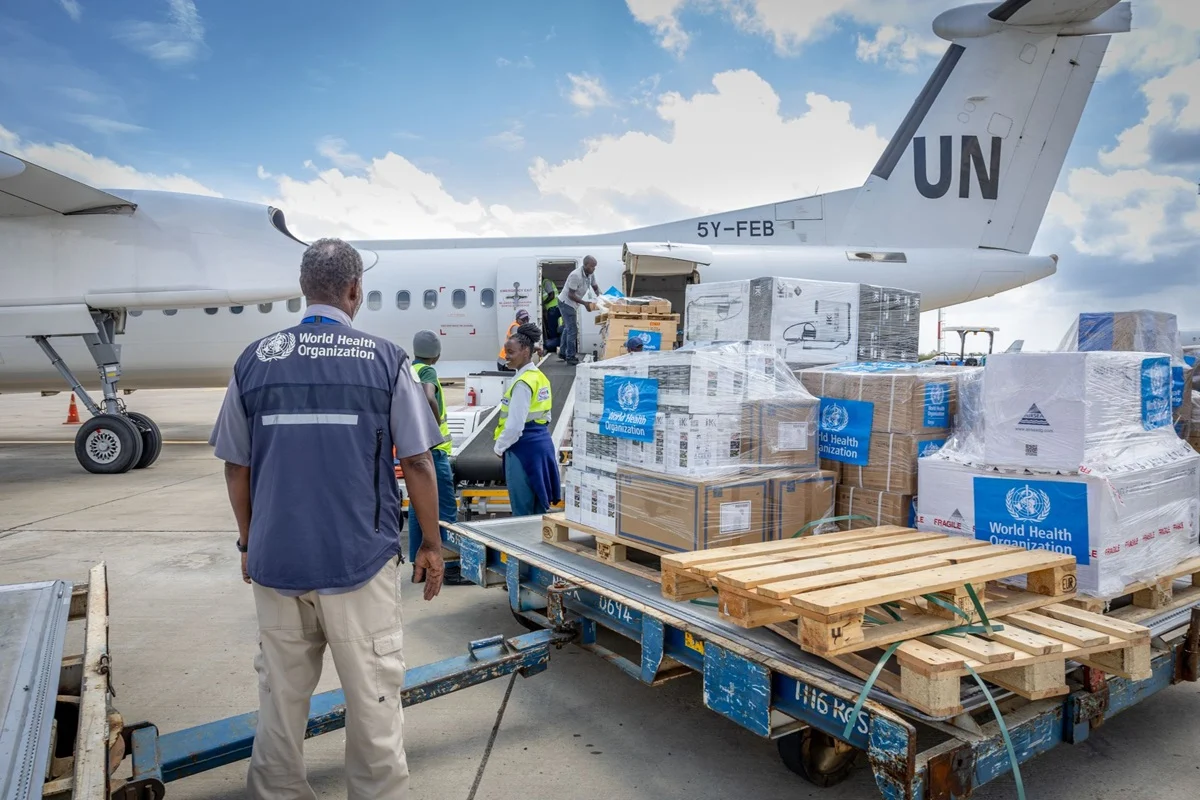
The Director-General of the World Health Organization, acting under the mandate of the International Health Regulations (2005), officially determined on May 17, 2026, that the ongoing epidemic of Ebola disease caused by the Bundibugyo virus (BDBV) represents a Public Health Emergency of International Concern (PHEIC). This designation follows an alarming increase in cases within the Democratic Republic of the Congo (DRC) and the subsequent cross-border transmission into neighboring Uganda. While the situation has been elevated to the highest level of global health alert, the WHO clarified that the event does not currently meet the specific criteria for a "pandemic emergency," a distinction reserved for pathogens demonstrating sustained, uncontained global spread.
Following the initial declaration, the IHR Emergency Committee convened on May 19, 2026, to review the epidemiological trajectory and the operational challenges hindering containment. The Committee’s findings underscored a grim reality: the epidemic is unfolding in one of the most complex humanitarian and security environments in the world. The presence of armed conflict, high population mobility, and significant gaps in healthcare infrastructure in the affected regions has necessitated a comprehensive set of temporary recommendations aimed at both the affected States Parties and the international community at large.
Epidemiological Status and Risk Assessment
As of May 22, 2026, the WHO Secretariat has categorized the risk level as "Very High" for the DRC and "High" for Uganda. The distinction in risk levels reflects the differing scales of the outbreak in the two nations. In the DRC, the virus has established multiple chains of transmission across several health zones, exacerbated by the difficulty of conducting contact tracing in volatile areas. Conversely, Uganda’s situation remains more contained, with two confirmed cases of Bundibugyo virus disease (BVD) reported. Both cases have been traced back to known transmission chains in the DRC, and as of the latest reporting period, no secondary onward transmission has been documented within Ugandan territory.
The Bundibugyo virus is one of six species within the Orthoebolavirus genus. While it is historically associated with lower case-fatality rates than the Zaire ebolavirus—ranging from 25% to 50% in previous outbreaks—it remains a highly lethal pathogen. A critical challenge for health authorities in 2026 is the lack of approved medical countermeasures. Unlike the Zaire strain, for which the Ervebo and Zabdeno-Mvabea vaccines have been deployed successfully in recent years, there are currently no licensed vaccines or specialized therapeutics for the Bundibugyo strain. This therapeutic vacuum places the burden of containment entirely on traditional public health interventions, such as early detection, isolation, and rigorous infection prevention and control (IPC).
Chronology of the 2026 Outbreak
The current crisis began in early April 2026, when a cluster of unexplained hemorrhagic fever deaths was reported in a remote health zone in the North Kivu province of the DRC. By late April, laboratory sequencing confirmed the presence of the Bundibugyo virus. The initial response was hampered by the geographical isolation of the region and intermittent security threats from non-state armed groups.
By May 10, the virus had reached urban centers near the border, leading to the first suspected cases in Uganda. The WHO was notified of the potential for international spread on May 12, triggering a formal assessment under the IHR framework. On May 17, the Director-General issued the PHEIC declaration, followed by the formal Emergency Committee meeting on May 19. The rapid progression from localized cluster to international emergency highlights the speed at which viral pathogens can move through the porous borders of the Great Lakes region.
Challenges in the Operational Environment
The Emergency Committee emphasized that the response must be adapted to the "most challenging operational environments possible." In Eastern DRC, the convergence of the Ebola outbreak with ongoing civil unrest creates a "syndemic" effect. Health workers often require security escorts to reach affected villages, which can sometimes alienate local communities and fuel mistrust.
Furthermore, the high rate of internal displacement in the region means that contacts of confirmed cases are often on the move, making the 21-day monitoring period nearly impossible to enforce without robust community engagement. The WHO has stressed that the response cannot be purely medical; it must integrate sociological insights to ensure that local populations are partners in the containment effort rather than passive recipients of external interventions.
Scientific Context and Medical Countermeasures
The scientific community is currently in a race against time to adapt existing Ebola technologies to the Bundibugyo strain. While the Zaire ebolavirus vaccines do not provide cross-protection against BDBV, the underlying viral vector platforms (such as the rVSV and ChAd3 platforms) are being leveraged to develop candidate vaccines.
The WHO’s Research and Development (R&D) Blueprint has been activated to fast-track clinical trials for these candidates. However, until these trials yield actionable data, the "gold standard" of care remains optimized supportive care. This includes aggressive fluid resuscitation, electrolyte monitoring, and the treatment of secondary infections. The WHO has issued updated interim technical guidance to ensure that health facilities in the DRC and Uganda can provide this level of care while minimizing the risk of nosocomial (facility-based) transmission to health workers.
Temporary Recommendations for States Parties
The WHO has issued a tiered set of recommendations based on the risk profile of various countries. For the DRC and Uganda, the focus is on "scaling-up" interventions. This includes:
- Surveillance and Laboratory: Enhancing active case finding and ensuring that laboratory results are returned within 24 hours to facilitate rapid isolation.
- Infection Prevention and Control: Implementing strict protocols in both formal health facilities and community care centers.
- Safe and Dignified Burials: Ensuring that burial practices, which are often high-risk events for Ebola transmission, are conducted in a way that respects cultural traditions while preventing the spread of the virus.
- Border Health: Implementing exit screening at international airports, seaports, and major land crossings to prevent the export of cases without unnecessarily disrupting international travel or trade.
For countries sharing land borders with the DRC and Uganda—such as Rwanda, South Sudan, Burundi, and Tanzania—the WHO has assessed the regional risk as "High." These nations are advised to increase their readiness by conducting simulation exercises, stockpiling personal protective equipment (PPE), and sensitizing health workers to the symptoms of BVD. For the rest of the world, where the risk is currently "Low," the focus remains on maintaining routine surveillance and ensuring that travel histories are taken for all patients presenting with fever and relevant symptoms.
Broader Impact and Global Implications
The declaration of a PHEIC carries significant economic and social weight. While the WHO specifically advises against any travel or trade restrictions that are not based on scientific evidence, the reality of such declarations often leads to a decrease in regional tourism and a slowdown in cross-border commerce. This is particularly concerning for the economies of East Africa, which are still recovering from the logistical disruptions of previous years.
Moreover, this outbreak serves as a stark reminder of the "neglected" strains of Ebola. For years, global health funding and research have prioritized the Zaire strain due to its historical prevalence. The current BDBV crisis exposes the vulnerability of the global health security architecture when faced with a pathogen for which no "off-the-shelf" vaccine exists.
Official Responses and International Cooperation
International partners, including the African Union’s Centers for Disease Control and Prevention (Africa CDC) and various non-governmental organizations like Médecins Sans Frontières (MSF), have begun mobilizing resources. The Africa CDC has deployed a team of epidemiologists to support the DRC’s Ministry of Health, while the UN’s Humanitarian Air Service (UNHAS) is facilitating the transport of essential supplies to remote health zones.
The WHO Director-General has called for "global solidarity," noting that the cost of containment now is a fraction of what the cost of a full-scale pandemic would be. "The implementation of these recommendations," the WHO statement noted, "shall be with full respect for the dignity, human rights, and fundamental freedoms of persons." This clause is a response to past criticisms of Ebola responses that were seen as overly militarized or coercive.
As the situation evolves, the WHO will continue to update its evidence-based guidance. The next meeting of the Emergency Committee is expected within three months, or sooner should the epidemiological situation deteriorate significantly. For now, the world’s attention is fixed on the forests and border towns of Central Africa, where a familiar foe in a different form is testing the limits of modern public health.
