

Dutch precision fermentation innovator Vivici has announced a significant funding milestone, securing €12.5 million (approximately $14.4 million USD) from the European Innovation Council (EIC) through its 2026 accelerator program. This substantial investment, disclosed recently, marks a pivotal moment for the company as it aims to accelerate the commercialization and expand the market reach of its animal-free whey protein ingredients. The EIC’s backing signifies strong European endorsement for Vivici’s disruptive technology and its potential to reshape the dairy protein landscape.
This latest funding injection follows Vivici’s impressive Series A round just a year prior, where the company successfully raised €32.5 million. The European Innovation Council’s accelerator program is renowned for its strategic approach to supporting high-impact startups and SMEs. It provides blended finance, a combination of grants and potential equity investments, to businesses demonstrating viable, scalable products, services, and business models that are poised to create new markets or disrupt existing ones, both within Europe and internationally. Vivici emerged as one of 38 selected entities from an initial pool of 87 ambitious proposals, highlighting the competitive nature of this prestigious funding opportunity. The total investment allocated across the program for grants amounts to €90 million, with an additional €202 million earmarked for potential equity investments, underscoring the EU’s commitment to fostering cutting-edge innovation.
The capital infusion will be strategically deployed to enhance the supply chain and broaden market access for Vivici’s proprietary animal-free whey protein ingredients, which are marketed under the brand name Vivitein. This expansion is particularly timely, given the escalating global demand for protein and the concurrent challenges faced by traditional dairy supply chains.
Precision Fermentation: The Engine Behind Vivici’s Innovations
Vivici’s core technology leverages the power of precision fermentation, a sophisticated biotechnology process that involves introducing specific genetic material into microorganisms. These engineered microbes are then cultivated in controlled fermentation environments, where they are programmed to produce target molecules, in this case, high-value dairy proteins, without the need for animal agriculture. This approach allows for the creation of identical replicas of milk proteins with unparalleled purity and consistency.

The company’s flagship product is Vivitein BLG, a bioidentical version of beta-lactoglobulin (BLG). BLG is the most abundant whey protein in cow’s milk and is highly prized for its functional properties, including its excellent gelling, foaming, and binding capabilities. It is also a complete protein source, containing all nine essential amino acids vital for human health. Vivitein BLG is characterized by its clear appearance and neutral flavor profile, making it an exceptionally versatile ingredient for a wide array of food and beverage applications.
According to Vivici’s product specifications, Vivitein BLG can be incorporated into formulations at levels of up to 50% by weight. Its applications span across numerous categories, including meal replacements, functional beverages, nutrition bars, and both traditional dairy products and their plant-based alternatives. Furthermore, it is suitable for use in desserts, confectionery, fillings, bakery mixes, and as an ingredient in plant-based meat, fish, and egg analogues.
The environmental benefits of Vivitein BLG are substantial when compared to conventionally produced beta-lactoglobulin derived from dairy cows. Vivici reports that its precision fermentation process results in a 66% reduction in greenhouse gas emissions, an 86% decrease in water consumption, and a 61% lower land-use footprint. These figures underscore the significant sustainability advantages offered by this innovative approach to protein production, aligning with growing consumer and regulatory demand for environmentally responsible food systems.
Expanding the Portfolio: Lactoferrin Joins the Vivitein Lineup
Building on the success of Vivitein BLG, Vivici unveiled its second precision-fermented whey protein, Vivitein LF, earlier this year. This new ingredient is an animal-free version of lactoferrin, an iron-regulating glycoprotein naturally found in milk. Lactoferrin is recognized for its potent bioactive properties, playing a crucial role in immune support, gut health, and overall well-being.
Vivitein LF is engineered to optimize microbiome balance, strengthen the gut barrier function, inhibit the growth of undesirable bacteria, and mitigate gut inflammation. The company highlights that its high-purity lactoferrin, boasting 95% purity, is ideally suited for a diverse range of health and wellness products. These include formulations targeting performance recovery for athletes, enhanced gut health solutions, women’s wellness products, and those aimed at promoting sustained vitality.
A key functional benefit of Vivitein LF is its ability to mobilize iron, thereby enhancing its absorption by the body. This is particularly relevant for addressing iron deficiency, a prevalent issue among many populations, especially women. The ingredient works synergistically with dietary iron intake and supplements, while also contributing to the reduction of digestive discomfort. For active individuals and athletes, Vivici’s precision-fermented lactoferrin offers anti-inflammatory benefits, supports faster recovery post-exercise, facilitates a quicker return to training, and may reduce the risk of sports-related injuries.
Both Vivitein BLG and Vivitein LF have already received regulatory clearance for sale in the United States. Vivici is exploring various product applications for its ingredients. Vivitein BLG is being targeted for use in protein shots, clear beverages, ready-to-eat snacks, and ready-to-mix powders. For Vivitein LF, which is slated for market entry next year, applications are being developed for functional shots, ready-to-mix beverages, dietary supplements, and gummies.
Strategic Location and Operational Scale
Vivici’s operations are strategically anchored at the Biotech Campus Delft, a vibrant hub for biotechnology innovation in the Netherlands. The company further bolsters its research and development capabilities with a dedicated dairy protein application laboratory situated within the NIZO Food Research facility in Food Valley. This strategic placement allows Vivici to collaborate closely with industry partners and leverage advanced research infrastructure.
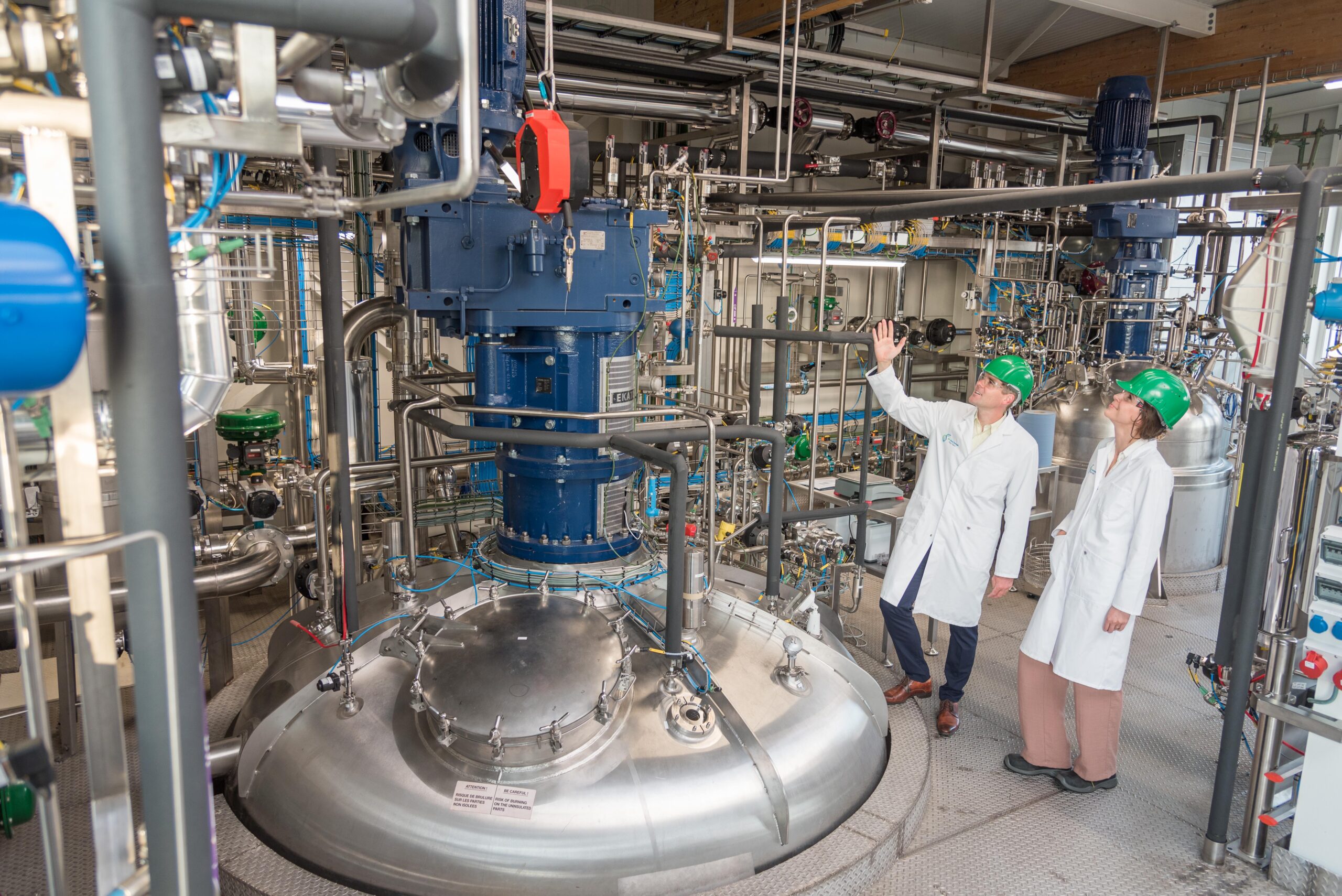
To ensure commercial viability and scalability, Vivici is actively engaged with co-manufacturers across Europe and the United States. The company has successfully demonstrated its production process at a significant scale, having tested its technology in a 75,000-liter fermenter at the Bio Base Europe Pilot Plant (BBEPP). This experience is crucial for de-risking the scale-up process and validating the efficiency and reliability of its manufacturing capabilities.
The EIC Accelerator funding is integrated into Vivici’s broader business strategy, which is designed to fully unlock the commercial potential of its precision fermentation technology. The objective is to achieve sustainable, large-scale production of whey proteins, thereby providing innovative and reliable alternatives to an increasingly strained global ingredient market.

Addressing the Global Whey Protein Shortage
The timing of Vivici’s funding announcement is particularly salient, coinciding with a significant and persistent shortage in the global whey protein market. The sustained and growing consumer appetite for high-protein products has placed immense pressure on traditional dairy supply chains, leading to unprecedented demand-supply imbalances.
In the United States, for instance, contracts for whey protein have reportedly been sold out well into 2026, with some supplies completely depleted for the remainder of the current year. This market tightness has driven whey prices to record highs. In 2025, whey prices surged, continuing a trend of sharp increases seen over the preceding two years. Data indicates that the cost of whey protein concentrate has risen by a staggering 108% over the last two years, while whey protein isolate has seen its price nearly double during the same period.
This price volatility and scarcity create significant challenges for food and beverage manufacturers, impacting product development, cost of goods, and ultimately, consumer access. Precision fermentation offers a compelling solution by decoupling protein production from the dairy industry, which traditionally relies on the cheese-making process for whey. By providing a stable, scalable, and environmentally conscious alternative, Vivici’s technology is poised to bridge the existing supply-demand gap, offering manufacturers and consumers greater predictability and reliability for a highly sought-after protein source.
Leadership Perspectives on the Future of Protein
Stephan van Sint Fiet, CEO of Vivici, expressed his enthusiasm and gratitude for the EIC’s support. "Securing the support of the EIC is a powerful endorsement of what we are building at Vivici," he stated. "It tells us that Europe sees the same opportunity we do, to turn the promise of precision fermentation into a commercial reality, at scale, for the benefit of customers and consumers. This funding allows us to move faster on exactly that." His remarks highlight the strategic importance of the EIC’s investment in validating Vivici’s vision and accelerating its path to market leadership.
Simon Penfold, the company’s Chief Commercial Officer, echoed this sentiment, emphasizing the market’s readiness for Vivici’s offerings. "Customer demand for our ingredients is already strong, and this backing lets us meet it with the supply and pace the market expects," Penfold commented. This statement underscores the immediate commercial traction Vivici is experiencing and the critical role the new funding will play in fulfilling existing and future demand. The successful integration of precision-fermented proteins into mainstream food and beverage products is expected to contribute to a more resilient and sustainable global food system, meeting the evolving needs of consumers and the planet.
