
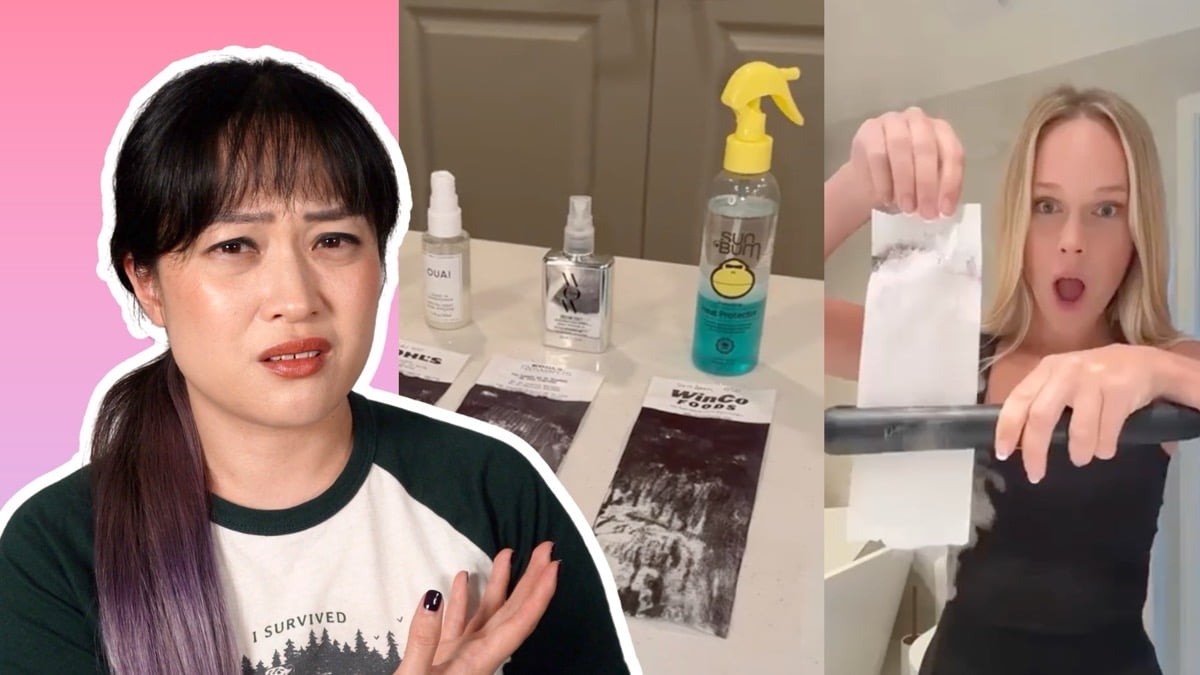
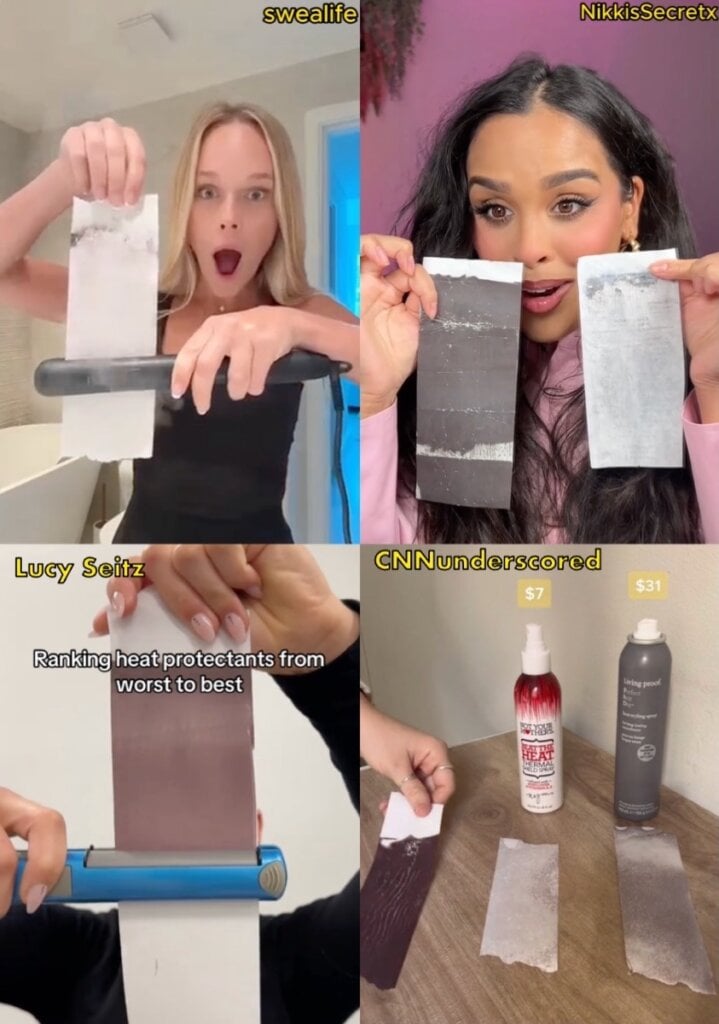
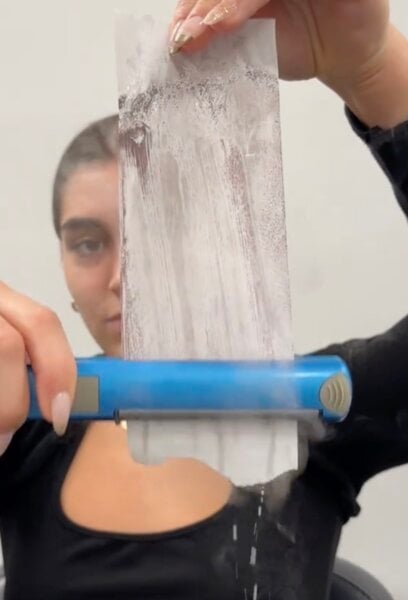
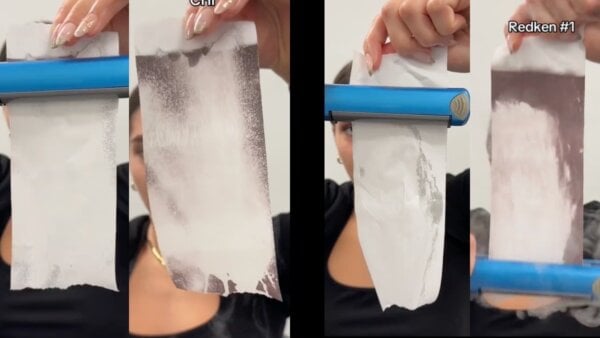
A pervasive trend on social media platforms, particularly TikTok, has seen individuals conducting DIY experiments to assess the efficacy of hair heat protectant sprays using thermal paper receipts and flat irons. The premise, widely adopted by millions of viewers, suggests that if a receipt treated with a heat protectant remains white after being ironed, the product is effective. Conversely, a receipt that turns black indicates a failure in heat protection. This seemingly straightforward test has garnered immense traction, influencing consumer perception and purchasing decisions within the beauty industry. However, the scientific validity of this viral method has been brought into question by experts, prompting a deeper investigation into its underlying mechanisms.
The Genesis of a Digital Trend
The viral heat protectant test emerged from the burgeoning intersection of beauty content and DIY science on social media. Influencers and cosmetologists, keen to provide tangible proof of product performance, began showcasing these receipt tests, often with dramatic visual results. The intuitive logic — heat causes receipts to blacken, so less blackening implies heat protection — resonated with a public eager for easily understandable product evaluations. One prominent series of videos by cosmetologist Lucy Seitz, for example, systematically demonstrated the test, even attempting to refine her methodology by incorporating a drying step after initial criticism regarding wet receipts. Despite these efforts to introduce scientific rigor, questions lingered about whether the thermal paper truly served as an accurate analogue for human hair. The simplicity and visual impact of the test made it highly shareable, cementing its status as a widely recognized, albeit potentially misleading, benchmark for heat protectant performance. This trend underscores a broader societal interest in demystifying product claims through accessible, hands-on experimentation, even if the scientific principles governing such tests are often oversimplified or misinterpreted.
The Scientific Scrutiny Begins
Recognizing the widespread influence and potential for misinformation, Dr. Michelle Wong, a prominent beauty scientist and communicator behind Lab Muffin Beauty Science, embarked on a comprehensive investigation to determine the validity of the viral heat protectant test. Dr. Wong noted that while many DIY beauty tests are easily dismissed due to fundamental differences between the test object and human skin or hair, the receipt test presented a more compelling facade of scientific legitimacy. Hair is damaged by heat, and thermal receipts react to heat by darkening, leading to the "surface validity" that captivated so many. The core question for Dr. Wong was whether the receipts were indeed changing color in a manner analogous to how hair experiences excessive heat damage. Her detailed inquiry, initially documented in a video and subsequently elaborated in a textual format for granular experimental details, revealed a far more complex picture than the viral trend suggested.
Early Experimental Findings: Day 1 Tests
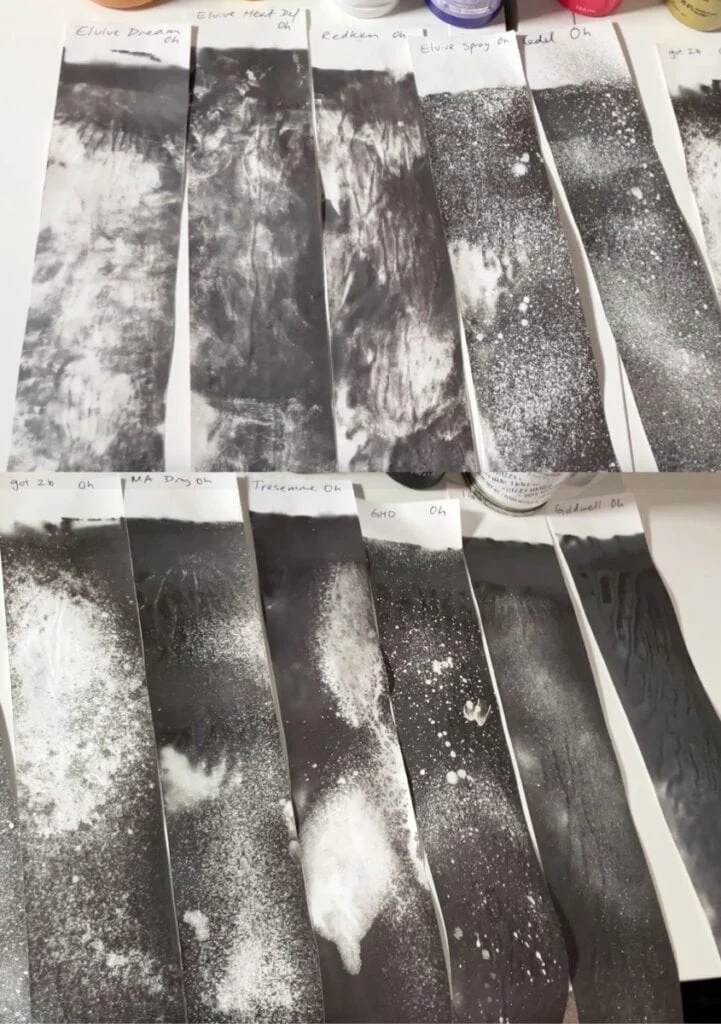
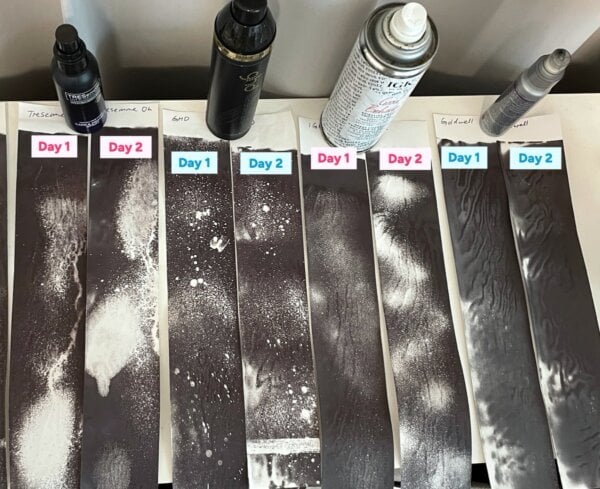
Dr. Wong initiated her investigation by attempting to replicate the viral test, focusing on common heat protectant formulas. She gathered 11 products, including seven pump sprays, one propellant spray, and three cream products, aiming for a diverse range to observe potential patterns. Using a straightener set to 170°C (338°F), close to the 340°F used by some influencers, her initial attempt with a wet Marc Anthony spray on a receipt resulted in crackling and smoking – a clear indication of significant water content. This led to a critical modification: products were applied to receipts and allowed approximately 15 minutes to dry before heat application, mirroring a more realistic, albeit still uncontrolled, application scenario.
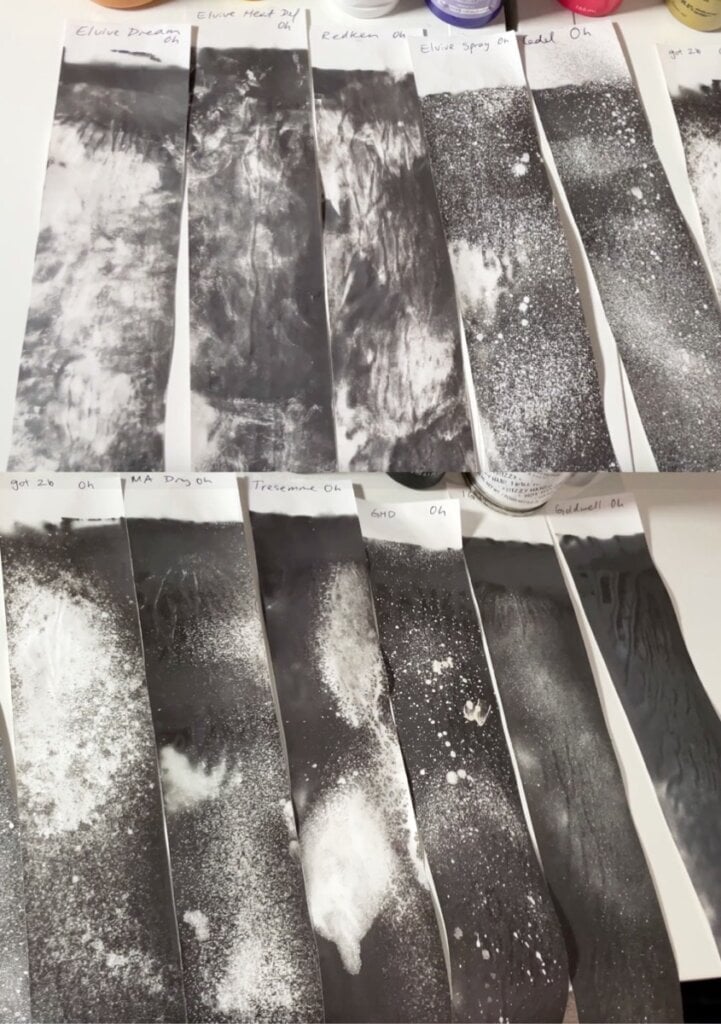
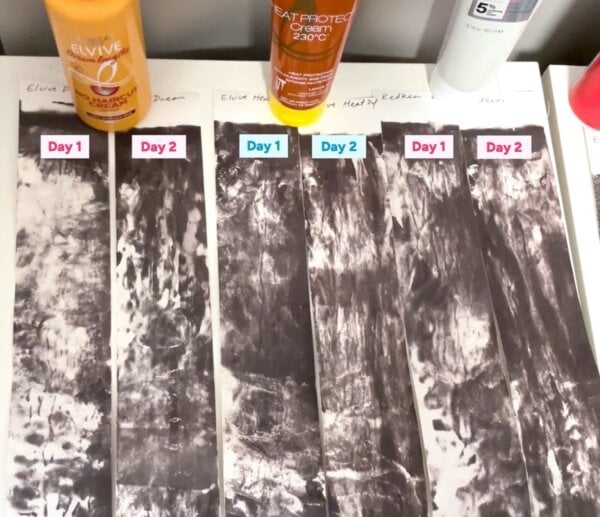
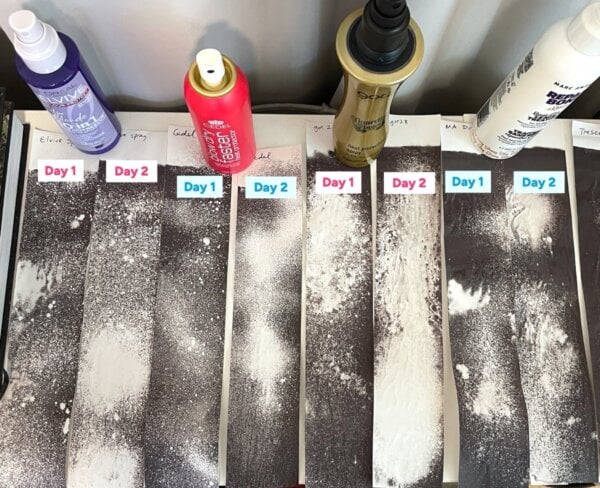
The results of this first day of testing yielded immediate insights. A stark difference was observed between receipts tested immediately after application and those allowed to dry for 15 minutes, with the latter generally showing less darkening. This highlighted the significant cooling effect of residual moisture. Notably, cream products consistently resulted in the lightest receipts. This was attributed to their thicker application, providing greater insulation, and their slower drying times, meaning more water was likely present during the heating process. Conversely, the Goldwell and IGK sprays, which had water lower on their ingredient lists, produced the darkest receipts, aligning with the hypothesis that less water meant less cooling. While no definitive pattern emerged between specific ingredients and darkening beyond the water content, the initial observations strongly suggested that the amount of product applied and its drying time were critical factors, directly impacting the apparent "effectiveness" of the heat protectant on the receipt.
The Critical Role of Water in Cooling
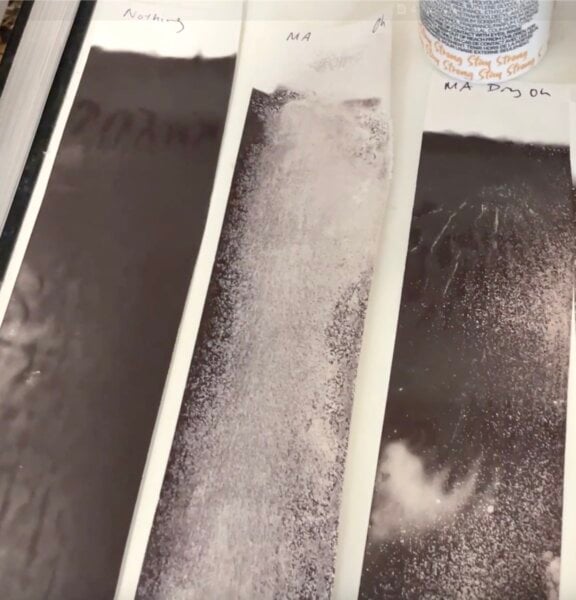
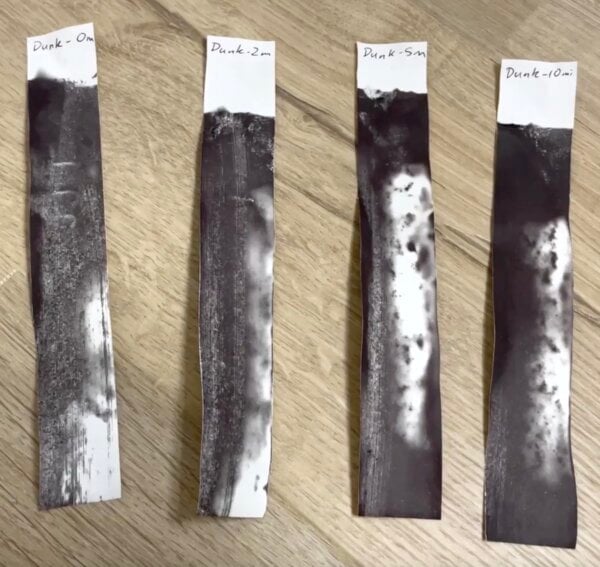
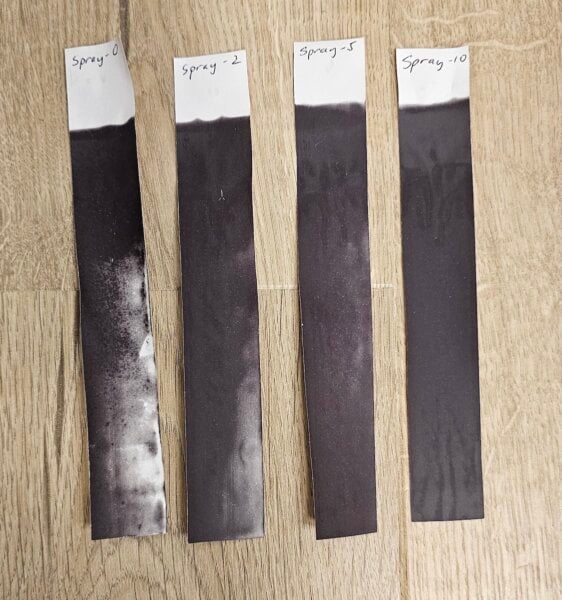
To isolate the impact of water, Dr. Wong conducted dedicated "water tests." Receipts were either fully dunked in water or sprayed with water, then subjected to the flat iron immediately, after 2 minutes, 5 minutes, and 10 minutes. The results unequivocally demonstrated water’s significant cooling effect. Dunked receipts remained largely white across all drying intervals, with the immediate test showing slightly less whiteness, possibly because the water hadn’t fully permeated the paper yet. Sprayed receipts, however, showed a more pronounced progression: white bits immediately, grey at 2 minutes, and black by 5 minutes. This confirmed that water acts as a potent cooling agent.
This finding was crucial, as water, despite its cooling properties on a receipt, is detrimental to hair when heat styled. Hair that is not completely dry can experience "bubble hair" – explosive evaporation of water within the hair shaft, causing severe structural damage. Therefore, products that "worked" on receipts by retaining water were paradoxically indicating a practice that would be harmful to actual hair. The test’s premise of "less blackening equals better protection" was fundamentally flawed if the mechanism of protection was simply the presence of water, which has an entirely different and often negative interaction with hair during heat styling.
Longer-Term Observations: Day 2 Tests and Unexpected Outcomes
Further experiments were conducted on a second set of receipts, which were prepared on Day 1 but tested 24 hours later, ensuring they were thoroughly dry. The initial expectation was that with all water evaporated, these receipts would universally turn much darker, revealing the "true" heat protection capabilities of the products. However, the results were unexpectedly contradictory. The cream products, even after 24 hours, still produced very light receipts. More surprisingly, many of the spray products appeared even lighter on Day 2 than they had after just 15 minutes of drying. This unexpected observation contradicted the initial water-cooling hypothesis and indicated that another, more persistent mechanism was at play.
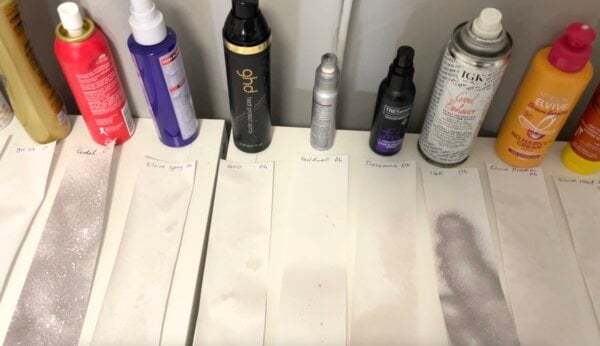
This anomaly pointed towards a deeper interaction between the heat protectant products and the thermal paper itself, beyond simple heat absorption or water evaporation. It suggested that certain components within the beauty products were chemically interfering with the thermal paper’s heat-sensitive ink layer, rather than merely mitigating heat transfer. This critical observation marked a turning point in Dr. Wong’s investigation, shifting the focus from thermal physics to the specific chemistry of the receipt paper and the product formulations.
A Critical Discovery: Unveiling Thermal Paper Chemistry
The unexpected Day 2 results necessitated a deeper dive into the composition and reaction mechanisms of thermal paper. Dr. Wong’s research initially encountered conflicting information regarding the temperature at which thermal paper changes color. Early Google searches suggested temperatures similar to hair straighteners (150-185°C), which seemed to support the test’s premise. However, a fortuitous encounter with a German Wikipedia article and a referenced scientific paper revealed a starkly different reality: the melting point of the substances in thermal paper ranged from a mere 40 to 80°C. Further investigation, including more targeted searches, confirmed that thermal paper begins to develop color between 60 to 100°C, reaching applicable density between 70 and 120°C.
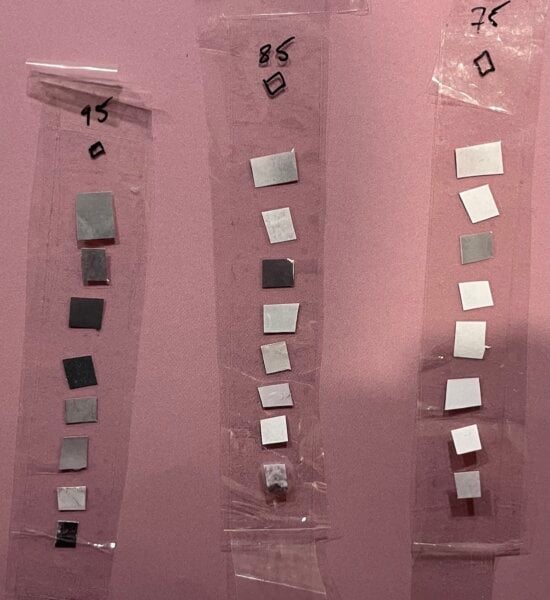
This was a pivotal discovery, as hair typically sustains damage at temperatures exceeding 100°C. If receipts were reacting at significantly lower temperatures, the test would be fundamentally irrelevant to hair protection. To confirm the activation temperature of her specific receipt paper, Dr. Wong conducted a precise test. She dipped various receipts into a beaker of boiling water allowed to cool to different temperatures. Despite initial challenges with paper integrity and adhesive interference, she found that most of her receipts turned black around 95°C. While this temperature aligns more closely with the threshold for hair damage, the broader discrepancy in thermal paper activation temperatures across different sources highlighted the variability and potential unreliability of the medium itself as a scientific model. More importantly, the low activation temperatures suggested that any substance interfering with the ink’s reaction, rather than just absorbing heat, could yield a "false positive" result.
Unraveling the Mechanism: The "Dissolving Ink" Hypothesis
With the thermal paper’s chemistry now better understood, Dr. Wong synthesized her observations into a new, more robust hypothesis: heat protectants that appear to "work" on receipts do so by dissolving the heat-sensitive ink layer, not by effectively protecting against heat. This dissolution prevents the ink components from reacting and forming the characteristic black color when heated.
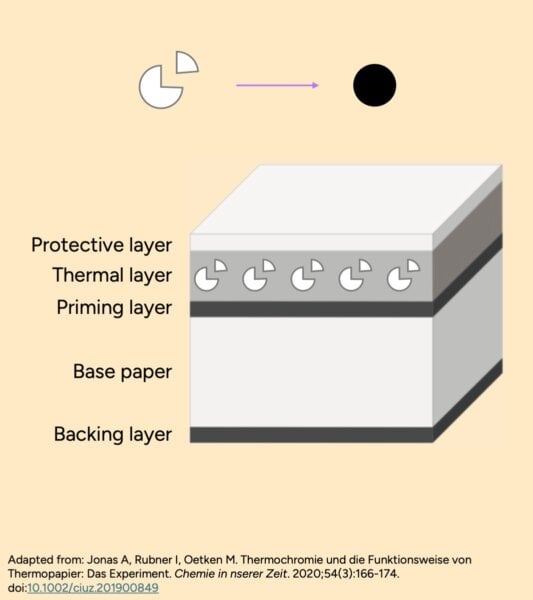
Thermal receipt paper utilizes a sophisticated, multi-component ink layer that is invisible at room temperature. This layer typically contains a leuco dye, a developer, and a sensitizer, all embedded in a binder. When heated, the sensitizer melts, allowing the dye and developer to come into contact and react, forming the visible black image. The integrity of this layered structure is crucial for the reaction. If a chemical solvent disrupts this structure, either by dissolving the binder, separating the dye and developer, or altering their chemical environment, the thermal reaction can be inhibited or prevented entirely.
Dr. Wong observed that many sprays that turned receipts grey or kept them white contained high amounts of alcohol. Alcohol is a powerful solvent, capable of dissolving a range of organic compounds, including the oilier substances often found in thermal ink layers. This led to the conclusion that alcohol-rich products were not protecting the receipt from heat, but rather chemically disrupting the ink layer, preventing its heat-activated color change.
Confirmatory Experiments and Chemical Interactions
To validate her "dissolving ink" hypothesis, Dr. Wong conducted a series of confirmatory tests using various common substances known for their solvent properties.
-
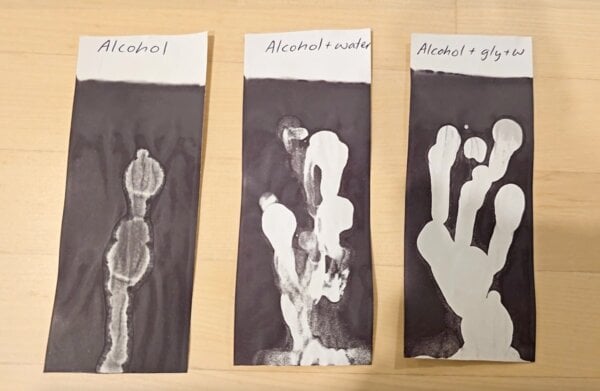
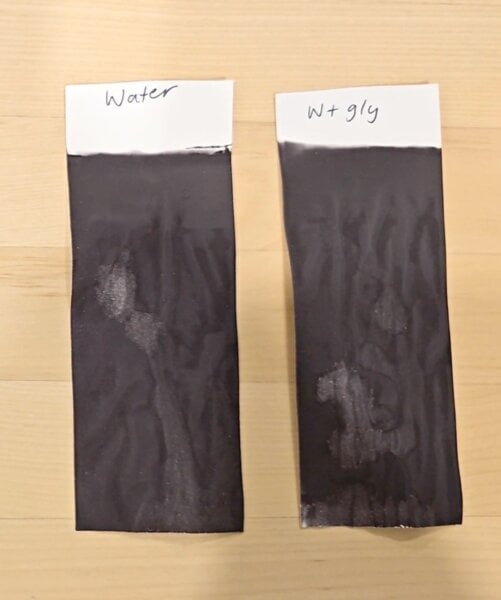
Alcohol, Water, and Glycerin: Drops of methylated spirits (alcohol), alcohol mixed with water, and alcohol with water and glycerin were applied to receipts. All kept the receipts light after heating (after 30 minutes of drying). Diluted alcohol proved even more effective at preventing blackening than pure alcohol. This was explained by water and glycerin forming hydrogen bonds with alcohol, slowing its evaporation and allowing it more time to disrupt the ink layer. This also clarified why spray products sometimes appeared lighter after 24 hours (Weird Observation 2): the product continued to mess with the ink over a longer period. Water and water/glycerin alone did not significantly disturb the ink, as receipt inks are typically too oily for them to dissolve effectively.
-
Other Alcohol-Containing Products: Perfume, which is largely alcohol-based, immediately turned receipts grey upon application and kept them white after heating. Dry shampoo, also containing alcohol, caused immediate grey discoloration but was less effective at preventing blackening upon heating. This difference was attributed to dry shampoos having fewer humectants, leading to faster alcohol evaporation and less prolonged solvent action.
-
Surfactants: Many heat protectants that "worked" on receipts but lacked significant alcohol contained surfactants. Surfactants are emulsifying agents found in many beauty products (like cleansers, moisturizers, sunscreens) that excel at dissolving oily substances. Micellar water and water with detergent, both rich in surfactants, effectively kept receipts white after approximately 30 minutes of drying. Similarly, a cream moisturizer (CeraVe Moisturising Cream) and a cream spray (Laneige Cream Skin) also prevented the receipts from darkening, as did sunscreens (La Roche-Posay Anthelios UVMune 400 Fluid, Naked Sundays spray) which often combine both alcohol and surfactants. This explained why creams, even when fully dry, continued to "work" – the emulsifiers in them were dissolving the ink layer. The physical act of rubbing cream onto the receipt likely enhanced this dissolution.
-
Volatile Silicones: A two-phase eye makeup remover, primarily cyclopentasiloxane (a volatile silicone), had minimal impact on the receipt. Silicones are generally too oily and evaporate too quickly to effectively dissolve the ink layer, explaining why some silicone-based products "failed" the receipt test despite being excellent heat protectants for hair.

-
Propellant: The propellant HFC-152a, present in some highly effective viral products, was also investigated. Compressed air, essentially just propellant, showed no effect on the receipts, ruling out the propellant itself as a contributing factor to the ink dissolution.
-
Erasing Existing Ink: As a final confirmation, Dr. Wong tested if the same substances could erase already darkened thermal ink. Alcohol, perfume, sunscreen, micellar water, and moisturizer were applied to pre-blackened receipts, and largely succeeded in fading or removing the dark print. This definitively proved that these substances interact chemically with the ink layer, rather than forming a protective barrier against heat.
Industry Response and Authentic Testing
Dr. Wong’s investigation firmly concluded that the viral receipt test is fundamentally flawed and provides no meaningful information about a heat protectant’s efficacy on hair. It primarily reveals which products contain solvents (like alcohol or surfactants) that can dissolve the thermal paper’s ink layer, or which products retain enough water to cool the surface. Neither of these mechanisms correlates with actual hair protection.
The beauty industry employs rigorous scientific methodologies to test heat protectants. Brands typically use instrumental tests on actual hair strands or swatches. For instance, Amika, a brand whose product "failed" the receipt test, publicly shared footage of their real testing process. This involves sophisticated machinery that repeatedly combs treated hair samples, simulating the friction and heat stress of styling tools. Hair damage is then assessed through various metrics, including tensile strength, elasticity, surface integrity (observed via microscopy), and color retention.
True heat protectants function by distributing heat more evenly across the hair shaft, minimizing "hot spots" that cause localized damage. They often contain silicones and specialized polymers that create a barrier to reduce thermal conductivity, or hydrolysed proteins that reinforce the hair structure. Critically, these products are designed to be applied to dry hair (or hair allowed to dry completely after application) to avoid the damaging effects of "bubble hair."
The Broader Implications for Consumer Science
The widespread adoption and misinterpretation of the viral heat protectant test highlight a significant challenge in the age of digital information: the spread of pseudo-scientific "hacks" and the erosion of trust in traditional scientific validation. Consumers, bombarded with product claims, are naturally seeking accessible ways to verify efficacy. However, without a foundational understanding of scientific principles and the specific chemistry involved, such DIY tests can lead to erroneous conclusions and potentially harmful product choices.
This phenomenon underscores the critical role of science communicators like Dr. Wong in debunking myths and promoting scientific literacy. For consumers, the takeaway is clear: when evaluating beauty products, it is imperative to look beyond viral trends and rely on credible scientific evidence. Seek products from brands that openly discuss their testing methodologies, citing instrumental tests and specific performance claims (e.g., protection up to a certain temperature, reduction in breakage vs. untreated hair). Understanding key ingredients like silicones (e.g., dimethicone, cyclopentasiloxane), polymers (e.g., polyquaterniums), and hydrolysed proteins (e.g., wheat protein) can also provide a more informed basis for selection. Most importantly, ensure any water-based heat protectant is fully dry before applying high-heat styling tools to prevent adverse effects on hair health.
