
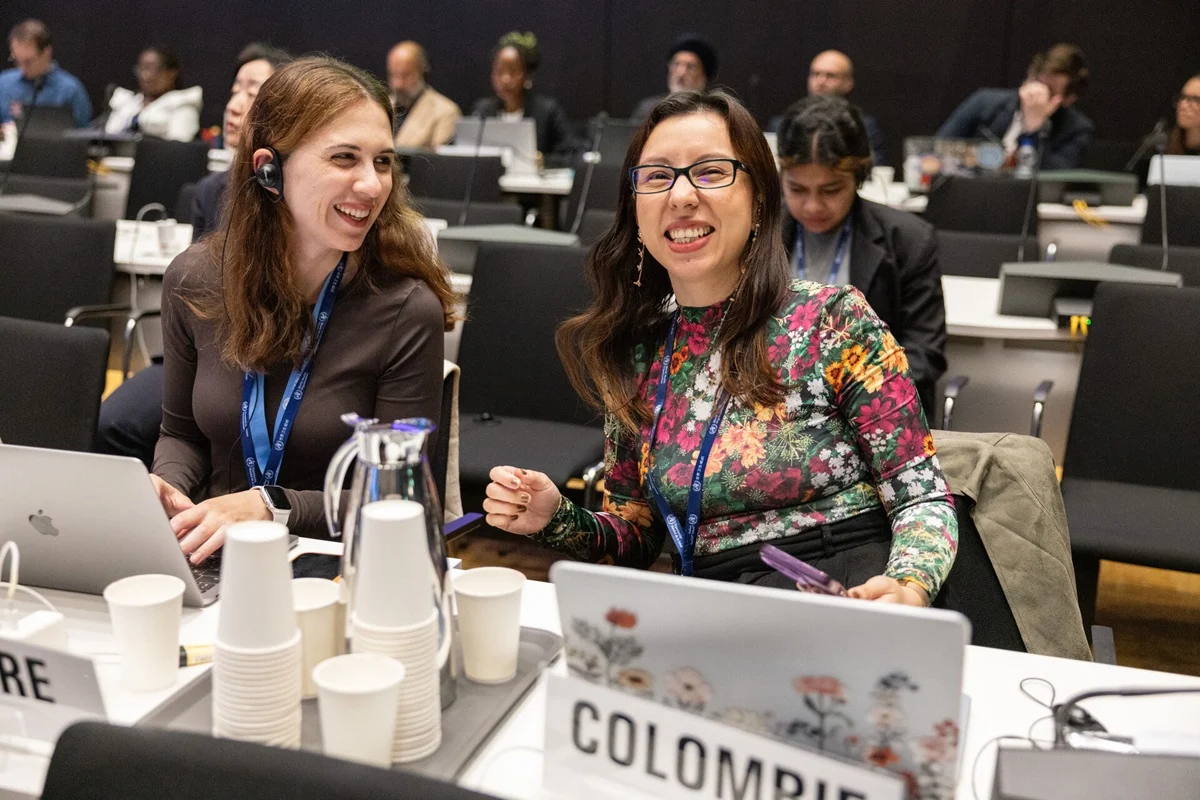
The Seventy-ninth World Health Assembly (WHA79) concluded this week in Geneva, Switzerland, marking a pivotal moment in international public health governance as Member States reached a consensus on more than 20 decisions and 13 major resolutions. This year’s assembly, convened against a backdrop of increasing geopolitical complexity and the lingering systemic scars of the COVID-19 pandemic, focused on a diverse array of critical health challenges, ranging from non-communicable diseases like stroke and liver disease to the existential threat of antimicrobial resistance (AMR) and the ethical governance of the global health workforce. The assembly served as a platform for Member States to reaffirm their commitment to the World Health Organization (WHO) while initiating a fundamental reform of the global health architecture through a Member State-led, WHO-hosted joint process.
The closing ceremony was marked by a formal expression of gratitude from WHO Director-General Dr. Tedros Adhanom Ghebreyesus, who presented ceremonial gavels to the leaders who steered the intense deliberations. Recipients included the President of the Seventy-ninth World Health Assembly, Dr. Víctor Atallah Lajam, Minister of Health of the Dominican Republic, as well as the Chairs of the assembly’s two primary working bodies: Dr. Timur Sultangaziyev, Deputy Minister of Health of Kazakhstan (Committee A), and Dr. Kwabena Mintah Akandoh, Ranking Member on the Parliamentary Select Committee on Health of Ghana (Committee B). In his final address, Dr. Tedros emphasized that the true measure of the assembly’s success lies not in the halls of Geneva, but in the tangible improvements seen in clinics, communities, and households worldwide. He noted that the resolutions adopted would only find their value when they translate into vaccinated children, surviving mothers, and contained outbreaks, a task that requires sustained political will and robust financing.
Strengthening the Ethical Recruitment of Global Health Workers
One of the most significant outcomes of the WHA79 was the approval of a resolution to amend the WHO Global Code of Practice on the International Recruitment of Health Personnel. This update, the first in 16 years, follows a rigorous review process initiated by an Expert Advisory Group (EAG) and extensive Member State consultations. The amendments are designed to address the evolving dynamics of global health labor markets, particularly the increasing reliance of high-income nations on health workers from low- and middle-income countries (LMICs).
The revised Code now explicitly includes provisions for health personnel recruited internationally as care workers, recognizing the growing demand in the long-term care sector. Furthermore, it clarifies how ethical recruitment principles should be applied during public health emergencies, ensuring that the surge in demand during a crisis does not lead to the permanent depletion of health workforces in vulnerable regions. A key pillar of the updated resolution is the concept of "co-investment," which encourages destination countries to invest in the health systems and training infrastructure of source countries. This approach aims to create a "brain gain" or a "brain circulation" rather than a unilateral "brain drain," ensuring that international mobility generates proportional benefits for all parties involved.
The EAG report highlighted that while progress has been made in data collection and the protection of migrant worker rights since 2010, significant gaps remain. The global health workforce shortage is currently projected to reach 10 million by 2030, with the most acute deficits in Africa and Southeast Asia. By strengthening the implementation of the Code, Member States aim to ensure that the pursuit of universal health coverage (UHC) in one nation does not come at the expense of health security in another.
Aligning Economic Systems with Public Health Goals
In a move that signals a paradigm shift in how governments view health spending, the Assembly adopted the Strategy on the Economics of Health for All (2026–2030). This strategy represents a formal acknowledgment that health and economic prosperity are not competing interests but are deeply interdependent. Historically, health spending has often been categorized by finance ministries as a "cost" to be managed or minimized. The new strategy seeks to reposition health as a primary driver of sustainable development and economic resilience.
The strategy outlines a framework for integrating health considerations into fiscal, industrial, and social policies. It calls for the transition toward "well-being-oriented economies" that prioritize human flourishing alongside GDP growth. Delegates at the assembly emphasized the urgency of this shift, citing the "global health financing emergency" where many nations struggle to maintain essential services under the weight of debt and economic instability. By strengthening the technical capacity of health ministries to engage with economic and financial actors, the WHO aims to foster more informed decision-making that supports the sustainable financing of universal health coverage.
The adoption of this strategy is expected to lead to new metrics for measuring economic success—moving beyond traditional economic indicators to include health equity and environmental sustainability. This approach is rooted in the work of the WHO Council on the Economics of Health for All, which has argued that the current global financial architecture often fails to deliver the public goods necessary for a healthy population.
A Comprehensive Framework for Radiation Protection
For the first time in the history of the World Health Organization, Member States approved a comprehensive resolution on radiation and health. The resolution, titled "Radiation and health: strengthening global protection, preparedness and response," addresses both ionizing radiation (such as X-rays and gamma rays) and non-ionizing radiation (such as ultraviolet radiation and electromagnetic fields).
The Assembly recognized that radiation exposure is a ubiquitous part of modern life, stemming from environmental sources like radon gas, occupational settings, and the rapidly expanding use of radiation in medical diagnostics and cancer treatment. While radiation is an essential tool in modern medicine, the resolution highlights the associated risks, including acute radiation syndrome and long-term carcinogenic effects. It places a specific emphasis on the vulnerability of children and pregnant women, who are more susceptible to the biological effects of radiation.
Under the new resolution, Member States have committed to enhancing national radiation protection systems, improving exposure monitoring, and integrating radiation risk management into broader public health frameworks. The WHO has been tasked with conducting a global mapping of existing initiatives and actors to identify gaps in protection and emergency response. This initiative is particularly timely given the increasing complexity of radiological emergencies and the need for standardized safety protocols in the deployment of radiopharmaceuticals and advanced medical imaging.
Renewing the Fight Against Antimicrobial Resistance (AMR)
Addressing what many experts call the "silent pandemic," the Assembly approved an updated Global Action Plan on Antimicrobial Resistance (GAP-AMR) for the decade spanning 2026–2036. The urgency of this plan is underscored by alarming data from the WHO’s Global Antimicrobial Resistance and Use Surveillance System (GLASS), which reported that in 2023, one in six common bacterial infections showed resistance to standard antibiotic treatments.
Recent studies estimate that bacterial AMR was associated with 4.71 million deaths in 2021. If current trends continue, projections suggest that AMR could contribute to 39 million deaths by 2050. The updated GAP-AMR adopts a comprehensive "One Health" approach, recognizing that the health of humans, animals, and the environment are inextricably linked. The plan sets a target to reduce bacterial AMR-associated deaths by 10% by 2030, a goal aligned with the 2024 UN General Assembly high-level meeting on AMR.
The 2026–2036 plan emphasizes the need for equitable access to effective antimicrobials while simultaneously curbing their overuse in human medicine and agrifood systems. It also targets the reduction of environmental pollution from antimicrobial residues, which often leak from pharmaceutical manufacturing sites and intensive farming operations, creating breeding grounds for resistant "superbugs." To ensure the plan’s success, Member States have called for strengthened governance, sustainable financing, and greater accountability, urging that AMR interventions be mainstreamed into general health system strengthening efforts.
Broader Implications and the Path Toward 2028
The resolutions adopted at the Seventy-ninth World Health Assembly reflect a sophisticated understanding of the multidimensional nature of modern health threats. By addressing issues such as precision medicine, haemophilia, and diagnostic imaging alongside systemic reforms in economics and labor, the WHO is attempting to build a more resilient global health infrastructure.
However, the assembly also highlighted the significant challenges that lie ahead. The "Implementation Gap" remains a primary concern for the WHO leadership. While the adoption of resolutions provides a legal and normative framework, the actual impact depends on national-level execution. This requires not only technical expertise but also significant financial investment. The assembly’s focus on the "Economics of Health for All" is a direct response to this need, attempting to unlock new streams of funding by demonstrating the return on investment that a healthy population provides.
The reform of the global health architecture, another major point of discussion, suggests a move toward a more inclusive and transparent governance model. By hosting a Member State-led process, the WHO aims to ensure that the rules of global health are set by the countries themselves, fostering a sense of ownership and mutual accountability.
As the assembly concluded, the timeline for future progress was established, with several key reports and reviews scheduled for the coming years. Progress on the radiation protection resolution, for instance, will be reported back to the World Health Assembly in 2028. Between now and then, the international community faces the arduous task of turning these high-level agreements into local realities. The success of WHA79 will ultimately be judged by its ability to protect the most vulnerable and to ensure that the global health system is better prepared for the inevitable challenges of the 21st century.
