
Affiliate Disclosure: I receive a small commission for purchases made via affiliate links.
How to cite:
Wong M. Does water damage hair? The myth of “hygral fatigueâ€. Lab Muffin Beauty Science. January 28, 2026. Accessed May 13, 2026.
https://labmuffin.com/does-water-damage-hair-the-myth-of-hygral-fatigue/
The widespread notion that repeatedly wetting and drying hair inherently causes damage, a phenomenon often termed “hygral fatigue,” is a persistent myth largely unsupported by robust scientific evidence. This belief, which suggests that the cyclical absorption and evaporation of water weakens hair fibers over time, has influenced countless hair care routines and product marketing strategies, leading many to limit hair washing or avoid air drying in an effort to “protect” their strands. However, a deeper examination of hair’s molecular structure and its interaction with water reveals a more nuanced reality, challenging the premise of this long-held misconception.
## Understanding Hair’s Intricate Architecture and Water Interaction
To fully comprehend why the concept of hygral fatigue is scientifically unsound, it is crucial to first understand the fundamental structure of human hair and its intrinsic relationship with water. Each strand of hair is primarily composed of keratin, a fibrous protein, organized into three main layers: the cuticle, cortex, and medulla.
The **cuticle** is the outermost protective layer, consisting of overlapping, scale-like cells that resemble shingles on a roof. These scales, when healthy, lie flat, providing a smooth surface that reflects light and protects the inner cortex. When hair becomes wet, these cuticle scales can slightly swell and lift, making the hair more permeable and, consequently, more vulnerable to external friction.
Beneath the cuticle lies the **cortex**, the thickest layer, which constitutes the bulk of the hair fiber. The cortex is responsible for hair’s strength, elasticity, and color, containing tightly packed keratin bundles held together by various types of chemical bonds. These bonds are critical to hair’s structural integrity:
* **Disulfide bonds:** These are strong, permanent covalent bonds formed between sulfur atoms in the amino acid cysteine. They are responsible for hair’s overall shape and strength and are only broken by strong chemical processes (like perming or relaxing) or extreme heat.
* **Ionic (salt) bonds:** These are weaker, temporary bonds formed between positively and negatively charged amino acid groups. They are easily broken by changes in pH and can reform readily.
* **Hydrogen bonds:** These are the most numerous and weakest bonds in the hair, formed between hydrogen atoms and highly electronegative atoms like oxygen or nitrogen. Hydrogen bonds are incredibly sensitive to water.
When hair comes into contact with water, water molecules penetrate the cuticle and enter the cortex. Here, they interact with the keratin proteins, primarily by breaking the temporary hydrogen bonds. This process allows the hair fiber to swell, increasing its diameter by up to 30% when fully saturated. As the hair dries, the water evaporates, and the hydrogen bonds reform, returning the hair to its original, dry state. This cycle of swelling and deswelling, driven by the breaking and reforming of temporary hydrogen bonds, is a natural and reversible process, central to hair’s ability to absorb moisture and maintain flexibility.
## Deconstructing the “Hygral Fatigue” Myth
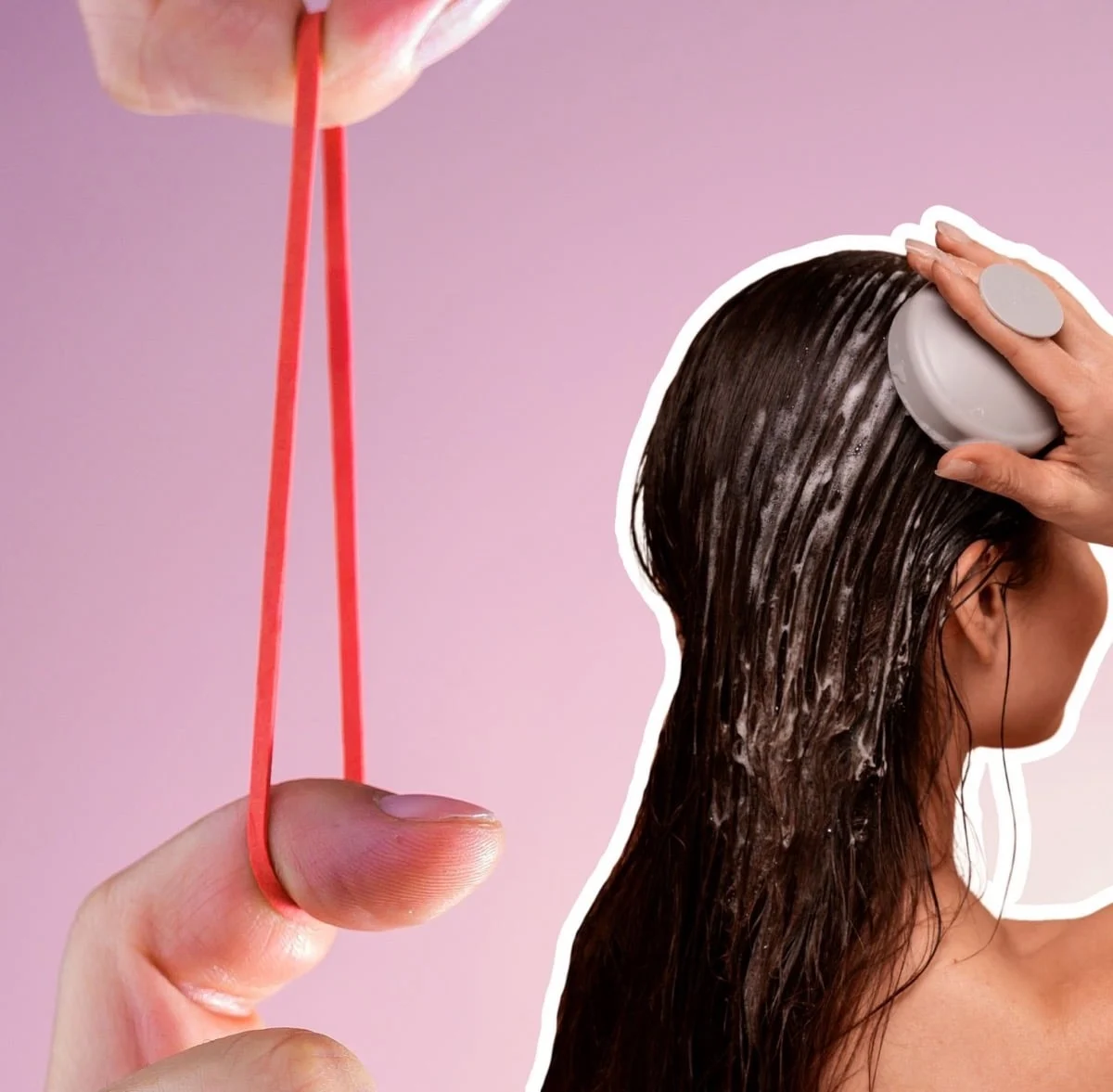
The idea of “hygral fatigue” posits that this repeated swelling and deswelling somehow “tires out” or permanently damages the hair, leading to increased porosity, breakage, and overall weakness. This analogy often compares hair to a rubber band that loses elasticity and eventually snaps after repeated stretching. However, this comparison fundamentally misrepresents the molecular behavior of hair.
In materials like rubber bands, repeated stretching can cause irreversible damage by breaking permanent covalent bonds within the polymer structure, leading to micro-cracks that propagate and ultimately result in material failure. Hair, on the other hand, relies on the temporary nature of hydrogen bonds. When water breaks these bonds, they do not suffer permanent degradation; they simply dissociate temporarily and then spontaneously reform as water leaves the hair fiber. The electrons and protons involved in these bonds are remarkably durable and do not “wear down” with each cycle. A more accurate analogy might be the assembly and disassembly of Lego bricks – the bricks themselves remain intact and fully functional regardless of how many times they are connected and disconnected.
Despite its scientific implausibility, the term “hygral fatigue” has found its way into some peer-reviewed scientific literature and is frequently cited in consumer hair care discussions, particularly within communities advocating for reduced washing frequency or specific drying methods. This widespread acceptance underscores the power of anecdotal evidence and easily digestible, albeit inaccurate, explanations in the absence of clear scientific debunking. The implication that daily washing is inherently harmful due to water exposure has led many consumers to adopt hair care practices based on a flawed premise.
## Scrutinizing the Evidence: Studies and Misinterpretations
The limited scientific studies often cited in support of “hygral fatigue” typically suffer from methodological flaws or misinterpretations of their findings. Two primary areas frequently referenced involve studies on hair drying methods and the supposed water-blocking properties of coconut oil.
### The Hair Drying Study (Lee et al., 2011)
One frequently cited paper, a 2011 study by Lee et al. published in *Annals of Dermatology*, investigated the effects of different hair drying methods. Researchers compared air drying with blow drying at varying temperatures. The study concluded that blow drying at a low temperature caused the least damage, while air drying was associated with the formation of “bulges” on the hair shaft, which the authors attributed to prolonged water swelling.
However, this interpretation has been met with skepticism within the broader hair science community. Air drying is a standard and generally accepted practice in hair experiments and daily life, and such “bulges” are not commonly reported as a consequence. Several alternative explanations for the observed bulges are more plausible:
1. **Pre-existing Damage:** The specific hair samples used for air drying might have had pre-existing damage, such as from chemical treatments, environmental exposure, or mechanical stress, which could have been exacerbated or simply become more visible under microscopy during or after air drying.
2. **Sample Preparation Artifacts:** Microscopic observations can sometimes reveal artifacts introduced during sample preparation or handling, rather than inherent damage from the drying process itself.
3. **Limited Scope and Replication:** The study’s design might have involved a limited number of samples or repetitions, making it difficult to ascertain if the observed bulges were a consistent effect of air drying or an isolated anomaly. Without extensive replication and verification across diverse hair types and conditions, drawing broad conclusions from such observations is scientifically tenuous.
4. **Misinterpretation of Swelling:** While water causes hair to swell, this swelling is typically uniform and reversible. Localized “bulges” are more indicative of structural weaknesses or localized damage points where the hair fiber has lost its uniform integrity, rather than a direct consequence of general water absorption.
The general consensus among hair scientists remains that air drying, when performed gently and without excessive manipulation of wet hair, does not cause inherent damage. The key factor in damage prevention is minimizing mechanical stress while hair is in its more fragile wet state.
### Coconut Oil Studies and Water Absorption
Another line of research that inadvertently contributed to the “hygral fatigue” narrative involves studies on coconut oil, which some have proposed could “block” hair from absorbing water and thus protect it from this supposed fatigue. Several studies, including those by Rele and Mohile (1999, 2003) and Gode et al. (2012), investigated the penetration of coconut oil into hair fibers and its potential effects on water absorption.
In some experiments, hair samples were treated with various oils (coconut, mineral, sunflower) and then subjected to dynamic vapor sorption (DVS) analysis, where changes in hair weight at different humidities were measured to quantify water absorption. These studies sometimes reported that coconut oil-treated hair showed a smaller percentage increase in weight due to water absorption compared to untreated or other oil-treated hair, leading to the conclusion that coconut oil reduced water uptake.
However, hair scientist Trefor Evans and others have highlighted a critical experimental error in interpreting these percentage-based results. When hair is coated with oil, its initial dry weight increases. If the same *absolute amount* of water is absorbed, calculating it as a percentage of the *total weight* (hair + oil) will yield a smaller percentage compared to calculating it as a percentage of the *hair’s weight alone*. This mathematical artifact could create the illusion that less water was absorbed, when in fact, the absolute amount might be similar.
Furthermore, from a structural perspective, it is highly improbable that any topical hair treatment, including coconut oil, could effectively “seal” the hair cuticle to prevent water molecules from entering or exiting. The hair cuticle, with its overlapping scales, presents numerous microscopic gaps. Water molecules are exceedingly small and can readily pass through these minute openings, and into the cortex. The water content of hair is primarily dictated by the ambient relative humidity, not by a surface barrier.
## The Actual Benefits of Coconut Oil and Implications for Hair Care
While coconut oil’s ability to “block” water to prevent “hygral fatigue” is largely unsubstantiated, it does not diminish its proven benefits for hair health. Coconut oil, particularly virgin coconut oil, is rich in medium-chain fatty acids, notably lauric acid, which has a relatively small molecular size. This allows it to penetrate deeper into the hair shaft than many other oils.
Once inside the cortex, coconut oil can act as a lubricant, filling microscopic gaps in the hair’s lipid matrix (the cell membrane complex that acts as “mortar” between keratin “bricks”). This internal lubrication can help to:
* **Reduce protein loss:** Studies have shown coconut oil can reduce protein loss from both damaged and undamaged hair when used as a pre-wash treatment or leave-in conditioner.
* **Improve hair strength and flexibility:** By filling internal voids, it can make the hair fiber more resilient and less prone to internal cracking and breakage.
* **Provide surface lubrication:** On the cuticle surface, all oils, including coconut oil, act as lubricants, reducing friction during combing, brushing, and styling. This minimizes mechanical damage, such as cuticle lifting and breakage, which is a significant contributor to overall hair damage.
Therefore, coconut oil’s benefits stem from its ability to lubricate and reinforce the hair structure, both internally and externally, protecting against mechanical stress rather than preventing “hygral fatigue” by blocking water absorption.
## Broader Implications for Hair Health and Care Routines
The debunking of “hygral fatigue” has significant implications for how individuals approach their hair care routines and for the broader beauty industry.
1. **Washing Frequency:** The myth of hygral fatigue has often been cited as a reason to wash hair less frequently. However, with this myth dispelled, individuals can feel confident washing their hair as often as needed for scalp health and aesthetic preferences, without fear of inherent damage from water itself. The critical factor remains the *method* of washing and drying, not the frequency of water exposure.
2. **Handling Wet Hair:** While water itself doesn’t cause fatigue, wet hair *is* more vulnerable to mechanical damage. This is because the swollen cortex and slightly lifted cuticles make the hair softer, more elastic, and less resistant to friction. Therefore, gentle handling – using a wide-tooth comb instead of a brush, blotting hair with a microfiber towel instead of vigorous rubbing, and avoiding harsh pulling or tight hairstyles – remains crucial for maintaining hair integrity.
3. **Product Development:** Understanding the true mechanisms of hair damage guides the development of effective hair care products. Instead of focusing on “sealing” hair from water, product formulations should prioritize ingredients that strengthen disulfide bonds, provide lubrication, smooth the cuticle, and protect against heat and UV damage. Conditioners, leave-in treatments, and protective styling products play a vital role in mitigating mechanical and environmental stressors.
4. **Consumer Education:** Dispelling such pervasive myths through scientific communication is essential. Empowering consumers with accurate information allows them to make informed choices about their hair care, moving away from fear-based practices towards routines that are genuinely beneficial for their hair type and lifestyle.
## Expert Consensus and Future Directions
Leading hair scientists and trichologists largely concur that repeated wetting and drying, by itself, does not cause permanent damage to healthy hair. The transient breaking and reforming of hydrogen bonds is a natural, reversible process integral to hair’s function. Damage attributed to “hygral fatigue” is almost invariably linked to mechanical stress applied while the hair is in its more fragile wet state, or to other forms of chemical or physical damage.
The field of hair science continues to evolve, with ongoing research into the complex interactions between hair, water, environmental factors, and various chemical treatments. Future studies are likely to further refine our understanding of hair’s resilience and vulnerability, leading to even more effective and evidence-based hair care solutions. However, the core principle remains clear: water is a vital component of hair’s natural environment, and its cyclical interaction with the hair fiber is a testament to hair’s remarkable structural adaptability, not a precursor to its inevitable decay.
