
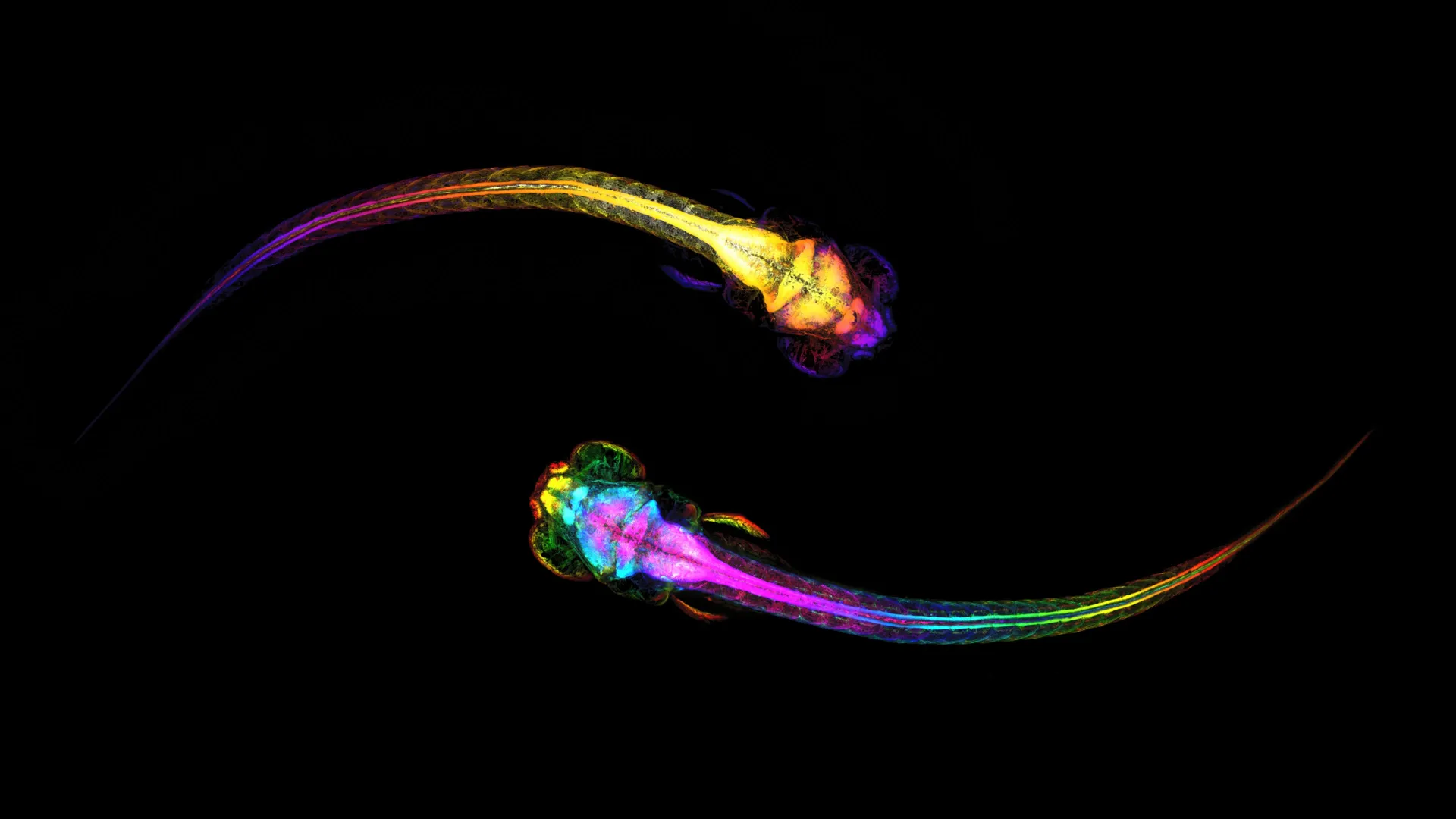
New research from the Hebrew University of Jerusalem is shedding light on the intricate neural mechanisms that precede social interaction, suggesting that the brain initiates a cascade of activity several seconds before any outward movement occurs. This groundbreaking study, published in a leading neuroscience journal, identifies a distinctive, brain-wide pattern of neural activity that not only signals an impending social approach but also correlates with an individual’s inherent social motivation. The implications of these findings extend from understanding fundamental social drives to potentially informing interventions for conditions affecting social behavior.
The Silent Architects of Social Engagement: Unraveling the Pre-Decision State
For decades, neuroscientists have sought to pinpoint the precise neural circuits responsible for initiating social behavior. While it’s understood that complex cognitive processes are involved in deciding to interact with others, the temporal dynamics of these decisions—how the brain transitions from perception to action—have remained a significant area of investigation. This latest work, spearheaded by Dr. Lilah Avitan and conducted by PhD student Imri Lifshitz and their colleagues at the Edmond and Lily Safra Center for Brain Sciences (ELSC) at the Hebrew University of Jerusalem, offers a compelling glimpse into this pre-action phase.
The research team leveraged the zebrafish as a model organism, a choice dictated by its suitability for high-resolution, real-time monitoring of brain activity at the cellular level. Zebrafish, despite their relatively simple nervous systems compared to mammals, exhibit complex social behaviors and possess homologous brain structures that are conserved across many vertebrate species, including humans. This allows for a powerful translation of findings from zebrafish to broader biological principles.
A Novel Experimental Paradigm: Observing Social Decisions in Motion
To meticulously track the neural underpinnings of social decision-making, the researchers engineered a sophisticated experimental setup. This innovative system allowed for the precise observation of one zebrafish reacting to the presence and movements of another nearby conspecific. During these interactions, the observer fish’s entire brain activity was recorded in real-time using advanced neuroimaging techniques. This method provided an unprecedented opportunity to observe the sequential neural events that culminate in a social decision, mapping the process as it unfolded moment by moment.
The experimental design specifically focused on instances where an observer fish demonstrated an inclination to swim towards a stimulus fish. By capturing brain activity leading up to and during these directional movements, the researchers could dissect the neural trajectory from initial sensory input to overt behavioral output. This detailed temporal mapping is crucial for understanding the causal relationships between neural events and subsequent actions.
The Emergence of a Brain-Wide Neural Signature
A pivotal discovery of the study was the identification of a distinct neural signature that consistently appeared several seconds before the observer fish initiated movement towards another. This finding challenges the notion of a singular, localized brain region solely responsible for social approach. Instead, the research points towards a coordinated, distributed process involving widespread changes in neural activity across multiple brain areas.
Specifically, the study observed a significant increase in neural activity within the pallium, a region of the fish brain analogous to the mammalian cortex and known to be involved in higher-order cognitive functions and complex behaviors. Concurrently, activity levels decreased in other, non-pallial brain regions. This synchronized ebb and flow of neural excitation and inhibition across the brain created what the researchers have termed a "pre-decision state." This state, characterized by its brain-wide nature, acted as a powerful predictor, signaling that a social action was imminent and allowing researchers to anticipate the behavior before it physically manifested.
The researchers quantified this brain-wide pattern by analyzing the correlation of activity across different brain regions. They found that the strength and coherence of this pattern were highly predictive of the observer fish’s subsequent action. For instance, if the pre-decision state was robust and widespread, it was significantly more likely that the fish would indeed approach the stimulus fish. This predictive capability underscores the functional significance of this neural cascade.
Quantifying the Social Drive: Neural Patterns and Individual Differences
Beyond predicting the occurrence of social behavior, the study revealed a fascinating link between the strength of this pre-decision neural signature and an individual fish’s inherent social drive. Fish exhibiting a more pronounced and widespread neural pattern in the pre-decision state were also observed to be more socially inclined in general. This suggests that the neural signature is not merely a generic precursor to movement but actively reflects the underlying motivation of the individual to engage in social interactions.
The findings further underscore the critical role of the pallium in orchestrating social approach. The coordinated activity involving the pallium, coupled with the observed variations in this neural signature among individuals, strongly suggests that this brain region is instrumental in generating the motivation to approach others and participate in social exchanges. This aligns with existing knowledge of the pallium’s involvement in complex behaviors, including social cognition and decision-making.
Dr. Lilah Avitan, the lead researcher, commented on the significance of their findings: "This study identifies a brain-wide neural signature of social approach that emerges before movement begins. This signature predicts not only whether an upcoming action will be social, but also how strongly socially driven the individual is." This statement highlights the dual predictive power of the identified neural pattern—its ability to forecast behavior and to quantify an individual’s internal state regarding social engagement.
Broader Implications and Future Directions
The ramifications of this research extend far beyond the realm of basic neuroscience. By deciphering the neural mechanisms that initiate social behavior, scientists are moving closer to understanding the fundamental drivers of sociality. This could lead to a more profound explanation for why certain individuals are naturally more gregarious and outgoing than others, shedding light on the biological basis of personality traits.
Furthermore, the conservation of similar brain structures across species, including the pallium’s role in complex behavior, suggests that these findings could have direct relevance to human social function. Understanding these pre-movement neural signals might offer critical insights into various neurological and psychiatric conditions characterized by altered or disrupted social behavior. Conditions such as autism spectrum disorder, social anxiety disorder, and schizophrenia, all of which involve significant challenges in social interaction, could potentially benefit from this deeper understanding of the neural precursors to social engagement.
Potential for Therapeutic Interventions and Diagnostic Tools
If similar pre-decision neural patterns can be identified in humans, they could pave the way for novel diagnostic tools. For example, by monitoring brain activity, clinicians might be able to identify individuals who are at risk for social difficulties or who are not responding optimally to certain social skills training interventions.
Moreover, this knowledge could inform the development of targeted therapeutic strategies. By understanding how the brain generates the motivation to approach others, researchers might be able to develop interventions aimed at enhancing social engagement in individuals who struggle with it. This could involve pharmacological approaches, neuromodulation techniques, or behavioral therapies designed to optimize these neural pathways.
The study’s methodology, which involved the creation of a novel experimental system for real-time brain activity monitoring during social interactions, also represents a significant advancement in neuroscientific research. The ability to observe neural events leading up to and during complex behaviors in a living organism with such precision opens new avenues for research across a wide range of behavioral neuroscience questions.
The Evolutionary Advantage of Proactive Social Engagement
From an evolutionary perspective, the ability to anticipate and initiate social interactions is crucial for survival and reproduction. Social animals benefit from cooperation, resource sharing, and the formation of alliances. The development of a neural system that can proactively prepare for social engagement would confer a significant advantage. The brain-wide "pre-decision state" identified in this study could be a highly efficient mechanism for orchestrating the complex neural processes required to engage with others.
The coordinated activity observed across multiple brain regions suggests a system that is not only responsive to external stimuli but also internally driven and predictive. This proactive approach allows an organism to be better prepared for the social environment, potentially leading to more successful interactions and improved outcomes.
Further Research and Unanswered Questions
While this study represents a major leap forward, it also opens up new avenues for inquiry. Future research could focus on:
- Identifying the specific neural circuits within the pallium and other brain regions involved in this pre-decision state.
- Investigating the role of neurotransmitters and other neurochemical signals in modulating this neural signature.
- Exploring how environmental factors and learning experiences influence the development and strength of these pre-decision neural patterns.
- Translating these findings to more complex mammalian models and eventually to human studies.
The research by Avitan and Lifshitz offers a compelling narrative of the brain’s sophisticated preparation for social engagement. By uncovering the silent countdown within the neural architecture, this work provides a fundamental insight into why we reach out to others and how our brains are wired for connection, with profound implications for understanding both typical and atypical social functioning. The study, initiated in early 2023 and culminating in recent publications, marks a significant step in our ongoing quest to comprehend the intricate tapestry of social behavior.
