
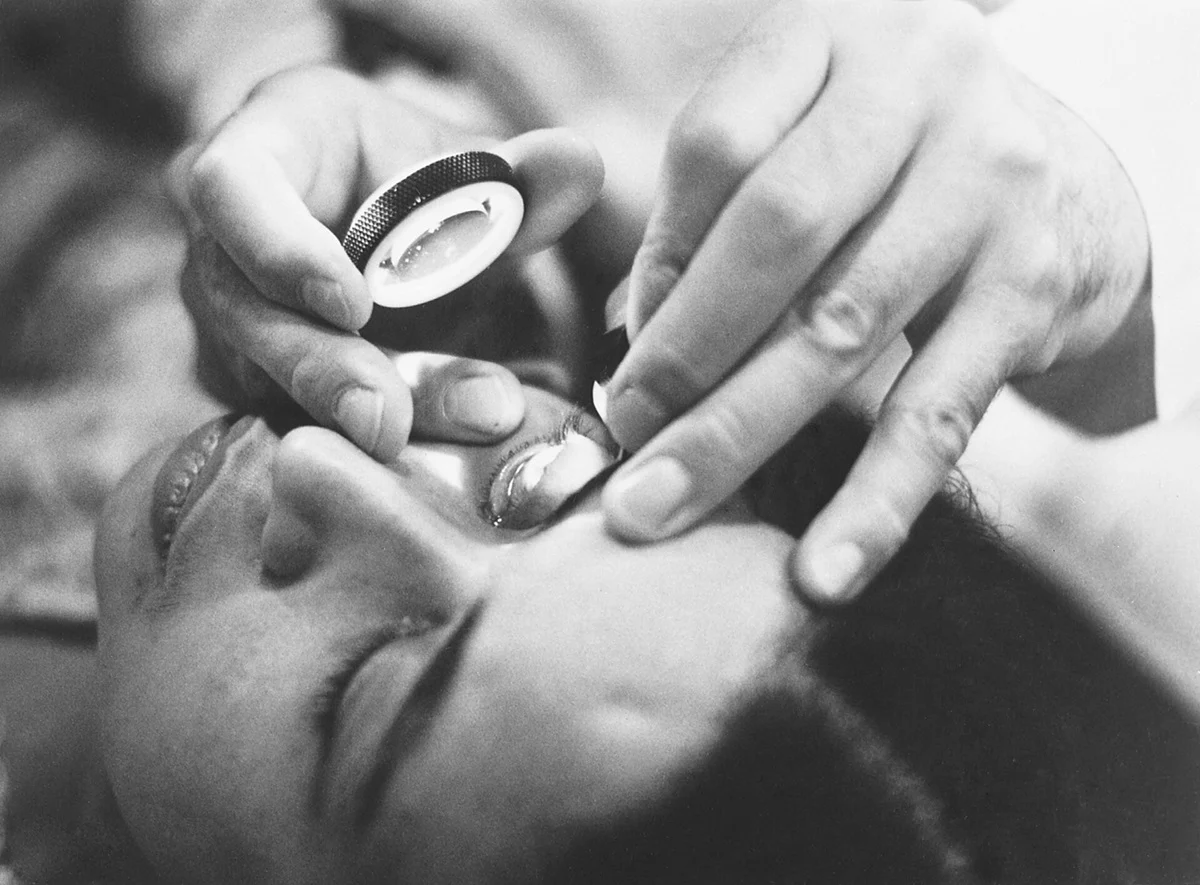
The World Health Organization (WHO) has officially validated Algeria for having eliminated trachoma as a public health problem, marking a monumental achievement in the nation’s public health history. With this validation, Algeria becomes the 10th country in the WHO African Region and the 29th country globally to reach this significant milestone. This accomplishment is the result of a century-long struggle against the disease, characterized by sustained political commitment, rigorous medical intervention, and a comprehensive multisectoral approach to hygiene and sanitation.
Trachoma, a devastating eye disease caused by the bacterium Chlamydia trachomatis, has long been the leading infectious cause of blindness worldwide. The disease is transmitted through direct or indirect contact with eye and nose discharges from infected people, particularly young children who serve as the main reservoir of infection. These discharges are spread by hands, clothing, and flies that have been in contact with the eyes or nose of an infected person. In areas where the disease is endemic, repeated infections over many years lead to a condition known as trachomatous trichiasis. This condition involves the scarring of the inner part of the upper eyelid, which eventually causes the eyelashes to turn inward and rub against the eyeball. The resulting constant friction is excruciatingly painful and leads to irreversible damage to the cornea, culminating in visual impairment or total blindness.
Globally, the burden of trachoma remains substantial, despite significant progress in recent decades. The disease is still endemic in 30 countries and is responsible for the blindness or visual impairment of approximately 1.9 million people. According to the most recent WHO data, roughly 97 million people live in trachoma-endemic areas and remain at risk of losing their sight. Algeria’s success provides a blueprint for these remaining nations, demonstrating that even long-standing endemicity can be overcome through coordinated national efforts.
A Century of Public Health Commitment: The Historical Context
Algeria’s journey toward the elimination of trachoma is not a recent endeavor but a legacy of public health dedication that spans over a hundred years. The foundational work began in the early 20th century, specifically in 1909, with the establishment of the Pasteur Institute of Algeria. At that time, trachoma was widespread across the North African region, exacerbated by limited access to clean water and a lack of specialized ophthalmic care.
Following the nation’s independence, the fight against trachoma was revitalized and localized. Algerian physicians, most notably under the pioneering leadership of Professor Mohamed Aouchiche, took command of the national strategy. Aouchiche and his colleagues recognized that medical intervention alone would not suffice; they advocated for a systemic overhaul of how eye health was integrated into the broader healthcare framework.
A pivotal moment occurred in 1974 when the Algerian government established a national public healthcare system that provided services free of charge to all citizens. This policy shift ensured that even the most vulnerable populations in remote and rural areas could access screening and treatment without financial barriers. By removing the cost of care, Algeria successfully moved trachoma management from specialized urban centers into the heart of affected communities.
The Strategic Implementation of the SAFE Strategy
The core of Algeria’s success lies in its meticulous implementation of the WHO-recommended SAFE strategy. This four-pronged approach—Surgery, Antibiotics, Facial cleanliness, and Environmental improvement—addresses both the immediate medical needs of patients and the underlying socio-economic factors that facilitate the spread of the disease.
Surgery (S)
To address the late, blinding stage of the disease, Algeria prioritized the provision of surgery for trachomatous trichiasis (TT). This required training a cadre of specialized health professionals capable of performing eyelid surgery in local clinics. By bringing surgical interventions closer to the patients, the health ministry was able to clear the backlog of cases and prevent thousands of individuals from progressing to permanent blindness.
Antibiotics (A)
The mass administration of antibiotics, specifically azithromycin, played a crucial role in reducing the community reservoir of Chlamydia trachomatis. Algeria conducted large-scale campaigns to treat at-risk populations, ensuring that the cycle of reinfection was broken. These campaigns were often integrated with other public health initiatives, maximizing reach and efficiency.
Facial Cleanliness (F)
Public awareness campaigns were a cornerstone of the Algerian strategy. Health educators worked within schools and community centers to promote facial cleanliness and personal hygiene. Because children are the primary carriers of the bacteria, emphasizing the importance of washing faces with soap and water was vital in reducing transmission rates.
Environmental Improvement (E)
Perhaps the most sustainable element of the strategy was the improvement of access to water supply and sanitation. Trachoma thrives in environments with water scarcity and poor waste management, where fly populations—the primary vectors for the disease—proliferate. Algeria’s investment in rural infrastructure, including the expansion of the water grid and improved latrine facilities, fundamentally changed the environmental conditions that allowed trachoma to persist.
The Final Push: Targeting the Southern Wilayas
While much of the country saw a decline in trachoma cases by the late 20th century, the disease remained a persistent public health problem in the arid southern regions. To address this, Algeria implemented a targeted three-year strategy from 2013 to 2015. A National Expert Committee was established to oversee interventions in 12 specific southern wilayas (provinces): Adrar, Laghouat, Biskra, Béchar, Tamanrasset, Ouargla, El Bayadh, Illizi, Tindouf, El Oued, Naama, and Ghardaïa.
These provinces presented unique challenges, including vast geographical distances, nomadic populations, and harsher environmental conditions. The 2013–2015 strategy involved intensified door-to-door screening and the deployment of mobile medical units to ensure that no case went untreated. This period of "accelerated elimination" was critical in pushing the prevalence rates below the WHO-defined threshold for elimination as a public health problem.
In 2022, WHO-compliant surveys were conducted to verify the status of the disease across these regions. The data confirmed that the elimination threshold for active trachoma had been achieved in all areas. While three specific areas initially showed trichiasis (TT) levels slightly above the threshold, the Ministry of Health responded with comprehensive door-to-door screening and management programs. By 2025, these final pockets were successfully addressed, allowing Algeria to compile and submit its formal dossier for WHO validation.
Official Responses and Global Recognition
The validation of Algeria’s achievement has drawn praise from global health leaders. Dr. Tedros Adhanom Ghebreyesus, WHO Director-General, described the event as a "historic triumph" that connects the nation’s past efforts with its future health goals. He emphasized that Algeria’s success is a testament to what can be achieved through sustained political will and the leadership of committed health professionals.
Dr. Mohamed Janabi, WHO Regional Director for Africa, highlighted the profound socio-economic impact of the disease. "Trachoma devastates individuals and communities profoundly, with blindness or visual impairment causing painful economic and livelihood loss," Janabi stated. He noted that Algeria’s milestone transforms the lives of children and women—who are disproportionately affected by the disease—and proves that the elimination of neglected tropical diseases (NTDs) is an achievable goal.
From the national perspective, Professor Mohamed Seddik Ait Messaoudene, Algeria’s Minister of Health, characterized the validation as the culmination of nearly fifty years of national mobilization. He noted that the success was built on a foundation of "prevention, equitable access to care, and the improvement of living conditions," underscoring the Algerian State’s unwavering commitment to the health of its population.
Broader Implications and the Road to 2030
Algeria’s elimination of trachoma is not an isolated success; it is a significant contribution to the global "Road Map for Neglected Tropical Diseases 2021–2030." This roadmap sets ambitious targets for the control, elimination, and eradication of 21 conditions that affect more than one billion people worldwide, primarily in impoverished and tropical areas.
Trachoma is the first neglected tropical disease to be officially eliminated in Algeria. This success places Algeria as the 62nd country globally and the 23rd in the WHO African Region to have eliminated at least one NTD. This achievement strengthens the argument for "multisectoral coordination," showing that when health departments work in tandem with water, education, and infrastructure sectors, the results are both profound and permanent.
The economic implications are equally noteworthy. Blindness caused by trachoma often traps families in a cycle of poverty, as affected adults are unable to work and children are frequently pulled out of school to care for blind relatives. By eliminating the disease, Algeria has secured the economic productivity and educational future of thousands of its citizens in the southern provinces.
Future Outlook: Sustaining the Success
Despite the validation, the work is not entirely finished. The WHO recommends that surveillance continues to ensure there is no resurgence of the disease. Algeria’s well-functioning school health system and its robust health information system are critical assets in this post-validation period. These systems will allow health authorities to monitor populations in formerly endemic areas closely.
The existence of extensive specialized eye care coverage across the country provides a safety net. Should any sporadic cases of trachoma reappear, the healthcare system is now equipped to identify and treat them immediately, preventing any further community spread.
As Algeria celebrates this victory, the international community looks to the nation as a leader in the fight against NTDs. The lessons learned from the Algerian experience—ranging from the importance of free healthcare to the necessity of environmental engineering—will undoubtedly serve as a guide for other nations striving to eliminate trachoma and ensure a future where no child or adult has to suffer from preventable blindness.
