
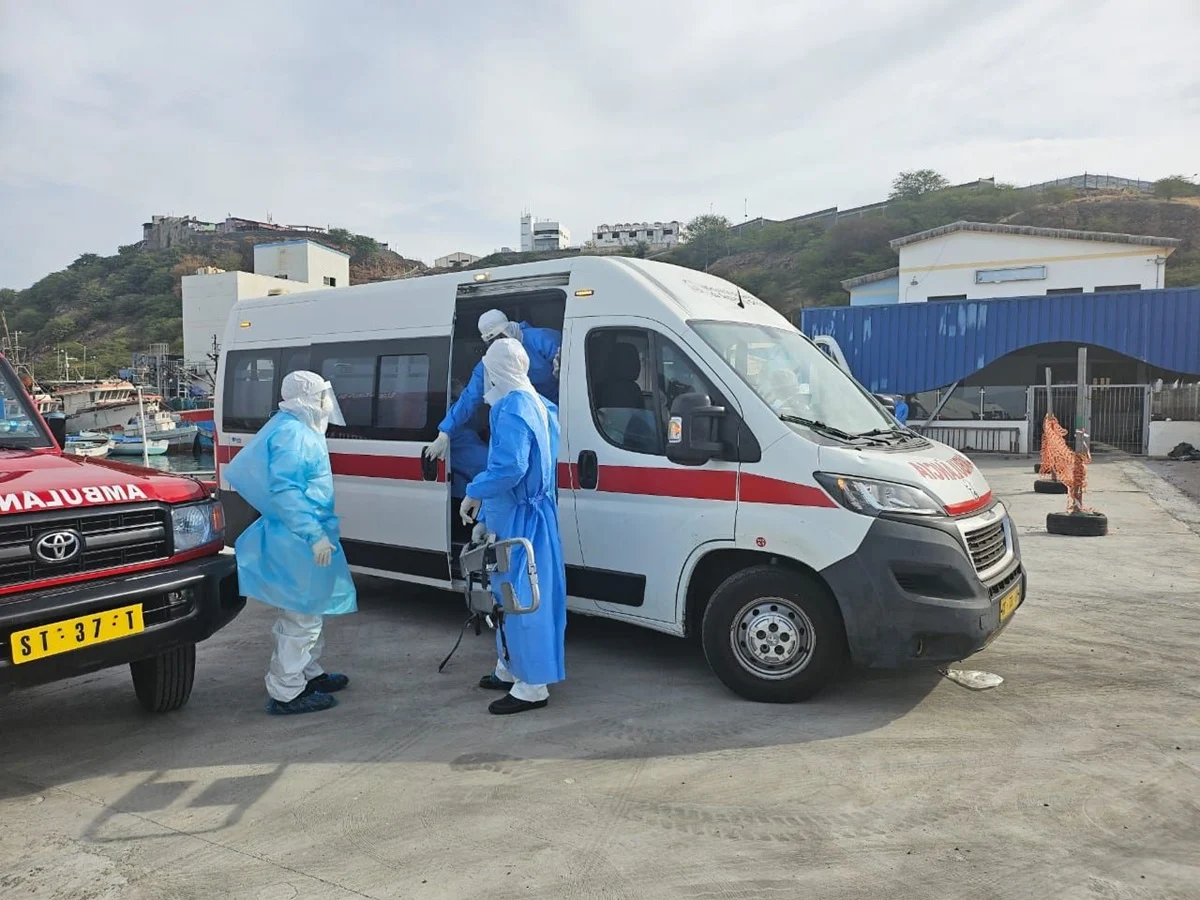
World Health Organization (WHO) Director-General Dr. Tedros Adhanom Ghebreyesus has officially briefed the international community on a developing cluster of hantavirus cases linked to the MV Hondius, an expedition cruise ship currently under medical surveillance. As of the latest update provided in May 2026, eight cases have been identified among the vessel’s cohort, tragically resulting in three fatalities. Of these eight cases, five have been laboratory-confirmed as being caused by the Andes virus (ANDV), a specific and particularly potent strain of hantavirus. While the situation remains contained within the passenger and crew population of the ship, the specific nature of the Andes virus has prompted a high-level coordinated response from global health authorities due to its unique transmission characteristics and high case-fatality rate.
The MV Hondius, a vessel known for its polar expeditions and voyages through the rugged environments of the South Atlantic and Antarctic regions, has become the center of a complex public health operation. According to the WHO, the outbreak was first brought to the organization’s attention on Saturday, May 2, 2026. Since that notification, the organization has moved rapidly to implement the protocols established under the International Health Regulations (IHR), a legally binding framework designed to prevent the international spread of disease while minimizing interference with world traffic and trade. Dr. Tedros emphasized that while the incident is serious, the current assessment of public health risk to the general global population remains low, provided that the current containment and mitigation strategies are strictly followed.
Understanding the Andes Virus: A Unique Pathogen
To understand the gravity of the situation aboard the MV Hondius, it is necessary to examine the specific pathogen involved. Hantaviruses are a family of viruses spread mainly by rodents and can cause varied disease syndromes in people worldwide. In the Americas, they are known to cause Hantavirus Pulmonary Syndrome (HPS), a severe and sometimes fatal respiratory disease. However, the Andes virus, which is endemic to parts of South America—particularly the Andean regions of Argentina and Chile—stands apart from other hantaviruses.
The Andes virus is the only species of hantavirus known to be capable of human-to-human transmission. While most hantavirus infections occur through the inhalation of aerosolized virus from rodent excreta (urine, droppings, or saliva), the Andes virus can spread between people through close and prolonged contact. This unique characteristic significantly alters the risk profile of an outbreak, especially in a confined environment like a cruise ship where passengers and crew live in close quarters for extended periods.
Historical data on Andes virus outbreaks suggest a high mortality rate, often ranging between 25% and 40%. The three deaths reported among the eight cases on the MV Hondius align with these statistics, highlighting the clinical severity of the infection. The symptoms typically begin with a prodromal phase including fever, chills, and muscle aches, which can rapidly progress to severe respiratory distress as the lungs fill with fluid, a condition known as pulmonary edema.
Chronology of the Outbreak and Response
The timeline of the MV Hondius incident began in late April 2026, during the ship’s scheduled itinerary. While the exact point of the initial exposure remains under investigation, the WHO was formally notified of the cluster of illnesses on May 2.
- May 2, 2026: WHO receives official notification of a cluster of respiratory illnesses aboard the MV Hondius. Initial reports suggest multiple passengers are experiencing severe symptoms.
- May 3–4, 2026: Preliminary testing identifies hantavirus. The WHO activates the IHR coordination mechanism, reaching out to the flag state of the vessel and the ports of call involved in the ship’s recent journey.
- May 5, 2026: Laboratory results confirm the presence of the Andes virus strain in five of the patients. The death toll is confirmed at three.
- May 6, 2026: Dr. Tedros Adhanom Ghebreyesus holds a press briefing to update the media and the public. He announces the deployment of a WHO expert to the ship to conduct a comprehensive medical assessment and risk evaluation.
- May 7, 2026: Shipment of 2,500 diagnostic kits is initiated from Argentina to five strategic regional laboratories to bolster testing capacity for potentially exposed individuals who may have already disembarked or are in transit.
The WHO’s response has been characterized by a focus on "global cooperation and solidarity," as stated by Dr. Tedros. The organization is currently working to ensure that the remaining passengers and crew are not only monitored for symptoms but are also treated with dignity and provided with psychological support during the quarantine period.
The International Health Regulations (IHR) in Action
The management of the MV Hondius outbreak serves as a practical application of the International Health Regulations (2005). These regulations are essential for maintaining global health security, providing a standardized set of rules for how countries must report and respond to potential public health emergencies of international concern.
Under the IHR, the WHO is coordinating with multiple sovereign nations to track the movement of the vessel and any individuals who may have had contact with the infected cases. This includes sharing data between health ministries and ensuring that the ship’s medical facilities are equipped to handle the specialized needs of hantavirus patients. The deployment of diagnostic kits from Argentina is a key component of this international effort. Argentina has extensive experience in managing Andes virus cases and possesses the specialized laboratory infrastructure required to produce and validate these kits. By distributing 2,500 kits to five different countries, the WHO is creating a safety net to catch any secondary cases that might arise due to the virus’s ability to spread between humans.
Logistics of the Medical Intervention
A primary challenge in managing a hantavirus outbreak at sea is the limitation of medical resources and the difficulty of isolation. To address this, the WHO has deployed a technical expert directly to the MV Hondius. This expert is tasked with overseeing the medical assessment of all 170+ individuals on board. The goal is to categorize passengers and crew based on their level of exposure—ranging from those who had direct, prolonged contact with confirmed cases to those who were in shared public spaces.
The incubation period for the Andes virus is a critical factor in the WHO’s current strategy. Symptoms can take anywhere from one to eight weeks to manifest after exposure. This long window means that even individuals who currently appear healthy may be carrying the virus. Dr. Tedros warned that "it’s possible that more cases may be reported" in the coming weeks. Consequently, the WHO is developing "step-by-step operational guidance" for the eventual disembarkation of the ship. This guidance will likely include mandatory quarantine periods, symptom monitoring protocols, and specific travel restrictions for those deemed at high risk.
Broader Implications for the Cruise Industry and Global Health
The incident on the MV Hondius echoes the challenges faced by the cruise industry during the COVID-19 pandemic, yet it presents a distinct set of problems due to the nature of the Andes virus. Unlike the highly contagious respiratory droplets of SARS-CoV-2, the Andes virus requires "close and prolonged contact" for human-to-human transmission. This suggests that while a ship-wide outbreak is possible, it is less likely than a highly transmissible airborne virus, provided that strict hygiene and isolation protocols are enacted immediately.
However, the high fatality rate of HPS necessitates a much more aggressive clinical response. The cruise industry may need to re-evaluate its medical screening processes for expedition voyages that visit regions where zoonotic diseases like hantavirus are endemic. This could include enhanced rodent control measures on ships and more rigorous pre-boarding health assessments for passengers visiting remote wilderness areas.
Furthermore, this event highlights the ongoing threat of zoonotic "spillover" events—where viruses jump from animal populations to humans. As human activity expands into previously undisturbed natural habitats, the frequency of such encounters is expected to rise. The MV Hondius outbreak underscores the necessity of maintaining "One Health" surveillance systems that monitor both animal and human health to detect such threats before they become global crises.
Analysis of the Current Risk and Future Outlook
While the three deaths are a somber reminder of the virus’s lethality, the WHO’s assessment of the global risk as "low" is based on several mitigating factors. First, the outbreak is currently confined to a single vessel with a known population. Second, the mechanism of transmission for the Andes virus, while unique among hantaviruses, is still significantly less efficient than that of many other viral pathogens. Third, the rapid mobilization of the IHR framework has allowed for the immediate sharing of diagnostic tools and expertise.
The focus in the coming days will be on the clinical management of the remaining five confirmed cases and the observation of the rest of the ship’s population. If no new cases emerge within the maximum incubation period, the threat will be considered neutralized. However, the international community remains on high alert. The coordination between the WHO, the Argentine government, and the maritime authorities serves as a blueprint for how modern health threats must be managed: through transparency, rapid scientific intervention, and cross-border cooperation.
As the MV Hondius continues its protocols under the watchful eye of the WHO, the organization remains committed to the safe and respectful treatment of all those affected. "Our priorities are to ensure the affected patients receive care, that the remaining passengers on the ship are kept safe and treated with dignity, and to prevent any further spread of the virus," Dr. Tedros concluded. The lessons learned from this expedition ship outbreak will undoubtedly inform future maritime health protocols and reinforce the vital role of the International Health Regulations in an interconnected world.
