
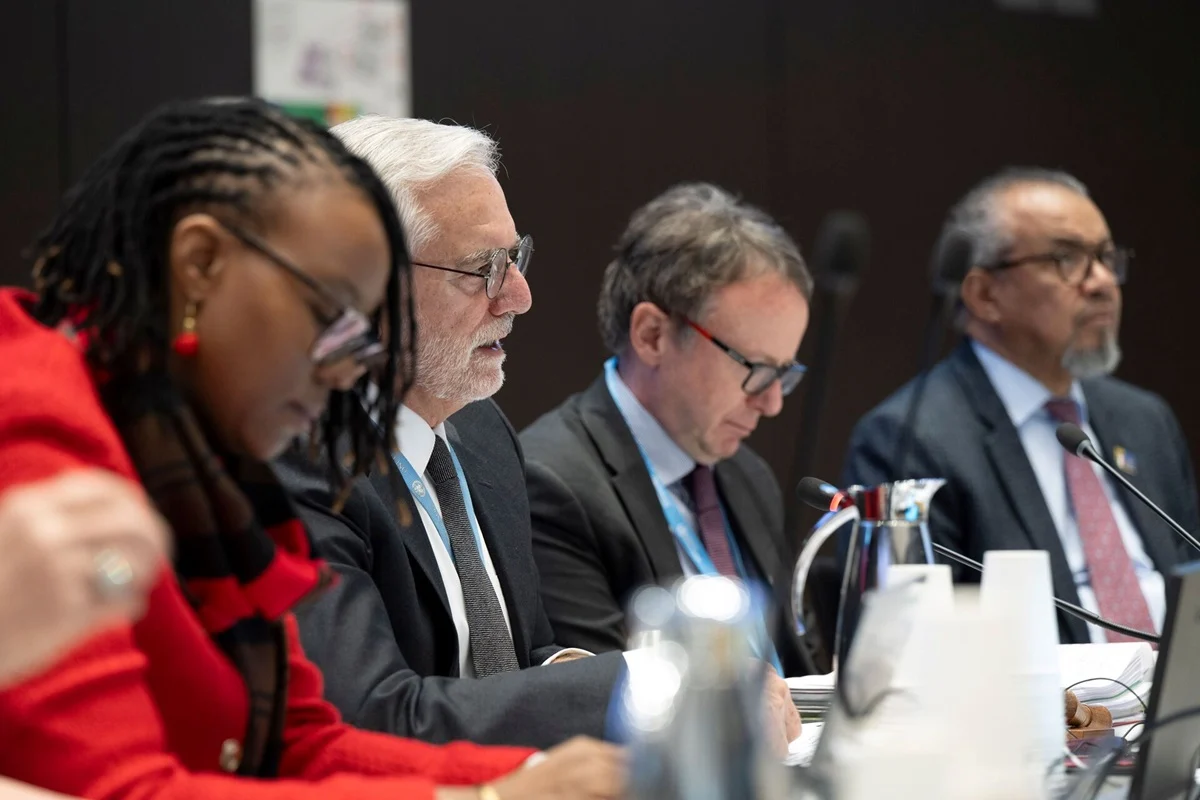
Member States of the World Health Organization (WHO) have concluded a pivotal session in Geneva, marking significant progress on the Pathogen Access and Benefit Sharing (PABS) system, a cornerstone of the broader WHO Pandemic Agreement. While negotiators reported substantial movement toward a consensus, the Intergovernmental Working Group (IGWG) ultimately determined that additional time is required to resolve the remaining technical and legal complexities of the framework. This decision underscores the high stakes of the negotiations, as the PABS system is designed to ensure that the global response to future health crises is faster, more coordinated, and fundamentally more equitable than the response seen during the COVID-19 pandemic.
The resumed session of the sixth meeting of the IGWG focused exclusively on the PABS annex, which serves as the operational heart of the Pandemic Agreement. The outcome of these deliberations is slated for presentation at the Seventy-ninth World Health Assembly (WHA) later this month. Recognizing the intricate nature of the remaining hurdles, the Assembly will be formally requested to consider an extension of the IGWG’s mandate, as initially established under Resolution WHA78.1. Under the proposed extension, the final framework would be submitted to the World Health Assembly by May 2027 at the latest, with the possibility of an earlier submission via a special session in 2026.
The Strategic Importance of the PABS System
The PABS system is envisioned as a "grand bargain" between the Global North and the Global South. At its core, the system seeks to formalize two interconnected processes: the rapid sharing of biological materials and genetic sequence data of pathogens with pandemic potential, and the fair and equitable sharing of the benefits that result from that data, such as vaccines, diagnostics, and therapeutic treatments.
During the COVID-19 pandemic, the global community witnessed a stark "vaccine apartheid," where high-income nations secured the vast majority of initial doses while developing nations, many of which had provided the viral samples necessary for research, were left at the end of the queue. The PABS system aims to rectify this imbalance by creating a legally binding framework where access to pathogen data is directly linked to guaranteed benefits for public health, particularly in underserved regions.
The finalization of this annex is the prerequisite for the signature and ratification of the entire Pandemic Agreement. Without a functional PABS system, the Agreement lacks the enforcement mechanism necessary to ensure that "equity" is more than just a rhetorical commitment.
Chronology of the Pandemic Agreement and the IGWG
The journey toward a global pandemic treaty began in the wake of the catastrophic social and economic disruptions caused by SARS-CoV-2. The timeline reflects a sustained diplomatic effort to overhaul the global health architecture:
- December 2021: A special session of the World Health Assembly established an Intergovernmental Negotiating Body (INB) to draft and negotiate a WHO convention, agreement, or other international instrument on pandemic prevention, preparedness, and response.
- May 2024: After years of intense negotiation, the World Health Assembly officially adopted the WHO Pandemic Agreement. This landmark decision signaled a global consensus on the need for a unified defense against future threats. Simultaneously, the Assembly established the open-ended IGWG to hammer out the specific operational details, most notably the PABS system.
- Late 2024 – Early 2025: The IGWG held multiple sessions to address the technicalities of "Benefit Sharing," including the percentage of vaccine production to be reserved for the WHO during an emergency and the protocols for sharing Digital Sequence Information (DSI).
- Current Session (May 2025): The resumed sixth meeting of the IGWG in Geneva focused on the PABS annex. While significant text was agreed upon, the complexity of the legal obligations required an extension.
- July 2026: The IGWG is scheduled to hold its seventh meeting to refine the annex further.
- 2026/2027: The final deadline for the completed PABS framework to be presented for adoption by the World Health Assembly.
The Stakes: Economic and Human Costs of Inaction
The urgency voiced by WHO officials is backed by sobering data regarding the costs of pandemic unpreparedness. According to various World Bank and WHO estimates, the COVID-19 pandemic resulted in an estimated 7 million officially recorded deaths, though the actual toll is believed to be closer to 20 million when accounting for excess mortality. Economically, the pandemic cost the global economy an estimated $12.5 trillion through 2024.
By contrast, the cost of implementing a robust global preparedness framework—including the PABS system—is estimated at approximately $10.3 billion to $31.1 billion per year. Proponents of the Pandemic Agreement argue that this investment is a fraction of the cost of another uncontrolled global outbreak.
Furthermore, the PABS system addresses the "innovation gap." Currently, the global distribution of vaccine manufacturing capacity is highly concentrated in a few regions. The PABS framework encourages technology transfer and the diversification of manufacturing, ensuring that diagnostics and therapeutics can be produced closer to where they are needed most.
Official Responses and Diplomatic Perspectives
The leadership of the WHO and the IGWG have expressed a blend of pragmatic caution and strategic optimism regarding the extension of the negotiations.
Dr. Tedros Adhanom Ghebreyesus, the WHO Director-General, emphasized that while the delay is necessary for precision, it should not be mistaken for a lack of momentum. "Real progress was made on the PABS annex and I am confident through continued negotiations differences will be overcome," Dr. Tedros stated. He reminded Member States that "the next pandemic is a matter of when, not if," framing the PABS annex as "the last piece of the puzzle" for global health security.
Ambassador Tovar da Silva Nunes of Brazil, serving as the IGWG Bureau Co-Chair, highlighted the technical rigor of the process. "Finalizing a document of such technical and legal complexity requires precision and dedication, both of which the Member States have demonstrated in full," he said. His comments reflect the difficulty of balancing intellectual property rights—a primary concern for nations with large pharmaceutical sectors—with the sovereign rights of countries over their biological resources.
IGWG Co-Chair Matthew Harpur echoed this sentiment, asserting that the bureau is confident the negotiations are moving in the right direction. He noted that the extension is a sign of the Member States’ commitment to creating a "framework needed to ensure countries are better, and more equitably, prepared."
Technical Hurdles and Points of Contention
The "technical and legal complexity" mentioned by Ambassador Nunes refers to several specific points of friction that remain under negotiation:
- Digital Sequence Information (DSI): One of the most contentious issues is how to treat the genetic data of pathogens when it is shared digitally rather than as a physical sample. Developing nations argue that DSI should be subject to the same benefit-sharing requirements as physical materials to prevent "biopiracy," where companies develop products based on digital data without compensating the source country.
- Percentage-Based Commitments: Negotiators are debating the exact percentage of pandemic-related products (vaccines, tests, etc.) that manufacturers should be required to provide to the WHO at affordable prices or as donations during a public health emergency of international concern.
- Intellectual Property (IP) Waivers: There is ongoing debate regarding the circumstances under which IP protections might be waived to allow for the rapid scaling of local production in developing countries.
- Sovereignty vs. Global Responsibility: Some nations remain wary of how the PABS system might interact with existing international agreements, such as the Nagoya Protocol, which governs access to genetic resources and the fair sharing of benefits.
Broader Impact and Implications for Global Health
The decision to extend the PABS negotiations has significant implications for the future of international law and public health. If successful, the Pandemic Agreement will represent the first time in history that a legally binding global system has been established for the systematic sharing of pathogens and the resulting medical benefits.
For the pharmaceutical industry, the PABS annex will provide a clearer regulatory landscape for how they interact with the WHO and Member States during a crisis. For developing nations, it offers a formal guarantee that they will not be marginalized during the next global health emergency.
Moreover, the PABS system is expected to integrate with the recently amended International Health Regulations (IHR 2005). While the IHR focuses on the surveillance and reporting of outbreaks, the Pandemic Agreement and its PABS annex provide the "how-to" for the response phase. Together, they form a dual-layered defense system intended to detect, contain, and neutralize threats before they escalate into global catastrophes.
As the IGWG prepares for its seventh meeting in July 2026, the international community remains focused on the delicate balance of interests. The extension of the deadline is a recognition that a rushed agreement might lack the legal robustness required to withstand the pressures of a real-world pandemic. However, the ticking clock of viral evolution ensures that the pressure on Geneva to deliver a final, equitable framework remains at an all-time high. The "last piece of the puzzle" is being carved with care, but the world watches with the knowledge that the puzzle must be completed before the next threat emerges.
