
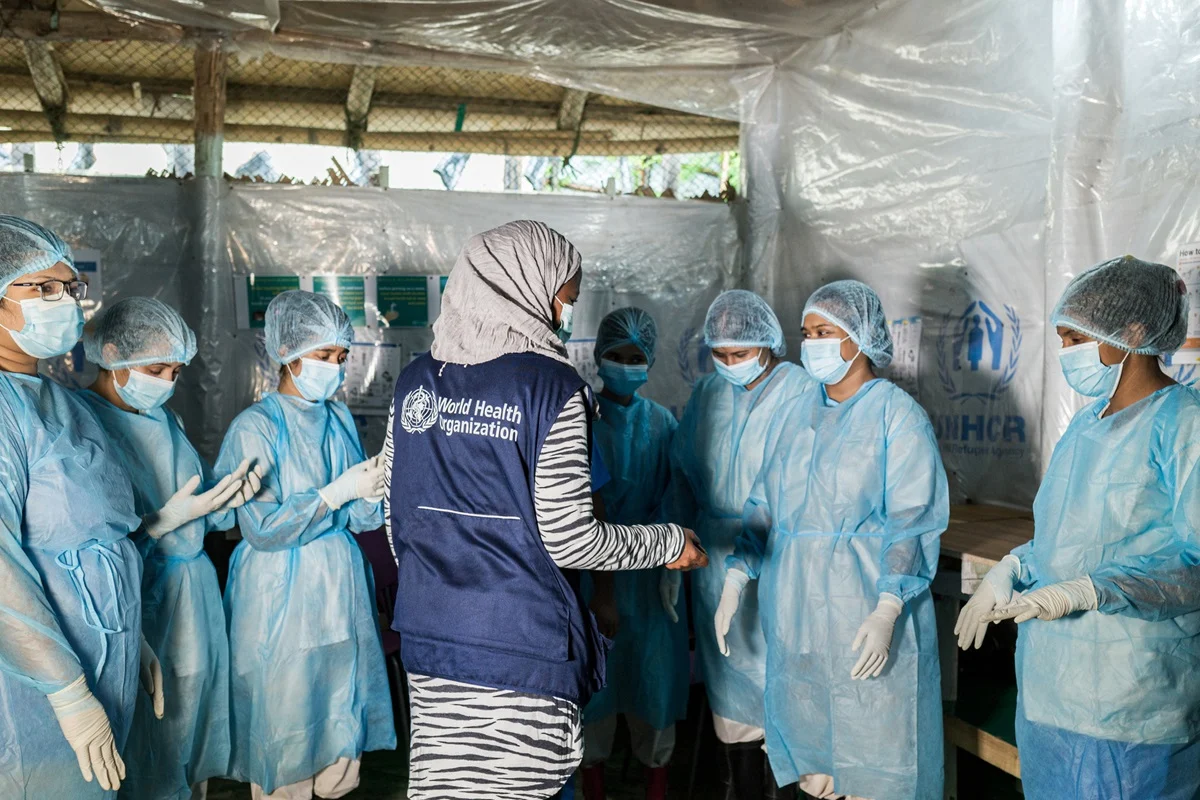
Six years have elapsed since the Director-General of the World Health Organization (WHO) invoked the highest level of alarm under international law, designating the spread of a novel coronavirus—later identified as SARS-CoV-2—a Public Health Emergency of International Concern (PHEIC). While the formal emergency status was rescinded in May 2023, the global community remains at a defining juncture. The anniversary serves as a somber reminder of the vulnerabilities exposed by the COVID-19 pandemic and a catalyst for a critical assessment: Is the global infrastructure more resilient today than it was in early 2020? According to the WHO and leading global health experts, the answer is a complex duality of significant advancement and lingering fragility.
The 158th session of the WHO Executive Board, which opened recently, has become the focal point for this evaluation. Dr. Tedros Adhanom Ghebreyesus, WHO Director-General, addressed the assembly with a message that balanced acknowledgment of progress with a stern warning against complacency. He emphasized that while the world has developed new tools and frameworks, the "panic-then-neglect" cycle that historically follows major health crises threatens to undermine the gains achieved through trillions of dollars in economic loss and millions of lives lost.
A Chronology of Crisis and Evolution: 2020–2024
The journey from the initial declaration to the present day reflects a rapid evolution in global health governance. On January 30, 2020, when the PHEIC was first declared, there were fewer than 100 cases outside of China and no recorded deaths. By the time the pandemic was officially characterized as such in March 2020, the virus had reached nearly every continent.
The subsequent four years saw a sequence of unprecedented milestones. The year 2021 was defined by the fastest vaccine development in human history, yet it was also marred by "vaccine nationalism," where high-income countries secured the lion’s share of doses, leaving low- and middle-income nations vulnerable. In 2022, the focus shifted toward strengthening surveillance and genomic sequencing to track emerging variants like Omicron. By May 2023, high levels of population immunity—through both vaccination and prior infection—allowed the WHO to end the PHEIC, though the organization maintained that COVID-19 remained a permanent global health threat.
As of 2024, the focus has transitioned from acute crisis management to long-term structural reform. This includes the ongoing negotiations for a "Pandemic Treaty" or Accord, intended to create a legally binding framework for future responses, ensuring that the inequities seen during COVID-19 are not repeated.
Tangible Progress: The "Yes" to Preparedness
The assertion that the world is better prepared is supported by several concrete institutional and technological developments. One of the most significant achievements is the establishment of the Pandemic Fund. Hosted by the World Bank with technical lead from the WHO, this fund was designed to provide a steady stream of long-term financing for pandemic prevention, preparedness, and response (PPR) in low- and middle-income countries. To date, it has raised billions in pledges, though experts note this is only a fraction of the estimated $10 billion per year required to close global gaps.
Technological innovation has also seen a paradigm shift. The WHO mRNA Technology Transfer Hub, based in South Africa, represents a move toward regional self-reliance. By sharing the blueprints for mRNA vaccines with manufacturers in the Global South, the international community is attempting to decentralize production, ensuring that the next time a pandemic strikes, vaccine manufacturing is not concentrated in a handful of wealthy nations.
Furthermore, the WHO Hub for Pandemic and Epidemic Intelligence in Berlin has enhanced global surveillance. By utilizing big data, artificial intelligence, and collaborative intelligence, the hub aims to detect potential threats faster than ever before. This system is bolstered by the WHO BioHub System, which facilitates the voluntary sharing of biological materials—pathogens with epidemic or pandemic potential—to accelerate the development of diagnostics and therapeutics.
Case Studies in Success: Ebola and Marburg
The practical application of these improved systems is evident in the response to recent outbreaks of other high-threat pathogens. Ten years ago, the West African Ebola outbreak resulted in over 11,000 deaths, largely due to a lack of rapid diagnostics, vaccines, and a coordinated international response.
In contrast, recent outbreaks of Ebola in the Democratic Republic of the Congo (DRC) and Marburg virus disease in Rwanda and Tanzania have been managed with significantly higher efficiency. In Rwanda, the response to a Marburg outbreak in late 2023 was characterized by rapid contact tracing and the swift deployment of experimental treatments under clinical trial protocols. National institutions, supported by WHO technical expertise, led these efforts, resulting in lower case fatality rates and shorter durations of transmission. This shift from international "intervention" to national "leadership" is a cornerstone of the new global health security strategy.
The Fragility of Gains: The "No" to Preparedness
Despite these advancements, the WHO warns that the progress is "fragile and uneven." The primary threat to global health security is no longer just the virus itself, but a shift in political and financial priorities. As the immediate memory of COVID-19 fades, many governments are redirecting budgets away from public health and toward defense and national security.
This trend is categorized by health economists as "shortsighted." The economic toll of COVID-19 is estimated to have exceeded $12 trillion in global GDP loss. In comparison, the cost of robust global preparedness is a negligible fraction of that amount. The WHO argues that pandemics are, in fact, national security threats that can destabilize economies, topple governments, and disrupt global supply chains more effectively than conventional warfare.
Furthermore, the "One Health" approach—which recognizes the interconnection between human, animal, and environmental health—remains underfunded. With approximately 75% of emerging infectious diseases being zoonotic (jumping from animals to humans), the failure to monitor wildlife trade and environmental degradation remains a significant blind spot in the global defense strategy.
Data and Economic Implications
Supporting data suggests that the investment gap remains wide. According to the G20 High-Level Independent Panel, the world needs to invest an additional $15 billion per year in international collective goods for pandemic preparedness. While the Pandemic Fund is a start, its current capitalization does not yet meet the scale of the threat.
Data from the WHO’s own monitoring frameworks show that while 90% of countries have improved their laboratory testing capacity since 2020, only about 25% have robust systems for community engagement and risk communication. This gap is critical, as the "infodemic" of misinformation during COVID-19 proved to be as lethal as the virus itself, driving vaccine hesitancy and resistance to public health measures.
The Pandemic Accord: A Litmus Test for Solidarity
The 158th Executive Board meeting is a precursor to the World Health Assembly in May, where Member States are expected to finalize negotiations on the Pandemic Accord. This document aims to address the systemic failures of the COVID-19 era, specifically regarding the "Access and Benefit Sharing" (ABS) mechanism.
The debate centers on a crucial trade-off: developing nations are asked to share data and samples of new pathogens, while they demand guaranteed access to the vaccines and treatments derived from that data. High-income countries and the pharmaceutical industry have expressed concerns regarding intellectual property rights. The outcome of these negotiations will determine whether the "solidarity" mentioned by Dr. Tedros is a functional reality or a diplomatic sentiment.
Analysis of Broader Implications
The shift in the global landscape since 2020 has profound implications for the future of international cooperation. The pandemic occurred during a period of rising geopolitical tension, and the current move toward isolationism in some regions poses a direct threat to health security. Pathogens do not respect borders, and a weakness in the health system of one country is a vulnerability for the entire world.
The integration of health into the broader "national security" framework is a double-edged sword. While it may unlock higher levels of funding, it also risks securitizing public health, where data sharing becomes a matter of intelligence rather than scientific cooperation. The WHO’s role as a neutral, coordinating body is therefore more critical than ever to ensure that health remains a global public good.
Conclusion: The Mandate for Continuous Vigilance
As the world marks six years since the COVID-19 PHEIC declaration, the message from the World Health Organization is clear: the time to prepare for the next pandemic is during the "inter-pandemic" period, not when the crisis is already underway. The achievements of the last four years—the Pandemic Fund, the mRNA hubs, and improved surveillance—provide a foundation, but they are not a guarantee of safety.
The upcoming decisions by governments at the WHO Executive Board and the subsequent World Health Assembly will dictate the trajectory of global health for the next generation. The transition from a state of emergency to a state of readiness requires sustained political will, consistent funding, and an unwavering commitment to the principle that "solidarity is the best immunity." Without these, the world remains at risk of repeating the history it so painfully endured between 2020 and 2023.
