
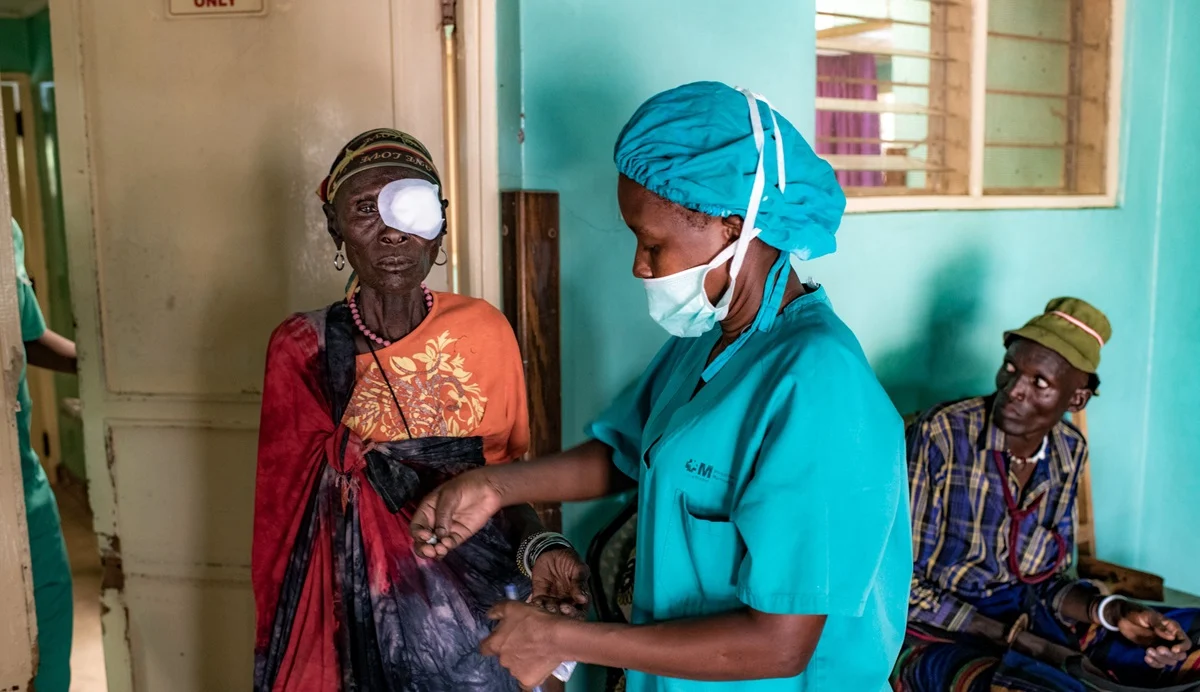
The World Health Organization (WHO) has issued an urgent call to action for member states to dramatically scale up surgical interventions for cataracts, a condition that remains the leading cause of blindness globally despite being almost entirely reversible through a cost-effective, 15-minute procedure. This appeal follows the publication of a comprehensive study in The Lancet Global Health, which reveals a stark reality: nearly 50% of individuals worldwide suffering from cataract-related blindness or severe vision impairment still lack access to the essential surgery they require. As aging populations continue to grow, health officials warn that without a radical shift in healthcare infrastructure and resource allocation, the global burden of avoidable blindness will continue to outpace current medical interventions.
Cataracts, characterized by the progressive clouding of the eye’s natural lens, currently affect more than 94 million people across the globe. While the condition is a natural byproduct of aging for many, its impact is most devastating in low- and middle-income countries where surgical services are often concentrated in urban centers, leaving rural populations in perpetual darkness. The recent Lancet study, which analyzed data from 68 countries between 2023 and 2024, underscores a significant gap in the World Health Assembly’s ambitious target of achieving a 30% increase in cataract surgery coverage by the year 2030.
The Global Scale of the Cataract Crisis
The clinical simplicity of cataract surgery stands in sharp contrast to the logistical complexity of its global delivery. The procedure involves removing the clouded lens and replacing it with an artificial intraocular lens (IOL). It is widely regarded by economists and health experts as one of the most cost-effective medical interventions in existence, offering an immediate restoration of sight and a near-instantaneous return to economic and social productivity.
Despite these benefits, the pace of progress has been insufficient. Over the last two decades, global coverage for cataract surgery has seen a modest increase of approximately 15%. However, this growth has been largely neutralized by demographic shifts. As life expectancy increases worldwide, the number of people reaching the age where cataracts develop is rising faster than the capacity of many health systems to treat them. Current modeling suggests that at the present rate of investment, coverage will only increase by about 8.4% over the current decade—less than a third of the progress required to meet international health targets.
Devora Kestel, Director a.i. of the WHO Department of Noncommunicable Diseases and Mental Health, emphasized the transformative nature of the intervention. According to Kestel, cataract surgery serves as a powerful tool for social equity, noting that when individuals regain their sight, they simultaneously regain their independence, dignity, and the ability to participate in the workforce. The WHO’s stance is clear: the failure to provide this surgery is not a failure of medical science, but a failure of health system distribution and political will.
Regional and Demographic Disparities
The Lancet Global Health report highlights a troubling "blindness gap" that is dictated by geography and gender. The African Region remains the most underserved, with three out of every four individuals requiring surgery left untreated. In these regions, the shortage of trained ophthalmologists and the lack of specialized surgical equipment in primary care settings create insurmountable barriers for the poor.
Gender inequity remains a persistent theme in global eye health. Data consistently shows that women are disproportionately affected by cataracts across all geographic regions. While women generally have a longer life expectancy—and thus a higher biological risk for cataracts—they also face systemic barriers to accessing care. In many societies, financial resources for healthcare are prioritized for male family members, and women may face greater restrictions on traveling to distant urban hospitals for treatment. This disparity means that even in regions where surgical volume is increasing, the benefits are not being shared equally across the population.
A Chronology of Global Eye Health Initiatives
The current push for expanded cataract surgery is part of a multi-decade effort to eliminate avoidable blindness. Understanding the timeline of these initiatives provides context for the urgency of the WHO’s current call:
- 1999: The WHO and the International Agency for the Prevention of Blindness (IAPB) launched "Vision 2020: The Right to Sight." This global initiative aimed to eliminate the main causes of all preventable and treatable blindness by the year 2020.
- 2013: The World Health Assembly (WHA) approved the Universal Eye Health Global Action Plan 2014–2019, which sought to reduce the prevalence of avoidable visual impairment by 25% by 2019.
- 2019: The WHO released the first World Report on Vision, which shifted the focus toward Integrated People-Centered Eye Care (IPCEC), embedding eye health within Universal Health Coverage (UHC).
- 2021: The 74th World Health Assembly adopted two new global targets for 2030: a 40% increase in effective coverage of refractive errors and a 30% increase in effective coverage of cataract surgery.
- 2024: The latest Lancet findings indicate that while progress is being made, the world is currently off-track to meet the 2030 cataract target, necessitating a sharp acceleration in surgical output and outreach.
Structural Barriers to Access
The persistent gap in cataract treatment is the result of several long-standing structural challenges. Primary among these is the unequal distribution of the eye-care workforce. In many developing nations, the majority of ophthalmologists reside in capital cities, while the majority of the blind population resides in remote rural areas. This geographic mismatch is compounded by a general shortage of trained ophthalmic nurses and technicians who are essential for pre-operative screening and post-operative care.
Financial barriers also play a critical role. Even in countries where the surgery itself is subsidized, patients often face high out-of-pocket costs for medications, diagnostic tests, and transportation. For a subsistence farmer or a person living in extreme poverty, the cost of traveling to a regional hospital can represent several months of income. Furthermore, a lack of public awareness often results in low demand; many individuals in underserved communities believe that vision loss is an inevitable and untreatable part of aging.
Beyond age, the WHO identifies several environmental and lifestyle factors that accelerate the development of cataracts. These include prolonged exposure to UV-B radiation (often due to outdoor labor without eye protection), tobacco use, and the long-term use of corticosteroids. Additionally, the global rise in diabetes has contributed to an earlier onset of cataracts in many populations, as high blood sugar levels can cause biochemical changes in the lens of the eye.
Proposed Solutions and Strategic Integration
To close the gap, the WHO advocates for a paradigm shift in how eye care is delivered. The core of this strategy is the integration of vision screening and eye examinations into primary healthcare systems. By training community health workers to identify cataracts during routine check-ups, health systems can catch cases earlier and create a more efficient referral pipeline to surgical centers.
Investment in infrastructure is equally vital. This includes not only building more surgical suites but also ensuring a steady supply of affordable, high-quality intraocular lenses and surgical consumables. Many experts suggest that "surgical camps" or mobile eye units can serve as a bridge to reach remote populations, though the long-term goal remains the establishment of permanent, sustainable local services.
Furthermore, the WHO is calling for targeted efforts to reach marginalized groups. This involves implementing gender-sensitive policies, such as providing free transport for women or setting up community-based clinics that are more accessible to those with domestic responsibilities. By prioritizing those who are most likely to be left behind, governments can ensure that gains in eye health contribute to broader goals of social and economic equity.
Economic and Social Implications of Sight Restoration
The implications of failing to address the cataract crisis extend far beyond individual health. Blindness is a significant driver of poverty. When an individual loses their sight, they often lose their livelihood, and in many cases, a younger family member—often a child or grandchild—must drop out of school or work to act as a caregiver. This creates a cycle of economic dependency that can affect entire communities.
Conversely, the economic returns of investing in cataract surgery are substantial. Studies have shown that restoring sight to a single individual can result in a significant increase in household income and a reduction in the "caregiver burden." On a national level, reducing the prevalence of blindness boosts GDP by increasing the size of the active workforce and reducing the social costs associated with disability.
As the global community looks toward the 2030 deadline, the WHO’s latest report serves as a reminder that the tools to end avoidable blindness already exist. The challenge lies in ensuring that these tools reach the millions of people who are currently living in the shadows. With sustained political commitment, increased funding, and a focus on equitable distribution, health officials believe that cataract surgery can transition from a luxury for the few to a universally accessible right for all. The path forward requires a unified effort from governments, civil society, and international partners to build a world where no one is left blind simply because of where they live or how much they earn.
