
On the occasion of World TB Day 2026, the World Health Organization (WHO) has issued a clarion call to the international community to accelerate efforts toward the eradication of tuberculosis (TB), one of the world’s most persistent and lethal infectious diseases. Under the thematic banner “Yes! We can end TB: Led by countries, powered by people,” the organization is advocating for a paradigm shift in how the disease is detected and treated. Central to this new strategy is the rapid deployment of innovative diagnostic tools, including point-of-care molecular tests and non-invasive tongue swabs, which are designed to reach vulnerable populations in the most remote and resource-constrained environments.
The WHO’s latest guidelines represent a significant technological leap in the fight against an epidemic that continues to claim more than 3,300 lives every single day. By moving away from a reliance on centralized laboratory infrastructure, which often causes delays in diagnosis and treatment initiation, the WHO aims to decentralize care and empower local health systems to identify cases in real-time. This push for innovation comes at a critical juncture as global health funding faces unprecedented pressure, threatening to stall the progress made over the last two decades.
A New Era of Decentralized Diagnostics
The cornerstone of the WHO’s new recommendations is the expansion of diagnostic tests that can be utilized at or near the point-of-care. Traditionally, TB testing has required sophisticated laboratory equipment and highly trained personnel, often located in urban centers far from the rural communities where TB prevalence is highest. The newly endorsed portable molecular diagnostics change this dynamic. These devices are designed to be simple to operate, battery-powered, and capable of delivering accurate results in under an hour.
Beyond their portability, these tools are significantly more cost-effective than previous generations of molecular diagnostics, with some models available at less than half the current market price. This reduction in cost is vital for middle- and low-income countries that bear the highest burden of TB. By allowing patients to receive a diagnosis and begin treatment during a single visit, health systems can drastically reduce the "loss to follow-up"—a phenomenon where patients tested in a clinic never return to receive their results or begin medication.
Dr. Tedros Adhanom Ghebreyesus, WHO Director-General, emphasized the humanitarian and clinical importance of these advancements. "These new tools could be truly transformative for tuberculosis, by bringing fast, accurate diagnosis closer to people, saving lives, curbing transmission and reducing costs," Dr. Tedros stated. He further urged all member states to prioritize the scaling of these technologies to ensure that no individual, regardless of their geographic location, is left behind.
Innovative Sampling: Tongue Swabs and Sputum Pooling
In addition to the hardware of diagnostic machines, the WHO has introduced revolutionary changes in how biological samples are collected. For decades, the "gold standard" for TB testing has been the collection of sputum—thick mucus coughed up from the lower airways. However, many patients, particularly children, adolescents, and those living with HIV, find it difficult or impossible to produce an adequate sputum sample.
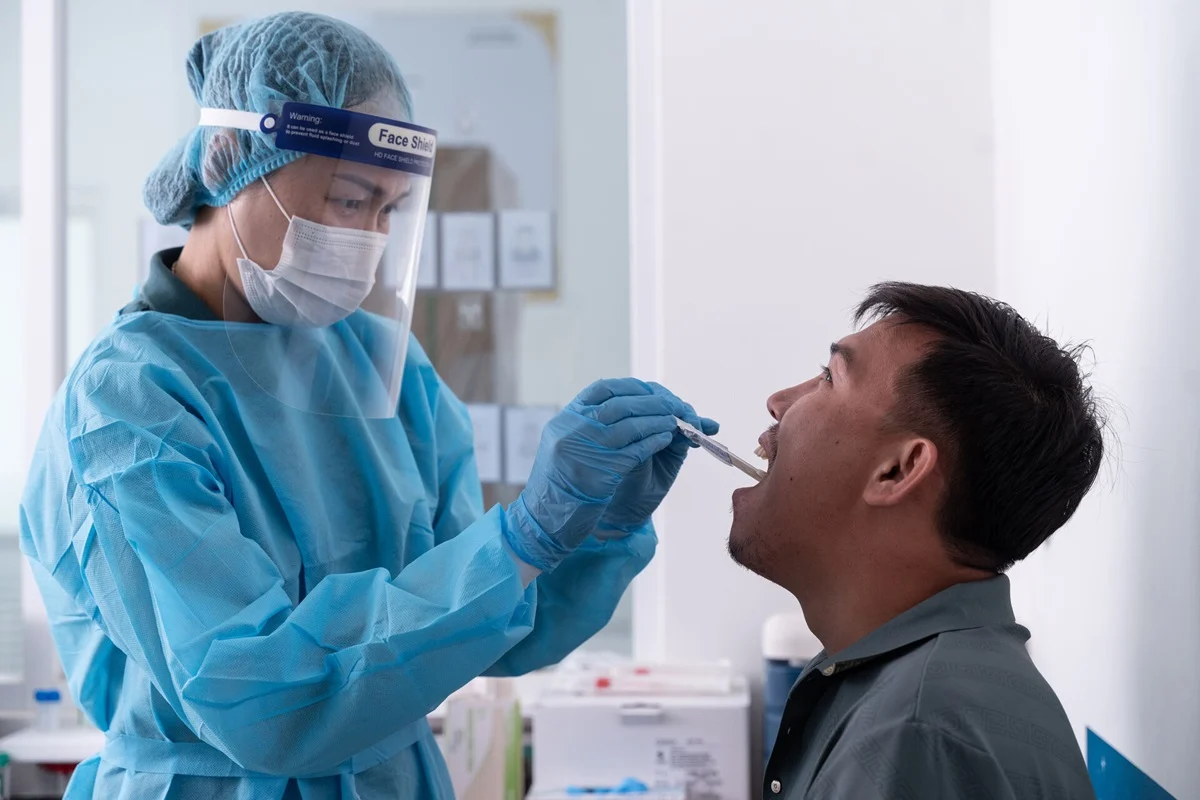
The new guidelines now recommend the use of tongue swabs as a viable alternative. This non-invasive method allows healthcare workers to collect samples by simply swabbing the surface of a patient’s tongue. This breakthrough is expected to significantly increase the detection rate among pediatric populations and those in the advanced stages of immunosuppression, who are at the highest risk of dying from the disease if left undiagnosed.
Furthermore, the WHO is promoting a "sputum pooling" strategy to maximize laboratory efficiency. In this approach, samples from multiple individuals are combined and tested in a single run. If the pool tests negative, all individuals in that group are cleared; if it tests positive, the individual samples are then tested separately. This method is particularly recommended for regions with limited resources, as it significantly reduces the cost of chemical reagents and maximizes the throughput of diagnostic machines.
The Economic Imperative: A High-Return Investment
The fight against TB is not merely a clinical necessity but a strategic economic choice. According to Dr. Tereza Kasaeva, Director of the WHO’s Department for HIV, Tuberculosis, Hepatitis, and Sexually Transmitted Infections, the economic returns on TB investment are among the highest in the public health sector. "Investing in TB generates up to US$ 43 in health and economic returns for every dollar spent," Dr. Kasaeva noted.
This high return on investment stems from the restoration of labor productivity and the prevention of catastrophic health expenditures for families. TB often strikes adults in their most productive years, leading to lost wages and pushing households into poverty. By diagnosing and curing the disease early, countries can safeguard their workforces and reduce the long-term strain on social safety nets.
Despite these clear economic benefits, global funding for TB research and implementation remains severely inadequate. The WHO estimates an annual funding gap of approximately US$ 5 billion for research alone. This shortfall hinders the development of new medicines, shorter treatment regimens, and, most importantly, a more effective vaccine. The current BCG vaccine, while helpful in preventing severe forms of TB in children, offers limited protection for adults against the pulmonary form of the disease which drives transmission.
Historical Context and the Current Global Burden
Tuberculosis has haunted humanity for millennia, but the modern era of TB control began in 1882 with Robert Koch’s discovery of Mycobacterium tuberculosis. Since the turn of the 21st century, global efforts have saved an estimated 83 million lives. However, the COVID-19 pandemic caused a significant setback, disrupting TB services and leading to the first increase in TB deaths in over a decade.
As of 2026, the statistics remain sobering. More than 29,000 people fall ill with TB every day. While the disease is preventable and curable, the rise of multidrug-resistant TB (MDR-TB) and rifampicin-resistant TB (RR-TB) has complicated eradication efforts. These resistant strains require longer, more expensive, and often more toxic treatment courses. The new point-of-care tests are specifically designed to detect resistance to rifampicin, allowing clinicians to tailor treatment plans immediately and prevent the further spread of resistant bacteria.
Integrated Health Services and Future Research
One of the most promising aspects of the new diagnostic platforms is their multi-disease capability. The same machines used to detect TB can often be configured to test for other infectious diseases, including HIV, mpox, and Human Papillomavirus (HPV). This "one-stop-shop" approach aligns with the broader goal of Universal Health Coverage (UHC), where primary care facilities serve as integrated hubs for multiple health needs.
To push toward the 2030 Sustainable Development Goal of ending the TB epidemic, the WHO is also championing the TB Vaccine Accelerator Council. This initiative seeks to align governments, funders, and the private sector to fast-track the development of a next-generation vaccine. Without a more effective vaccine, experts argue that the decline in TB incidence will be too slow to meet global targets.
The WHO’s 2026 strategy emphasizes that technology alone is not a silver bullet. The success of these innovations depends on "decisive leadership" and "strategic investment." Public health experts suggest that the integration of these tools must be accompanied by social support programs that address the social determinants of TB, such as malnutrition, poor housing, and tobacco use.
Conclusion: A Call to Political Action
As countries observe World TB Day 2026, the message from the WHO is clear: the tools to end TB exist, but the political will to fund and deploy them at scale is lagging. The shift toward point-of-care diagnostics and non-invasive sampling represents a milestone in making TB care more equitable and patient-centered.
The global community now faces a choice. It can continue with a "business as usual" approach, which risks further reversals in progress due to funding cuts and emerging drug resistance, or it can embrace the WHO’s recommendations as a central pillar of health security. By investing in these innovations today, world leaders can fulfill the promise of a TB-free future, ensuring that the theme of 2026—"Yes! We can end TB"—becomes a reality for the millions still living under the shadow of this ancient disease.
