
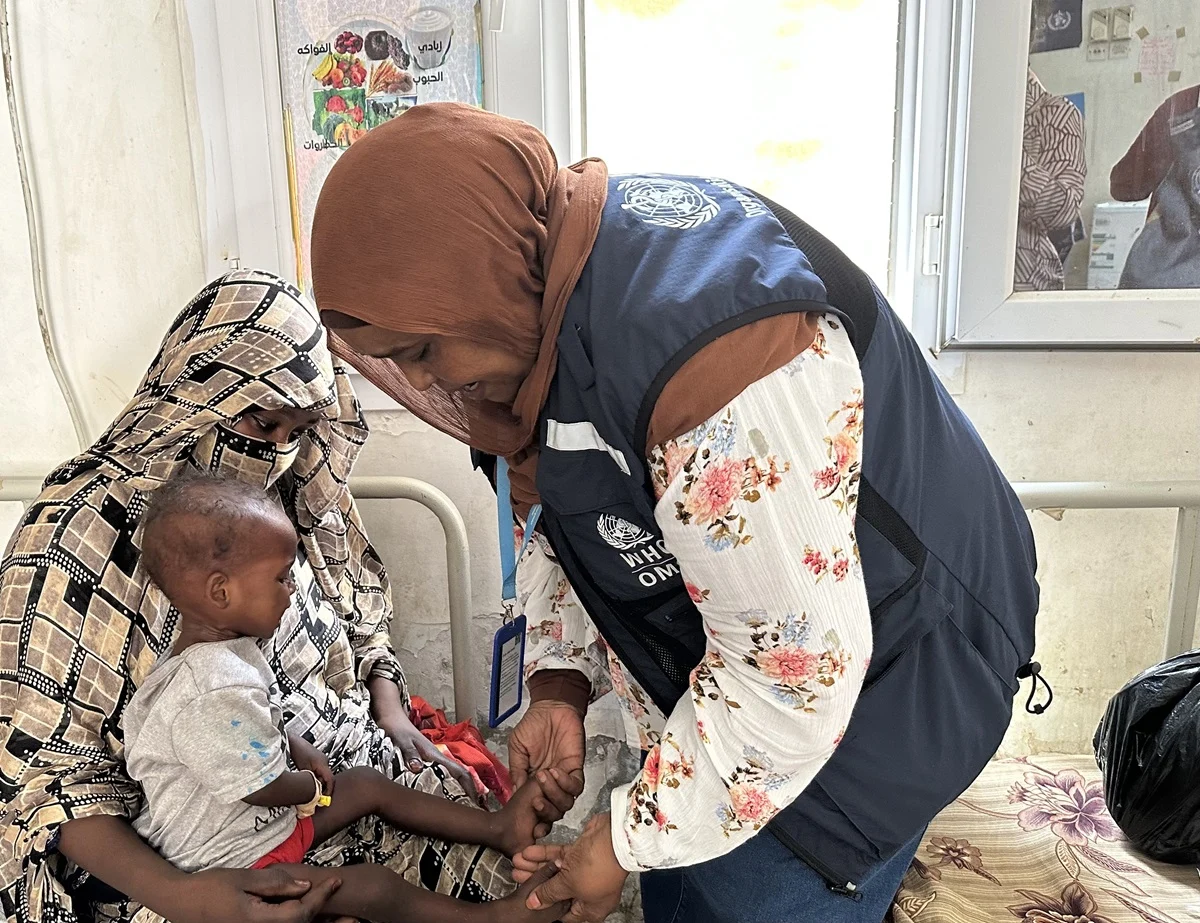
The Republic of the Sudan has officially become the site of the world’s most severe humanitarian emergency following three full years of relentless civil conflict. As of April 2026, data from international monitoring agencies indicates that an estimated 34 million people—the vast majority of the nation’s population—are in desperate need of humanitarian assistance. Among them, 21 million individuals lack access to even the most basic health services, as the country’s medical system faces a total collapse driven by targeted attacks, a lack of funding, and the compounding pressures of widespread famine and disease.
While some stability has been reported in peripheral states, the health crisis continues to deepen in regions where active fighting persists. The World Health Organization (WHO) has warned that the convergence of rising malnutrition, shrinking access to medical facilities, and a series of infectious disease outbreaks has created a "perfect storm" of mortality that threatens to define the region for a generation. The crisis is no longer merely a byproduct of war but has evolved into a systemic failure of the state’s ability to protect its most vulnerable citizens.
The Genesis and Evolution of the Conflict: A Three-Year Chronology
The current catastrophe trace its origins to April 15, 2023, when long-simmering tensions between the Sudanese Armed Forces (SAF) and the paramilitary Rapid Support Forces (RSF) erupted into open urban warfare in the capital, Khartoum. What began as a power struggle between rival military factions quickly transformed into a nationwide conflagration that dismantled the country’s nascent transition toward civilian rule.
By late 2023, the conflict had spread from the capital to the historically volatile Darfur and Kordofan regions. These areas, already scarred by decades of intermittent violence, saw a resurgence of ethnically targeted killings and mass displacement. Throughout 2024, the systematic destruction of agricultural cycles and trade routes began to manifest as a severe food security crisis. By early 2025, international observers noted a disturbing trend: the deliberate targeting of civilian infrastructure, particularly hospitals and water treatment plants, which appeared to be used as a tactic of war to displace populations and weaken local resistance.
Entering 2026, the war has reached a grim milestone. The "IPC Alert" issued on February 5, 2026, warned that the window to prevent a total famine was rapidly closing. The conflict has moved beyond the front lines, as the collapse of the economy and the cessation of public services have left millions of non-combatants in a state of permanent precarity.
Systematic Attacks on Health Infrastructure and Personnel
The degradation of Sudan’s health system is not merely an incidental casualty of crossfire but the result of sustained and verified violence against the medical sector. Across Sudan’s 18 states, approximately 37% of health facilities are currently non-functional. In conflict-heavy zones such as Khartoum, Darfur, and the Kordofans, that percentage is significantly higher, with many districts having no operational hospitals at all.
The WHO has verified 217 specific attacks on health care since the outbreak of the conflict in April 2023. These incidents have resulted in at least 2,052 deaths and 810 injuries among patients and medical staff. Beyond the immediate loss of life, these attacks have a multiplier effect; the destruction of a single referral hospital can strip hundreds of thousands of people of their only access to surgical care, maternal health services, and emergency stabilization.
A recent and prominent example of this devastation occurred at the El Daein Teaching Hospital in East Darfur. A critical hub for the region, the hospital was rendered non-functional following a direct attack that resulted in 64 deaths, including children and health workers. The loss of this facility has created a vacuum in East Darfur, forcing those in need of urgent care to undertake perilous journeys through active war zones to find the nearest functioning clinic, which may be hundreds of kilometers away.
Dr. Tedros Adhanom Ghebreyesus, WHO Director-General, emphasized the gravity of these violations. “The war in Sudan is devastating lives and denying people their most basic rights, including health, water, food, and safety,” Dr. Tedros stated. “The health system has been crippled, leaving millions without essential health care. Doctors and health workers can save lives, but they must have safe places to work and the medicines and supplies they need. Ultimately, the best medicine is peace.”
The Dual Threat of Malnutrition and Disease Outbreaks
The collapse of the health system is occurring simultaneously with a catastrophic rise in acute malnutrition. As of early 2026, over 4 million people are estimated to be suffering from acute malnutrition, a condition that severely compromises the immune system and makes the population—particularly children—exceptionally vulnerable to otherwise treatable diseases.
This weakened physiological state has allowed infectious diseases to spread with unprecedented speed. Current reports from the Federal Ministry of Health and WHO indicate widespread outbreaks of:
- Malaria and Dengue: Flourishing in areas where vector control programs have ceased.
- Measles and Polio (cVDPV2): Rebounding due to the disruption of routine childhood immunization schedules.
- Hepatitis E and Meningitis: Spreading in overcrowded displacement camps with poor sanitation.
- Diphtheria: Re-emerging in states including Al Jazirah, Gedaref, and River Nile.
Notably, a protracted cholera outbreak that lasted more than a year was finally declared over in March 2026. This victory was achieved only after a massive international response that included oral vaccination campaigns reaching 24.5 million people. However, health officials warn that without improvements in water and sanitation infrastructure, the risk of a resurgence remains extremely high.
The International Response and Humanitarian Operations
Despite the high-risk environment, international organizations have maintained a presence on the ground. The WHO has been a primary coordinator for the health response, working to bridge the gap between emergency aid and the rehabilitation of the public health sector.
Since the conflict’s inception, the WHO has delivered over 3,300 metric tons of medicines and medical supplies to various regions of Sudan. These supplies cover a range of needs, from trauma care kits for the war-wounded to specialized nutritional supplements for children with severe acute malnutrition. WHO-supported services have provided essential health care to more than 4.1 million people through a network of primary health care centers, mobile clinics, and surviving hospitals.
A significant focus of the 2025-2026 response has been the restoration of the "cold chain" for vaccines and the rehabilitation of national reference laboratories. In a landmark public health achievement amidst the war, Sudan became the first country in the region to include malaria vaccines in its routine immunization program. Vaccination campaigns overall have reached more than 46 million people, providing protection against cholera, polio, measles, and rubella.
Dr. Shible Sahbani, the WHO Representative to Sudan, noted that the strategy is shifting as some regions become more accessible. "WHO has been on the ground since the start of the conflict, with supplies, disease surveillance, training, and coordination," Dr. Sahbani said. "As access to some areas opens up, we are stepping up efforts to support early recovery and rehabilitation of the health system alongside the humanitarian response."
Regional Stability and Broader Implications
The crisis in Sudan is no longer contained within its borders. The displacement of over 10 million people—both internally and as refugees to neighboring Chad, Egypt, South Sudan, and Ethiopia—has placed an immense strain on the stability of East Africa. Neighboring countries, many of which are dealing with their own internal economic and security challenges, are struggling to accommodate the influx of refugees who arrive with nothing and often require intensive medical care.
From a socio-economic perspective, the destruction of Sudan’s middle class and the "brain drain" of its professional medical community pose long-term threats to the country’s recovery. With a significant portion of the nation’s doctors and nurses having fled the country or been killed, the task of rebuilding the health system after a eventual ceasefire will take decades.
Furthermore, the IPC alerts regarding food insecurity suggest that even if the fighting were to stop today, the impact of three lost planting seasons and the destruction of the national grain silos in Khartoum will result in a prolonged period of dependency on international food aid.
Conclusion: The Urgent Call for Peace and Funding
The consensus among health officials and humanitarian leaders is that humanitarian aid, while vital, is merely a palliative measure for a wound that requires a political cure. The WHO Regional Director for the Eastern Mediterranean, Dr. Hanan Balkhy, underscored this sentiment by highlighting the declining access to care despite international efforts.
“Three years in conflict have turned Sudan into the world’s largest ongoing health crisis,” Dr. Balkhy stated. “With millions lacking basic medical care, facing hunger, and at risk of disease, Sudan’s health crisis continues to deepen, emphasizing the urgent need for humanitarian support and long-term solutions. We remain committed to the people of Sudan.”
To sustain even the current level of emergency operations, the WHO and its partners are calling for three critical interventions from the international community:
- Unrestricted and Safe Access: The removal of bureaucratic and physical barriers to the delivery of aid, particularly in the besieged regions of Darfur and Kordofan.
- Protection of Health Care: A cessation of attacks on medical facilities, ambulances, and health workers, in accordance with international humanitarian law.
- Sustained Funding: Long-term financial commitments from donors to move beyond stop-gap emergency measures and toward the rehabilitation of the public health infrastructure.
As Sudan marks the third anniversary of a war that has redefined the scale of modern humanitarian disaster, the international community faces a stark reality: without an immediate and lasting peace, the health of the nation cannot be restored. For the 34 million people caught in the crossfire, peace is not just a political goal—it is a biological necessity for survival.
