
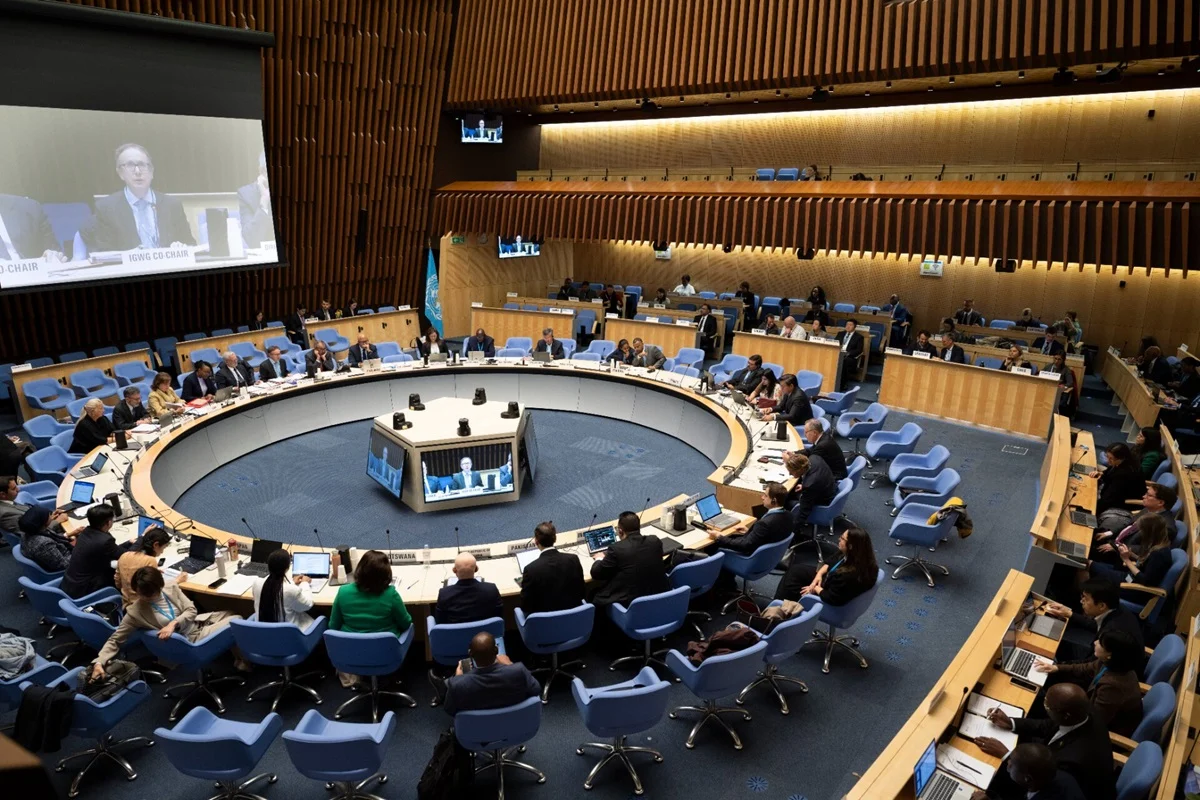
The World Health Organization (WHO) and its 194 Member States have concluded a pivotal week of intensive negotiations in Geneva, marking a significant milestone in the development of the Pathogen Access and Benefit Sharing (PABS) system. This specialized framework serves as a critical annex to the broader WHO Pandemic Agreement, a legally binding international instrument designed to prevent the recurrence of the systemic failures witnessed during the COVID-19 era. Held from February 9 to 14, 2026, the fifth meeting of the Intergovernmental Working Group (IGWG) focused on bridging the remaining gaps between national interests and collective global security. The session concluded with a streamlined draft and a renewed commitment to finalize the text ahead of the 79th World Health Assembly in May.
The PABS system represents the operational heart of future pandemic response efforts. Its primary function is to create a standardized, transparent, and equitable mechanism for the sharing of biological materials and genetic sequence information (GSI) of pathogens with pandemic potential. In exchange for this rapid sharing, the system mandates a reciprocal sharing of benefits, such as vaccines, diagnostics, and therapeutics, ensuring that the countries providing the data are not the last to receive the resulting medical interventions. As the world moves toward the final stages of these negotiations, the focus has shifted from high-level conceptual agreement to the technical and legal specificities that will govern international health security for decades to come.
The Evolution of the PABS Framework: A Chronological Overview
The journey toward the PABS annex began in the immediate aftermath of the COVID-19 pandemic, which exposed profound inequities in global health infrastructure. While the scientific community achieved the unprecedented feat of developing vaccines in less than a year, the distribution of these tools was characterized by "vaccine nationalism," where wealthy nations secured the vast majority of doses while developing nations faced prolonged shortages.
In December 2021, a Special Session of the World Health Assembly established the Intergovernmental Negotiating Body (INB) to draft and negotiate a WHO convention or agreement on pandemic prevention, preparedness, and response. By 2024, the broad strokes of the Pandemic Agreement were adopted, but several highly technical components, most notably the PABS annex, required further specialized deliberation. This led to the formation of the Intergovernmental Working Group (IGWG) in 2025, tasked specifically with refining the PABS mechanism.
The February 2026 meeting represents the fifth time the IGWG has convened. Over the past year, the group has transitioned from debating the necessity of such a system to refining the legal language that will compel pharmaceutical companies and research institutions to participate in benefit-sharing. The timeline is now compressed, with a final round of negotiations scheduled for March 2026, followed by the presentation of the completed annex to the World Health Assembly in May.
Technical Mechanisms: Access Versus Benefit Sharing
At the core of the PABS system is a "quid pro quo" arrangement designed to balance the needs of global surveillance with the demands of social justice. The "Access" component focuses on the rapid, unhindered sharing of pathogen samples and Digital Sequence Information (DSI). During the early stages of an outbreak, every hour counts; the PABS system aims to ensure that laboratories worldwide can access the genetic blueprint of a new virus instantly, allowing for the immediate start of research and development.
The "Benefit Sharing" component is the more contentious element of the negotiations. It proposes that manufacturers who utilize the shared pathogen data must commit to providing a certain percentage of their production—often discussed as 20%, with 10% as a donation and 10% at affordable prices—to the WHO for distribution based on public health need rather than purchasing power. This mechanism is intended to bypass the market-driven delays that left billions of people vulnerable during the 2020-2022 period.
Supporting data from the COVID-19 pandemic underscores the necessity of this shift. According to various economic analyses, the global economy suffered an estimated loss of over $12.5 trillion due to the pandemic. Furthermore, studies published in The Lancet suggested that more equitable vaccine distribution could have prevented over 1 million deaths in low- and middle-income countries. These figures have served as a sobering backdrop for the IGWG negotiations, reminding delegates that the cost of failure is measured in both economic stability and human lives.
Diplomatic Leadership and Official Responses
The conclusion of the fifth IGWG meeting was met with a mixture of cautious optimism and a recognition of the arduous work ahead. Ambassador Tovar da Silva Nunes of Brazil, serving as the IGWG Bureau co-chair, emphasized the progress made in simplifying the draft text. He noted that while contentious issues remain—particularly regarding intellectual property and the specific triggers for benefit-sharing—the group now has a "clear vision" for the path forward. Brazil’s leadership in this area reflects a broader push from the Global South to ensure that the agreement is not merely a surveillance tool for the North, but a genuine partnership.
Mr. Matthew Harpur of the United Kingdom, also a co-chair, echoed these sentiments while highlighting the temporal pressure facing the group. He characterized the discussions as "serious and constructive," noting that the coming weeks are critical for "bridging the remaining gaps." The involvement of the United Kingdom and other G7 nations is vital, as these countries house the majority of the world’s major pharmaceutical entities whose cooperation is essential for the PABS system to function.
WHO Director-General Dr. Tedros Adhanom Ghebreyesus has been a vocal advocate for the "solidarity" inherent in the PABS system. In his closing remarks for the session, he lauded the "steady progress" and reiterated that strong multilateralism is the only viable defense against future biological threats. Dr. Tedros has frequently reminded Member States that "no one is safe until everyone is safe," a mantra that has become the unofficial slogan of the Pandemic Agreement.
Stakeholder Engagement and the Role of the Private Sector
Unlike traditional diplomatic treaties that occur solely between governments, the PABS negotiations have actively sought input from a broad spectrum of stakeholders. This includes representatives from the private sector, academia, and the managers of global sequence databases. The pharmaceutical industry, represented by organizations such as the International Federation of Pharmaceutical Manufacturers & Associations (IFPMA), has expressed concerns regarding the potential impact of mandatory benefit-sharing on innovation and intellectual property rights.
Industry leaders argue that while they support the goal of equitable access, the PABS system must be designed in a way that does not disincentivize the massive investments required for rapid vaccine development. Conversely, civil society organizations and academic researchers have pushed for maximum transparency, arguing that pathogens are a "common heritage of mankind" and should not be subject to restrictive patenting that hinders global access.
The IGWG has the difficult task of weaving these disparate perspectives into a single, cohesive legal framework. The February session included dedicated dialogues with these stakeholders to ensure that the final annex is "fit for purpose"—meaning it is technically feasible for laboratories and economically viable for manufacturers, while still achieving its humanitarian goals.
Broader Implications and the Path to May 2026
The implications of a successful PABS annex extend far beyond the walls of the WHO headquarters. If adopted and ratified, it will represent one of the most significant advancements in international law since the 2005 International Health Regulations (IHR). It would effectively formalize a global "social contract" for health, shifting the paradigm from charity-based aid to a rights-based system of equitable distribution.
The next steps are clearly defined. In March 2026, Member States will return to the negotiating table for what is expected to be the final substantive drafting session. This meeting will focus on the "contentious elements" mentioned by Ambassador Nunes, including the specific legal language regarding the percentage of medical products to be shared and the governance of the PABS database.
The final outcome will be presented to the World Health Assembly in May 2026. Adoption of the PABS annex would complete the architecture of the WHO Pandemic Agreement, providing the world with a formalized playbook for the next "Disease X." The success of this initiative is viewed by many as a litmus test for multilateralism in an increasingly fragmented geopolitical landscape.
As the IGWG concludes its fifth session, the consensus among observers is that while the technical hurdles are high, the political will to avoid a repeat of the 2020 crisis remains strong. The PABS system is not merely a bureaucratic annex; it is a fundamental reconfiguration of how the human race protects itself against microscopic threats. By linking the sharing of information with the sharing of life-saving tools, the WHO and its Member States are attempting to build a future where health security is a universal reality rather than a geographic privilege.
