
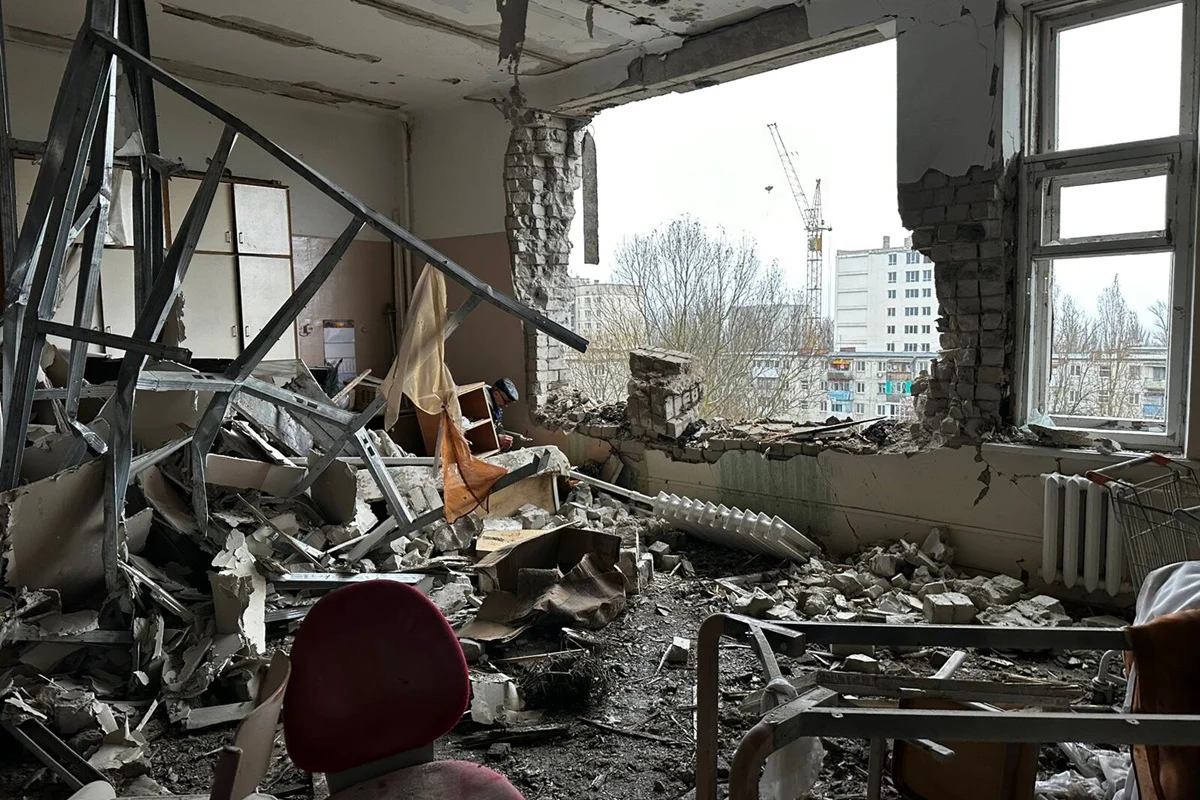
The full-scale invasion of Ukraine has entered its fifth year, marking a grim milestone in a conflict that has systematically dismantled the nation’s civilian infrastructure and placed an unprecedented strain on its health care delivery. As of February 2024, the World Health Organization (WHO) has confirmed that 2025 was the most violent year for the Ukrainian medical sector since the outbreak of hostilities on February 24, 2022. Attacks on health care facilities, personnel, and transport increased by nearly 20% in 2025 compared to the previous year, signaling a dangerous escalation in the targeting of protected humanitarian assets. Since the inception of the war, the WHO has documented at least 2,881 verified attacks on health care, resulting in a cumulative toll of 233 deaths and 930 injuries among health workers and patients. These figures represent not only a violation of international humanitarian law but a direct assault on the fundamental right to life and health for millions of Ukrainian citizens.
The humanitarian landscape in 2026 is defined by a dual-front crisis. On one side, direct military strikes continue to level hospitals and clinics; on the other, the strategic destruction of the nation’s energy grid has created a "cascading effect" that undermines medical care even in areas far from the active frontlines. The psychological and physiological toll is immense. According to the most recent WHO assessments conducted in December 2025, the health disparity between regions is widening. Approximately 59% of residents in frontline areas now describe their health status as "poor" or "very poor," a significant jump from the 47% reported in non-frontline regions. This data underscores the reality that the war is not merely a military engagement but a public health catastrophe of generational proportions.
A Chronology of Attrition: From 2022 to the 2025 Escalation
The progression of the war has seen a shift in the nature of medical infrastructure targeting. In the initial months of 2022, the damage was largely the result of indiscriminate shelling in urban centers such as Mariupol and Kharkiv. By 2023 and 2024, the conflict settled into a war of attrition, where medical facilities in the Donbas and southern regions were frequently caught in crossfire or targeted during territorial shifts. However, 2025 marked a strategic shift toward the destruction of medical logistics. The WHO reports that attacks on medical warehouses tripled in 2025 compared to 2024. This deliberate focus on supply chains has crippled the "last mile" delivery of life-saving medications, particularly in hard-to-reach rural areas.
The third quarter of 2025 stood out as the deadliest period for the health sector. During these three months, 184 distinct attacks were recorded, claiming the lives of 12 people and injuring 110 others. This surge coincided with a broader campaign against civilian infrastructure, suggesting a coordinated effort to degrade the resilience of the Ukrainian population. By the time the war reached its four-year anniversary in early 2026, the cumulative damage had created a landscape where the mere act of seeking medical attention had become a high-risk endeavor.
The Winter of 2025-2026: Infrastructure as a Weapon of War
The winter of 2025–2026 has been recorded as the harshest since the conflict began, characterized by a series of devastating strikes on thermal power plants and the high-voltage power grid. In January 2026, a massive aerial bombardment of Kyiv’s energy infrastructure left nearly 6,000 buildings without heat as temperatures plummeted to -20°C. The resulting humanitarian emergency forced an estimated 600,000 residents to flee the capital, seeking warmth and functioning services elsewhere.
Dr. Jarno Habicht, the WHO Representative to Ukraine, described the situation as a "devastating cycle." When heating stations are struck, water in the pipes of residential and medical buildings freezes and bursts, leading to ice floods and structural damage that cannot be easily repaired in subzero conditions. This "thaw-freeze" cycle has rendered many clinics unusable, forcing doctors to perform surgeries in makeshift underground bunkers or in rooms heated only by small, portable generators. For patients recovering from major surgeries, such as cancer treatments or cardiovascular interventions, the lack of climate control and running water at home often turns a successful medical procedure into a struggle for survival against the elements.
The Silent Crisis: Mental Health and Chronic Disease
While the physical destruction of buildings is visible, the internal collapse of the population’s health is equally severe. The WHO Regional Director for Europe, Dr. Hans Henri P. Kluge, highlighted a "staggering" mental health crisis that has permeated every level of society. Surveys conducted in late 2025 reveal that 72% of Ukrainians have experienced significant anxiety or depression within the past year. Despite the high prevalence of these conditions, only one in five individuals has sought professional help, hampered by the stigma of mental illness and the scarcity of available counselors.
Simultaneously, the stress of the war and the interruption of routine care have fueled a surge in non-communicable diseases (NCDs). Cardiovascular disease, already a leading cause of death in Ukraine prior to the war, has reached epidemic levels. Currently, one in four Ukrainians suffers from dangerously high blood pressure. The management of hypertension is further complicated by a breakdown in pharmacy networks; 80% of the population reports difficulty accessing necessary medications. The primary barrier cited is the soaring cost of drugs, with 71% of respondents stating they can no longer afford their prescriptions due to the economic devastation caused by the prolonged conflict.
Rehabilitation and the Long-Term Burden of Trauma
The proliferation of war-related trauma—ranging from blast injuries to complex amputations—has created a demand for rehabilitation services that the current system cannot meet. The WHO notes that access to specialized rehabilitation remains one of the most significant gaps in the Ukrainian health sector. Only 4% of hospitals are currently equipped to provide inpatient rehabilitation, and a mere 3% of facilities offer assistive technologies such as prosthetics or corrective devices.
This deficit has created a backlog of thousands of amputees, many of them young soldiers and civilians, who are waiting months for basic mobility aids. The lack of infection prevention and control measures in overcrowded frontline hospitals has also led to an increase in antimicrobial resistance (AMR). Without the ability to provide sterile environments and consistent antibiotic regimens, doctors are increasingly facing "superbugs" that complicate the recovery of patients with trauma injuries.
The Global Response and the 2026 Appeal
In response to the escalating needs, the WHO and its partners have significantly scaled up their presence in Ukraine. Throughout 2025, WHO support reached 1.9 million people across the country. This assistance included the delivery of medical supplies, the facilitation of emergency referrals, and the provision of 284 generators to ensure that critical hospital departments—such as intensive care units and operating theaters—remain functional during blackouts.
However, the scale of the crisis continues to outpace the available resources. For the year 2026, the WHO has launched an appeal for $42 million in urgent funding. This capital is intended to sustain essential health services and protect access to care for at least 700,000 of the most vulnerable individuals, particularly those in frontline oblasts where the health system is on the verge of total collapse.
Dr. Tedros Adhanom Ghebreyesus, the WHO Director-General, emphasized that while medical supplies and generators are vital stop-gap measures, they cannot address the root cause of the suffering. "After four years of war, health needs are increasing, but many people are unable to get the care they need," Dr. Tedros stated. He reiterated the organization’s commitment to supporting Ukraine’s health workers but concluded with a sobering reminder: "Ultimately, the best medicine is peace."
Analysis of Implications: A System Under Siege
The data from the first four years of the war suggests that the Ukrainian health system is being subjected to a "stress test" unlike any seen in modern European history. The tripling of attacks on medical warehouses in 2025 is a particularly concerning trend, as it indicates a shift toward disrupting the fundamental logistics of humanitarian aid. If this trend continues into 2026, the international community may need to rethink how medical supplies are stored and distributed, perhaps moving toward more decentralized, smaller-scale hubs to mitigate the risk of catastrophic loss from a single strike.
Furthermore, the mass displacement of 600,000 people from Kyiv in January 2026 highlights the fragility of urban centers. The internal migration of millions of people places an immense burden on the health infrastructure of western Ukraine, which was not built to handle such a rapid influx of patients with complex, chronic needs. As the war enters its fifth year, the focus of international aid must shift from short-term emergency response to long-term system resilience, ensuring that the "heart patients who can’t find medication" and the "teenagers too afraid to leave their houses" are not forgotten in the shadow of the military conflict.
The situation in Ukraine serves as a grim case study in the weaponization of civilian infrastructure. The systematic violation of international humanitarian law through the targeting of health care not only causes immediate death but ensures that the scars of the war—both physical and psychological—will remain for decades after the guns fall silent. The WHO’s 2026 appeal is a call to action for the global community to prevent a total collapse of the Ukrainian health system, a collapse that would have profound implications for the stability of the entire region.
