
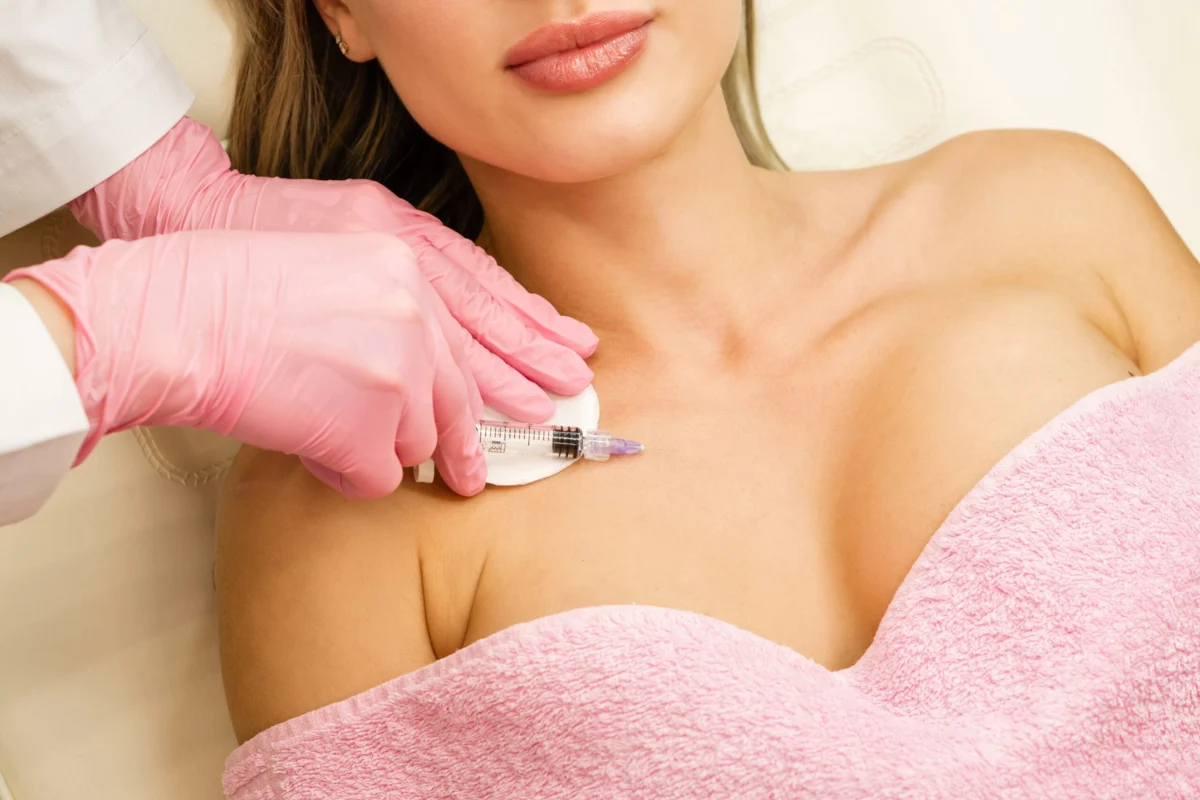
The British Association of Aesthetic Plastic Surgeons (BAAPS) has launched a formal appeal to the UK government, supported by a coalition of prominent medical bodies, calling for an outright ban on the use of synthetic dermal fillers in breast tissue. This collective movement, which includes the British Association of Medical Aesthetic Nurses (BAMAN) and the British College of Aesthetic Medicine (BCAM), argues that the practice provides no therapeutic or aesthetic benefit that could possibly outweigh the severe medical risks associated with it. The demand comes at a critical juncture in the UK’s legislative history, as the Department of Health and Social Care moves toward implementing a mandatory licensing scheme for non-surgical cosmetic procedures in England.
According to BAAPS, the administration of dermal fillers—often marketed as a "non-surgical breast lift" or "liquid breast augmentation"—is a high-risk procedure that has led to an alarming number of complications. These include severe mastitis, chronic abscesses requiring surgical intervention, the formation of hard and misshapen lumps, and the migration of filler material to other regions of the body. Furthermore, medical experts have raised the alarm regarding the long-term physiological impact on patients, noting instances of persistent pain and interference with the ability to breastfeed.
The Evolution of Regulatory Oversight in the UK Aesthetics Sector
The current push for a ban is the latest development in a decade-long struggle to regulate the UK’s "Wild West" aesthetics industry. The timeline of this regulatory journey began in earnest following the 2013 Keogh Review, which described the dermal filler market as a "crisis waiting to happen" due to the lack of training requirements and the ease with which anyone could purchase and inject these substances.
In 2021, the Botulinum Toxin and Cosmetic Fillers (Children) Act made it illegal to provide these treatments to under-18s for cosmetic purposes. However, broader regulation for adults remained elusive until the Health and Care Act 2022 granted the Secretary of State the power to introduce a licensing scheme for non-surgical cosmetic procedures. While Scotland has already moved ahead with its own regulatory framework, England is currently in the process of defining which procedures will be permitted and who will be authorized to perform them.
Within the proposed licensing framework, breast fillers are expected to be placed in the "Red Category." This classification designates procedures as high-risk, meaning they should only be performed by qualified doctors or under strict medical supervision. However, BAAPS President and consultant plastic surgeon Ms. Nora Nugent argues that categorization is insufficient. She maintains that for this specific procedure, the risks are so profound and the benefits so transient that no amount of professional oversight can make it safe. The association’s stance is that the procedure should not be restricted to doctors, but rather eliminated entirely.
Clinical Complications and the Threat to Cancer Detection
The most significant concern cited by the medical community is the potential for dermal fillers to mask or mimic the symptoms of breast cancer. Unlike the face or other areas of the body where filler complications might manifest as localized swelling or nodules, the breast is a complex glandular environment where any new lump is a cause for immediate clinical investigation.
Dr. Darren McKeown, an aesthetic practitioner and member of BCAM, has been a vocal advocate for patient safety in this regard. He explains that dermal fillers are notorious for causing inflammatory reactions and nodules. In a standard aesthetic setting, a clinician might assume a lump is a side effect of the filler. In the context of breast tissue, however, such an assumption is dangerous. "Assuming that a new lump in a patient with prior breast filler is simply a filler-related issue would be a high-risk strategy," Dr. McKeown warns. He notes that fillers can create "shadows" or artifacts on mammograms, making it exceedingly difficult for radiologists to distinguish between benign filler material and malignant tumors. This confusion can lead to delayed diagnoses, potentially resulting in more aggressive cancer treatments or lower survival rates for patients.
In addition to diagnostic interference, the physical complications are often debilitating. Synthetic fillers, particularly those made of hyaluronic acid or semi-permanent materials, are not designed to be injected in the large volumes required for breast augmentation. When these substances migrate, they can travel into the chest wall or under the arms, causing chronic inflammation that is notoriously difficult to treat. In many cases, the only solution is extensive surgery to debride the affected tissue, often leaving the patient with significant scarring and permanent deformity.
The Influence of Social Media and Aggressive Marketing
The demand for non-surgical breast enhancement has been largely fueled by social media platforms, where influencers and clinics promote the "liquid boob job" as a quick, painless alternative to traditional surgery. This marketing often targets young women, leveraging body image insecurities and the promise of "lunchtime" procedures with minimal downtime.
Regulatory bodies have already begun to crack down on these practices. In 2024, the Advertising Standards Authority (ASA) and the Committee of Advertising Practice (CAP) took enforcement action against CCskinlondondubai, a provider found to be using high-pressure sales tactics. The company utilized flash sales and countdown timers to encourage immediate bookings, a practice the ASA ruled as exploitative and trivializing of the risks involved.
Ms. Nugent and Dr. McKeown both emphasize that education alone cannot protect the public from these marketing tactics. They argue that as long as the procedure remains legal, vulnerable individuals will continue to be swayed by "reckless" digital marketing. Gareth Lewis, Chief Operating Officer at BAMAN, echoed this sentiment, stating that professional associations representing nurses in aesthetics believe that procedures with a high-risk profile and limited evidence base have no place in modern medicine.
Analyzing the Implications of a Potential Ban
Opponents of an outright ban often argue that prohibition may drive the practice "underground," where procedures are performed in even less sterile environments by completely unregulated individuals. However, the medical consensus among BAAPS and its partners is that the threat of underground activity is a matter for law enforcement, not a reason to allow a harmful procedure to remain legal.
"We cannot shy away from denouncing a harmful procedure simply because unscrupulous practitioners will continue to carry it out underground," Ms. Nugent stated. She called for robust legal consequences for those who perform high-risk procedures in non-clinical settings without the necessary qualifications. The goal of the ban is to remove the "veneer of legitimacy" from the procedure, making it clear to the public that it is medically unsound.
From a practitioner’s perspective, the move toward a ban would also clarify the "scope of practice." Ms. Nugent advises that any practitioner who does not have specialized training in breast physiology and pathology should never attempt to place fillers in the breast region. The recommendation for any practitioner faced with a request for breast enhancement is to refer the patient to a qualified plastic surgeon who can offer evidence-based surgical options, such as implants or fat grafting, which have established safety profiles and do not interfere with cancer screening to the same degree.
Future Outlook and the Path to Legislation
The UK government is expected to release further details on the non-surgical licensing scheme later this year. The outcome of the consultation will determine whether the voices of the BAAPS, BAMAN, and BCAM have been heard. If a ban is implemented, it would mark one of the most significant interventions in the history of the UK cosmetic industry, signaling a shift from a "buyer beware" market to one where patient safety is the primary legislative driver.
The proposed ban would also bring the UK more in line with international standards. In several other jurisdictions, including parts of the European Union, the use of certain fillers for breast augmentation has already been restricted or discouraged by national health authorities due to similar concerns regarding mammography interference.
As the debate continues, the medical community remains steadfast. The consensus is clear: the aesthetic desire for a non-surgical breast enhancement does not justify the potential for life-altering medical complications or the risk of a missed cancer diagnosis. For organizations like BAAPS, the priority is not just regulating who performs the procedure, but ensuring that a procedure with such high stakes is removed from the market entirely to protect public health. The coming months will be pivotal as the government weighs these medical warnings against the complexities of industry regulation, with the health of thousands of women potentially hanging in the balance.
