
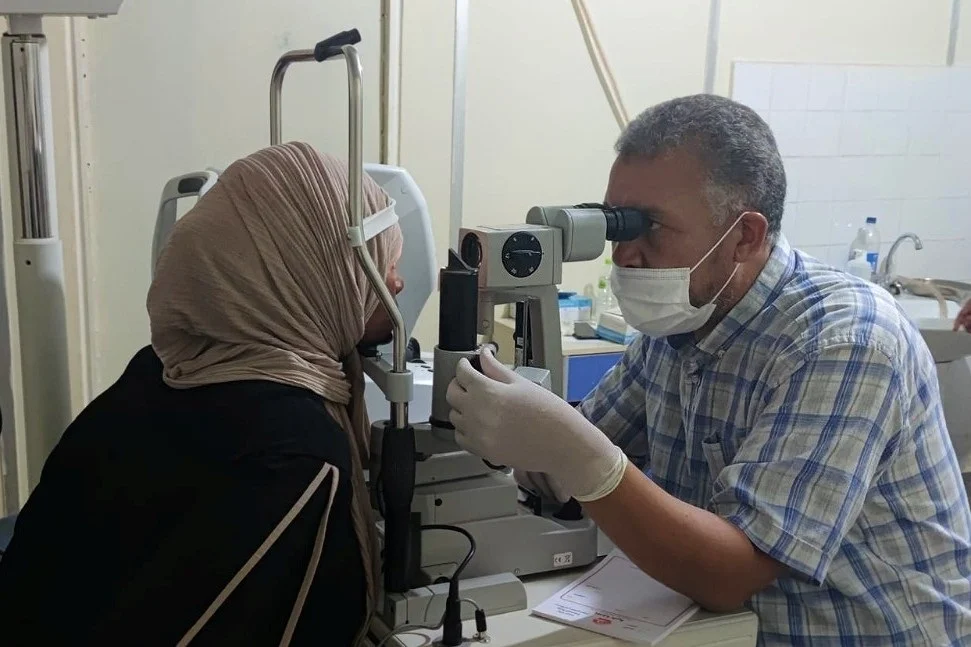
The World Health Organization (WHO) has officially recognized Libya for eliminating trachoma as a public health problem, marking a historic achievement for the nation’s healthcare system and a significant victory for the Eastern Mediterranean Region. This validation, announced following a rigorous assessment of epidemiological data and surgical interventions, positions Libya as a leader in the global fight against neglected tropical diseases (NTDs). The achievement is particularly noteworthy given the complex socio-political and humanitarian challenges the country has faced over the last decade. By reaching this milestone, Libya ensures that future generations are protected from a preventable cause of blindness that has plagued the region for over a century.
Libya now stands as the 28th country globally and the 8th in the WHO Eastern Mediterranean Region to achieve the elimination of trachoma. This success underscores the efficacy of targeted, evidence-based public health strategies and demonstrates that even in environments characterized by migration and instability, sustained commitment to health can yield transformative results. The validation serves as a beacon of hope for other nations still grappling with the disease, illustrating that the goals set forth in the WHO’s 2021–2030 roadmap for neglected tropical diseases are attainable through international cooperation and national perseverance.
The Biological and Social Burden of Trachoma
Trachoma is an infectious eye disease caused by the bacterium Chlamydia trachomatis. It is primarily transmitted through direct contact with eye and nose secretions from infected individuals, as well as through contact with contaminated objects such as towels or clothing. In many endemic areas, eye-seeking flies (Musca sorbens) act as a significant vector for transmission. The disease is closely linked to environmental factors, including overcrowding and limited access to clean water and adequate sanitation facilities.
The progression of trachoma is particularly devastating. While initial infections often manifest as mild conjunctivitis, repeated infections over years lead to severe scarring of the inner eyelid. This scarring causes the eyelid to turn inward, a condition known as trachomatous trichiasis. In this state, the eyelashes scratch the cornea with every blink, causing intense pain and eventually leading to irreversible corneal opacities and blindness. Beyond the physical suffering, trachoma imposes a heavy economic burden on families and communities, as those affected lose their ability to work or attend school, perpetuating a cycle of poverty in vulnerable populations.
A Century of Struggle: The Libyan Historical Context
The presence of trachoma in Libya has been documented for more than a hundred years. Throughout the 20th century, the disease was endemic across much of the country, with the highest prevalence rates recorded in the arid southern regions. These areas, characterized by remote desert communities and limited infrastructure, faced significant barriers to consistent healthcare access. Early surveys conducted in the mid-1900s revealed high levels of active, inflammatory trachoma among children, indicating widespread and active transmission.
In the 1970s and 1980s, the Libyan Ministry of Health launched its first coordinated efforts to control infectious eye diseases. These early programs focused on mass antibiotic distribution and basic eye care services. As the national health system strengthened over the subsequent decades, the transmission of trachoma began to decline. However, the lack of comprehensive, updated data meant that the disease remained a suspected threat in certain pockets of the country, particularly in the south.
The path to elimination was complicated by the political upheaval that began in 2011. The ensuing years of conflict and institutional fragmentation strained the country’s health infrastructure. Despite these hurdles, the National Prevention of Blindness Programme remained a priority, with health workers continuing to monitor eye health trends even as they managed more immediate humanitarian crises.
The Strategic Path to Elimination: 2017 to 2025
The final push toward elimination began in earnest in 2017, when the Ministry of Health formally prioritized the eradication of trachoma within its national eye health framework. Working in close collaboration with the WHO and international partners, the government adopted the "SAFE" strategy—an acronym for Surgery for trichiasis, Antibiotics to clear infection, Facial cleanliness, and Environmental improvement.
In 2022, a critical phase of the program involved conducting detailed epidemiological surveys in six southern districts where trachoma was suspected to persist. These surveys, supported by Sightsavers, the International Trachoma Initiative, and Tropical Data, utilized standardized methodologies to assess the prevalence of active trachoma and trichiasis. The results were largely encouraging, showing that prevalence levels had fallen below the WHO-defined elimination thresholds in almost all surveyed areas.
One notable exception was the district of Wadi Al Hayaa/Ghat, where the prevalence of trichiasis remained above the threshold. In response, the Ministry of Health mobilized a targeted surgical campaign to provide corrective procedures for those suffering from the condition. By 2025, follow-up surveys confirmed that the prevalence of trichiasis in these areas had also dropped below the threshold, clearing the final technical hurdle for Libya’s validation.
Resilience Amidst Humanitarian Challenges
Libya’s achievement is framed by its ability to maintain health standards during a period of extreme adversity. The country has navigated years of civil unrest, which resulted in the displacement of thousands of people and placed immense pressure on urban centers and basic services. Migration dynamics also presented a unique challenge; as a transit point for migrants and refugees, Libya had to ensure that its public health surveillance was robust enough to manage mobile populations.
The integration of trachoma surveillance into the broader primary healthcare system proved to be a decisive factor. Rather than operating as a siloed program, the trachoma elimination effort leveraged existing health centers and trained local eye health workers. This approach not only facilitated the reach of the program into remote districts but also built long-term capacity within the Libyan medical workforce.
Dr. Mohamed Al-Ghoj, Libya’s Acting Minister of Health, emphasized that the victory belongs to the frontline workers. "Even through difficult years, we maintained our focus on improving eye health services and ensuring no one was left behind," he stated. He credited the professionalism and dedication of doctors and nurses who traveled to every district, regardless of the security situation, to ensure a future free of preventable blindness.
Global and Regional Significance
The validation of Libya is a milestone for the WHO’s Eastern Mediterranean Region (EMR). Dr. Hanan Balkhy, the WHO Regional Director for the EMR, noted that Libya’s success reflects strong regional coordination. The Eastern Mediterranean has faced significant public health hurdles due to conflict and climate change, yet it continues to lead in the elimination of NTDs. Libya is now the 10th country in the region to have eliminated at least one neglected tropical disease, joining a growing list of nations that are successfully meeting the targets of the WHO’s global roadmap.
From a global perspective, Libya’s success contributes to the momentum of the WHO Alliance for the Global Elimination of Trachoma (GET2020), a partnership launched in 1996. While the initial 2020 goal has passed, the progress made by countries like Libya shows that the "last mile" of elimination is achievable. Dr. Tedros Adhanom Ghebreyesus, WHO Director-General, remarked that this milestone reinforces the conviction that progress against NTDs is possible everywhere, even in the most challenging environments.
Technical Analysis of Implications and Future Outlook
The elimination of trachoma in Libya provides several key takeaways for the international health community. First, it validates the importance of the WHO’s technical standards. The use of the "Tropical Data" system ensured that Libyan surveys were globally comparable and scientifically sound, which was essential for the validation process. Second, it highlights the necessity of "national mobilization"—the ability of a country to align its internal resources and political will toward a specific health goal.
However, the "elimination as a public health problem" status does not mean the work is finished. It implies that the disease is no longer a significant threat to the population at large, but post-validation surveillance remains critical. Libya must continue to monitor for potential re-emergence, especially in border regions and among migrant communities. The infrastructure built for trachoma—such as the networks of trained ophthalmic nurses and improved water and sanitation data—can now be repurposed to tackle other NTDs or health priorities.
Furthermore, the environmental aspect of the SAFE strategy (Facial cleanliness and Environmental improvement) has broader implications for Libya’s public health. Improving access to water and sanitation not only prevents trachoma but also reduces the incidence of diarrheal diseases and other hygiene-related infections. In this sense, the fight against trachoma has acted as a catalyst for broader health system strengthening.
Conclusion: A Triumph of Science and Solidarity
The announcement of Libya’s trachoma elimination is more than a medical victory; it is a testament to the resilience of a nation and the power of international solidarity. By overcoming geographical, political, and logistical barriers, Libya has secured the sight of its citizens and contributed to a global legacy of disease eradication.
As the WHO and its partners look toward the 2030 targets for neglected tropical diseases, the Libyan example will serve as a case study in persistence. It proves that with the right combination of science, community mobilization, and technical support, the most ancient and neglected of diseases can finally be consigned to history. The success in Libya is a reminder that health is a fundamental bridge to peace and stability, providing a foundation upon which a more resilient and prosperous society can be built.
