
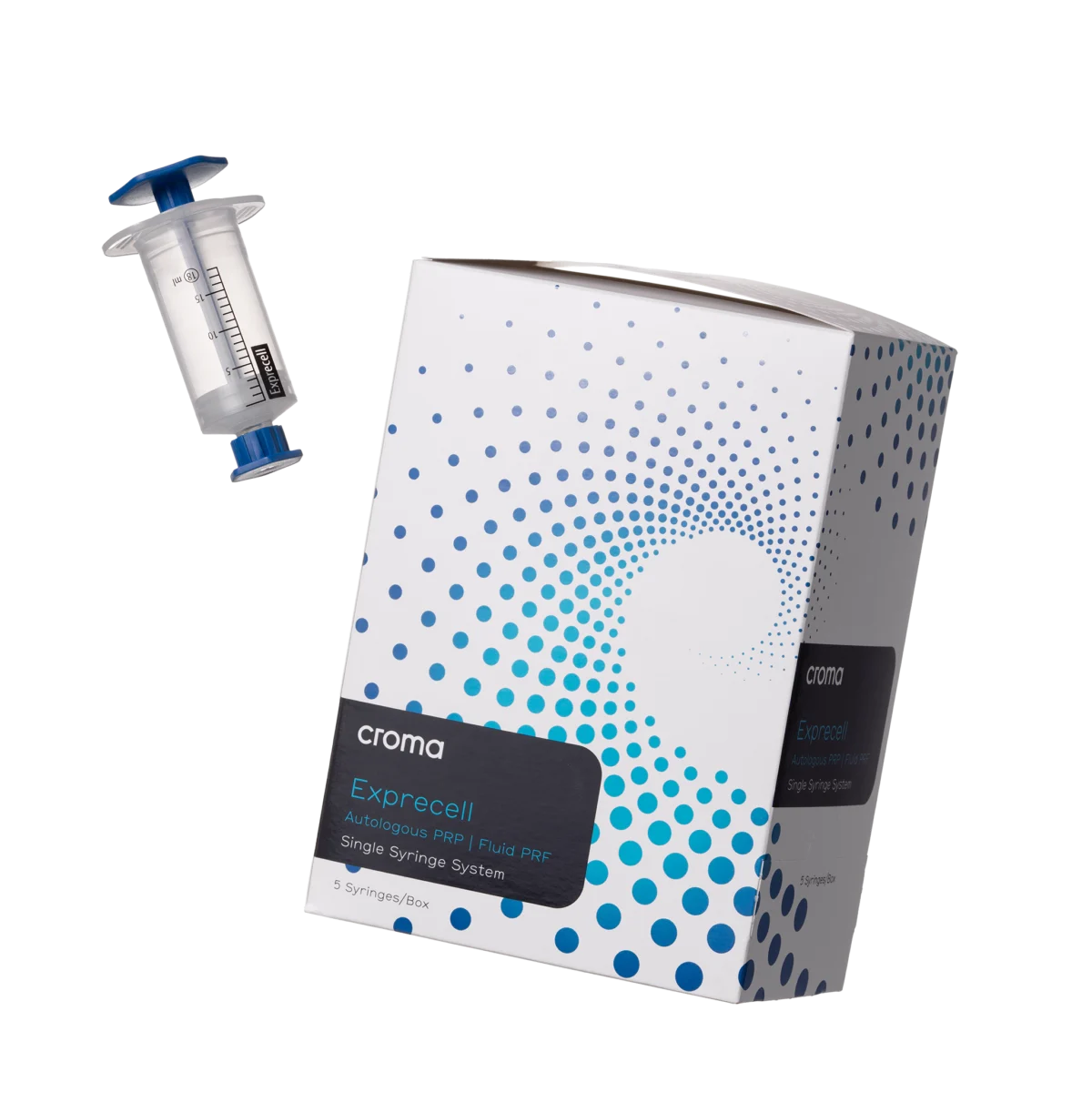
The aesthetic pharmaceutical sector has reached a significant technological milestone with the introduction of Exprecell, a sophisticated medical device developed by Croma Pharma for the preparation of autologous platelet-rich plasma (PRP). This new system, which has received formal Medical Device Regulation (MDR) approval, represents a paradigm shift in how regenerative blood concentrates are processed and utilized within clinical environments. By offering an all-in-one solution that facilitates the production of both autologous PRP and fluid platelet-rich fibrin (Fluid-PRF), Croma Pharma is addressing a growing demand for streamlined, high-performance tools in the field of regenerative aesthetics.
The Exprecell system distinguishes itself through its ability to generate autologous blood concentrates without the necessity of anticoagulants, a feature that preserves the natural biological integrity of the sample. According to technical specifications provided by the manufacturer, the resulting Fluid-PRF is a biologically active concentrate that maintains the regenerative properties of platelets and leukocytes. Unlike traditional fibrin scaffolds that solidify rapidly, this concentrate remains in a liquid state for a defined period, allowing for precise application in various aesthetic and dermatological procedures.
Technical Innovation in Autologous Blood Processing
At the core of the Exprecell system is a high-capacity, single-syringe architecture designed to optimize the workflow of healthcare professionals. The device integrates the processes of blood aspiration and preparation into a cohesive unit, utilizing a single-spin methodology. This engineering choice significantly reduces the time required for preparation, with the entire spin cycle completed in just five minutes. In a high-volume clinical setting, this efficiency allows practitioners to offer regenerative treatments with minimal downtime and reduced risk of sample contamination.
The elimination of anticoagulants, such as sodium citrate, is a critical component of the Exprecell value proposition. In traditional PRP systems, anticoagulants are used to prevent the blood from clotting during the centrifugation process. However, the presence of these chemicals can sometimes alter the pH of the concentrate or interfere with the natural healing cascade once injected. Exprecell’s technology bypasses this requirement, resulting in a more physiological concentrate that mimics the body’s natural response to injury.
The production of Fluid-PRF is particularly noteworthy. While standard PRP has been a staple of aesthetic medicine for over a decade, Fluid-PRF represents an evolution in the science of biostimulation. By maintaining a liquid form without chemical additives, the concentrate provides a rich matrix of growth factors, including Platelet-Derived Growth Factor (PDGF), Transforming Growth Factor-beta (TGF-β), and Vascular Endothelial Growth Factor (VEGF). These proteins are essential for collagen synthesis, tissue repair, and the improvement of skin texture and tone.
Regulatory Context and the Significance of MDR Approval
The launch of Exprecell comes at a time when the regulatory landscape for medical devices in Europe and the United Kingdom is undergoing rigorous transformation. The transition from the Medical Device Directive (MDD) to the more stringent Medical Device Regulation (MDR) has placed a higher burden of proof on manufacturers regarding the safety, clinical performance, and traceability of their products.
Securing MDR approval for Exprecell is a testament to Croma Pharma’s commitment to clinical excellence. The MDR framework requires extensive clinical evaluation and post-market surveillance, ensuring that any device used in a medical or aesthetic capacity meets the highest possible standards for patient safety. For practitioners, this certification provides a layer of legal and clinical security, knowing that the device has been vetted by regulatory bodies for its intended use in preparing autologous concentrates.
Industry analysts suggest that the push for MDR-compliant PRP systems is driven by a need to standardize treatments in an often-fragmented market. As regenerative medicine moves from the fringes of "niche" treatments into the mainstream of aesthetic portfolios, the demand for regulated, evidence-based hardware has never been higher.
Clinical Perspectives and Market Reception
The introduction of Exprecell has been met with enthusiasm from both corporate leadership and clinical experts. Vikki Baker, the commercial director at Croma Pharma UK for the Netherlands and Nordics, emphasized the strategic importance of this launch. Baker noted that the addition of Exprecell to the company’s portfolio aligns with their mission to provide healthcare professionals with state-of-the-art tools that enhance clinical performance and quality of care. She characterized the device as a "next-generation solution" that prioritizes both speed and biological efficacy.
From a clinical standpoint, the endorsement by Dr. Munir Somji, a global key opinion leader for Croma UK, highlights the practical advantages of the system. Dr. Somji, who is among the first practitioners in the UK to integrate Exprecell into his practice, pointed to the rising patient demand for regenerative treatments. He noted that providing an MDR-approved solution for both PRP and Fluid-PRF allows clinicians to meet this demand with a high degree of confidence in the procedural outcomes.
The versatility of the system allows it to be used across a spectrum of indications. In the UK aesthetic market, PRP and PRF are frequently employed for skin rejuvenation, the treatment of periorbital aging (dark circles and fine lines), and as a therapy for androgenetic alopecia (hair loss). The ability of Exprecell to produce Fluid-PRF provides an added benefit for practitioners looking to enhance the "glow" and structural integrity of the skin through natural, patient-derived components.
The Growth of Regenerative Aesthetics: Market Context
The launch of Exprecell is situated within a broader global trend toward "regenerative aesthetics." This segment of the industry focuses on using the body’s own biological processes to repair and rejuvenate tissues, rather than relying solely on synthetic fillers or neurotoxins. According to market research data, the global regenerative medicine market is expected to grow at a compound annual growth rate (CAGR) of over 15% through 2030.
Several factors are driving this growth:
- Patient Preference for "Natural" Results: There is a discernible shift among consumers toward treatments that offer subtle, bio-stimulatory effects rather than the "over-filled" look often associated with traditional dermal fillers.
- Safety and Biocompatibility: Because autologous treatments use the patient’s own blood, the risk of allergic reactions or foreign-body granulomas is virtually eliminated.
- Synergistic Treatments: PRP and PRF are increasingly used in combination with microneedling, laser resurfacing, and radiofrequency treatments to accelerate healing and enhance the final aesthetic result.
Croma Pharma, an Austrian-based family-owned company founded in 1976, has long been a major player in the hyaluronic acid (HA) filler market. The move into advanced PRP hardware indicates a strategic diversification of their portfolio, positioning the company as a comprehensive provider of aesthetic solutions that span both synthetic and biological modalities.
Chronology of Development and Launch
The development of Exprecell follows several years of research and development aimed at simplifying the complex logistics of blood centrifugation. Historically, PRP preparation required multiple steps, including the manual transfer of plasma between tubes and the addition of activators or anticoagulants, which increased the risk of human error and contamination.
- Pre-2020: Croma Pharma identifies a gap in the market for a faster, more integrated PRP preparation system that meets modern regulatory standards.
- 2021-2023: The device undergoes rigorous testing and clinical evaluation to meet the requirements of the EU Medical Device Regulation (2017/745).
- Late 2023: Initial pilot programs begin with key opinion leaders in Europe to validate the "single-spin" efficiency in real-world clinical settings.
- Q2 2024: Official announcement and launch of Exprecell in the UK and Northern European markets, supported by educational symposia and training for practitioners.
This timeline reflects a methodical approach to product release, ensuring that the hardware is supported by both clinical data and a robust supply chain before reaching the wider market.
Broader Implications for the Aesthetic Industry
The entry of Exprecell into the UK market is likely to influence how competitors approach the regenerative sector. As practitioners become accustomed to the five-minute preparation time and the benefits of an anticoagulant-free concentrate, legacy systems that require longer processing times may see a decline in market share.
Furthermore, the focus on Fluid-PRF may encourage a shift in clinical protocols. While traditional PRP has been the gold standard, the superior fibrin matrix found in PRF offers a more sustained release of growth factors over time. This "slow-release" mechanism is theoretically more effective for long-term tissue regeneration compared to the immediate burst of growth factors provided by standard PRP.
For the patient, the implications are equally positive. Faster preparation times mean shorter appointments, and the use of an MDR-approved device ensures that the treatment they receive is held to the highest safety standards. As the aesthetic industry continues to professionalize and face increased scrutiny from health authorities, the adoption of standardized, regulated technology like Exprecell will be a key differentiator for top-tier clinics.
In conclusion, Croma Pharma’s launch of Exprecell represents a convergence of biological science and medical engineering. By simplifying the preparation of autologous concentrates and adhering to the strictest regulatory frameworks, the company has provided a tool that enhances the capability of aesthetic practitioners to deliver safe, effective, and natural-looking results. As regenerative medicine continues to evolve, systems like Exprecell will likely become the cornerstone of modern dermatological and aesthetic practice.
