

California Cultured, a pioneering U.S. startup, has taken a significant stride toward commercializing its innovative cell-based cocoa powder by securing self-affirmed Generally Recognized as Safe (GRAS) status. The company has formally notified the U.S. Food and Drug Administration (FDA) of this determination, a crucial step that paves the way for broader market access and is expected to accelerate its planned launch later this year. This development comes at a critical juncture for the global cocoa industry, which is grappling with unprecedented challenges stemming from climate change, disease, and aging agricultural infrastructure.
The company’s achievement marks a potential turning point in the production of cocoa-derived ingredients, offering a more sustainable and resilient alternative to traditional farming methods. By cultivating cocoa cells in controlled bioreactors, California Cultured bypasses many of the environmental and logistical vulnerabilities inherent in conventional cocoa cultivation. The self-affirmed GRAS status signifies that, based on scientific evidence and expert consensus, the ingredient is considered safe for its intended use in food products.
In parallel with its self-affirmation, California Cultured has submitted a GRAS notice to the FDA, seeking a "no questions" letter. This proactive measure demonstrates the company’s commitment to transparency and regulatory compliance, particularly as the landscape for self-affirmed GRAS provisions is subject to ongoing review and potential policy shifts. Industry observers note that securing FDA concurrence, even through a notification process, adds a layer of robustness to the safety profile of novel food ingredients. This move is particularly significant as it represents the first GRAS filing for cocoa powder produced through plant cell culture technology.
Strategic Market Entry and Commercial Partnerships
California Cultured’s strategy centers on introducing its cell-based cocoa powder into established market segments where cocoa is already a widely used ingredient. "We are starting where cocoa powder is already used at scale," explained Steve Stearns, Head of Strategy and Business Development at California Cultured. "That includes baked goods, beverages, coatings, and snacks. The first products you will see are in those categories, especially where consumers are looking to add flavonols in their diet to increase heart health during workouts, in the morning or anytime, really. You should expect initial launches in that format, with broader chocolate applications following as we continue to expand."
The company’s approach emphasizes a business-to-business (B2B) model, focusing on supplying ingredients to major food manufacturers and chocolate companies. This strategy leverages existing distribution channels and manufacturing capabilities within the industry, enabling faster scaling and broader market penetration. California Cultured has already established commercial agreements with two significant players in the chocolate sector, signaling strong industry interest in its novel ingredient.
One key partnership is with Puratos, a global leader in bakery, patisserie, and chocolate solutions. The U.S. subsidiary of Puratos, which has seen its venture capital arm, Sparkalis, invest in California Cultured from an early stage, intends to introduce a cell-based chocolate product to its clientele by the end of the current year. This collaboration underscores the growing momentum behind alternative cocoa solutions within the established confectionery industry.
Technological Innovation and Product Advantages
Founded in 2020 by CEO Alan Perlstein and COO Harrison Yoon, California Cultured employs a sophisticated plant cell culture process. The technology involves isolating cocoa plant cells and nurturing them in controlled bioreactors, a process akin to fermentation but utilizing plant cells instead of microorganisms. This method is noted for its non-genetically modified (non-GM) approach, positioning it as a distinct category within cellular agriculture.
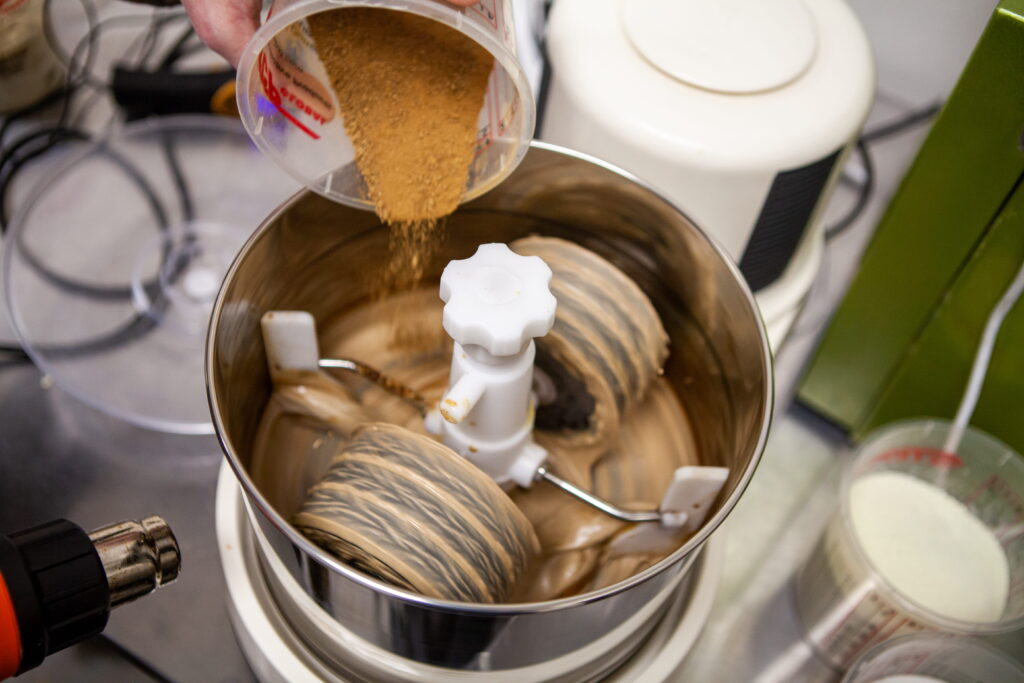
"We start with cocoa plant cells and grow them in controlled bioreactors, similar to fermentation, but with plant cells instead of microbes. Plant cells are the current only viable non-GM cellular agriculture products," Stearns elaborated. "The cells produce the same compounds you find in cocoa, including the flavanols. Once the culture reaches the right density, we harvest, dry, and process it into a cocoa powder format."
A primary advantage of this technology lies in its ability to produce cocoa powder with a significantly higher concentration of flavanols—approximately 20 times that of conventional cocoa. Flavanols are potent antioxidants linked to numerous health benefits, including cardiovascular support. Traditional cocoa processing methods often lead to a substantial loss of these valuable compounds, whereas California Cultured’s controlled production environment allows for consistent flavanol retention throughout the manufacturing process.
"Flavanols are one of the most valuable parts of cocoa from a health standpoint. They are associated with cardiovascular benefits and are a big reason cocoa has been studied so heavily in nutrition science. The challenge is that traditional processing destroys a large portion of them," Stearns noted. "Because we control the production environment, we can consistently produce cocoa that is significantly higher in flavanols than conventional sources and maintain that through processing."
Furthermore, the cell-based process offers a solution to concerns regarding heavy metal contamination, such as lead and cadmium, which can be present in conventionally grown cocoa due to soil composition. "One of the biggest problems in the flavanol industry is heavy metals such as lead and cadmium. Some of the leading products are high in heavy metals. Our product is free of lead and cadmium because we don’t grow cocoa in lead-rich soils," Stearns stated.
The economic viability of plant cell culture is also a significant factor. Compared to the capital-intensive nature of cultivated meat or precision fermentation, the production of plant cells requires less expensive nutrients like sugars, minerals, and vitamins, and does not necessitate costly growth factors or pharmaceutical-grade facilities. This efficiency makes California Cultured’s product potentially price-competitive with existing supermarket chocolate offerings.
Navigating Industry Challenges and Securing Investment
California Cultured’s progress is particularly timely given the escalating crisis in the traditional cocoa supply chain. Climate change has severely impacted cocoa-producing regions, leading to record-high prices and critically low stock levels. The Ivory Coast and Ghana, the world’s two largest cocoa producers, have experienced extensive deforestation, with scientists warning of significant crop losses by 2050 due to climate change and disease. The production of conventional chocolate is also a substantial contributor to greenhouse gas emissions and water consumption, further highlighting the need for sustainable alternatives.
"We are not dependent on farming, so we are not exposed to deforestation, climate volatility, or long supply chains," Stearns emphasized. "From a climate perspective, it removes a lot of land use pressure and significantly reduces transportation and agricultural inputs." Alan Perlstein, founder and CEO, added, "For over a century, the chocolate industry has depended on a single agricultural system that is increasingly under pressure. Culturing cocoa cells gives us a path to produce chocolate ingredients with far greater stability while dramatically reducing environmental impact."
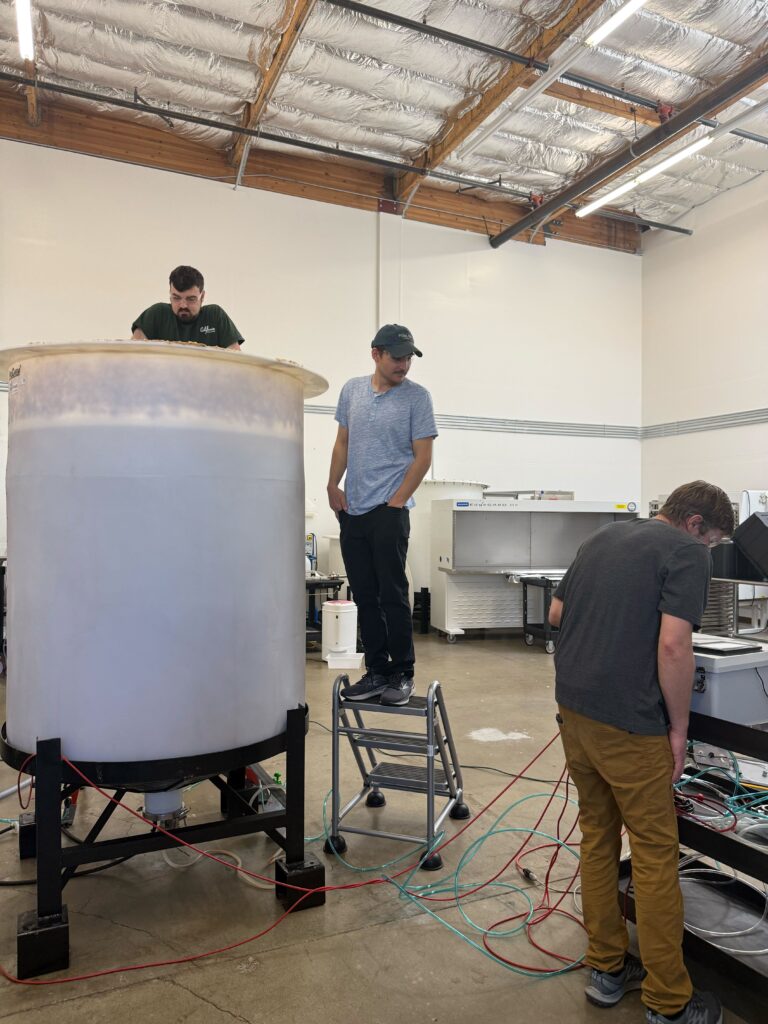
The company has been steadily building its operational capacity. In 2025, California Cultured transitioned from laboratory-scale experiments to large-scale manufacturing in precision-controlled bioreactors through a partnership with biomanufacturing firm Pow.Bio. This was followed by the opening of a 12,000-square-foot facility in West Sacramento. The company has also been actively engaged in co-developing high-flavanol products with Meiji, a prominent Japanese chocolate manufacturer, with planned launches in the U.S. market this year.
To date, California Cultured has raised approximately $15.9 million. Stearns confirmed, "We have raised capital to get through product development, scale up, and partnerships to date. We are currently in market raising our Series A3, which is focused on scaling production capacity, expanding commercial partnerships, and supporting initial product launches." This latest fundraising round is critical for scaling production capacity to 160,000 liters within the next year, a capacity expected to yield a significant operating margin on their flagship cultured cocoa powder.
The Growing Ecosystem of Alternative Cocoa
The burgeoning interest in cell-based and alternative cocoa solutions is evident across the global confectionery landscape. Major industry players are actively exploring these innovations to mitigate supply chain risks and meet evolving consumer demands for sustainable products. Barry Callebaut, the world’s largest B2B chocolate supplier, is investigating both cell-based and cocoa-free chocolate alternatives. Puratos has also invested in Food Brewer, another cell-based cocoa startup, alongside Lindt. Furthermore, Mondelēz International and Cargill are collaborating with Celleste Bio and Kokomodo, respectively, on cultured cocoa initiatives.
"Big chocolate companies are investing here because the supply side is getting more fragile. Demand is increasing globally while yields are under pressure from disease, climate change, and ageing farms. That creates real risk in their supply chains," Stearns observed. "Technologies like ours offer a way to stabilize supply, bring production closer to end markets, and potentially improve consistency and quality."
California Cultured’s strategic focus on B2B partnerships with established giants like Meiji and Puratos allows them to integrate their innovative ingredient seamlessly into existing product lines. This collaborative approach aims to accelerate market adoption and cater to established consumer bases, positioning cell-based cocoa as a viable and essential component of the future chocolate industry. The company’s progress in achieving GRAS status and its ongoing fundraising efforts signal a strong trajectory toward commercial success and a significant contribution to a more sustainable and resilient cocoa ecosystem.
