
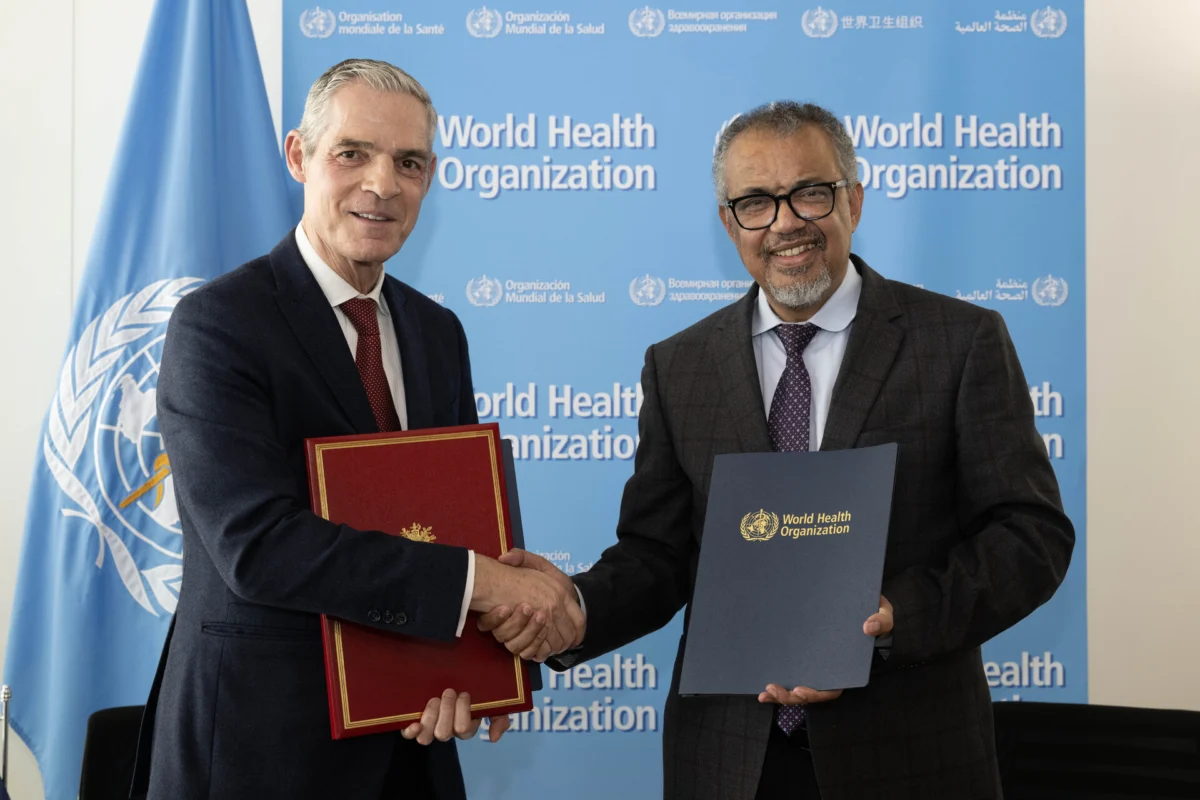
In a significant reinforcement of international health cooperation, the French government has formalized a substantial financial commitment to the World Health Organization (WHO), pledging €24 million to bolster global health initiatives. The signing ceremony, held on October 17, 2024, at the WHO headquarters in Geneva, featured His Excellency Jérôme Bonnafont, Permanent Representative of France to the United Nations, and WHO Director-General Dr. Tedros Adhanom Ghebreyesus. This funding, channeled through the French Ministry of Europe and Foreign Affairs, serves as a cornerstone of the ongoing 2020–2025 France-WHO Framework Agreement, a strategic partnership designed to harmonize French diplomatic objectives with the technical priorities of the global health body.
A Strategic Financial Injection
The €24 million contribution is multifaceted, designed to address both immediate crisis management and long-term systemic health objectives. Of particular note is the allocation of €4.5 million in fully flexible voluntary funds directed toward the Core Voluntary Contributions Account (CVCA). Unlike restricted funding, which is earmarked for specific projects, flexible contributions allow the WHO to pivot resources rapidly in response to emerging, unforeseen health threats—a capability that has become increasingly vital in an era defined by climate-linked disease outbreaks and complex geopolitical conflicts.
The remainder of the package is strategically distributed across several critical pillars of the WHO’s Fourteenth General Programme of Work (GPW 14), which spans 2025 to 2028. These pillars include the combatting of non-communicable diseases (NCDs), the development of urban health labs, the advancement of the "One Health" approach—which recognizes the interconnectedness of human, animal, and environmental health—and sustained investment in the WHO Contingency Fund for Emergencies (CFE).
Contextualizing the Partnership
The relationship between France and the WHO has intensified over the last decade, particularly following the global COVID-19 pandemic, which highlighted the necessity for a well-funded and agile international health organization. The 2020–2025 Framework Agreement represents a shift from ad-hoc donor support to a more structured, predictable financial model. This agreement provides the legal and administrative infrastructure necessary to ensure that French contributions are not merely financial transactions but are integrated into the operational DNA of the WHO.
Historically, France has positioned itself as a vocal advocate for the "financial sustainability" of the WHO. This means pushing for a move away from the organization’s historical reliance on restricted, project-based funding toward a system supported by more robust assessed contributions and flexible voluntary funding. By acting as a co-host for the inaugural WHO Investment Round, France has signaled that it intends to lead by example, encouraging other member states to adopt a similar philosophy of long-term, predictable support.

Operational Focus: From Lyon to Gaza
A significant portion of the funding is directed toward the WHO’s operational capacity, most notably the WHO Emergencies Centre in Lyon. This facility serves as a nerve center for preparedness, training, and logistical support for epidemic response. By maintaining a permanent presence in Lyon, the WHO leverages France’s logistical expertise and scientific infrastructure to manage complex health emergencies.
Furthermore, the funding package addresses specific humanitarian hotspots. The inclusion of financial support for health operations in Gaza, as well as mental health support for populations affected by the conflict in Ukraine, reflects France’s commitment to providing health care as a neutral, essential service in zones of active conflict. Additionally, the funding for cholera response is a targeted intervention aimed at curbing outbreaks that often thrive in the wake of instability and degraded water and sanitation infrastructure.
Analysis: The Impact of Flexible Funding
The emphasis on flexible funding is not merely administrative; it is a strategic imperative. In the current global landscape, health crises are rarely isolated. The emergence of zoonotic diseases, for instance, requires an integrated approach that transcends traditional medical boundaries. By providing flexible capital, France enables the WHO to invest in "One Health" initiatives—collaborations between veterinary services, environmental agencies, and human healthcare systems.
Data indicates that flexible funding allows the WHO to reduce administrative overhead associated with managing hundreds of small, restricted grants. When funding is flexible, the WHO can allocate resources based on epidemiological data and risk assessment rather than donor preference. This allows for a more equitable distribution of aid, ensuring that neglected diseases and "silent" health crises receive the attention they require, even when they fall outside of the headlines.
Official Statements and Diplomatic Alignment
During the signing ceremony, Ambassador Jérôme Bonnafont emphasized that the contribution is an extension of France’s broader foreign policy regarding health equity. "France remains deeply committed to supporting the World Health Organization in its efforts to tackle critical global health challenges," Bonnafont stated. "These agreements reflect our shared priorities of promoting health equity, responding to emergencies, and strengthening healthcare systems worldwide."
Dr. Tedros Adhanom Ghebreyesus, in his response, underscored the value of the partnership. "We are immensely grateful to the French Government for its steadfast support to WHO, continued partnership, and leadership in global health. This contribution will enable us to address key health threats, from non-communicable diseases to emergency response, helping to save lives and protect the most vulnerable populations."

The synergy between the two parties is evident in the alignment of these agreements with the World Health Assembly’s 2024 directives. By synchronizing their financial cycles with the WHO’s GPW 14, France is effectively signaling to other G7 nations that the security of the international health architecture is a primary diplomatic interest.
The Broader Implications for Global Health Governance
The international community has long debated the reform of the WHO’s funding model. For years, the organization has faced criticism for being underfunded and overly dependent on the priorities of specific donors. France’s recent commitment serves as a test case for a reformed model. By moving toward a more transparent and predictable financial framework, the WHO can theoretically reduce the influence of narrow political agendas in public health decisions.
However, the success of this model depends on the participation of other major economies. The Investment Round, co-hosted by France, seeks to mobilize the necessary resources to close the gap between the WHO’s mandate and its available budget. If France’s model of consistent, flexible funding is adopted by a wider coalition of nations, the WHO could see a transformation in its operational efficiency.
Looking Ahead: 2025 and Beyond
As the 2020–2025 Framework Agreement approaches its conclusion, the latest injection of funds ensures that the partnership remains robust during a transition period. The focus will now shift toward the implementation of the Fourteenth General Programme of Work. With the support of partners like France, the WHO aims to accelerate progress toward the Sustainable Development Goals (SDGs), particularly those related to universal health coverage and the prevention of future pandemics.
The collaboration also highlights the vital role of "health diplomacy." By embedding its funding within the WHO’s institutional framework, France is essentially reinforcing the legitimacy of multilateralism. In a world where the international order is frequently tested, the continued, stable support for a central technical body like the WHO provides a degree of continuity and stability that is essential for global health security.
In summary, the €24 million commitment from France is more than a budgetary allocation; it is a policy statement. It reaffirms that in the face of complex, interconnected global health threats, the most effective path forward is a strengthened, well-resourced, and strategically aligned World Health Organization. Through this ongoing partnership, France and the WHO continue to build the infrastructure necessary to protect global populations against both chronic health challenges and the next generation of pandemic threats.
