
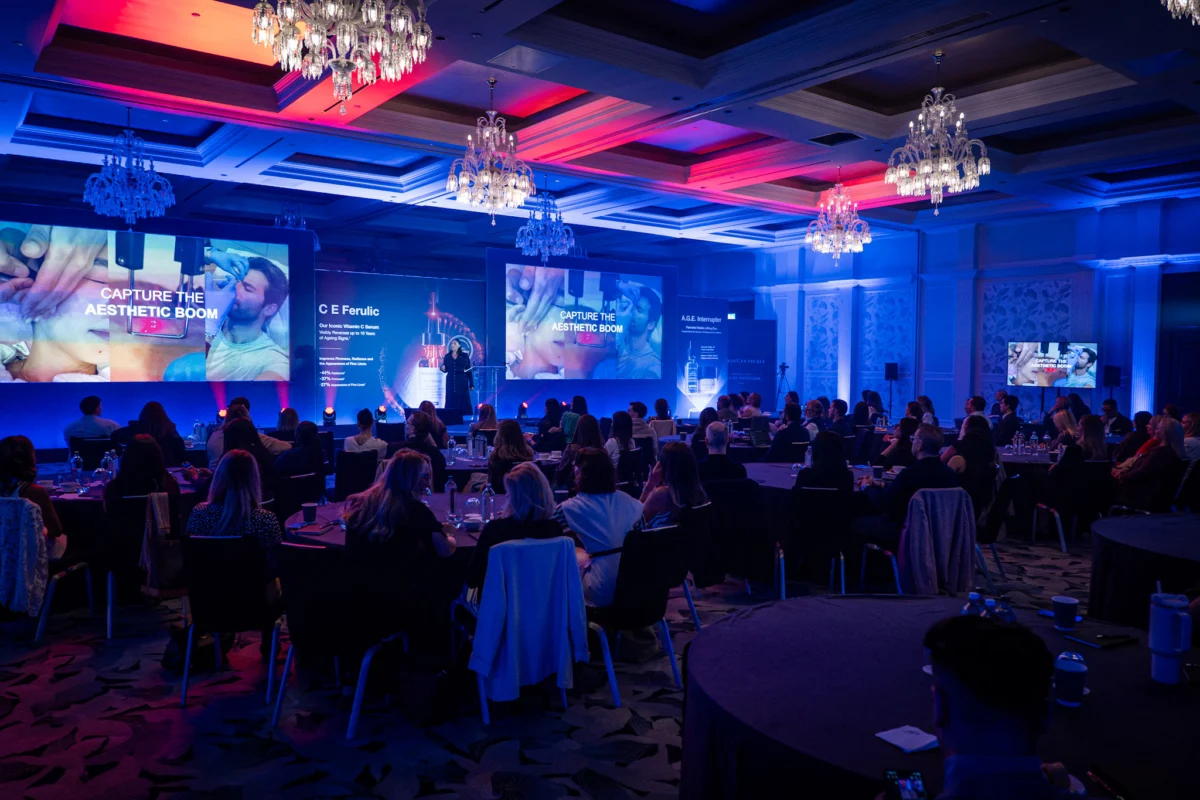
The landscape of modern medical aesthetics underwent rigorous examination on September 14 and 15, as leading skincare innovator SkinCeuticals gathered top-tier practitioners, clinical experts, and industry journalists for its flagship annual conference. Held at the luxurious Fairmont Windsor Park, the two-day immersive event—appropriately designated as the Master Physician 2026 symposium—served as a high-level forum for exploring the intersection of clinical excellence, advanced dermatological science, and sustainable business practices.
Against the backdrop of a rapidly evolving aesthetics sector, the conference focused heavily on moving beyond transactional, one-off treatments. Instead, the curriculum championed a holistic, long-term paradigm shift: one that integrates in-clinic interventions with precision homecare regimens and deep patient engagement. With the global medical aesthetics market continuing its robust upward trajectory—driven by rising consumer demand for preventative care and evidence-based formulations—the insights shared at Fairmont Windsor Park underscored the urgent need for clinicians to adapt their practice models to meet increasingly sophisticated patient expectations.
Main Facts and Core Themes of the Symposium
The primary objective of the SkinCeuticals Master Physician 2026 event was to provide delegates with a comprehensive toolkit encompassing advanced clinical science, operational strategy, and psychological profiling. The agenda was meticulously curated to address the multi-faceted challenges faced by contemporary aesthetic clinics, ranging from clinical efficacy to patient retention and technological integration.
Prominent figures from across the medical, nursing, and business consultancy sectors took to the stage to deliver evidence-based presentations and lead interactive workshops. The speaker lineup featured renowned aesthetic practitioners Dr Ben Taylor-Davies and Dr Ifeoma Ejikeme, esteemed nurse practitioner Eleanor Hartley, and prominent business consultant Vanessa Bird. Their collective expertise ensured that sessions bridged the gap between theoretical dermatology and practical, day-to-day clinic operations.
Among the central themes explored during the conference were the science and clinical applications of topical antioxidants, the nuanced categorization of patient archetypes to improve communication, and the mechanics of fostering enduring patient loyalty. Furthermore, the curriculum addressed emerging clinical demographics, such as managing the dermatological needs of patients utilising glucagon-like peptide-1 (GLP-1) receptor agonists, alongside the ethical and practical integration of artificial intelligence (AI) in clinical diagnostics and administrative workflows.
Chronology of the Two-Day Event
Day One: Foundations of Patient Longevity and Clinical Excellence
The conference commenced on the morning of September 14 with opening remarks that set an ambitious tone for the proceedings. The initial sessions immediately dived into the core philosophy of the Master Physician framework: long-term patient care.
Dr Ben Taylor-Davies and Dr Ifeoma Ejikeme led early morning segments focusing on clinical diagnostics and the seamless integration of medical-grade homecare into initial patient consultations. Emphasising that clinical results are only as good as the patient’s daily maintenance routine, the speakers presented data and case studies demonstrating how structured homecare protocols significantly enhance and prolong the outcomes of in-clinic procedures such as chemical peels, laser resurfacing, and micro-needling.
Following a mid-morning networking break, the focus shifted toward dermatological science, specifically examining the role of topical antioxidants in neutralizing oxidative stress and preventing photo-aging. Experts detailed the biochemical mechanisms of vitamin C formulations and their synergistic effects when paired with broad-spectrum sunscreens.
The early afternoon session transitioned into behavioral psychology and business economics. Vanessa Bird, a leading aesthetic business consultant, presented data on patient lifetime value (LTV) and customer retention strategies. By examining various patient archetypes, Bird illustrated how clinicians can tailor their communication styles to build deeper trust, address individual psychological drivers, and cultivate multi-year treatment plans.
As the afternoon progressed, the agenda addressed complex clinical challenges and modern specialty topics. A dedicated segment unpacked the latest protocols in rosacea management, highlighting the delicate balance required to soothe chronic inflammation while actively treating vascular reactivity. This was followed by a timely and highly anticipated discussion on the dermatological implications observed in patients undergoing treatment with glucagon-like peptide-1 (GLP-1) agonists—commonly prescribed for diabetes and weight management. Clinicians discussed the phenomenon colloquially known as "Ozempic face," where rapid subcutaneous fat loss leads to facial volume depletion, laxity, and accelerated signs of aging, requiring novel multi-modal treatment approaches.
The academic portion of the first day concluded with a forward-looking examination of artificial intelligence. Speakers explored how machine learning algorithms and AI-driven imaging systems can assist practitioners in mapping skin damage, tracking treatment progress, and personalizing skincare recommendations, while firmly noting the irreplaceable role of human clinical judgment.
The formal programming of Day One culminated in a high-profile panel discussion centred on building a lasting professional legacy. Moderated to encourage candid dialogue, the panel featured general practitioner Dr Raj Arora, nurse prescriber Nina Prisk, and Sanjay Arora, chief executive officer of Arora Hotel Group. The panellists debated the attributes of successful healthcare brands, the importance of maintaining ethical standards amidst commercial pressures, and how practitioners can establish enduring reputations for excellence within the competitive medical aesthetics landscape.
Day Two: Specialty-Led Masterclasses and Peer Collaboration
Transitioning from broad-spectrum strategic insights to granular operational execution, the second day of the conference—September 15—adopted a specialty-led format.
Instead of traditional lecture-style auditoriums, Day Two was structured around interactive, breakout-style specialty sessions designed to confront specific clinical and operational bottlenecks. Delegates were encouraged to engage in active peer-to-peer learning, dissecting complex case studies and exchanging real-world experiences from their respective clinics.
Topics addressed during these morning workshops included managing adverse events, scaling multidisciplinary clinic teams, optimizing inventory management for medical-grade skincare lines, and navigating the complexities of patient consent and regulatory compliance in aesthetic medicine. This collaborative problem-solving environment allowed practitioners to pressure-test new protocols against the collective wisdom of their peers, ensuring that the theoretical concepts introduced on Day One could be translated into actionable operational strategies upon returning to their practices.
Background Context and Industry Implications
The timing of the SkinCeuticals Master Physician 2026 conference reflects a maturation point within the global aesthetic medicine industry. Over the past decade, the market has expanded exponentially, driven by deststigmatization, technological advancements, and a growing consumer demographic seeking non-surgical anti-aging solutions.
However, this rapid growth has introduced significant challenges. The marketplace has become increasingly crowded, leading to heightened competition among clinics and a risk of commoditization. In response, industry leaders like SkinCeuticals are pivoting toward educational initiatives that emphasize clinical differentiation through science, education, and holistic patient stewardship.
The emphasis on combining in-clinic procedures with targeted homecare—often referred to in the industry as the "integrated skincare model"—is supported by a growing body of dermatological research. Studies consistently demonstrate that patients who adhere to a prescribed daily regimen of scientifically validated active ingredients experience superior clinical outcomes and higher satisfaction rates. By equipping practitioners with the communication frameworks and economic models necessary to champion homecare, events like the Master Physician conference help elevate the standard of care across the entire industry.
Furthermore, the inclusion of cutting-edge topics such as GLP-1 dermatological management and AI integration highlights the industry’s proactive stance toward emerging consumer trends. As systemic health treatments increasingly manifest visible dermatological side effects, aesthetic practitioners are finding themselves at the intersection of general wellness and specialized skin health. Educational platforms that address these novel intersections are vital for maintaining clinical competence and safety standards.
Official Responses and Perspectives
Reflecting on the overarching success and strategic vision of the two-day symposium, Oliver Pearce, medical events and communications manager at SkinCeuticals, offered a detailed assessment of the event’s core mission and its reception among attendees.
"Master Physician 2026 was about giving our clinical partners more than just scientific education," Pearce stated. "It was about equipping them with the confidence and tools to build long-term, trusted relationships with their patients. Seeing the room engage so openly with the challenges we know clinics are facing, and leave with real, practical next steps, is exactly the outcome we hoped for."
Pearce’s comments capture the dual imperative facing modern aesthetic clinics: the necessity of maintaining rigorous scientific literacy combined with the commercial acumen required to run sustainable, patient-centric businesses. Industry observers noted that by fostering a collaborative environment at a premier venue like Fairmont Windsor Park, SkinCeuticals successfully reinforced its position not merely as a product manufacturer, but as an educational partner dedicated to the long-term professional development of aesthetic practitioners.
Broader Impact on the UK Aesthetic Landscape
As the delegates departed Fairmont Windsor Park and returned to clinical practices across the United Kingdom and beyond, the ripples of the Master Physician 2026 conference are expected to manifest in several tangible ways.
First, participating clinics are likely to refine their patient consultation frameworks, placing greater emphasis on comprehensive diagnostic assessments and mandatory homecare integration from the outset of the patient journey. This shift promises to improve clinical outcomes, reduce complication rates, and enhance the predictability of aesthetic treatments.
Second, the operational insights shared by business consultants and industry leaders will empower clinic owners to optimize their business models, focusing on lifetime customer value rather than transactional volume. In an economic climate marked by fluctuating consumer confidence, building deep, resilient patient loyalty remains one of the most effective hedges against market volatility.
Finally, by addressing complex modern challenges such as GLP-1 side effects and the ethical deployment of artificial intelligence, the conference has set a benchmark for forward-looking clinical education. As medical aesthetics continues to converge with advanced science and digital technology, initiatives that champion evidence-based practice and holistic patient care will remain critical in shaping the future of the specialty.
