

Plant-based meat pioneer Beyond Meat has secured a major legal reprieve in a long-running intellectual property dispute, though the company continues to face severe financial and operational headwinds. A federal judge in Massachusetts has drastically reduced the financial penalties stemming from a high-profile trademark lawsuit over a promotional campaign with coffee and donut giant Dunkin. The ruling cuts nearly $23.4 million from a steep $38.9 million jury verdict handed down against Beyond Meat late last year, offering a vital financial cushion to a company grappling with consecutive quarters of shrinking revenues and mounting market pressures.
The legal battle centers on a 2019 marketing collaboration between Beyond Meat and Dunkin to launch the Beyond Sausage breakfast sandwich. To promote the new menu item, the companies launched a high-visibility advertising campaign featuring prominent American rapper Snoop Dogg, anchored by the tagline Great Taste, Plant-Based. However, the promotional phrasing triggered immediate friction within the alternative protein sector, setting off a multi-year courtroom showdown that has tested Beyond Meat’s legal resilience and financial stability.
Chronology of a High-Stakes Trademark Dispute
The roots of the litigation stretch back to a federal trademark registration secured in 2015 by Sonate, a company operating under the trade name Vegadelphia Foods. Having entered the plant-based protein market five years prior to Beyond Meat’s commercial prominence, Vegadelphia had successfully registered the slogan Where Great Taste Is Plant-Based.
When the Dunkin campaign rolled out nationwide with variations of the disputed tagline—including Great Taste, Plant-Based and Plant-Based, Great Taste—Vegadelphia alleged willful trademark infringement. The smaller company argued that the massive marketing blitz by a multi-billion-dollar brand caused severe consumer confusion, effectively overshadowing Vegadelphia’s established market footprint.

Furthermore, Vegadelphia claimed that the unauthorized use of its intellectual property directly derailed a pivotal corporate milestone: a series of acquisition talks with two prominent food industry executives. Known internally as the Vegadelphia 2.0 initiative, the prospective deal could have allegedly vaulted the company’s valuation to $100 million within a matter of years.
Seeking legal recourse, Vegadelphia filed a formal lawsuit in 2022 in the U.S. District Court for the District of Massachusetts. Co-defendant Dunkin opted to resolve its exposure through a confidential settlement finalized in 2024, leaving Beyond Meat to fight the allegations alone. Beyond Meat’s legal team maintained that the slogans constituted fair use, argued that the phrasing was merely descriptive of its products, and asserted that Vegadelphia’s trademark lacked sufficient commercial strength to cause actionable market confusion.
A jury ultimately rejected Beyond Meat’s defenses, ruling in late 2024 that the Dunkin advertisement created a strong likelihood of consumer confusion and dismissing claims that the phrasing qualified as fair use. The jury subsequently awarded Vegadelphia nearly $39 million in total damages, comprising $23.5 million in actual damages for the infringement alongside $15.4 million in profit disgorgement.
The Judicial Ruling: A 60% Reduction in Damages
Following the jury verdict, both legal teams filed post-trial motions seeking to alter the financial outcome. Beyond Meat petitioned the court to eliminate or substantially reduce the penalty, while Vegadelphia sought prejudgment interest and an enhancement of the profit disgorgement award.
U.S. District Judge Indira Talwani partially granted Beyond Meat’s motion while denying Vegadelphia’s requests. In her written opinion, Judge Talwani scrutinized the causal link between the advertising slogan and the collapsed acquisition talks that formed the basis of Vegadelphia’s hefty actual damages claim.

The judge concluded that no reasonable jury could find sufficient, non-speculative evidence demonstrating that Beyond Meat’s trademark infringement was a substantial or proximate factor in the abandonment of the Vegadelphia 2.0 deal. Consequently, Justice Talwani slashed the actual damages award by $23.4 million, reducing that specific component to just $37,500.
While the profit disgorgement sum of $15.44 million remained untouched, the court’s intervention reduced Beyond Meat’s total financial liability to roughly $15.48 million—representing a substantial 60% reduction from the original jury verdict. Both parties retain the legal right to pursue further post-trial motions or escalate the dispute to the federal appeals court, leaving the ultimate finality of the case open to future litigation maneuvers.
Financial Implications for a Distressed Pioneer
Despite the significant judicial discount, a penalty exceeding $15 million arrives at a precarious juncture for Beyond Meat. The plant-based meat manufacturer has weathered a prolonged downturn characterized by shifting consumer preferences, inflationary pressures on grocery shoppers, and intense competition within the broader functional food and alternative protein sectors.
Financial disclosures underscore the gravity of the penalty. In its second-quarter earnings report, Beyond Meat posted total revenues of $68.8 million. The remaining damages award to Vegadelphia equates to approximately 22% of the company’s quarterly top-line revenue, representing a considerable cash outflow for an enterprise working to stabilize its balance sheet.
The trademark resolution is merely the latest chapter in a busy and complex legal docket for Beyond Meat. The company has steadily worked to clear its slate of legacy litigation. In 2024, Beyond Meat agreed to a $7.5 million settlement to resolve a class-action lawsuit alleging it had overstated the protein digestibility and nutritional benefits of its meat analogues compared to conventional animal protein.
Later that year, another federal judge dismissed a separate class-action lawsuit filed by disgruntled investors who claimed the company misled them regarding manufacturing capacities and inflated stock values. Beyond Meat also emerged victorious in a commercial arbitration dispute with a former co-manufacturer over the premature termination of a production contract. However, the company continues to face peripheral scrutiny, including ongoing legal investigations by shareholder advocacy firms regarding potential federal securities law compliance.
Strategic Pivots and Operational Turnaround Efforts
The mounting legal expenses and declining market valuations have forced Beyond Meat to execute aggressive operational pivots. The company has recorded six consecutive quarters of shrinking revenue, and its share price has hovered near historic lows, prompting management to consider tactical measures to maintain its listing on the Nasdaq exchange.
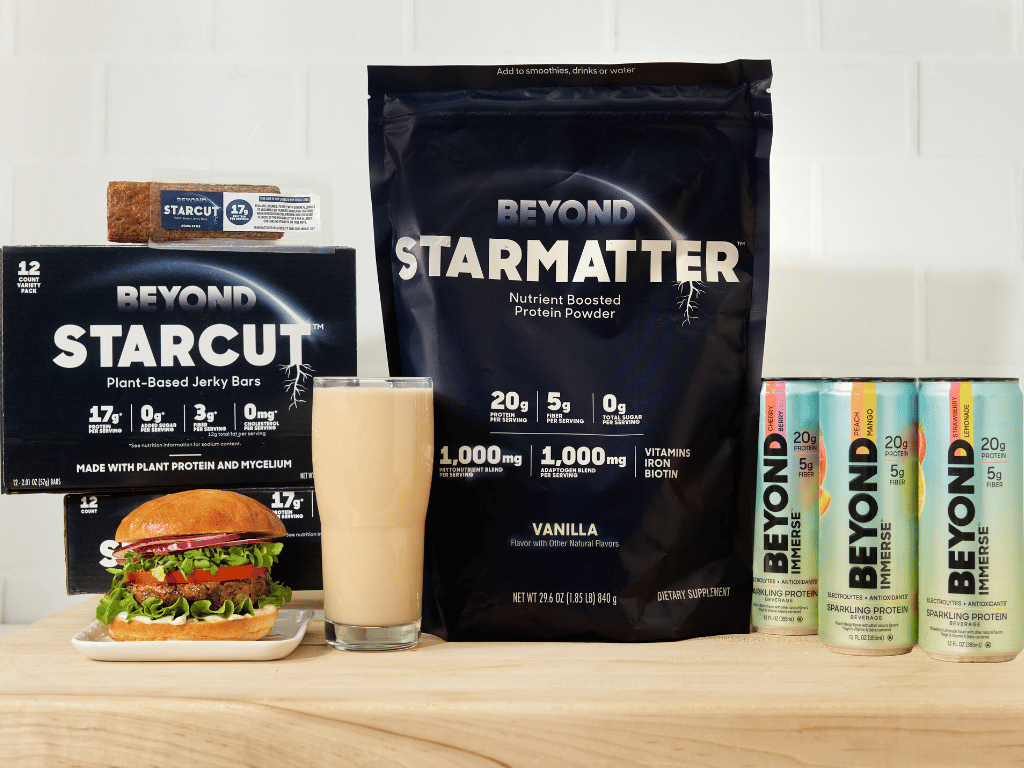
In an effort to diversify revenue streams and redefine its market identity beyond traditional plant-based burgers and sausages, Beyond Meat has actively expanded its product portfolio. The company has ventured into functional beverages and nutritional supplements, rolling out sparkling plant-protein drinks, plant-based protein powders, and high-protein snack bars. These innovations represent a strategic effort to capture health-conscious consumers in higher-margin categories.
As Beyond Meat seeks to put its protracted legal battles behind it, the resolution of the Vegadelphia trademark dispute removes a significant cloud of uncertainty from the corporate horizon. Nevertheless, the company’s path toward sustainable profitability will depend heavily on the success of its ongoing product diversification strategy, operational cost controls, and its ability to rebuild consumer trust in a rapidly evolving marketplace.
