
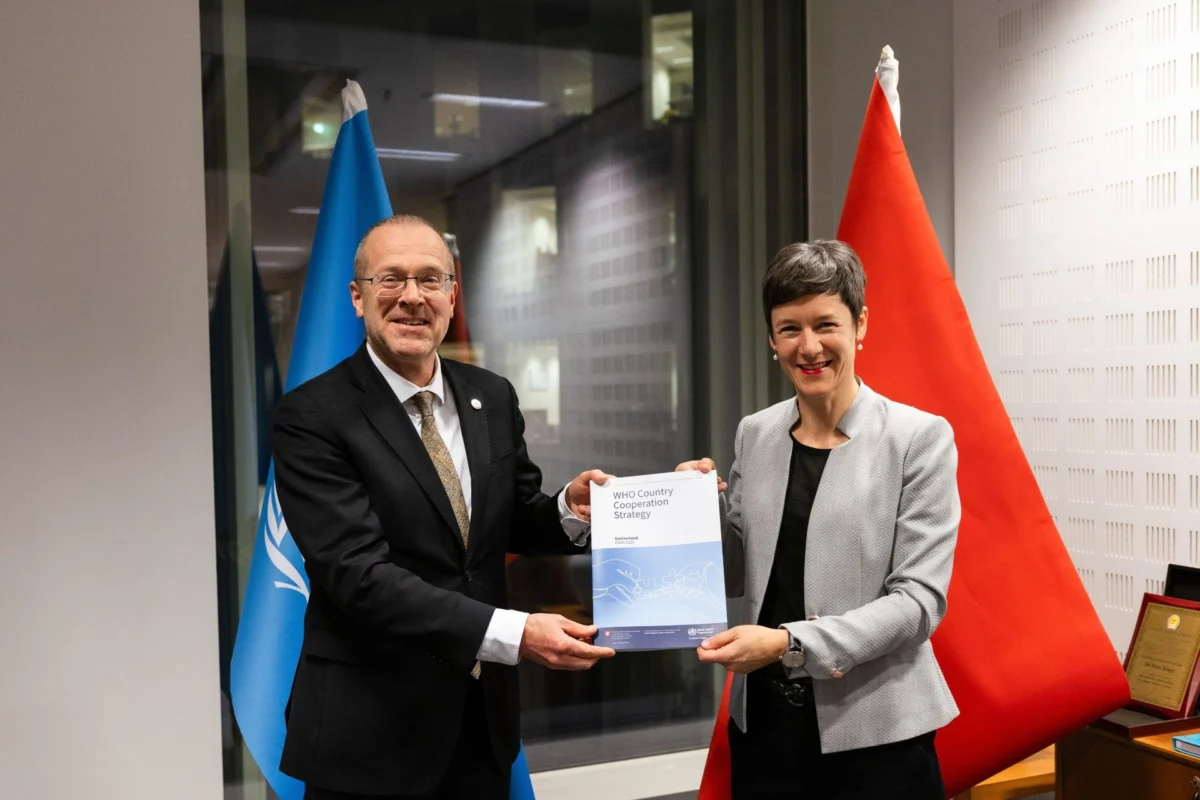
The World Health Organization (WHO) and the Swiss Confederation have officially inaugurated a new chapter in their long-standing partnership, formally signing the WHO-Switzerland Country Cooperation Strategy (CCS) for the 2024–2028 period. This formal agreement, finalized on March 4, 2025, at the WHO Regional Office for Europe in Copenhagen, marks a significant milestone in international health diplomacy. By renewing this commitment, both parties aim to leverage Switzerland’s unique position as a global hub for health governance and innovation to address the increasingly complex challenges facing public health systems in Europe and across the globe.
A Pioneering Partnership: Historical Context
The relationship between Switzerland and the WHO is deeply rooted in Switzerland’s role as the host nation for the organization’s headquarters in Geneva. However, the formalization of a "Country Cooperation Strategy" is a more recent development. In 2013, Switzerland broke new ground by becoming the first high-income country within the WHO European Region to implement such a strategic framework.
This pilot program was designed to move beyond the traditional donor-recipient dynamic, instead establishing a collaborative partnership model that recognizes the high level of sophistication within the Swiss health system. Over the past decade, this model has served as a blueprint for how international organizations can engage with advanced economies to foster mutual learning, policy alignment, and shared strategic goals. The decision in 2022 to initiate an update to this strategy was driven by the necessity of adapting to post-pandemic realities, digital health integration, and the evolving geopolitical landscape affecting global health security.
Chronology of Cooperation
The evolution of this partnership is characterized by key strategic shifts:
- 2013: Switzerland launches the inaugural WHO-Switzerland Cooperation Strategy, pioneering the concept of an institutional partnership with a high-income member state.
- 2020–2022: The COVID-19 pandemic highlights the critical need for robust, real-time data sharing and global supply chain resilience, accelerating discussions for a refreshed strategic framework.
- 2022: The WHO and the Swiss Federal Office of Public Health (FOPH) jointly agree to draft a new roadmap for 2024–2028.
- June 2024: Both parties announce a specific strengthening of the partnership regarding the Global BioHub system, focusing on the secure sharing of pathogens and biological materials.
- March 4, 2025: The official signing ceremony takes place in Copenhagen, solidifying the objectives for the next four years.
Strategic Pillars of the 2024–2028 Strategy
The newly signed document outlines a multi-faceted approach to health governance. The strategy is built upon several core pillars:
1. Strengthening Health Security and Pandemic Preparedness
Building on the lessons learned from the 2020 health crisis, the agreement prioritizes the strengthening of the global architecture for pandemic preparedness. This includes active participation in the WHO’s BioHub system, which facilitates the rapid, transparent, and secure sharing of biological samples. Switzerland’s role as a logistical and scientific node is critical here, ensuring that scientific data can be translated into actionable countermeasures, such as diagnostics and vaccines, in record time.
2. Digital Health and Innovation
As the world undergoes a digital transformation in healthcare, Switzerland and the WHO are aligning their efforts to govern the use of Artificial Intelligence (AI) in clinical settings. The strategy emphasizes the creation of ethical guidelines for health data usage and the development of digital tools that can bridge the gap between policy and practice. Switzerland, with its dense network of research universities and biotech clusters, serves as a primary testbed for these innovations.
3. Health Equity and Non-Communicable Diseases (NCDs)
While high-income countries face different health burdens than developing nations, the prevalence of NCDs—such as cardiovascular disease, diabetes, and mental health disorders—remains a shared concern. The strategy fosters an exchange of best practices in preventative medicine and sustainable health financing, ensuring that national policies are aligned with global standards for aging populations.

Data-Driven Collaboration
The significance of this partnership is backed by Switzerland’s substantial financial and intellectual contributions to global health. Switzerland consistently ranks among the top contributors to the WHO’s voluntary funding streams. Beyond monetary support, the collaboration involves the secondment of Swiss technical experts to WHO programs, providing the organization with high-level policy analysis, epidemiological modeling, and legal expertise in international health regulations.
For instance, the WHO-Switzerland partnership has been instrumental in the development of the "Global Health Lab" concept, where data from Swiss health systems is analyzed to improve the efficiency of primary care models. By integrating these insights into the WHO’s regional European frameworks, member states can observe how data-driven governance can lead to reduced healthcare costs without compromising patient outcomes.
Official Responses and Diplomatic Significance
During the signing ceremony in Copenhagen, Dr. Hans Kluge, WHO Regional Director for Europe, underscored the necessity of the alliance. "The renewal of this strategy is not merely a formality; it is a declaration of intent to lead by example," Dr. Kluge noted. "Switzerland’s commitment to multilateralism and scientific rigor provides the foundation we need to navigate the health challenges of the coming decade."
Barbara Schedler, Ambassador for Global Health at the Swiss Federal Office of Public Health, echoed these sentiments. "By formalizing our cooperation through 2028, Switzerland reaffirms its commitment to the WHO as the cornerstone of global health governance. Our partnership is built on the belief that health is a global public good that requires constant innovation, shared resources, and unwavering political will."
Broader Implications and Global Impact
The implications of the 2024–2028 strategy extend far beyond the borders of Switzerland and the administrative halls of the WHO. In an era where global health systems are increasingly fragmented, the WHO-Switzerland model provides a template for "diplomatic health." By focusing on technical exchange rather than just financial assistance, this partnership demonstrates how high-income nations can exert positive influence in the global health arena.
Analysts point to three main areas where this strategy could influence global health policy:
- Standardization of Bio-Security: The success of the BioHub system within this partnership may lead to a more standardized global framework for the sharing of genomic sequences, reducing the friction that often occurs during health emergencies.
- Policy Transferability: The "Swiss Model" of healthcare, characterized by universal coverage and high levels of technological integration, is being scrutinized to see which elements can be successfully adapted for low- and middle-income settings, particularly in Eastern Europe and Central Asia.
- Governance Reform: As the WHO seeks to reform its own administrative structures, the collaborative governance style adopted by the Swiss-WHO steering committee serves as a pilot for more efficient, agile decision-making processes.
Conclusion: Looking Toward 2028
The 2024–2028 WHO-Switzerland Cooperation Strategy arrives at a time of profound transition for global health. With climate change, aging demographics, and the threat of future pandemics looming, the requirement for stable, long-term institutional partnerships has never been greater.
By committing to this four-year roadmap, Switzerland and the WHO have signaled that they are prepared to tackle the complexities of the mid-2020s with a structured, data-informed, and collaborative approach. While the challenges are immense, the synergy between Swiss scientific excellence and WHO’s global mandate provides a robust framework for navigating the uncertainties of the modern health landscape. As the implementation phase begins, the international community will be watching closely to see how this renewed commitment translates into concrete improvements in health outcomes, not only for the people of Switzerland but for the global population that relies on the WHO’s leadership.
