

Polycystic Ovary Syndrome (PCOS) stands as the most prevalent endocrine disorder among women of reproductive age, yet securing a definitive clinical diagnosis remains a notoriously protracted journey. Recent epidemiological and clinical research indicates that individuals frequently endure a timeline spanning up to two years, alongside a minimum of three distinct physician consultations, before receiving confirmation of their condition. For the millions of women navigating symptoms ranging from severe menstrual irregularities and hyperandrogenism to metabolic complications and fertility challenges, this multi-year diagnostic delay represents a significant barrier to timely medical intervention, lifestyle management, and psychological support.
Background Context of PCOS Diagnostics
The historical framework for diagnosing PCOS is rooted in clinical consensus rather than a single definitive biomarker test. For decades, the medical community has relied heavily on the Rotterdam criteria established in 2003. Under these international guidelines, a diagnosis requires the presence of at least two of three distinct clinical manifestations: chronic oligo- or anovulation (irregular or absent periods), clinical or biochemical signs of hyperandrogenism (elevated male hormones, such as testosterone), and the appearance of polycystic ovaries on an ultrasound examination.

However, applying these criteria in a standard primary care setting often requires navigating a complex labyrinth of exclusions. Before a physician can confidently attribute a patient’s symptoms to PCOS, standard clinical protocol mandates the systematic exclusion of numerous other endocrine and metabolic pathologies that present with overlapping features. These alternative conditions include Cushing’s syndrome, congenital adrenal hyperplasia, androgen-secreting tumors, primary hypothyroidism, hyperprolactinemia, and drug-induced hirsutism.
Consequently, the diagnostic pathway typically entails a combination of detailed medical history evaluations, physical examinations, transvaginal or pelvic ultrasound imaging, and comprehensive panels of blood tests. A transvaginal ultrasound utilizes high-frequency sound waves to visualize the morphology of the ovaries, specifically checking for the characteristic accumulation of small fluid-filled follicles surrounding the eggs. Nevertheless, diagnostic nuances persist; clinical data demonstrates that approximately 20 percent of the healthy female population possesses polycystic ovarian morphology on ultrasound without meeting the broader clinical criteria for PCOS.
Parallel to imaging, venipuncture blood draws are deployed to quantify specific hormone concentrations. These laboratory assessments typically evaluate total and free testosterone, sex hormone-binding globulin (SHBG), dehydroepiandrosterone sulfate (DHEAS), and luteinizing hormone (LH) relative to follicle-stimulating hormone (FSH) ratios. For women concurrently planning a family, anti-Müllerian hormone (AMH) evaluations are frequently incorporated to gauge ovarian reserve and function.
The Emergence of At-Home Diagnostic Technologies

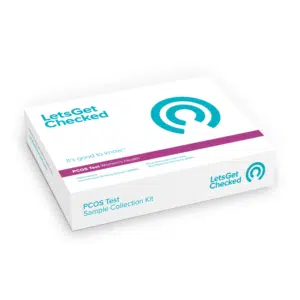
In response to the documented delays and systemic bottlenecks within traditional healthcare models, the diagnostic landscape has begun to incorporate decentralized testing methodologies. Among these developments, commercial at-home hormone testing kits—such as the PCOS Home Test distributed by Let’s Get Checked—have emerged to streamline the preliminary phase of the investigative process.
Designed to operate via a minimally invasive capillary blood collection method, these home kits utilize a simple finger-prick apparatus to gather a small blood specimen. The user then ships the sample via prepaid expedited mail to a certified laboratory facility. These laboratories operate under the same regulatory standards and clinical oversight as those utilized by institutional healthcare providers, employing routine quality control protocols to ensure analytical validity.
The biological specimens are analyzed for a targeted panel of key reproductive and metabolic hormones intrinsically linked to the pathophysiology of the syndrome. By capturing these baseline metrics, the testing service aims to provide individuals with a probable indication of PCOS risk, thereby equipping patients with tangible clinical data prior to formal physician consultations.
Chronology and Timing Considerations for Hormone Biomarkers

The clinical utility of hormone assays is heavily dependent on precise physiological timing, given that female reproductive hormones fluctuate dynamically throughout the infradian rhythm of the menstrual cycle. For individuals maintaining a regular menstrual cadence, diagnostic protocols dictate that sample collection must occur during the early follicular phase—specifically on days three, four, or five following the onset of menses.
Conversely, individuals experiencing chronic oligomenorrhea or amenorrhea—hallmark characteristics of ovulatory dysfunction in PCOS—face unique timing challenges. For those without a predictable cycle, clinical guidelines permit sample collection on any three consecutive operating days, typically Monday through Friday. Specialized analytical teams incorporate this absence of a predictable cycle into their clinical interpretation algorithms, contextualizing the biomarker concentrations against the patient’s reported menstrual history.
Furthermore, medical professionals emphasize that exogenous hormone interventions can significantly confound test outcomes. The administration of hormonal contraceptives, including combination oral contraceptive pills, alters the hypothalamic-pituitary-ovarian axis and artificially suppresses or modulates circulating androgen and gonadotropin levels. Consequently, healthcare providers and at-home testing providers uniformly advise against utilizing hormone testing kits while actively using hormonal birth control, as the resulting suppression can yield false negatives or masked endocrine profiles.
Clinical Implications of Early Detection and Intervention
The necessity of expediting the PCOS diagnosis extends far beyond the immediate mitigation of visible or uncomfortable symptoms. While manifestations such as hirsutism, acne, scalp hair thinning, and erratic menstrual cycles impose substantial burdens on daily quality of life, the metabolic ramifications of the disorder present long-term health risks that demand proactive clinical management.
Chronic hormonal imbalances and insulin resistance, which frequently co-occur with polycystic ovary syndrome, elevate the lifetime risk profile for several serious systemic conditions. Clinical literature correlates untreated or late-diagnosed PCOS with an increased susceptibility to type 2 diabetes mellitus, dyslipidemia, cardiovascular disease, hypertension, and endometrial hyperplasia or carcinoma resulting from chronic unopposed estrogen exposure. Furthermore, the psychological toll—manifesting as heightened rates of anxiety, depression, and body image distress—underscores the urgency of establishing a definitive diagnosis and initiating structured multidisciplinary care.
When at-home screening or primary laboratory evaluations yield abnormal results suggestive of PCOS, clinical pathways generally direct patients toward specialized medical professionals. Depending on the individual’s life stage and health objectives, these referrals may include gynecologists, endocrinologists, or reproductive endocrinologists—particularly if fertility preservation or conception assistance is a primary goal.
Broader Impact on Healthcare Delivery Models

The integration of direct-to-consumer and at-home diagnostic tools into chronic disease evaluation reflects a broader shift toward patient-empowered healthcare models. By decentralizing the initial data-gathering phase, individuals facing prolonged waiting lists or barriers to specialized care can secure objective biomarker data independently. While these at-home kits do not replace a formal clinical diagnosis—which ultimately requires a comprehensive evaluation by a licensed physician applying established diagnostic criteria—they serve as a functional bridge.
By reducing the informational asymmetry between patients and healthcare providers, preliminary at-home testing provides physicians with quantifiable baseline evidence during initial consultations. This pre-existing documentation can potentially bypass preliminary investigative delays, allowing clinical teams to prioritize targeted ultrasound imaging, specialized endocrinological assessments, and personalized therapeutic interventions more efficiently. As the medical community continues to refine diagnostic workflows for complex endocrine disorders, tools that bridge the gap between patient advocacy and clinical validation remain a focal point of modern healthcare evolution.
