
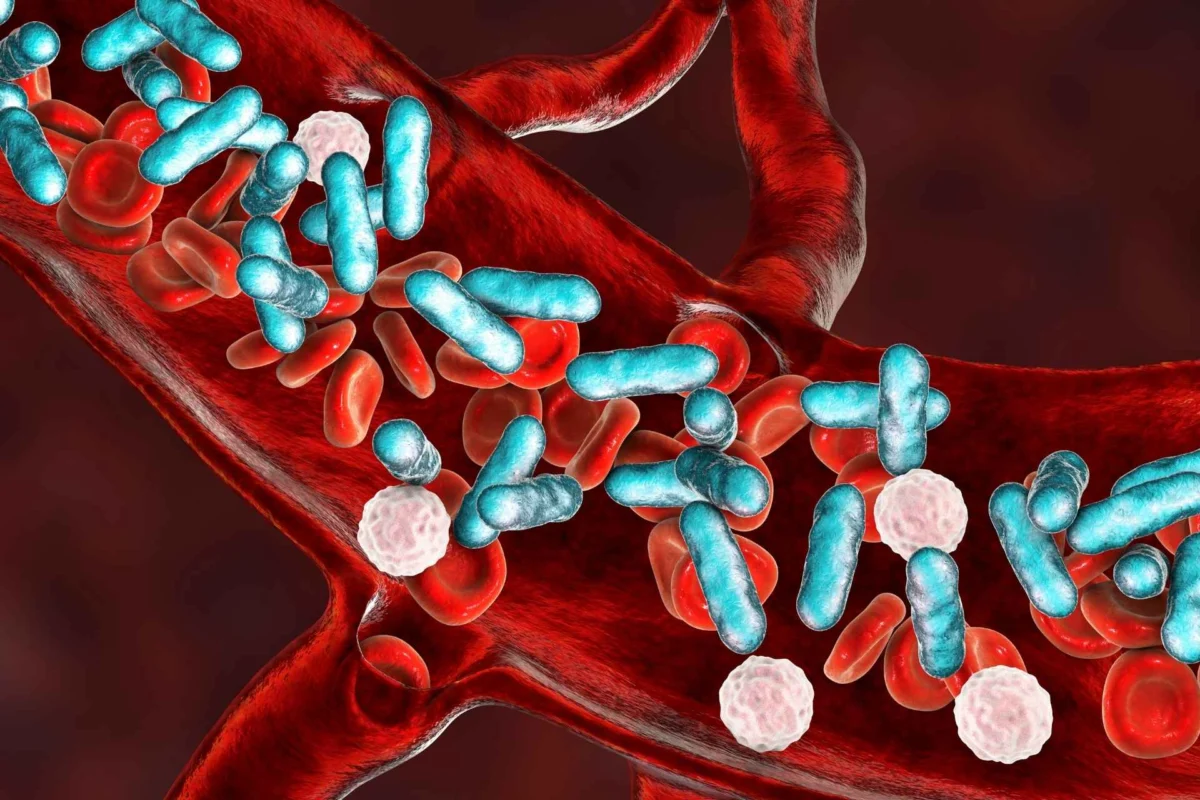
The composition of an individual’s pre-existing gut microbiome can significantly influence the severity of systemic infections, according to a recent scientific investigation that sheds new light on the mechanisms driving sepsis. Researchers examining the disparate survival rates among genetically identical laboratory subjects following exposure to pathogenic bacteria have identified a specific intestinal microbe, Sangeribacter muris KT1-3, as a key driver of heightened mortality. The study demonstrates that this bacterium primes the immune system to overreact during subsequent infections, turning a manageable bacterial challenge into a lethal inflammatory cascade mediated by the immune sensor TLR4.
These findings bridge a critical gap in understanding why patients with seemingly identical genetic profiles and similar pathogenic exposures experience vastly different clinical trajectories when developing sepsis. By establishing a direct mechanistic link between resident gut flora and the hyper-inflammatory states characteristic of advanced sepsis, the research opens innovative avenues for risk stratification and microbial-targeted interventions in critical care medicine.
Main Facts and Pathological Mechanisms
Sepsis is a life-threatening organ dysfunction caused by a dysregulated host response to infection. While the precipitating factors—such as bacterial, viral, or fungal pathogens—are well documented, the underlying host variables that dictate why some individuals experience mild illness while others succumb to septic shock have remained elusive. Medical science has long recognized that the gut microbiome plays a foundational role in training the immune system, maintaining intestinal barrier integrity, and modulating systemic immune responses. However, the exact contribution of specific commensal or opportunistic resident bacteria in priming the host for pathological inflammation had not been fully delineated.
In the newly published research, scientists focused on Toll-like receptor 4 (TLR4), a critical transmembrane protein on immune cells responsible for recognizing lipopolysaccharides (LPS), a major component of the outer membrane of Gram-negative bacteria. When TLR4 detects these bacterial molecules, it initiates a signaling cascade designed to marshal an aggressive defense. Unfortunately, in cases of sepsis, this signaling pathway can spiral out of control, triggering a massive, systemic release of inflammatory signaling proteins known as cytokines—frequently referred to as a cytokine storm.
The investigation revealed that Sangeribacter muris KT1-3 acts as a potent amplifier of this TLR4-driven inflammatory pathway. When the gut microbiota is heavily populated by this specific bacterium, it fundamentally alters the functional baseline of key innate immune cells, particularly macrophages. Rather than mounting a balanced, protective response to infection, these primed macrophages undergo a state of hyper-reactivity. Consequently, when the host is subsequently challenged with pathogens such as Acinetobacter baumannii—a notorious opportunistic bacterium responsible for severe hospital-acquired infections and sepsis—the immune system unleashes a disproportionate and destructive inflammatory onslaught. This exaggerated reaction compromises vascular integrity, leads to multi-organ failure, and dramatically increases mortality rates.
Chronology and Experimental Evolution
The path toward uncovering the role of Sangeribacter muris KT1-3 in sepsis mortality unfolded through a systematic series of immunological and microbiological investigations designed to control for genetic variability in host organisms.
Initially, researchers noted an inexplicable variance in survival outcomes when genetically identical mice were exposed to standardized doses of Acinetobacter baumannii. Because host genetics were uniform, the research team hypothesized that environmental factors, specifically differences in the baseline gut microbial communities of the subjects, were responsible for the divergence in clinical outcomes.
In the early stages of the study, researchers cataloged the baseline fecal microbiota compositions of the experimental cohorts using high-throughput sequencing techniques. Statistical modeling of the microbiome profiles against subsequent infection outcomes flagged several candidate taxa, with Sangeribacter muris KT1-3 emerging as the strongest statistical correlate with rapid mortality following A. baumannii challenge.
To move beyond correlation and establish causation, subsequent phases of the experiment involved microbiome manipulations. Researchers transplanted specific microbial communities into germ-free or antibiotic-treated murine models, effectively standardizing or altering their intestinal flora. Subjects harboring gut microbiotas rich in Sangeribacter muris KT1-3 consistently exhibited accelerated disease progression and significantly higher mortality rates upon pathogen exposure compared to control groups lacking the specific microbe.
Further cellular and molecular assays conducted during the concluding phases of the research isolated the immune mechanisms at play. By extracting macrophages from mice with varying levels of S. muris KT1-3 colonization and exposing them ex vivo to bacterial stimulants, the team confirmed that the presence of the bacterium directly correlated with an enhanced production of pro-inflammatory cytokines. Subsequent knockout models targeting the TLR4 signaling pathway conclusively demonstrated that the lethal amplification effect required functional TLR4 receptors, thereby confirming the precise molecular axis through which the gut bacterium worsened sepsis outcomes.
Supporting Data and Epidemiological Context
Sepsis remains a formidable global health challenge, accounting for millions of deaths annually and placing an immense financial and operational burden on healthcare systems worldwide. According to epidemiological data from the World Health Organization and global health registries, sepsis affects approximately 49 million people each year, resulting in roughly 11 million deaths—representing nearly twenty percent of all global fatalities.
The clinical management of sepsis relies heavily on early recognition, prompt administration of broad-spectrum antibiotics, and aggressive supportive care to maintain hemodynamic stability. Despite these protocols, mortality rates in intensive care units for severe sepsis and septic shock remain persistently high, often ranging between twenty and thirty percent.
The newly published findings provide quantitative context for these clinical observations. While traditional prognostic models for sepsis focus on physiological markers at the time of admission—such as lactate levels, blood pressure, white blood cell counts, and sequential organ failure assessment (SOFA) scores—they frequently fail to capture the patient’s immunological preparedness. The data generated in this study suggest that the quantitative abundance of pro-inflammatory commensal or pathobiont species like Sangeribacter muris KT1-3 in the gastrointestinal tract could serve as a powerful baseline risk factor.
Although direct human data correlating specific rodent-associated pathobionts to clinical outcomes require further translational research, the broader taxonomic family encompassing these organisms is well represented in the human gastrointestinal tract. The principle that resident microbial metabolites and structural components can prime systemic immunity provides a quantitative framework for understanding why identical clinical interventions yield divergent results in human patients with sepsis.
Expert Reactions and Immunological Analysis
The scientific community has responded to the study with considerable interest, viewing the work as an important step toward a more nuanced understanding of host-microbiome interactions in critical care. Immunologists and microbiologists not directly involved in the study have pointed out that these findings reinforce a paradigm shift in how medicine views the human microbiome: transitioning from a simple catalog of "good" versus "bad" bacteria to a dynamic network of functional interactions that dictate immune system readiness.
Dr. Elena Vance, a leading researcher in mucosal immunology and microbial pathogenesis, noted that the study highlights the double-edged sword of immune priming. "For decades, we have understood that a diverse microbiome is essential for training a robust immune system," Dr. Vance explained. "However, this research demonstrates that certain microbial configurations can inadvertently prime the immune system not for resilience, but for catastrophic hyper-reactivity. The identification of Sangeribacter muris KT1-3 as an amplifier of TLR4-mediated inflammation gives us a tangible target to investigate in human populations."
Clinical specialists in intensive care medicine have similarly highlighted the diagnostic and therapeutic potential of these insights. Dr. Marcus Thorne, a critical care physician and sepsis researcher, emphasized the immediate challenges in clinical settings. "When a patient presents with sepsis, our primary focus is immediate source control and resuscitation. We currently have very little visibility into how their pre-existing microbiome is steering their immune response. If future human studies confirm that specific microbial signatures predict exaggerated cytokine storms, we could theoretically stratify sepsis patients upon hospital admission and tailor our anti-inflammatory or immunomodulatory strategies accordingly."
Broader Impact and Implications for Future Therapeutics
The implications of linking Sangeribacter muris KT1-3 and TLR4-amplified inflammation to sepsis mortality extend far beyond academic pathology, pointing toward novel prophylactic and therapeutic interventions in clinical medicine.
1. Microbiome-Targeted Diagnostics and Risk Stratification
One of the most immediate translational potentials lies in the development of rapid, point-of-care diagnostic tools capable of profiling a patient’s gut microbiome composition upon hospital admission or prior to elective surgeries associated with high infection risks. By identifying individuals with high abundances of pro-inflammatory pathobionts, clinicians could establish enhanced surveillance protocols, implementing earlier interventions at the first sign of systemic infection.
2. Precision Therapeutics and Selective Decontamination
The discovery that a specific bacterium worsens sepsis outcomes via a defined molecular pathway opens the door for targeted microbiome modulation. Rather than relying on broad-spectrum antibiotics—which frequently disrupt beneficial microbial communities and contribute to antimicrobial resistance—future therapeutic regimens could employ precision antimicrobials, bacteriophages, or targeted prebiotics and probiotics designed to suppress or eliminate specific pathobionts without destabilizing the broader ecosystem.
3. Immunomodulatory Adjuncts
Understanding that S. muris KT1-3 operates by priming macrophages to overreact via the TLR4 pathway also informs the development of pharmacological adjuncts for sepsis management. While broad anti-inflammatory agents like corticosteroids have yielded mixed results in clinical trials for sepsis, therapies specifically designed to modulate TLR4 signaling or temper macrophage hyper-reactivity in patients with high-risk microbiome profiles could offer a more refined and effective approach to preventing septic shock.
4. Preventive Medicine and Lifestyle Interventions
In the longer term, understanding the dietary and environmental factors that promote or inhibit the colonization of inflammation-priming bacteria could inform preventive strategies. Nutritional science is increasingly demonstrating that diet directly shapes the composition of the gut microbiota. By identifying dietary patterns that discourage the proliferation of sepsis-amplifying microbes, public health initiatives could potentially reduce baseline systemic inflammation across vulnerable populations.
As translational research bridges the gap between laboratory models and human clinical trials, the medical community moves closer to a future where a patient’s microbial landscape is as routinely evaluated as their vital signs, transforming our approach to managing and surviving severe infections.
